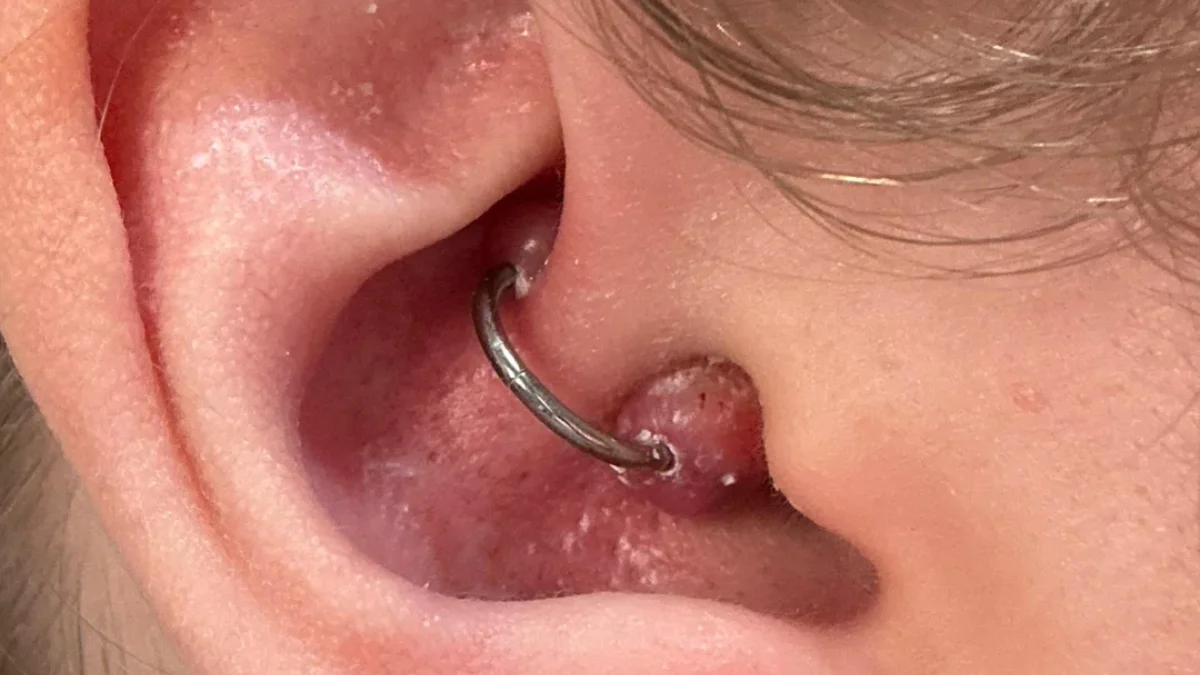
A daith piercing bump is a common issue caused by irritation, improper jewelry, or poor aftercare during the healing process. Most bumps are harmless and can be treated at home with simple care like saline cleaning and avoiding pressure. Understanding the difference between irritation bumps, hypertrophic scars, and keloids is essential for proper treatment. With consistent care and by removing the source of irritation, most daith piercing bumps heal within a few weeks. However, persistent or worsening bumps may require professional evaluation.
After you’ve just fallen in love with your new daith piercing, getting a bump on it is one of the most annoying things that can happen. You paid for it, went through the pain, and now you see this strange bump in the mirror. The good news? You’re not the only one. A daith piercing bump might feel like the end of the world, but it’s actually pretty common. In most cases, you can fix it without having to do anything major.
Let’s find out what’s really causing that bump and how to get rid daith piercing bump.
What is a daith piercing bump, and why should you care?
A daith piercing bump looks like a small bump around the hole where you got the piercing. Depending on what’s going on underneath, it could be pink, red, or even purple. The hard part? Not every bump is the same. Some of them are just your body’s way of healing, while others mean that something is bothering your piercing. This is where it matters to know the difference between a keloid and a piercing bump because the treatment is very different for each one.
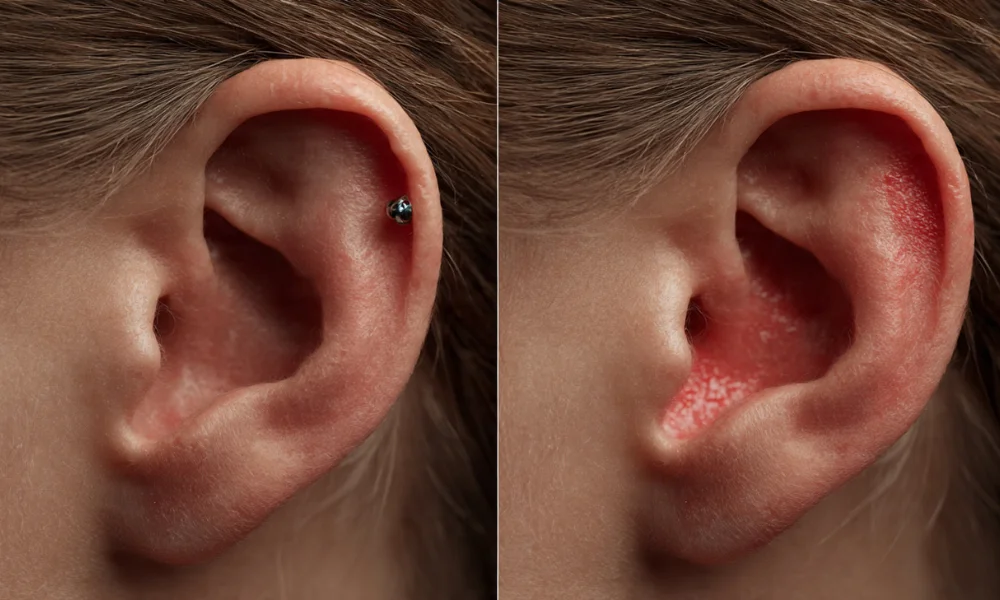
A bump on your cartilage piercing is your ear’s way of saying, Hey, something’s not right. Your cartilage is thick and dense, so it takes longer to heal than soft tissue. When something bothers it while it’s healing, your body makes swelling to protect itself. The bump you see is just inflammation doing what it does.
1. Problems with jewelry (the main cause)
Here’s the truth: if your jewelry doesn’t fit right, you’re just asking for trouble. What you wear is the main reason for cartilage piercing bumps.
- Wrong gauge: If your piercer used 18g jewelry, it might be too thin and could tear your cartilage as it heals.
- Too tight: Jewelry that fits too tightly doesn’t let swelling happen and makes constriction bumps.
- Low-quality metal: Jewelry that is cheap can cause allergic reactions that make you swell.
- Curved barbells: These tend to turn inward as they heal, which can hurt.
The solution? Talk to your piercer about downsizing after the swelling goes down, which usually takes 3 to 4 months. Switching to solid gold or titanium that is implant-grade can also make a big difference.
2. Sleeping on Your Piercing
This one is easy, but it’s also easy to miss. If you sleep on the side with your new daith piercing, you are putting pressure on the cartilage that is healing. That pressure makes inflammation happen, which causes a bump.
For the first 6 to 9 months, try using a travel pillow or sleeping on your back. Yes, it sounds annoying, but it stops a lot more headaches than it causes.
3. Touching and Twisting (Your Hands Are the Enemy)
You put bacteria on your daith every time you touch it with dirty hands. Also, it may seem like twisting the jewelry is helping to clean it, but you’re actually hurting the delicate tissue that’s healing. This trauma is what makes daith piercing bump treatment necessary.
4. Headphones and earbuds
In-ear headphones are like tiny machines that make your daith hurt. They move the jewelry, put pressure on the area, and can bring in bacteria. You’ll notice a huge difference if you switch to over-ear headphones while it heals.
5. Bad After-Care Choices
Some techniques used to treat daith piercings actually increase bumps rather than alleviate them:
- Tea tree oil: Highly caustic; damages healing skin tissues
- Hydrogen peroxide: Too strong for a newly pierced hole
- Excessive cleaning: Anything above two times per day is harmful
- Wrong liquid: Use only sterile saline solution
When it comes to treating daith piercings bumps, there is only one thing to do keep it simple.
Identifying What Type of Bump You Have
Understanding keloid vs piercing bump differences is necessary because the treatments are completely different.
| Bump Type | Appearance | Timeline | Growth | Treatment |
| Irritation Bump | Pink, small, pea-sized | Days 1-6 weeks | Stable size | Saline + care changes |
| Hypertrophic Scar | Red/purple, thicker | 2-8 weeks | Stays contained | 2-6 months with care |
| Keloid | Hard, dark, extends outward | 3-12 months | Keeps growing | Needs dermatologist |
| Infected Bump | Warm, swollen, discharge | Sudden onset | Worsens quickly | See a doctor NOW |
Quick Diagnostic Test: If you’ve had your piercing for less than a month and it remains the same size, it’s probably just an irritation bump.
How to Get Rid of Daith Piercing Bump: Step-by-Step Guide
- Address the Root Cause (Now): Before we discuss how to remove daith piercing bump, figure out why it developed in the first place. Could it be due to your choice of jewelry? To your sleeping posture? To your cleaning habits?
- Keep It Clean (The Simple Way): Apply sterile saline solution to your daith piercing two times per day using a sprayer. Dry gently with a disposable paper towel. That’s it, nothing fancy.
- Hands Off (Seriously): No more touching, no more twisting. No more attempting to clean under that bump. Your hands contain lots of bacteria and bacteria causes bumps to grow. Yes, you can touch it once your hands are washed thoroughly.
- Adjust Your Sleeping Position: Try sleeping with a travel pillow or on your back. You will be thankful for this advice once you start noticing that your bump begins to shrink.
- Reduce Jewelry Size After Healing: When your daith piercing is healed, consult your piercer and switch to appropriately sized jewelry. That’s when many bumps magically disappear.
How Do You Know about an Infected Daith Piercing Bump?
While there is a difference between irritation and infection in a daith piercing bump, the following symptoms show infection:
- Discharge that is green or yellow
- Increased warmth
- Pain
- Fever or overall feeling sick
- Bad odor
The most crucial thing to keep in mind regarding infection is: Don’t take out your jewelry. You trap the infection under the jewelry when you take it out and worsen the problem. Get a medical professional or piercer to check what is going on.
Time Frame: How Long Before Your Bump Disappears?
Irritated Bumps: Typically 2-6 weeks if cared for properly
Hypertrophic Scars: As long as 6 months, may take even longer
Keloids: Never disappear on their own and require professional attention
The important thing is persistence. Changing your aftercare regimen in the middle of the process will reset the timer, so to speak.
When to Seek Professional Help
Contact your piercer if any of the following applies:
- Bump hasn’t improved within four weeks
- Jewelry is too tight
- Piercing looks like it’s shifting positions
Contact a dermatologist if any of the following applies:
- Bump is spreading beyond the pierced area
- Hasn’t improved after six or more months
- Think it might be a keloid
- Seek professional scar remo
Quick Reminder:
Timing depends on which kind of bump you are experiencing. Keloid vs piercing bump is an extremely important factor here, considering one can be treated successfully with time and patience, whereas the other requires intervention.
Cartilage piercing bump cause does not require special treatment; however, it is still important to identify the issue properly. Rest assured that if your daith piercing was done by a reliable piercer and you’ve gotten a bump, everything will be all right in time. All you have to do is eliminate the source of irritation, and you will end up with an amazing looking pierce.
Final Thoughts: Stop Your Daith Piercing Bump Now
Although a daith piercing bump may be very annoying, it definitely doesn’t spell the end of your piercing. Bumps arise either due to problems with jewelry or your care during the healing period. Determine what’s wrong and solve the issue that will help the problem disappear on its own.
No matter whether you have irritation or an infection, being consistent is key. Stop doing whatever caused the bump in the first place, use sterile saline, stop touching the piercing, and make sure you sleep well. That should do the trick.
For more tips on daith piercing care and expert opinion, visit Daith Piercing (https://daithpiercing.com), which will be your one-stop destination for daith piercing advice. No matter whether you’re seeking advice on treating a daith piercing bump, ways to remove a daith piercing bump, or what’s the difference between keloid and piercing bump, this website offers all kinds of valuable information. It’s because knowing about the topic is very important.
FAQ Section
What’s the difference between a daith piercing bump and a keloid?
If you have a bump from daith piercing in the first couple of weeks and it isn’t very big, it will probably go away after several weeks or months with correct care. When looking into keloid vs piercing bump, you’ll find that keloids take months to form and grow beyond their original area. So if your bump grew big fast or hasn’t shrunk despite multiple months passing, you should visit a dermatologist as soon as possible. In contrast, regular bumps require no professional help.
How long does a daith piercing bump treatment usually take?
If you take good care of your piercing by washing it daily with saline solution and avoid all potential irritants, daith piercing bump removal shouldn’t take more than 2-6 weeks. However, it can be longer in some cases, particularly if you have hypertrophic scar formation. On the other hand, if you still have your bump after one month, it might be best to see your piercer again and fix the jewelry size issue.
Can I get rid of a daith piercing bump without seeing a professional?
Yes, you can definitely how to get rid of daith piercing bump at home by using sterile saline solution twice daily, sleeping on the opposite side, and avoiding earbuds. Also, downsize your jewelry after initial swelling goes down (around 3-4 months) because this fixes most bumps caused by tight jewelry. Whether it’s an irritation bump or early hypertrophic scar, home care typically works if you’re patient and consistent.
How do I know if my daith piercing bump is infected?
An infected daith piercing bump shows green or yellow discharge, feels hot to the touch, and causes increasing pain over time. So if you notice these signs, don’t remove your jewelry instead, see a doctor because removing it traps the infection inside. Basically, infections need medical attention while regular bumps just need proper aftercare and time.
What causes a daith piercing bump most often?
The biggest cartilage piercing bump causes are tight or low-quality jewelry, sleeping on your piercing, and touching it with unwashed hands. Also, using wrong aftercare products like tea tree oil or over-cleaning can trigger bumps. By switching to implant-grade titanium, using a travel pillow, and sticking to saline-only cleaning, you eliminate most cartilage piercing bump causes before they even start.