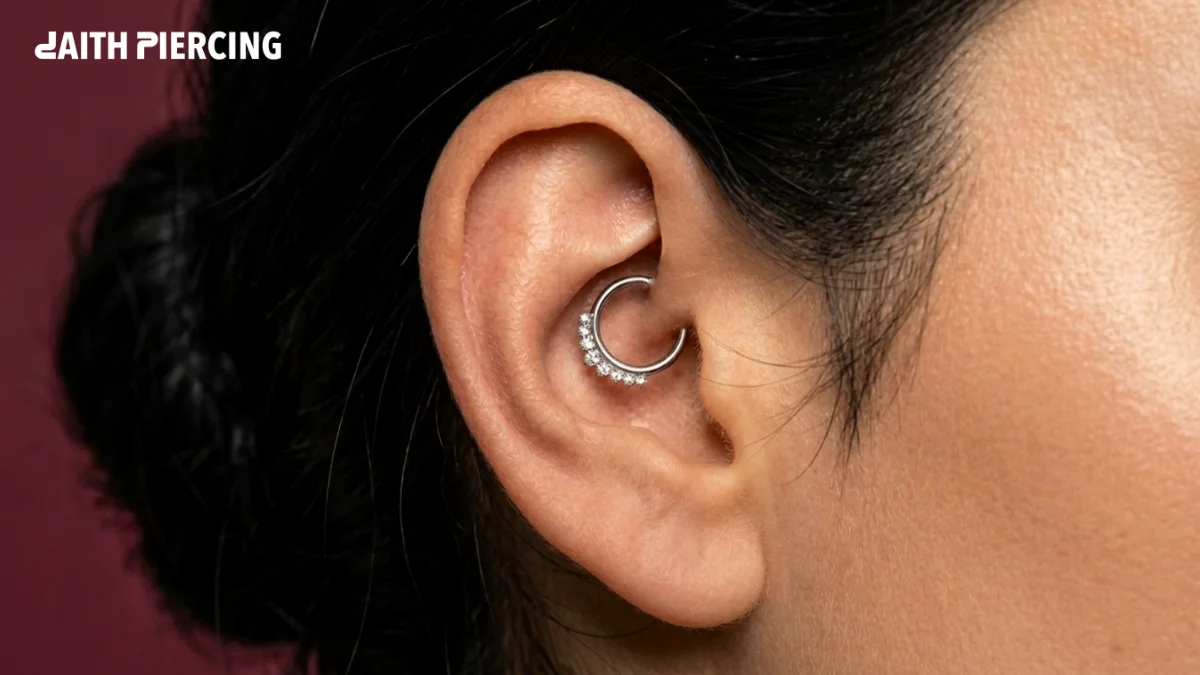
Thinking of a daith piercing? You need to know the risks first. While this inner-ear look is iconic, daith piercing side effects are more common than most realize. In fact, NCBI data shows a 35% complication rate for this specific placement.
At daithpiercing.io, we are cutting through the fluff to give you the clinical truth. This 2026 guide tackles the ugly side of healing from stubborn perichondritis to the reality of long-term migration. Most blogs play it safe, but we’re breaking down the specific anatomy of your ear and why this piercing demands more respect than a standard lobe. Read on to master the early warning signs and ensure your recovery is part of the successful 65%.
What Are the Most Common Daith Piercing Side Effects?
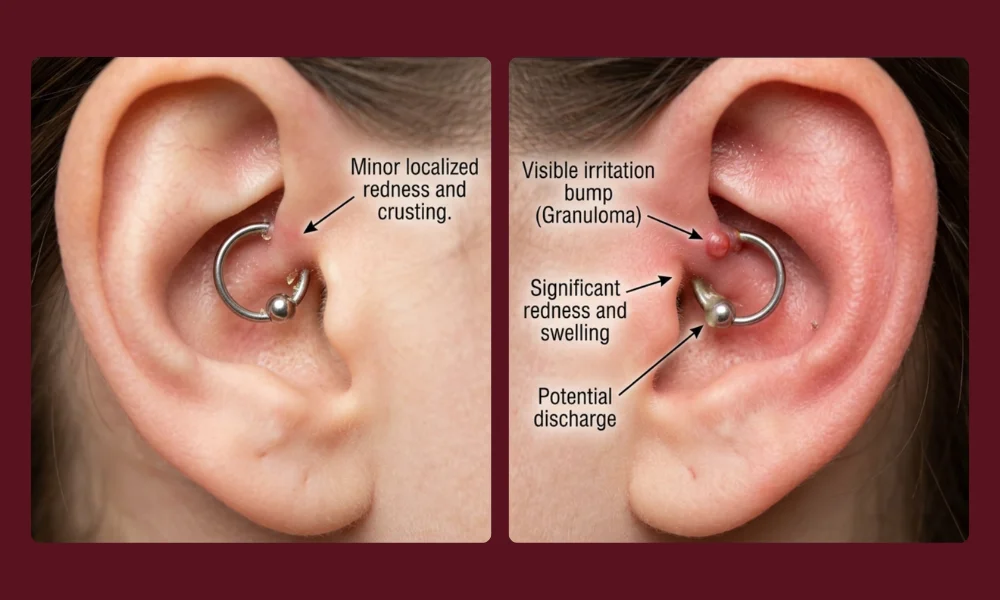
The most common daith piercing side effects include localized pain, throbbing, and significant swelling during the first two weeks. Because this involves thick cartilage, minor bruising and weeping (clear discharge) are standard parts of the inflammatory response. Most users also experience crusting and temporary itching as the tissue begins to repair itself.
-
Pain: Sharp during the procedure; dull aching afterward.
-
Swelling: High volume due to the piercing’s location in the inner ear.
-
Redness: Normal within the first 7–14 days.
-
Clear Discharge: Lymph fluid that forms crusties.
-
Bruising: Common around the crus helicis.
-
Itching: A sign of active healing.
-
Bumps: Often caused by localized irritation or pressure.
Daith Piercing Pain and What’s Normal in the First Week
On a scale of 1–10, most professionals rank daith piercing pain between a 5 and 7. It sits higher than a lobe or helix because the needle must pass through the crus helicis a particularly thick, firm ridge of cartilage. The use of a curved needle to navigate this tight fold also adds a unique pressure that most clients describe as a “deep crunch” followed by intense throbbing.
Expect a sharp, localized sting during the procedure, followed by a heavy throb for the first 48 hours. By the end of the first week, this should settle into a manageable dull ache. However, if the pain intensifies after day five, or if you experience sharp shooting sensations accompanied by a fever, these are red flags for infection. For a step-by-step recovery plan, check out our daithpiercing aftercare guide to keep your healing on track.
Common Daith Piercing Side Effects in the Healing Stages
Most guides treat recovery as a single event, but daith piercing side effects shift significantly as your body adapts. Understanding what to expect during each specific window helps you differentiate between a healthy inflammatory response and a genuine complication.
Week 1 to 2: The Acute Phase
In the first fortnight, expect significant swelling and soreness. It is normal to see light bleeding or a whitish-clear discharge known as lymph fluid. Unlike yellow or green pus, lymph is a sign that your body is sealing the wound. If the swelling starts to swallow the jewelry or restricts blood flow to the ear rim, you need to see your piercer immediately.
Month 1 to 3: The Irritation Window
This is when most crusties appear as lymph fluid dries. You will likely feel mild itchiness a classic sign of tissue repair. However, this is also the primary window for piercing bumps (hypertrophic scarring or irritation bumps) to form. These usually stem from sleeping on the ear or using harsh cleaning solutions.
Month 4 to 12: Long-Term Maturation
A daith piercing takes 4 to 12 months to heal fully. Late-stage side effects are rare but include jewelry rejection, where the body pushes the metal toward the surface, or “embedding” if the jewelry is too small for the tissue. Even if the outside looks perfect by month six, the internal fistula is still fragile; keep your aftercare consistent until the one-year mark.
Serious Daith Piercing Side Effects You Can’t Ignore
While minor irritation is common, some daith piercing side effects require immediate clinical intervention. Ignoring these symptoms can lead to permanent damage or systemic illness.
Infection: The Most Common Serious Risk
A standard infection is the most frequent complication, often appearing after the initial four-day grace period. Signs include thick yellow or green pus, skin that feels hot to the touch, and localized throbbing that prevents sleep. WebMD notes that roughly one-third of people experience some form of piercing complication. Without professional treatment, a localized infection can escalate into cellulitis or, in extreme cases involving unsterilized equipment, bloodborne pathogens like Hepatitis B, C, or HIV.
Perichondritis: The Hidden Danger
Perichondritis is a severe bacterial infection of the ear cartilage tissue. Unlike a small surface bump, this involves deep-seated inflammation that can cut off blood supply to the cartilage. If left untreated, the cartilage can collapse, leading to a permanent cauliflower ear deformity. If your entire upper ear becomes purple, swollen, and extremely painful, you need antibiotics immediately.
Toxic Shock Syndrome and Sepsis
Though rare, systemic infections like Toxic Shock Syndrome (TSS) or sepsis have been documented in cartilage piercings. If you experience sudden high fever, dizziness, or a widespread rash alongside a new piercing, seek emergency care.
Cosmetic Daith Piercing Side Effects: Bumps, Scars, and Keloids
Many readers confuse different types of growths. Knowing the difference determines whether you need a saline soak or a dermatologist.
Hypertrophic Scars vs. Keloids vs. Piercing Bumps
-
Irritation Bumps: Small, fluid-filled pockets caused by friction or poor aftercare. These are treatable and temporary.
-
Hypertrophic Scars: Raised, firm tissue that stays within the boundaries of the piercing. These usually fade over months with proper care.
-
Keloids: Thick, fibrous clusters of scar tissue that grow beyond the piercing site. These are largely genetic affecting roughly 10% of the population and usually require medical removal.
Jewelry Rejection and Migration
Sometimes your body identifies the metal as a foreign threat. During rejection, the skin between the entry and exit holes thins, and the jewelry visibly shifts toward the surface. If you notice the exit holes widening or the skin turning a bright, translucent red, the piercing is migrating and will likely leave a permanent scar if not removed by a professional.
Daith Piercing Pros and Cons at a Glance
Deciding on this procedure requires weighing the aesthetic payoff against the demanding recovery. When looking at daith piercing pros and cons, the most obvious benefit is the striking, central placement that anchors any curated ear look.
| Pros (The Benefits) | Cons (The Challenges) |
| Aesthetic Appeal: A striking, central anchor for “curated ear” setups. | Lengthy Healing: Requires a strict 4 to 12-month commitment to fully heal. |
| Migraine Theory: Anecdotal reports suggest potential relief via vagus nerve stimulation. | Higher Pain Level: Rated 5-7/10 due to the thickness of the crus helicis cartilage. |
| Discreet Placement: Tucks into the inner ear, making it less prone to snagging on clothes. | Sleep Disruptions: You cannot sleep on the pierced side for several months. |
| Unique Look: A bold, less common placement compared to standard helix or lobe piercings. | Complication Risks: High 35% complication rate including bumps and infection. |
| Earbud Compatible: Once healed, most jewelry allows for comfortable headphone use. | Equipment Interference: Can make using stethoscopes or small earbuds difficult during healing. |
Daith Piercing for Anxiety, Migraines, Tinnitus, and Vertigo: Are the Risks Worth It?
Can a single piercing solve chronic health issues? While thousands swear by it, the science is still catching up to the hype. If you are piercing for therapy rather than fashion, here is what you need to know.
Daith Piercing for Anxiety: Which Side Should You Pick?
When choosing a daith piercing for anxiety, which side you pick usually follows your pain. Most practitioners suggest piercing the side where you feel the most physical tension or pressure during an attack. If your anxiety is generalized, the side does not matter it is purely aesthetic. Just remember: using an ear piercing for anxiety and depression is backed by stories, not clinical trials.
Daith Piercing for Tinnitus and Vertigo
Searching for a daith piercing for tinnitus or a daith piercing for vertigo? Be cautious. There is zero medical evidence that a cartilage piercing can stop ear ringing or dizziness. While the placebo effect is powerful, the risk of infection or permanent scarring is a high price to pay for a maybe. If you are not ready for the 12-month healing commitment, the medical gamble likely is not worth it.
How to Reduce Daith Piercing Side Effects: Aftercare Essentials
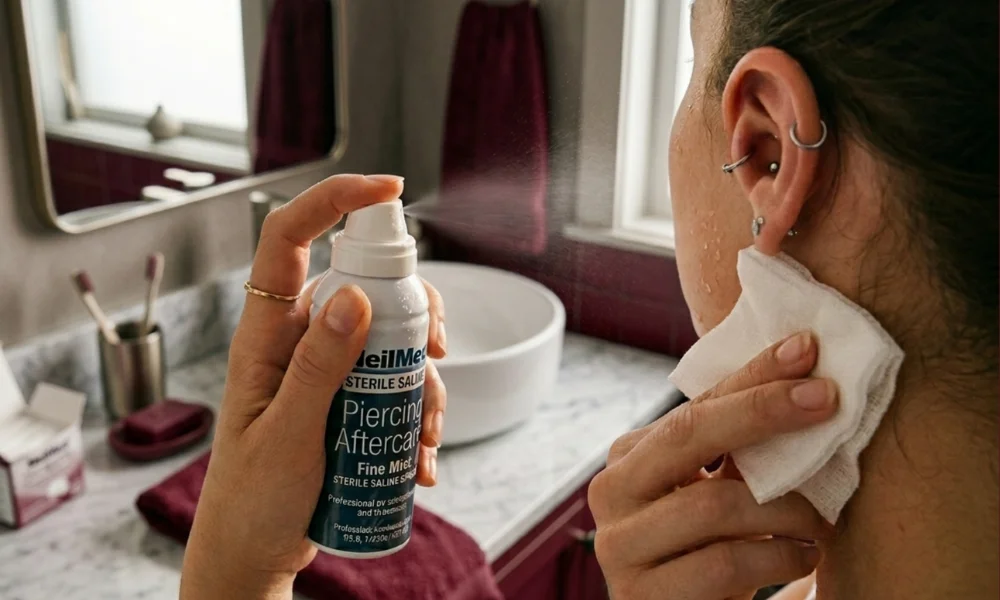
Minimizing daith piercing side effects requires a disciplined routine. Follow these five essential steps to keep your healing on track:
-
Clean Smart: Use a sterile saline spray twice daily. Avoid “home remedies” like tea tree oil, rubbing alcohol, or peroxide, as these are too harsh for cartilage and will stall healing.
-
Zero Pressure: Do not sleep on the pierced side and swap your earbuds for over-the-ear headphones. Physical friction is the leading cause of painful irritation bumps.
-
Stay Dry: Keep your piercing out of swimming pools, hot tubs, and lakes for the first few months to avoid bacterial infections.
-
Invest in Metal: Start with implant-grade titanium or 14k gold. Low-quality jewelry often contains nickel, which can trigger an allergic reaction and mimic a serious infection.
-
Be Patient: Never change your jewelry before the 4 to 6-month mark. Swapping it too early can cause the fistula to collapse or tear.
For a deeper dive into these techniques, check out our full daithpiercing.io aftercare guide.
Conclusion
Most daith piercing side effects are manageable parts of the body’s natural healing process, but ignoring the serious warning signs like perichondritis or migration can lead to permanent changes. Success with this unique placement depends entirely on your patience and the quality of your information.
At daithpiercing.io, we are dedicated to helping you navigate the complexities of cartilage work with confidence. Before you book your appointment, make sure to read our comprehensive aftercare guide and always choose a licensed, APP-certified piercer to ensure the highest safety standards.
Frequently Asked Questions
How long do daith piercing side effects usually last?
Initial swelling and soreness typically subside within two weeks, though minor crusting and sensitivity can persist for several months.
Can a daith piercing cause permanent ear damage?
While rare, untreated infections like perichondritis can lead to cauliflower ear or permanent cartilage collapse if not addressed by a medical professional.
Is it normal for my daith piercing to bleed days after the procedure?
Minor spotting is common during the first week; however, heavy or persistent bleeding requires a visit to your piercer to check for jewelry issues.
How do I know if my daith piercing bump is an infection or just irritation?
Irritation bumps are usually flesh-colored and painless, whereas an infection presents with throbbing pain, heat, and yellow or green discharge.