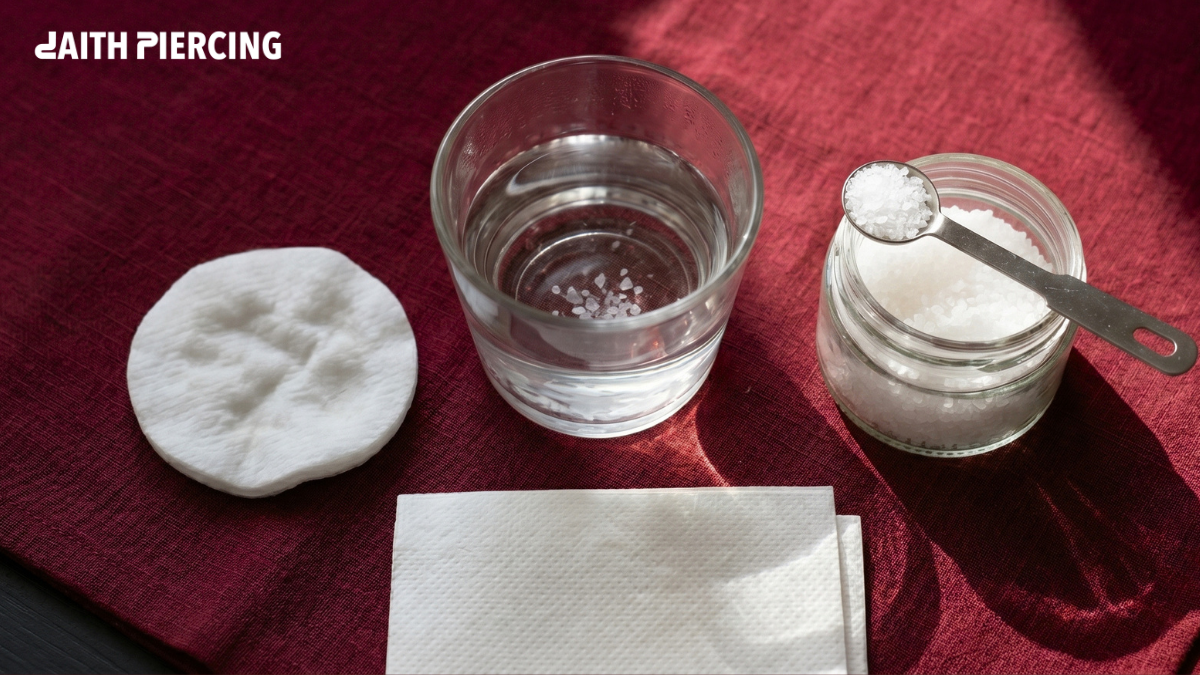
A sea salt soak for daith piercing means soaking the healing area in a warm saltwater solution to gently clean it and ease swelling, using one-quarter teaspoon of non-iodized sea salt per one cup of warm distilled water.
Here at daithpiercing, we have watched this one habit make or break a heal. Done right, it calms the area and clears away crusties. Done wrong, it dries the skin and stings for no reason.
This guide strips away the hype. You will get the exact recipe, the real timing, and the honest limits. No miracle claims, just what actually works.
Key Takeaways
- A sea salt soak for daith piercing routine uses one-quarter teaspoon of non-iodized sea salt to one cup of warm distilled water. Stronger is not better.
- A daith sits deep in your ear, so a warm compress works better than dunking your whole ear.
- Soak once or twice a day for about five minutes, not more.
- Sterile saline wound wash from a pharmacy is the easiest and safest option of all.
- Salt soaks support healing. They do not treat infection. See a pro for that.
What Is a Sea Salt Soak for Daith Piercing?
A sea salt soak for daith piercing routine is warm saltwater that you hold against a fresh piercing to keep it clean and comfortable. The salt level matches the salt in your own body fluids, so it cleans without burning.
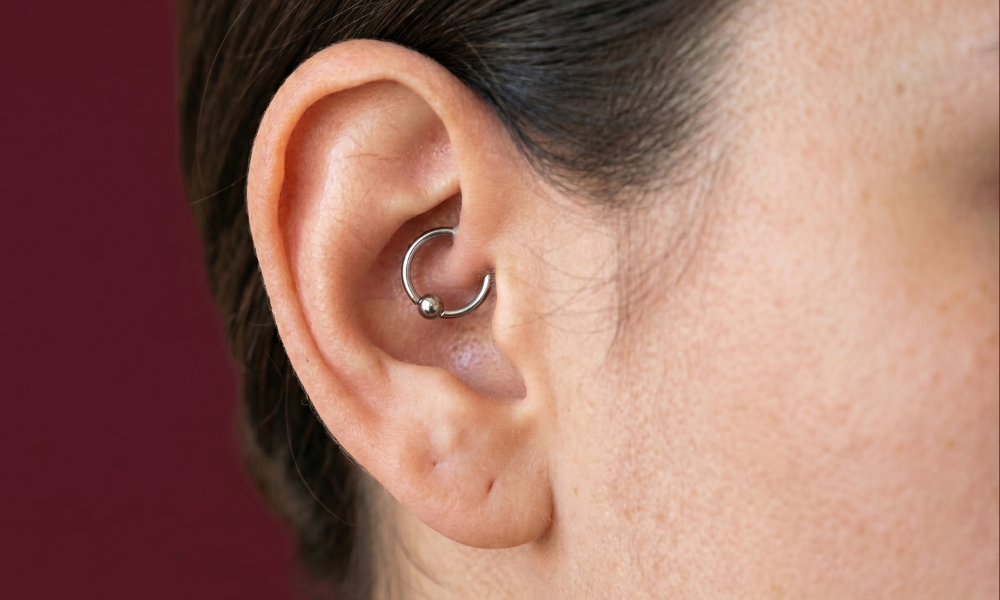
Your daith is the small fold of cartilage right above your ear canal. It is tucked in deep. That spot makes a full soak awkward, so most people use a warm compress instead.
Cartilage heals slowly. A daith can take six to twelve months, and sometimes longer. A gentle soak routine helps that long road feel less bumpy.
How Do You Make a Sea Salt Solution for a Piercing?
The recipe is short. You only need three things: non-iodized sea salt, warm distilled water, and a clean cup.
Mix one-quarter teaspoon of non-iodized sea salt into one cup, or eight ounces, of warm distilled water. Stir until it dissolves. The water should feel warm, not hot.
A few rules keep this safe:
- Use non-iodized sea salt. Iodine can irritate a fresh piercing.
- Use distilled water when you can. Tap water can carry things you do not want near a wound.
- Make a fresh batch each time. Do not store leftover saltwater for days.
Want zero guesswork? Buy sterile saline wound wash that lists only sodium chloride and water. It costs a few dollars and skips the mixing.
The Daith S.O.A.K. Method (Our Honest Routine)
We built a simple framework so you remember the steps of a sea salt soak for daith piercing routine without overthinking them. We call it S.O.A.K.
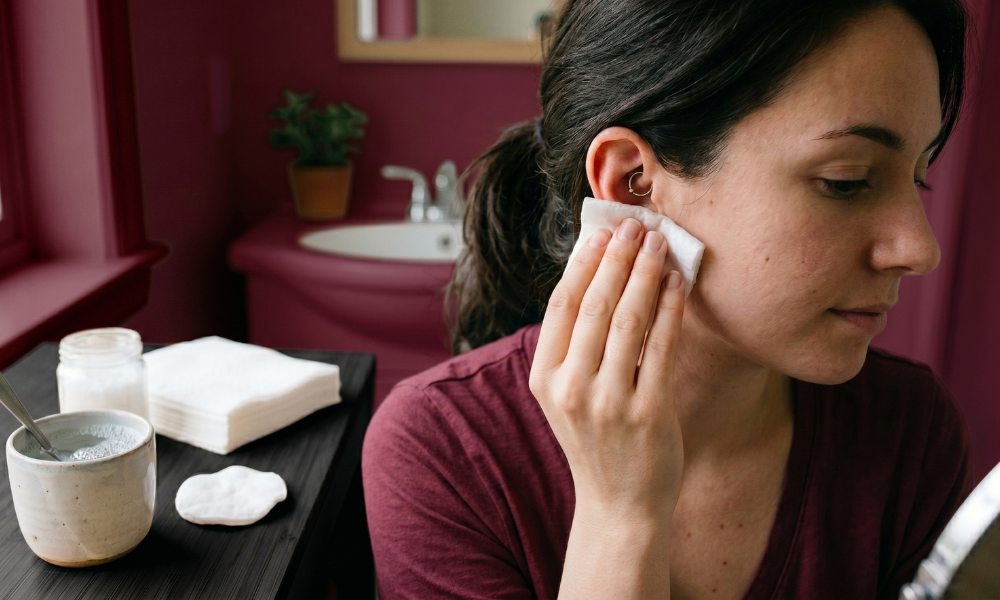
S: Solution. Mix the correct ratio above, or grab sterile saline. Warm, not hot.
O: Optimize the method. For a daith, soak a clean cotton pad or gauze in the solution. Hold it against the front and back of the piercing as a warm compress for about five minutes.
A: Apply gently. Let the warmth loosen any crusties. Do not pick, scrub, or twist the jewelry.
K: Keep it dry and calm. Rinse with a little clean water if you like, then pat dry with a clean paper towel. Skip cloth towels, since they snag and carry bacteria.
That is it. Two cycles a day, morning and night, is plenty for most people.
How Long and How Often Should You Do a Sea Salt Soak Daith Piercing Routine?
Soak for about five minutes, once or twice a day. More is not better. Over-soaking strips the skin and can stall your heal. Here is the honest part. Many piercers now say less cleaning is smart. You want to remove crust and debris, then leave the piercing alone to do its job.
Keep this rhythm for the first few weeks, then ease off as swelling drops. By the middle stage of healing, once a day or every other day is often enough.
Sea Salt Soak for Daithpiercing vs Other Cleaning Options
Not every cleaning method belongs near a fresh daith. This table shows what helps and what hurts.
| Option | Good for daith? | Notes |
|---|---|---|
| Sterile saline wound wash | Best | Pre-mixed, sterile, no guesswork |
| DIY non-iodized sea salt soak | Yes, with care | Cheap and effective if you nail the ratio |
| Epsom salt | No | Different compound, not the right choice for piercings |
| Rubbing alcohol | No | Too harsh, dries and damages new tissue |
| Hydrogen peroxide | No | Kills healing cells, slows recovery |
| Tea tree oil | No | Can burn and irritate fresh cartilage |
| Antibacterial soap scrubs | No | Strips the area, often too drying |
Benefits and Limitations (The Honest Both Sides)
A sea salt soak for daith piercing routine earns its spot for good reasons. It is cheap, simple, and gentle. It lifts away crust, eases tightness, and keeps the area fresh between showers.
But let us be clear about the limits. A soak does not speed up cartilage healing on its own. Your body sets that pace. A soak only supports the process.
A soak also does not fix infection or a bad placement. If something feels off, salt water is not the cure. You need a piercer or a doctor.
Common Mistakes to Avoid
Most daith problems trace back to a handful of habits. Skip these and you are ahead of the game.
- Too much salt. A strong brine stings and dries. Stick to the one-quarter teaspoon ratio.
- Soaking too often. Five times a day is not dedication. It is irritation.
- Twisting the jewelry. Old advice said to rotate it. Do not. That tears new tissue.
- Picking crusties. Let the warm soak soften them, then pat them away.
- Using a fabric towel. It carries germs and catches on the jewelry. Use paper towels.
- Switching jewelry early. Wait until the piercing is fully healed and ask your piercer first.
Expert Tips From the DaithPiercing Approach
When we held the common advice up against guidance from the Association of Professional Piercers, the theme was the same. Keep your sea salt soak for daith piercing routine simple and stop overdoing it.
A warm compress beats a cup dunk for a daith every time. The placement is too deep and too curved for a clean dunk, so the compress reaches it better.
Wash your hands before you touch the area. Sleep on a clean pillowcase, and try to sleep on the other side so you do not crush the piercing. Small habits move the needle more than fancy products.
How Do You Know If a Daith Piercing Is Infected?
Mild redness, light swelling, and a little clear or pale crust are normal in early healing. That is your body at work, not a red flag. Watch for these warning signs instead: spreading redness, heat, throbbing pain, thick yellow or green discharge, a bad smell, or fever. Those point to infection.
If you see them, do not panic and do not remove the jewelry on your own, since that can trap the problem inside. Call your piercer or see a doctor for proper care.
Trends and Future Outlook (2026 to 2028)
The big shift is toward minimal aftercare. More piercers now push sterile saline and a hands-off approach over heavy cleaning routines, and that thinking is here to stay. Pre-mixed saline sprays keep growing because they are foolproof. Expect more travel-size and sensitive-skin options on shelves through 2026 and beyond.
The daith itself stays popular, partly from the migraine talk online. The evidence there is still thin, so we keep saying it plainly. Get a daith because you like it, not as a guaranteed cure.
Final Thoughts
A sea salt soak for daith piercing is one of the cheapest, gentlest tools you have. The trick is doing less, not more. Right ratio, warm compress, twice a day, then leave it alone.
This routine suits anyone healing a fresh daith who wants honest, low-fuss care. If you would rather skip the mixing, grab a sterile saline spray and call it done.
We built Daith Piercing for exactly this moment, when you want clarity before you commit. Soak smart, stay patient, and trust the slow heal.
Frequently Asked Questions
What salt do you use in a sea salt soak for daith piercing routine?
Use plain non-iodized sea salt. Iodine and added minerals can irritate a fresh piercing. Avoid Epsom salt and table salt with anti-caking agents. If mixing feels like a hassle, sterile saline wound wash labeled only sodium chloride and water is the safest pick.
What is the correct sea salt to water ratio for a piercing?
Mix one-quarter teaspoon of non-iodized sea salt into one cup, or eight ounces, of warm distilled water. Stir until it dissolves fully. A stronger mix does not clean better. It only dries and stings the healing skin, so stick to this ratio.
How long should you soak a daith piercing?
Soak for about five minutes, once or twice a day. Hold a soaked cotton pad against the piercing as a warm compress. More frequent soaking can irritate the area and slow your heal, so keep it short and gentle, then pat the spot dry.
Can a sea salt soak heal an infected daith piercing?
No. A salt soak keeps a healing piercing clean, but it does not treat infection. If you notice spreading redness, heat, thick yellow or green discharge, or fever, see a piercer or doctor. Do not remove the jewelry yourself, since that can trap the infection inside.
Is sterile saline better than a homemade sea salt soak?
For most people, yes. Sterile saline wound wash is pre-mixed, sterile, and removes the guesswork around salt amount and water purity. A homemade soak still works well when you measure carefully and use distilled water, but saline is the simpler, safer everyday choice.