Key Takeaways
- A Daith Piercing Still Bleeding can happen after irritation during early healing.
- Regular unexplained bleeding after two weeks deserves attention.
- Daith piercings can take approximately six to 12 months to fully heal.
- Avoid twisting, spinning, picking, or unnecessarily touching the jewelry.
- Avoid pressure from sleeping, headphones, hair, and towels.
- Do not use harsh cleaning products on a healing piercing.
- Increasing pain, swelling, warmth, redness, pus, fever, or chills can indicate infection.
- Cartilage piercing infections can require prompt medical treatment.
- Do not remove jewelry yourself when infection is suspected unless a healthcare professional advises it.
Quick Answer
If your daith piercing is still bleeding after two weeks, occasional light spotting can happen when the piercing is bumped, snagged, slept on, or otherwise irritated. However, bleeding that happens frequently, does not stop, or comes with increasing pain, swelling, warmth, redness, pus, or fever is not something to ignore.
The Association of Professional Piercers explains that some bleeding, swelling, tenderness, or bruising can occur initially. At the same time, Mayo Clinic advises contacting a healthcare professional when swelling, redness, or bleeding continues beyond the first few days.
Because a daith is a cartilage piercing, it is better to be cautious when symptoms are getting worse rather than better.
Is Bleeding After Two Weeks Normal?
Not necessarily. A healing daith can remain tender, irritated, or crusty for quite some time, but regular bleeding at two weeks should not simply be dismissed as normal healing.
The important difference is how and when the bleeding occurs.
For example, a tiny spot of blood after accidentally catching your jewelry on clothing or touching the piercing may be caused by mechanical irritation. In contrast, bleeding that starts without an obvious trigger or appears together with worsening inflammation may need professional assessment.
The Association of Professional Piercers also points out that a piercing can look healed on the outside while the inside remains fragile because healing occurs from the outside inward.
Therefore, even if your daith looks fairly good, the tissue underneath may still be vulnerable.
Why Is My Daith Piercing Still Bleeding?
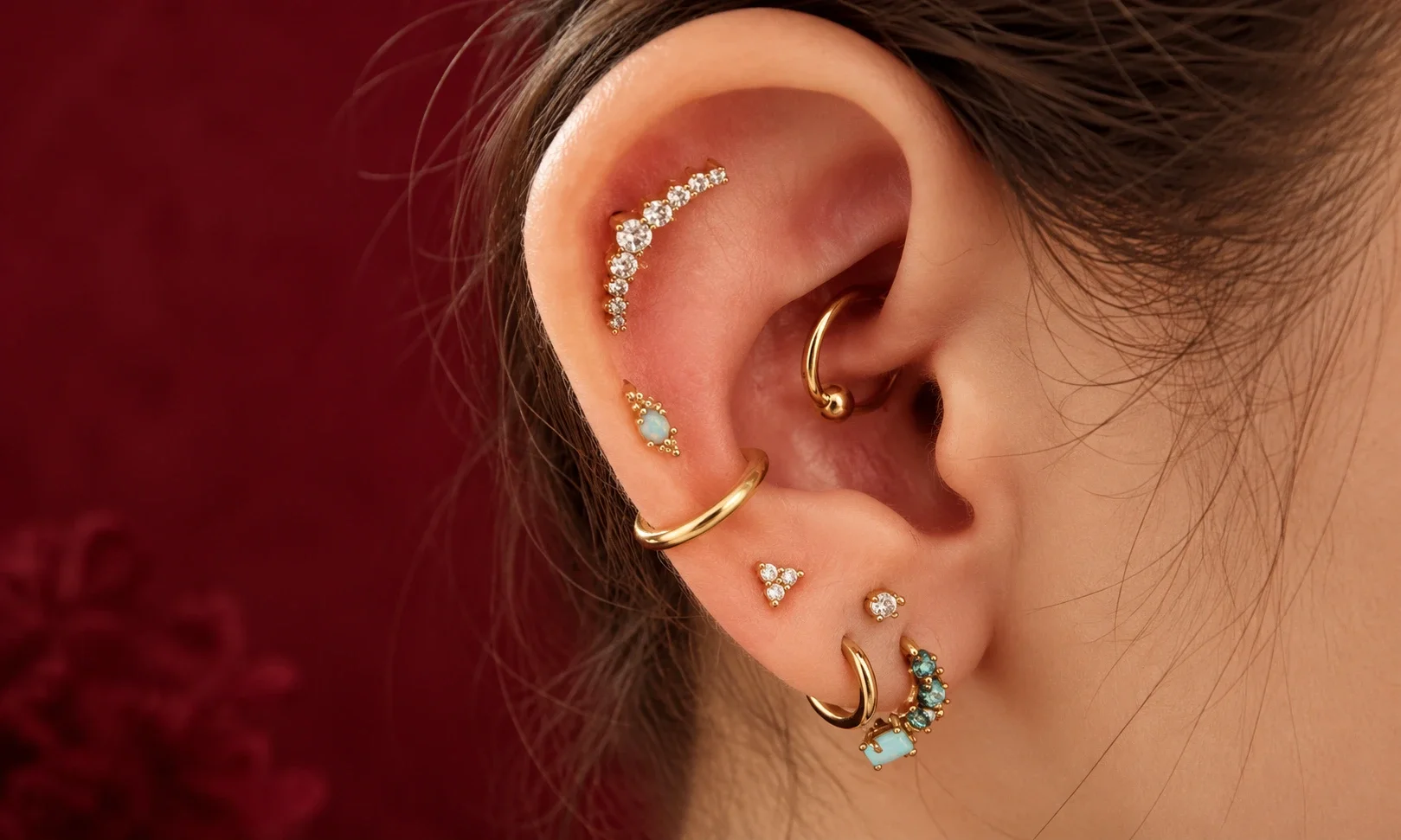
There are several possible reasons a daith piercing may bleed during the early healing period.
Accidental Bumping
One of the most common causes is simple trauma. Your ear may get bumped while sleeping, changing clothes, brushing your hair, or using headphones.
Even a small movement can irritate fresh cartilage tissue.
Sleeping on the Piercing
Pressure from a pillow can put stress on the jewelry and the healing channel. Consequently, you may notice soreness, crusting, or a small amount of blood after sleeping on that side.
Try to avoid putting direct pressure on the new piercing while it heals.
Touching or Moving the Jewelry
Frequently touching, spinning, pulling, or adjusting the jewelry can reopen fragile tissue.
The Association of Professional Piercers specifically recommends leaving the jewelry alone during healing and avoiding twisting, spinning, or rotating it.
Jewelry Getting Caught
Hair, towels, masks, headphones, and clothing can catch on the jewelry.
As a result, the piercing channel may become irritated and bleed again even though there is no infection.
Overcleaning
Cleaning is important, but more cleaning does not necessarily mean faster healing.
Harsh products can damage healing tissue. Mayo Clinic recommends cleaning skin piercings with saline made for wound cleaning or with soap and water, while avoiding products such as hydrogen peroxide and iodine because they can injure the skin.
Infection or Significant Irritation
Bleeding can also occur with an infected piercing, particularly when it is accompanied by increasing pain, swelling, warmth, redness, pus, or feeling unwell.
NHS guidance lists blood or pus coming from a piercing alongside swelling, pain, heat, and significant redness or darkening as warning signs of infection.
Normal Healing vs Infection
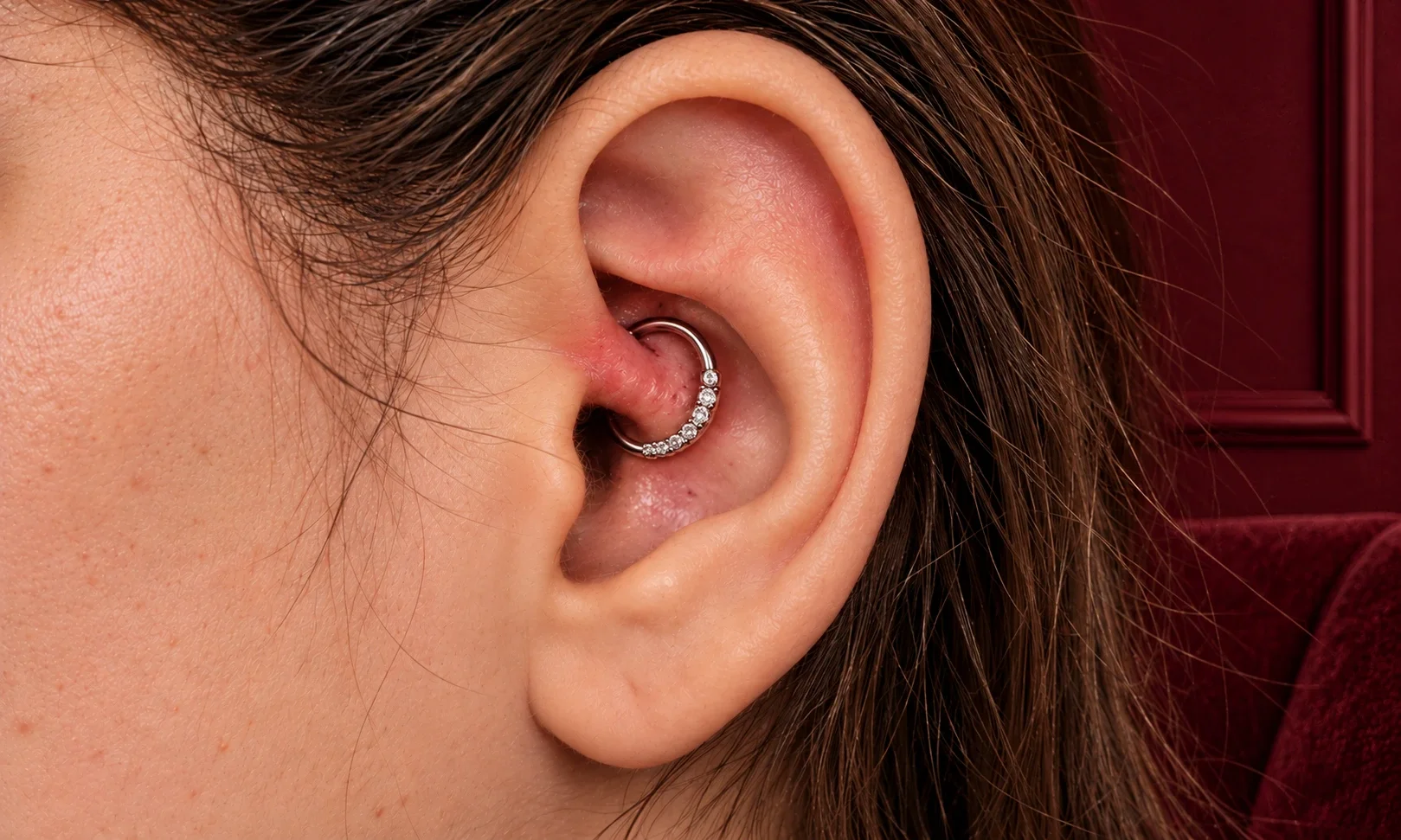
It can be difficult to tell the difference between normal healing and a developing problem. The following comparison can help.
| Sign | More consistent with healing | More concerning |
|---|---|---|
| Mild tenderness | Yes | If pain keeps increasing |
| Small amount of crust | Common | Thick or foul-smelling discharge |
| Occasional irritation | Possible | Constant worsening irritation |
| Slight swelling | Can occur early | Increasing or severe swelling |
| Small spotting after trauma | Possible | Repeated unexplained bleeding |
| Mild itching | Can occur | Severe irritation with other symptoms |
| Increasing warmth | No | Possible infection |
| Pus | No | Possible infection |
| Fever or chills | No | Seek medical attention |
Keep in mind that this table is a guide, not a diagnosis.
In particular, cartilage infections can be more serious than infections involving soft tissue. Cleveland Clinic explains that cartilage has less blood supply and that infections involving upper-ear cartilage can sometimes become serious.
What Should You Do If Your Daith Is Bleeding?
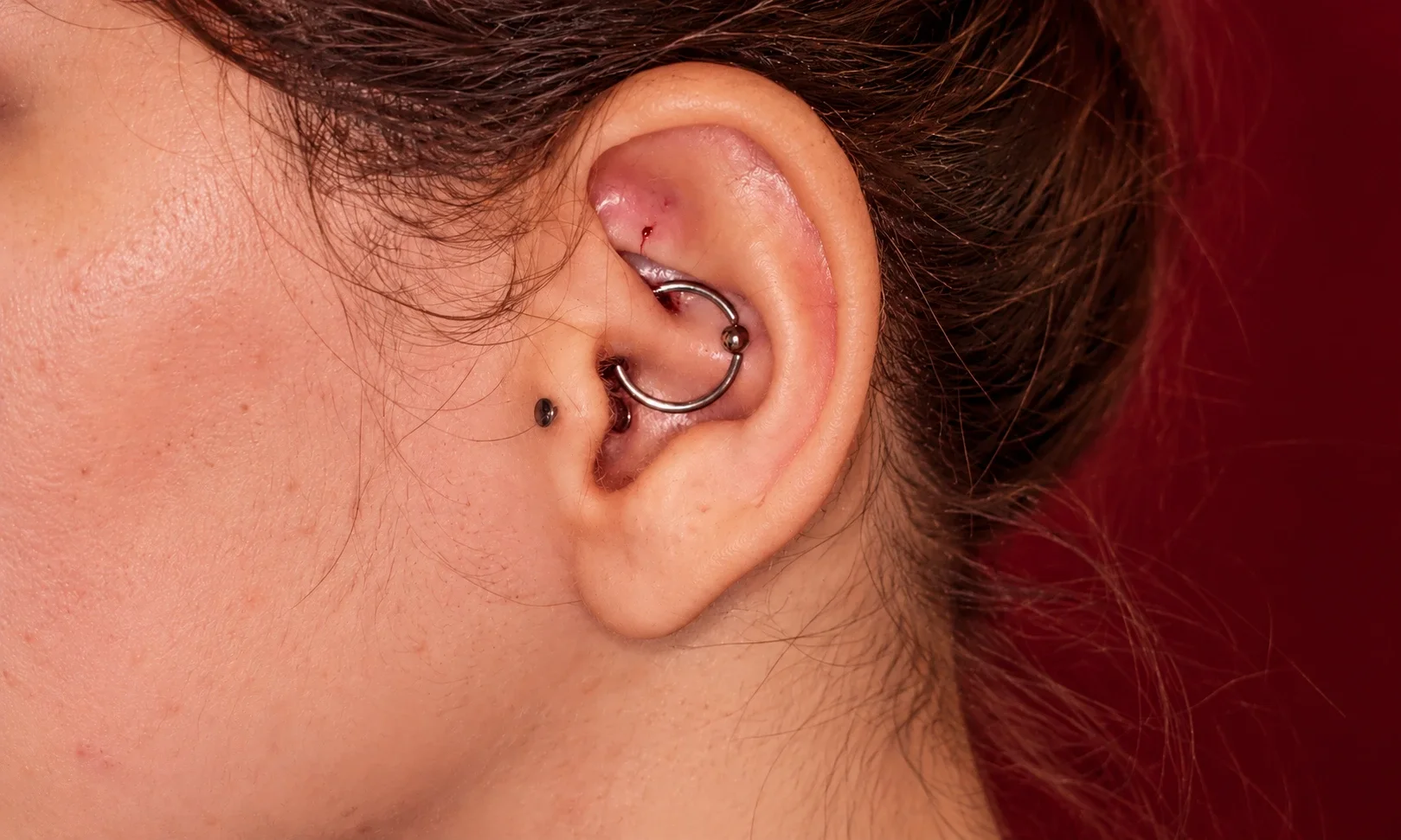
First, stay calm. A small amount of bleeding after accidental irritation does not automatically mean something is seriously wrong.
1. Wash Your Hands
Before touching the area, wash your hands thoroughly.
This simple step reduces the chance of transferring bacteria to an already vulnerable piercing.
2. Avoid Touching the Jewelry
Do not twist, spin, pull, or repeatedly check the jewelry.
Instead, allow the piercing to settle without unnecessary movement. This is especially important if bleeding started after the jewelry was bumped.
3. Clean It Gently
Follow appropriate piercing aftercare and use sterile saline intended for wound cleaning.
Avoid aggressive scrubbing. Furthermore, do not use harsh substances such as hydrogen peroxide or iodine unless a healthcare professional specifically tells you to do so.
4. Reduce Pressure
Try not to sleep directly on the piercing.
Also, be careful with headphones, hair, towels, hats, and anything else that can press against or catch the jewelry.
5. Watch the Trend
One of the most useful things you can do is observe whether the symptoms are improving or getting worse.
A piercing that becomes gradually calmer is different from one that becomes increasingly painful, swollen, hot, or red.
When Should You See a Doctor?
You should seek medical advice if bleeding continues or repeatedly returns without an obvious reason.
More importantly, seek prompt medical care if the daith becomes increasingly painful, swollen, hot, very red or dark, or begins producing pus. Mayo Clinic specifically advises medical assessment for concerning symptoms involving cartilage piercings.
You should also take symptoms such as fever, chills, or feeling generally unwell seriously.
If you believe the piercing is infected, do not automatically remove the jewelry yourself. NHS guidance recommends leaving the jewelry in unless a doctor tells you to remove it.
A healthcare professional can determine whether the problem is irritation, infection, an allergic reaction, or another complication.
Common Mistakes That Cause More Bleeding
Many people accidentally delay healing because they try to help too much.
Twisting the Jewelry
Moving the jewelry to “keep the hole open” can repeatedly disturb healing tissue.
Instead, leave it alone except when following your cleaning routine.
Picking Crusts
Crust is not something you need to force off.
Picking at it can remove fragile healing tissue and trigger fresh bleeding.
Using Harsh Cleaning Products
Alcohol, hydrogen peroxide, iodine, and other harsh products can irritate healing tissue.
Consequently, using stronger products is not automatically better.
Changing Jewelry Too Early
A daith can take many months to heal fully. Cleveland Clinic lists approximately six to 12 months for daith healing.
Therefore, changing jewelry after only a couple of weeks can disturb the healing channel.
Ignoring Worsening Symptoms
A little tenderness can be expected. However, increasing pain, swelling, heat, redness, pus, or fever should not be treated as ordinary healing.
Daith Piercing Bleeding: What to Expect
The healing process is not always perfectly linear. You might have a few days where your ear feels comfortable and then experience mild irritation after accidentally sleeping on it. Similarly, a small amount of crust may appear after the piercing has seemed calm for several days.
That does not automatically mean the piercing has failed to heal.
However, repeated bleeding without an obvious cause is worth discussing with a professional, particularly because cartilage piercings heal slowly.
The Association of Professional Piercers notes that some secretion and crusting can occur during healing and that the interior tissue may remain fragile even when the outside looks healed.
For that reason, patience matters.
How Long Does a Daith Piercing Take to Heal?
A daith is a cartilage piercing, so healing can take considerably longer than many people expect. Cleveland Clinic gives a general healing range of six to 12 months for daith piercings.
This does not mean you should experience active bleeding throughout that entire period. Instead, it means that the piercing can remain vulnerable to irritation long after the first few weeks.
Daith Piercing Still Bleeding After 2 Weeks: Simple Checklist
Use this checklist if you are worried about continued bleeding:
- Is the bleeding only a tiny spot?
- Did the jewelry recently get bumped?
- Have you been sleeping on that ear?
- Are headphones or hair catching the jewelry?
- Have you been touching or rotating it?
- Is the pain improving or getting worse?
- Is swelling increasing?
- Does the area feel unusually hot?
- Is there yellow, green, or foul-smelling discharge?
- Do you have fever, chills, or feel unwell?
If the symptoms are getting worse rather than better, professional medical advice is the safer choice.
FAQs
Is it normal for a daith piercing to bleed after two weeks?
A small amount of bleeding can happen after irritation or accidental trauma. However, ongoing or unexplained bleeding after two weeks should not automatically be considered normal.
Can sleeping on a daith piercing cause bleeding?
Yes. Pressure from sleeping on a healing cartilage piercing can irritate the tissue and may cause soreness or spotting.
Should I remove my daith jewelry if it is bleeding?
Do not remove it simply because you notice a small amount of blood. If you suspect infection, speak with a healthcare professional before removing the jewelry. NHS guidance recommends leaving jewelry in unless a doctor advises otherwise.
Does bleeding mean my daith piercing is infected?
Not necessarily. Bleeding can result from irritation or trauma. However, bleeding combined with worsening pain, swelling, warmth, redness, pus, fever, or chills can indicate a problem that needs medical assessment.
How long does a daith piercing take to heal?
Daith piercings commonly take around six to 12 months to fully heal, according to Cleveland Clinic.
Should I twist my daith jewelry while cleaning it?
No. The Association of Professional Piercers recommends avoiding twisting, spinning, or rotating jewelry during healing.
When should I worry about a bleeding daith?
Be more concerned when bleeding is frequent, difficult to stop, happens without obvious irritation, or appears alongside increasing pain, swelling, warmth, redness, pus, fever, or chills.
Conclusion
A daith piercing still bleeding after two weeks does not always mean something is seriously wrong. Because daith piercings pass through cartilage, the area can remain fragile and sensitive during the early stages of healing.
Nevertheless, repeated bleeding should not be ignored, especially when it occurs without obvious trauma or comes with worsening symptoms.
Keep the area clean, avoid unnecessary movement, protect the jewelry from pressure and catching, and give the piercing time to heal. If you notice signs of infection or symptoms are getting worse, contact a healthcare professional rather than trying to diagnose the problem yourself.
At daithpiercing, the goal is to provide practical, easy-to-understand information that helps readers make safer decisions about their piercings. Readers can also explore a simple dry skin routine, learn about bond repair, or discover affordable luxury jewelry for more beauty and self-care insights. However, online information cannot replace an examination by a qualified healthcare professional.