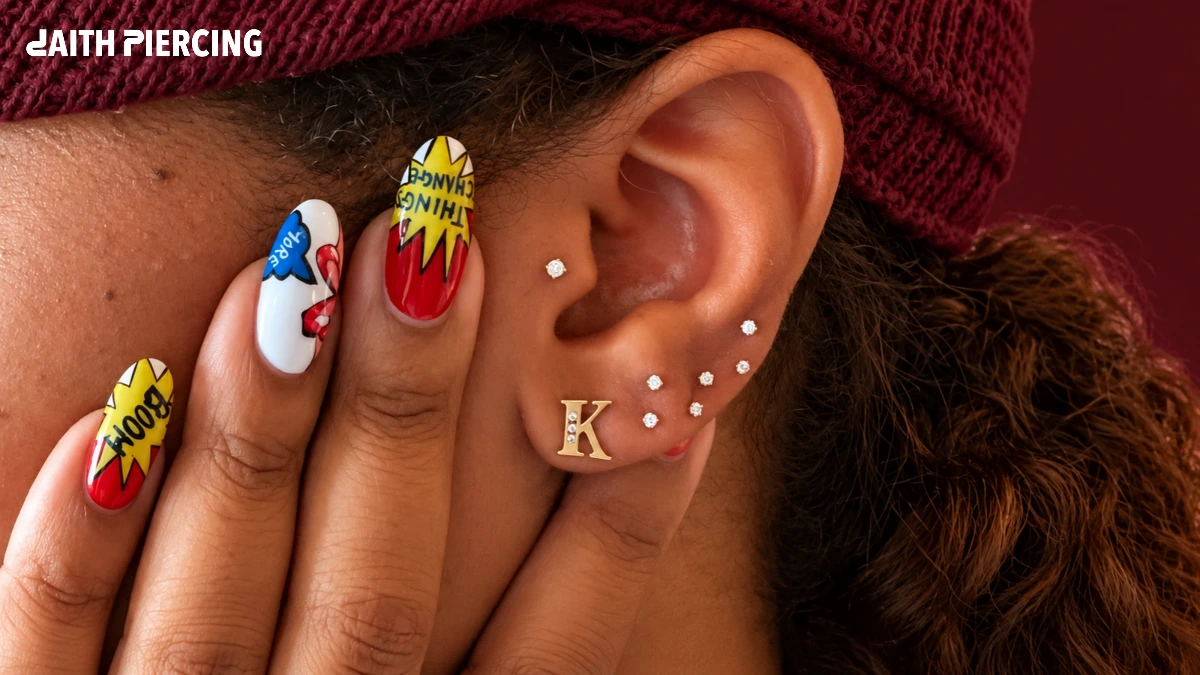
A gauge piercing is usually linked with stretched ear piercings, where the original piercing is gradually enlarged to wear larger jewelry such as plugs and tunnels. The look can be bold, simple, artistic, or completely personal. But getting there safely is more important than reaching a large size quickly.
If you are thinking about a gauge piercing, the biggest thing to understand is that stretching is a slow process. Your skin needs time to adjust between sizes, and forcing a piercing can lead to pain, tearing, scarring, thinning, or a blowout. The Association of Professional Piercers recommends gradual stretching and giving the tissue enough time to recover before moving to the next size.
Key Takeaways
- Gauge piercing usually refers to a stretched piercing designed for larger jewelry.
- Gauge numbers become smaller as jewelry becomes thicker.
- Stretch only a fully healed and healthy piercing.
- Never force jewelry into a piercing.
- Give your tissue weeks or months to recover when needed.
- Pain, bleeding, or tearing are warning signs, not signs of successful stretching.
- Choose suitable, high-quality jewelry for fresh stretches.
- Sterile saline is a simple option for aftercare.
- A blowout can happen when stretching is too fast or too aggressive.
- Larger stretches may permanently change the appearance of your ear.
- When unsure, getting advice from a qualified professional piercer is safer than guessing.
At DaithPiercing, we believe good piercing information should be straightforward. Whether you are considering your first stretch or planning your next size, understanding the process can help you make a more informed decision.
What Is a Gauge Piercing?
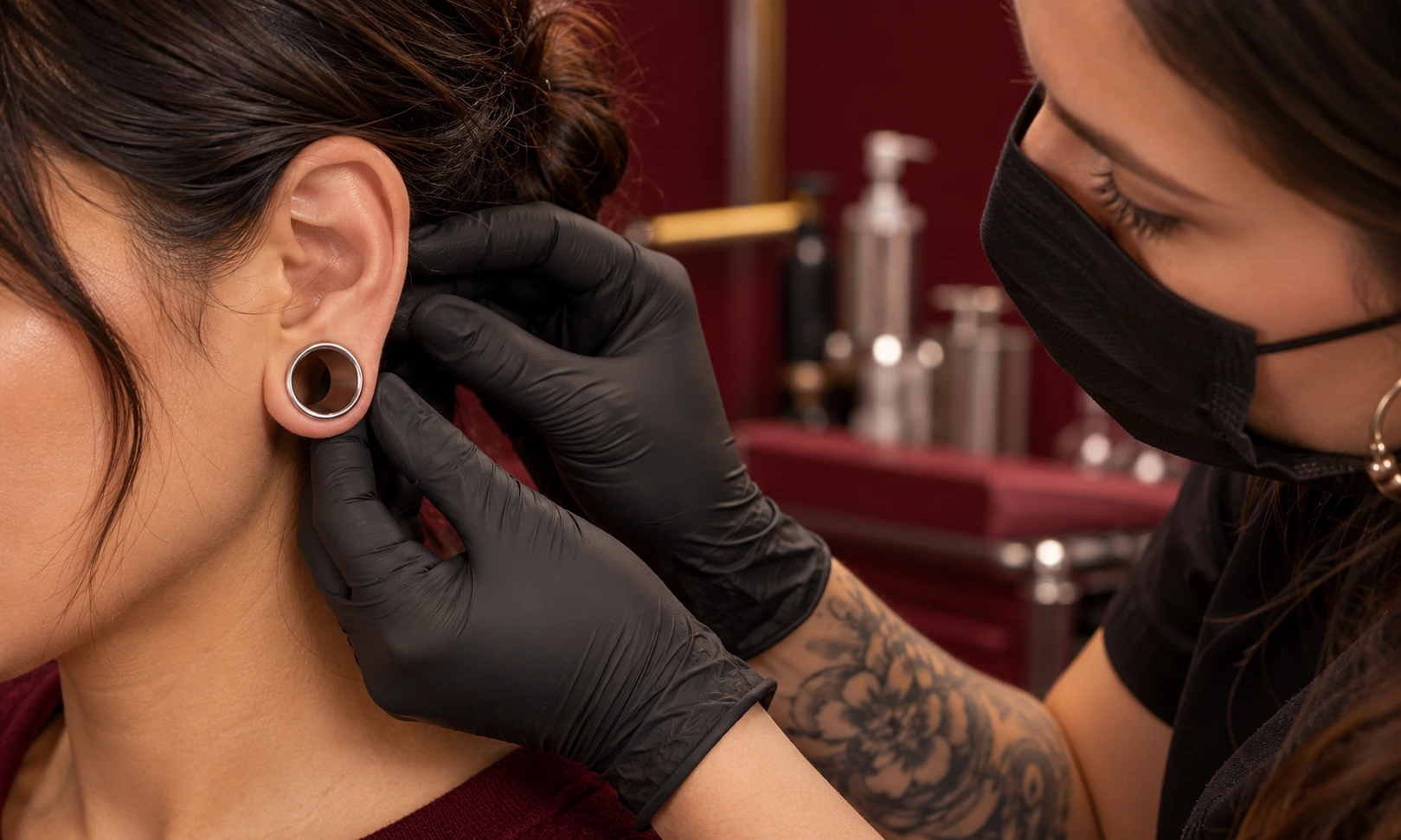
The term gauge piercing commonly refers to a piercing that has been stretched to accommodate thicker jewelry. Gauge is a sizing system used to describe jewelry thickness, especially in the United States.
One confusing part is that gauge numbers work backward. A smaller gauge number means thicker jewelry. For example, 14G is thinner than 12G, while 4G is thinner than 2G. As you move toward larger sizes, the difference between sizes can also become more noticeable.
Although people often say “gauging,” professional piercers generally use the word stretching because the process involves gradually enlarging an existing piercing.
The earlobe is the most common place for this style of stretching because it contains softer tissue. Other areas can be stretched too, but they may require more care and professional guidance.
How Does Gauge Piercing Stretching Work?
Stretching starts with a fully healed piercing. You then move to a slightly larger piece of jewelry and give your tissue enough time to settle before considering another increase.
There is no universal timetable that works for everyone. Some people may need several weeks between stretches, while others may need months. Your piercing’s location, current size, tissue condition, previous stretching history, and individual healing ability all matter.
The most important rule is simple: never force the next size.
A properly stretched piercing should not require significant pressure. Severe pain, bleeding, tearing, or strong resistance means your piercing is not ready. The Association of Professional Piercers specifically advises stopping if jewelry does not insert easily or if stretching causes significant discomfort or bleeding.
Why Going Slowly Matters
Your piercing is living tissue, not an empty hole that can simply be pushed wider. When you stretch too quickly, the tissue does not have enough time to recover and develop healthy new tissue.
Rushing can cause scar tissue, reduced circulation, thinning, irritation, and a blowout. A blowout happens when tissue from inside the piercing channel is pushed outward, creating a visible ridge or lip around the hole. In some cases, the damage can become permanent.
Gauge Piercing Size Chart
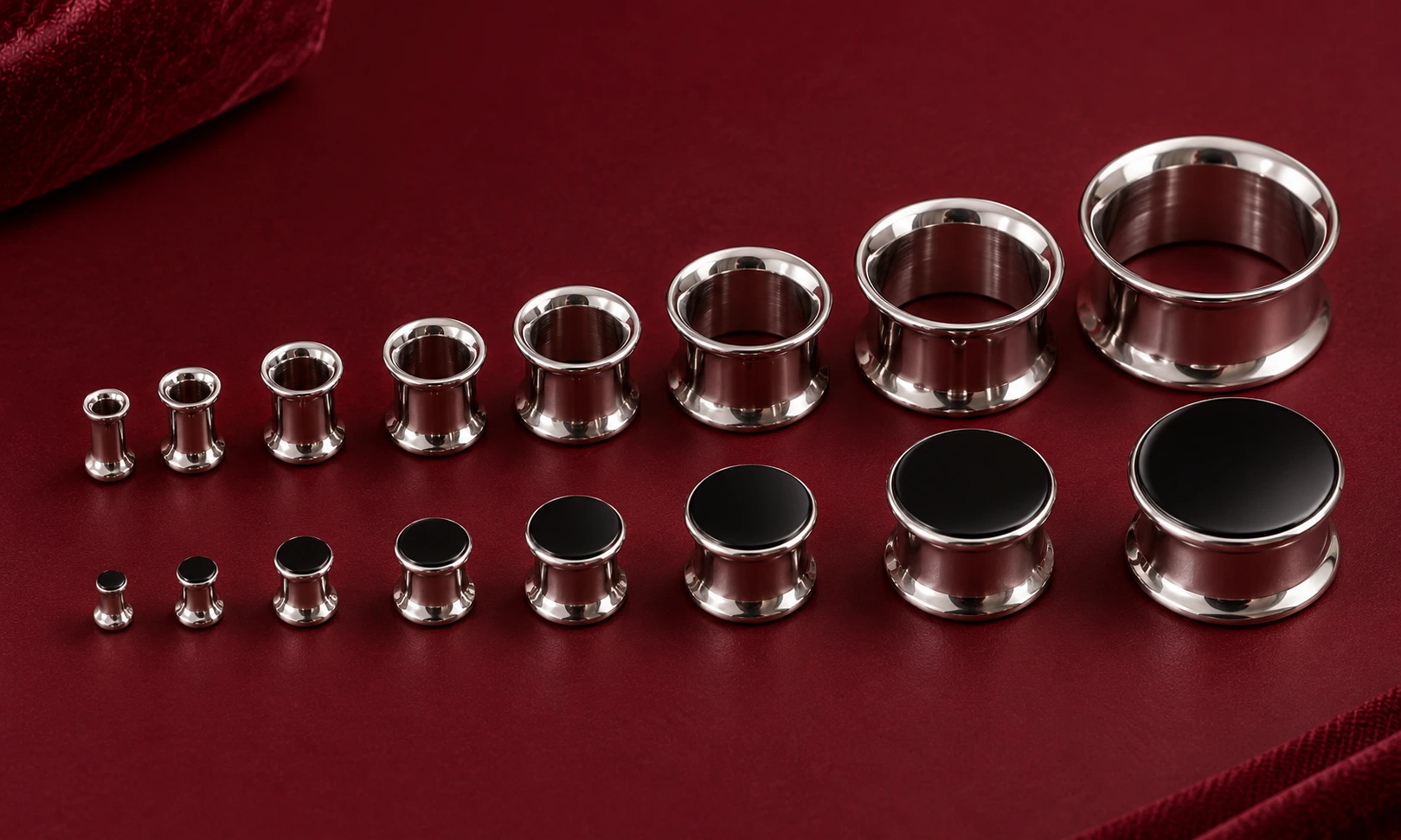
Gauge sizes can be confusing because the numbers decrease as the jewelry gets thicker. Here are some commonly used ear-stretching sizes:
| Gauge | Approximate Size |
|---|---|
| 14G | 1.6 mm |
| 12G | 2.0 mm |
| 10G | 2.5 mm |
| 8G | 3.2 mm |
| 6G | 4.0 mm |
| 4G | 5.0 mm |
| 2G | 6.0 mm |
| 1G | 7.0 mm |
| 0G | 8.0 mm |
| 00G | 9.0 mm |
Exact sizing can vary by jewelry manufacturer and sizing system, so checking the actual millimeter measurement is useful, especially when you reach larger sizes. The APP also notes that millimeter-based increments can make stretching more gradual than relying only on traditional gauge jumps.
Best Jewelry for a Gauge Piercing
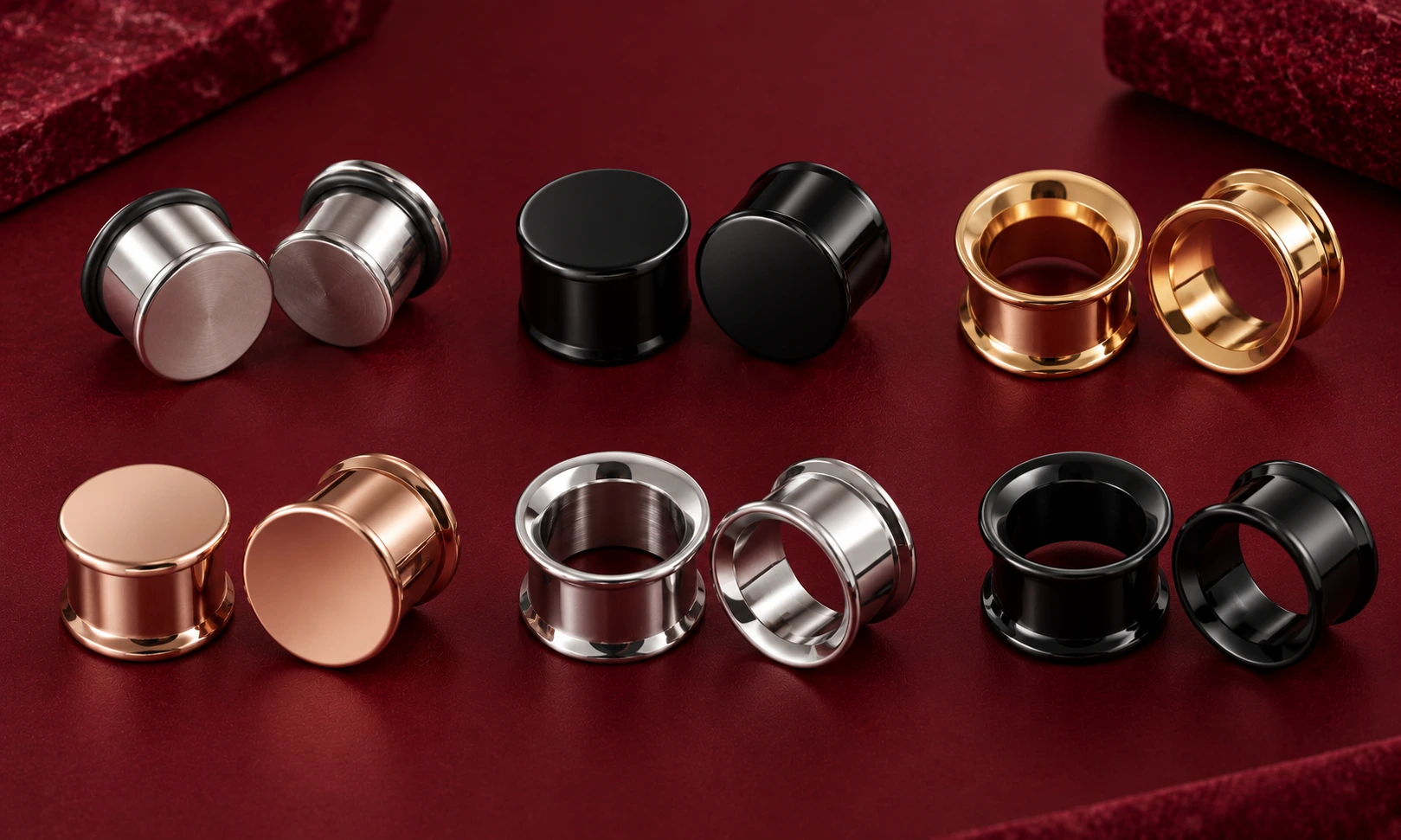
Choosing the right jewelry matters just as much as choosing the right size. Popular options include plugs, tunnels, single-flared plugs, and non-flared jewelry.
For a fresh stretch, professional piercing guidance recommends appropriate body-safe jewelry rather than materials that can irritate healing tissue. Acrylic, silicone, and natural materials such as wood or bone are not recommended for a freshly stretched piercing.
The shape matters too. Single-flared or non-flared jewelry is generally a better choice for a fresh stretch. Double-flared jewelry can put unnecessary pressure on newly stretched tissue and may cause damage.
Avoid sharp edges and jewelry designed to force the piercing open. Heavy hanging jewelry can also place extra pressure on the bottom of an earlobe and contribute to uneven stretching or tissue thinning.
Gauge Piercing Aftercare
A newly stretched piercing should be treated much like a fresh piercing. Keep the area clean and avoid unnecessary touching.
The Association of Professional Piercers recommends sterile saline wound wash containing 0.9% sodium chloride for piercing aftercare. You should wash your hands before touching the area and avoid twisting or rotating the jewelry because unnecessary movement can irritate.
Simple aftercare includes:
- Wash your hands before touching the piercing.
- Clean with sterile saline as recommended.
- Avoid twisting, spinning, or playing with the jewelry.
- Keep makeup, lotions, sprays, and other personal-care products away from the area.
- Avoid unnecessary pressure or snagging.
- Keep bedding and anything that touches the piercing clean.
- Give the tissue enough time to recover before stretching again.
You should also avoid treating a stretched piercing like a race. A larger size is not automatically a better result. Healthy tissue is the real goal.
Does a Gauge Piercing Hurt?
A properly stretched earlobe should cause little to no significant pain. You may notice mild tenderness, tightness, or inflammation after moving to a new size, but intense pain is not something to ignore.
Bleeding, severe pain, a torn appearance, or strong resistance usually means something has gone wrong. Instead of pushing through it, stop and allow the tissue to recover.
If the piercing becomes significantly irritated, a professional piercer may recommend going back to a smaller size. This is often called downsizing. It can feel like a setback, but protecting the tissue is more important than reaching your target size quickly.
What Is a Gauge Piercing Blowout?
A blowout is one of the most common problems people worry about when stretching an ear. It occurs when the inner tissue of the piercing is pushed outward, creating a noticeable flap or ridge.
Blowouts are often associated with stretching too quickly or making too large a jump between sizes. They can also happen when jewelry is forced into a piercing that is not ready.
If you notice a blowout, do not continue stretching. A professional piercer can examine the tissue and advise whether downsizing and additional recovery time are needed. In some cases, the damage may leave permanent changes.
Can a Gauge Piercing Go Back to Normal?
There is no guaranteed size at which a stretched piercing will return completely to its original appearance.
Some smaller stretched piercings may shrink considerably after jewelry is removed, while larger stretches may remain visibly open. The result depends on factors such as the size reached, how quickly the piercing was stretched, the jewelry used, and the person’s individual tissue.
Large or heavily stretched earlobes may sometimes require earlobe repair surgery if someone wants to restore the shape of the lobe. Cleveland Clinic notes that stretched piercings and heavy earrings can contribute to enlarged or torn earlobes, and surgical repair can reconnect the affected tissue.
For this reason, stretching should be considered a potentially permanent body modification rather than something guaranteed to reverse later.
Signs Your Gauge Piercing May Have a Problem
Some tenderness after stretching can be normal, but certain symptoms deserve attention.
Watch for:
- Increasing redness or swelling
- Significant warmth around the piercing
- Severe or worsening pain
- Pus or unusual discharge
- Persistent bleeding
- Strong tenderness
- Tissue that looks torn or severely damaged
- Fever or feeling unwell
These can indicate irritation, injury, or infection. Ear-piercing infections can cause redness, swelling, warmth, tenderness, and discharge, according to Cleveland Clinic. If you suspect an infection, especially if symptoms are getting worse, seek medical care.
Is Gauge Piercing Safe?
A gauge piercing can be safely stretched when the process is gradual and the tissue is healthy. The biggest problems usually come from rushing, using inappropriate jewelry, forcing larger sizes, or ignoring signs of irritation. If you notice persistent bleeding, read our guide on piercing bleeding to understand when professional advice may be needed.
Professional guidance is especially valuable if you want to reach a larger size or have previously experienced scarring, tearing, or a blowout. An experienced piercer can assess your anatomy and help you choose appropriate jewelry and increments. Maintaining healthy skin is also important, so a gentle dry skin routine can help you understand basic skin care.
Safety is not about how quickly you can reach your goal size. It is about keeping the tissue healthy throughout the process. Just as damaged hair needs careful treatment rather than aggressive handling, bond repair highlights the importance of choosing appropriate care for the condition you’re treating.
FAQs
1. What is a gauge piercing?
A gauge piercing is generally a healed piercing that has been gradually stretched to accommodate thicker jewelry. The term is most commonly used for stretched earlobes.
2. What is the safest way to stretch a gauge piercing?
The safest approach is to stretch slowly, use appropriate jewelry, and allow plenty of recovery time between sizes. Never force jewelry into a piercing that feels tight or painful. A professional piercer can also guide you through the process.
3. Does stretching a gauge piercing hurt?
Proper stretching should cause little to no significant pain, especially with an earlobe. Mild tenderness can happen, but severe pain, bleeding, or tearing means you should stop.
4. Can a gauge piercing close completely?
It depends on the person and how far the piercing has been stretched. Smaller stretches may shrink considerably, while larger stretches can leave a permanent opening or change in the earlobe. No size is guaranteed to return completely to normal.
5. What is a blowout in a gauge piercing?
A blowout occurs when the inner tissue of a stretched piercing is pushed outward. It can happen when someone stretches too quickly or forces jewelry into the piercing. If it happens, stop stretching and consider seeing a professional piercer.
6. How long should I wait between gauge piercing stretches?
There is no single waiting period that works for everyone. Your tissue may need several weeks to several months to recover before the next stretch. The piercing should be comfortable, healthy, and fully settled before increasing the size again.
Disclaimer: This article is for informational and educational purposes only and is not a substitute for professional medical advice. Every piercing heals differently and stretching too quickly can cause injury or permanent tissue damage. Always consult a qualified professional piercer for guidance and seek medical care if you notice signs of infection or serious irritation.