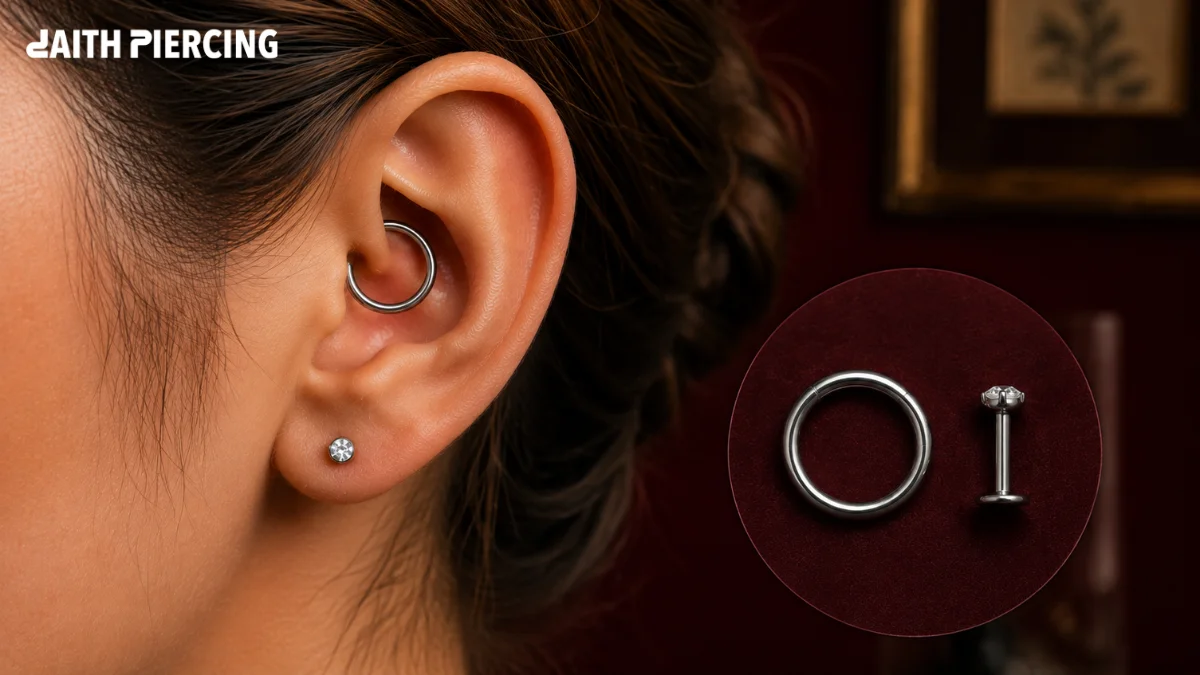
Key Takeaways
- Flat back labrets are generally not the ideal choice for a daith piercing stud.
- Daith piercings usually work best with curved or circular jewelry.
- Proper size and material are important for comfort.
- Quality jewelry can reduce irritation.
- Always consider your ear anatomy before changing jewelry.
- Professional advice can help you choose the best option.
Quick Answer
A flat back labret is generally not the best choice for a daith piercing because daith piercings are located in a curved cartilage area that works better with circular jewelry.
Most professional piercers recommend jewelry such as captive bead rings, seamless rings, curved barbells, or specially designed daith studs.
A flat back labret may create pressure, discomfort, or poor positioning if it does not match the natural shape of your ear.
What Is a Daith Piercing Stud?
A daith piercing stud is a type of jewelry designed specifically for the inner cartilage fold of the ear. Unlike regular earlobe studs, daith jewelry must fit into a small curved area while allowing enough space for movement and healing.
The daith area is made of cartilage, which is thicker and slower to heal compared with soft tissue. Because of this, jewelry selection plays an important role in comfort and recovery.
Common daith jewelry styles include:
| Jewelry Type | Description |
|---|---|
| Captive Bead Ring | A circular ring held together with a small bead |
| Seamless Ring | A smooth circle with no visible opening |
| Clicker Ring | A hinged ring that is easy to open and close |
| Curved Barbell | A curved piece designed for cartilage placement |
| Daith Stud | A small decorative piece made for inner ear anatomy |
A properly fitted daith piercing stud should sit comfortably without pushing against the ear or causing unnecessary pressure.
Can You Wear a Flat Back Labret in a Daith Piercing?
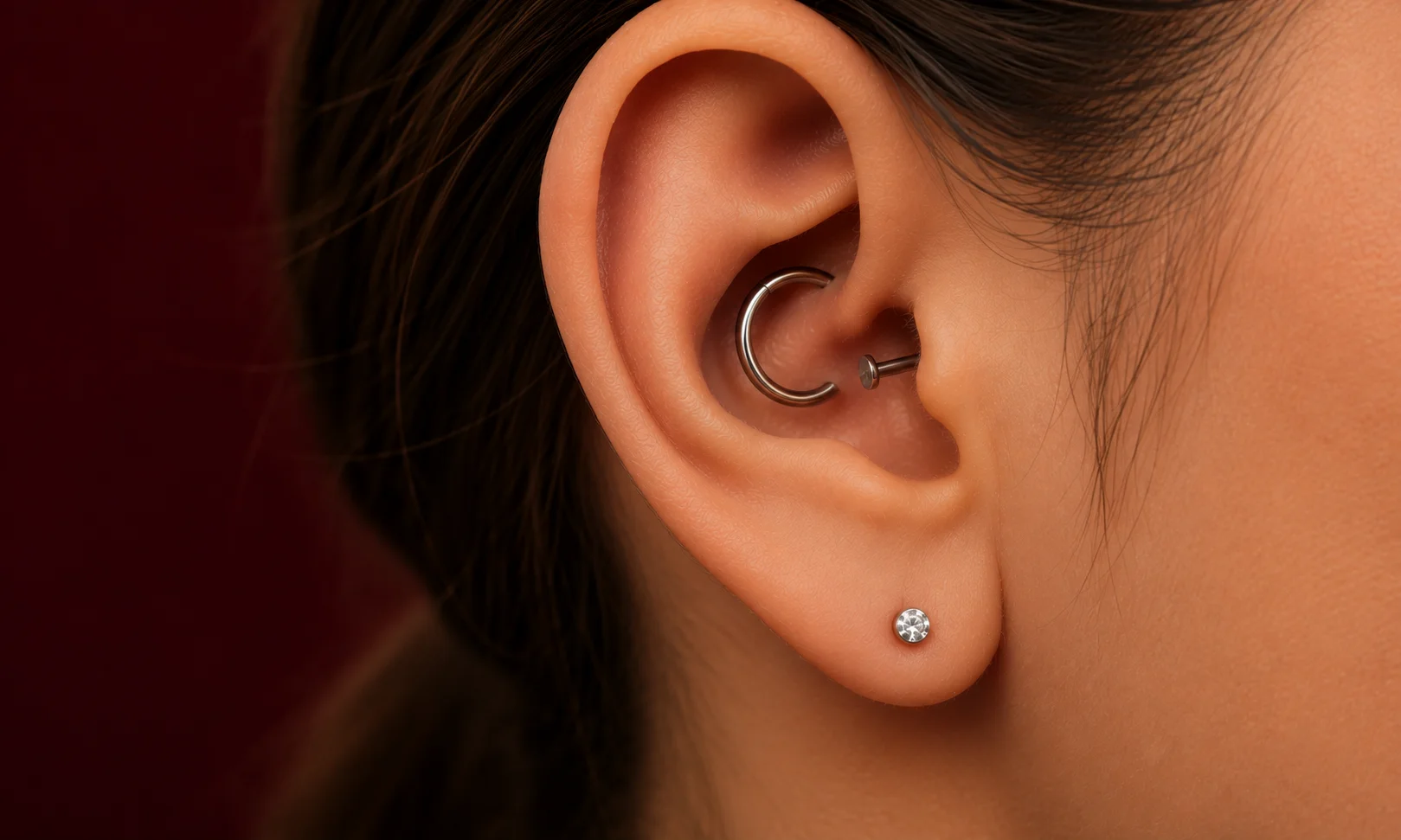
A flat back labret is commonly used for cartilage piercings such as helix, tragus, and conch piercings. It has a straight post with a flat disc on one side and a decorative end on the other.
Although it is popular for many ear piercings, it is not usually recommended for daith piercings.
The main reason is the anatomy of the daith area. The inner cartilage fold is curved, while a labret is designed to sit through a more straightforward piercing channel.
A flat back labret may work in rare situations if:
- The piercing angle allows enough space
- The jewelry length is correctly measured
- The ear anatomy supports the design
- A professional piercer approves the choice
However, most people find traditional daith jewelry more comfortable and practical.
Why Flat Back Labrets Are Usually Not Recommended for Daith Piercings
1. The Shape May Not Match the Ear Anatomy
Daith piercings sit in a curved cartilage section. A straight labret post may not follow this natural curve.
When jewelry does not fit correctly, it can create pressure points and irritation.
2. Limited Movement and Comfort
The inner ear area has limited space. A flat back disc may press against nearby cartilage or feel uncomfortable during daily activities.
This can become noticeable when:
- Sleeping on that side
- Using headphones or earbuds
- Cleaning the piercing
- Moving the ear
3. Healing Issues
Cartilage piercings already require patience during healing. The wrong jewelry style can increase irritation and make the healing process more difficult.
A suitable daith piercing stud should allow proper airflow, comfortable cleaning, and enough room for natural swelling.
4. Higher Chance of Poor Placement
Jewelry should support the piercing instead of forcing it into an unnatural position.
A flat back labret may sit at an awkward angle, which can affect both appearance and comfort.
Daith Piercing Stud vs Flat Back Labret: Key Differences
| Feature | Daith Piercing Stud | Flat Back Labret |
|---|---|---|
| Designed For | Inner ear cartilage | Flat cartilage areas |
| Shape | Usually curved or circular | Straight post |
| Comfort in Daith | Usually higher | Depends on anatomy |
| Healing Support | Better suited | May cause pressure |
| Popular Uses | Daith piercing | Helix, tragus, conch |
| Easy Cleaning | Usually easier | Can be harder in tight spaces |
Best Jewelry Options for Daith Piercings
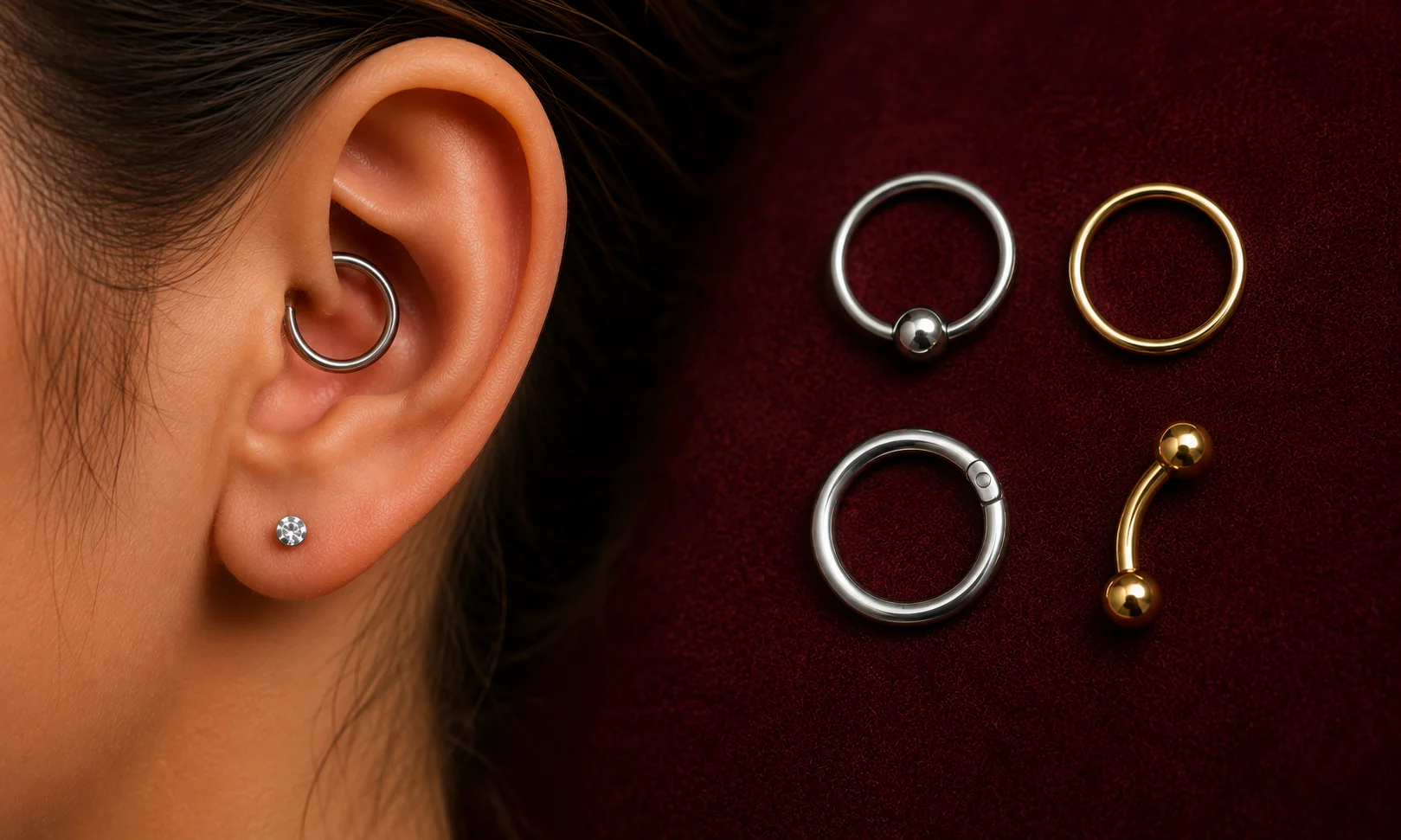
Choosing the right jewelry can improve comfort and help maintain a healthy piercing.
Captive Bead Rings
Captive bead rings are one of the most traditional choices for daith piercings.
They provide a circular shape that follows the natural curve of the ear. They are available in different metals, sizes, and designs.
Clicker Rings
Clicker rings are popular because they are simple to open and close.
They come in many decorative styles, including:
- Gem designs
- Floral patterns
- Minimal styles
- Gold and titanium finishes
For many people, clickers provide both comfort and a stylish appearance.
Curved Barbells
Curved barbells can work well for some daith placements because their shape follows the cartilage.
However, they should be selected carefully because the wrong size can create pressure.
Implant Grade Titanium Jewelry
Titanium is often preferred for fresh piercings because it is lightweight and generally well tolerated by many people.
Quality jewelry materials can reduce irritation and support a smoother healing experience.
How to Choose the Right Daith Piercing Stud Size
Choosing the correct size is one of the most important parts of wearing comfortable daith jewelry. A piece that is too tight can cause pressure, while jewelry that is too large may move too much and become irritating.
The correct size depends on:
- Your ear anatomy
- Piercing placement
- Healing stage
- Jewelry style
- Professional piercer measurements
Common factors include:
| Measurement | Why It Matters |
|---|---|
| Gauge | Shows the thickness of the jewelry post |
| Diameter | Determines how large the ring sits around the ear |
| Length | Important for straight or curved jewelry |
| Material | Affects comfort and skin reaction |
Most daith piercings are commonly done with jewelry around 16 gauge, but the ideal size can vary. Always confirm measurements with a professional piercer before changing jewelry.
Benefits of Choosing the Right Daith Piercing Stud
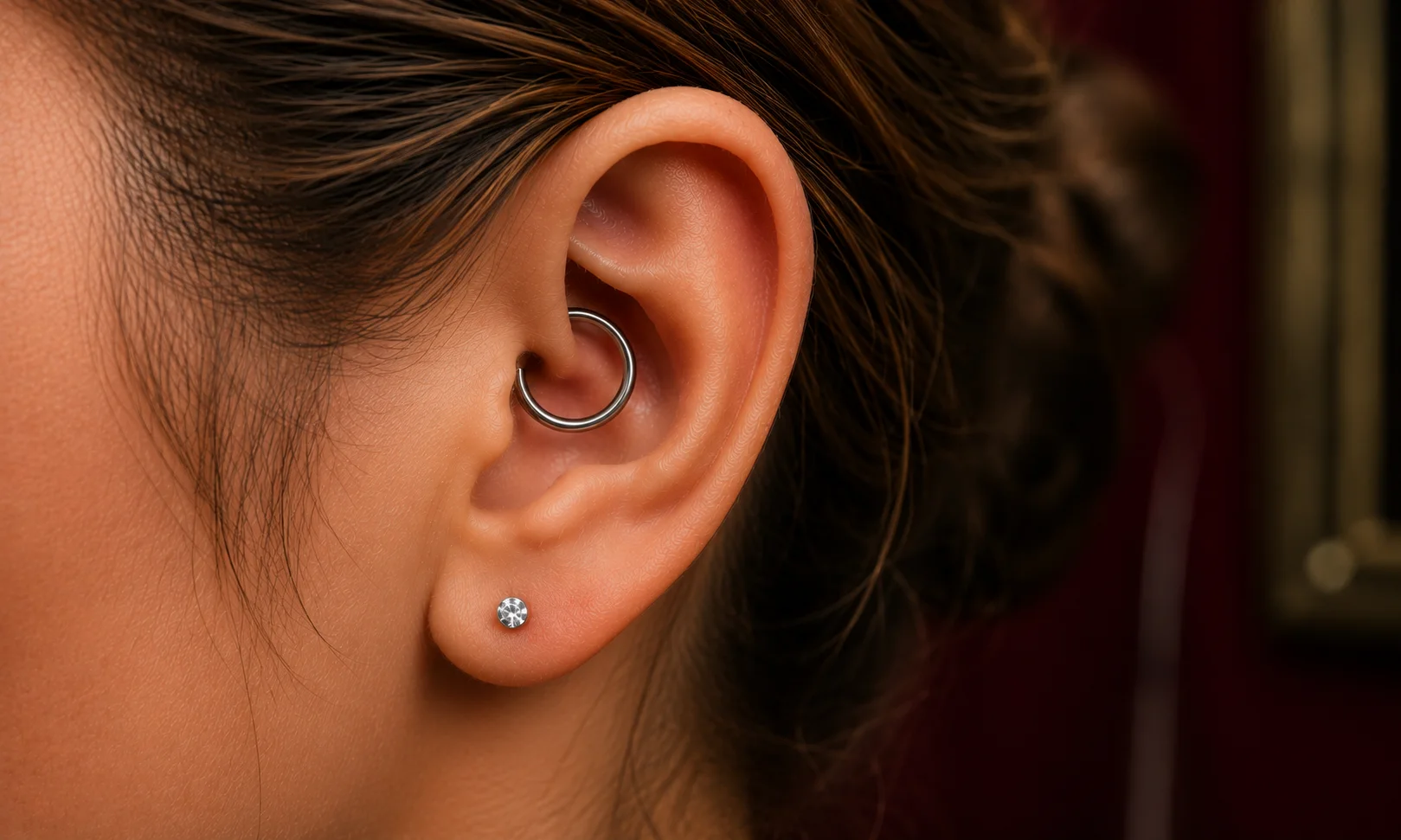
The right jewelry does more than improve appearance. It can also make your piercing experience more comfortable.
Better Comfort
A properly fitted daith stud reduces unnecessary pressure on the cartilage.
This makes everyday activities like sleeping, wearing headphones, and cleaning your piercing easier.
Improved Healing Experience
Good quality jewelry with the correct size allows the piercing to heal naturally without extra irritation.
Cartilage healing can take several months, so choosing suitable jewelry is important.
More Attractive Appearance
Daith jewelry sits in a unique location, meaning the right design can highlight the shape of your ear.
A well-fitted ring or daith stud can create a clean and stylish look.
Lower Risk of Irritation
Poorly fitted jewelry may cause problems such as:
- Swelling
- Tenderness
- Redness
- Pressure marks
- Bumps around the piercing
Selecting appropriate jewelry helps reduce these issues.
Common Mistakes When Choosing Daith Jewelry
Many people focus only on the design and forget that comfort and fit are equally important.
Choosing Jewelry Based Only on Appearance
A beautiful piece may not be suitable if it does not fit your ear anatomy.
Always consider comfort before style.
Changing Jewelry Too Early
New cartilage piercings need time to heal. Changing jewelry too soon can disturb the healing process.
Wait until your piercing is ready before switching to decorative pieces.
Buying Low-Quality Materials
Cheap metals may contain materials that irritate sensitive skin.
Look for trusted materials such as:
- Implant-grade titanium
- High-quality gold
- Niobium
Using Incorrect Sizes
Jewelry that is too tight can put pressure on the piercing.
Jewelry that is too loose can move excessively and irritate.
Ignoring Professional Advice
A professional piercer understands ear anatomy and can recommend jewelry that matches your specific piercing.
Expert Tips for Wearing a Daith Piercing Stud Comfortably
Clean Your Piercing Properly
Keep your hands clean before touching your jewelry.
Use a recommended saline solution and avoid harsh chemicals that may irritate the piercing.
Avoid Unnecessary Touching
Constantly moving or rotating jewelry can delay healing.
Try to leave the piercing alone as much as possible.
Be Careful With Headphones
Because daith piercings are located near the ear canal, some headphones may create pressure.
Choose comfortable options and avoid anything that pushes directly against the jewelry.
Sleep Carefully
Sleeping directly on a fresh daith piercing can cause discomfort.
Using a travel pillow or avoiding pressure on that side may help.
Choose Comfortable Metals
High-quality materials can make a big difference, especially for people with sensitive skin.
Can a Flat Back Labret Be Used After Healing?
After a daith piercing has fully healed, some people experiment with different jewelry styles.
However, switching to a flat back labret is still not always practical.
A healed piercing may tolerate different jewelry better than a fresh piercing, but the shape and position of the channel remain important.
Before making a change:
- Check whether the jewelry fits naturally
- Make sure it does not press against cartilage
- Ask a professional piercer if unsure
Comfort should always be the priority.
Daith Piercing Stud Materials Comparison
| Material | Advantages | Considerations |
|---|---|---|
| Titanium | Lightweight, durable, commonly recommended | Usually more expensive than basic metals |
| Gold | Stylish and attractive | Choose high quality gold to avoid irritation |
| Niobium | Good option for sensitive skin | Fewer designs available |
| Stainless Steel | Affordable and widely available | Quality varies between products |
Daith Piercing Stud Checklist
Before buying or changing your jewelry, consider these points:
✓ Choose jewelry made from quality materials
✓ Confirm the correct size
✓ Make sure the design fits your ear shape
✓ Avoid changing jewelry too quickly
✓ Buy from trusted jewelry sellers
✓ Ask a professional piercer when uncertain
✓ Prioritize comfort over trends
Frequently Asked Questions
Can you put a flat back labret in a daith piercing?
A flat back labret is usually not recommended for a daith piercing because the straight design may not match the curved inner ear area. Some healed piercings may accept different styles, but professional advice is recommended.
What is the best jewelry for a daith piercing?
Popular choices include captive bead rings, clicker rings, seamless rings, and curved barbells. The best option depends on your ear anatomy and comfort.
How long does a daith piercing take to heal?
Daith piercings usually take several months to heal completely. Healing time varies depending on individual factors, aftercare, and jewelry choice.
Can I wear earbuds with a daith piercing?
It depends on the jewelry size and your ear anatomy. Some people find earbuds uncomfortable because they may press against the piercing area.
Is titanium good for daith piercing jewelry?
Yes, implant-grade titanium is a popular choice because it is lightweight and commonly used for body jewelry.
Can I change my daith jewelry myself?
It is better to wait until the piercing is fully healed and ask a professional piercer if you are unsure about changing jewelry.
Does daith jewelry help with headaches or migraines?
Some people believe daith piercings help with migraines, but there is not enough scientific evidence proving that a daith piercing treats migraines.
Conclusion
A daith piercing stud should be chosen carefully because this piercing location has unique anatomy.
While flat back labrets are excellent for many cartilage piercings, they are usually not the best option for daith piercings because their straight shape may not fit the natural curve of the ear.
Circular jewelry such as clicker rings, captive bead rings, and properly designed daith jewelry usually provides better comfort and appearance.
The most important factors are proper sizing, quality materials, and professional guidance.
A stylish daith piercing is not only about choosing a beautiful piece of jewelry. It is about finding something that fits comfortably and supports a healthy piercing experience.