Key Takeaways
- A Daith Piercing Too Deep is not automatically incorrectly placed.
- Ear anatomy determines how deep a safe placement can be.
- Constant pressure, embedding, and worsening irritation deserve professional assessment.
- Jewelry size and angle can contribute to discomfort.
- Never force or reposition daith jewelry yourself.
- Infection symptoms need prompt medical attention.
- Do not remove jewelry during a suspected infection without appropriate medical advice.
- A professional piercer can determine whether the issue is placement, jewelry, anatomy, or healing.
- If the original placement is unsuitable, removal and later repiercing may be the safest option.
- Proper aftercare can support healing but cannot correct an incorrectly positioned piercing.
Quick Answer
A daith piercing may be too deep when the jewelry is placed excessively into the surrounding cartilage, leaves very little usable tissue around the piercing holes, causes constant pressure, or interferes with the ear canal or nearby structures.
However, appearance alone cannot confirm that a daith is too deep. Ear anatomy, swelling, jewelry size, angle, and the natural shape of the cartilage all affect how the piercing looks.
If you suspect a placement problem, have an experienced professional piercer examine it. If you develop severe pain, spreading redness, significant swelling, pus, fever, or other signs of infection, seek medical care promptly.
What Does a Daith Piercing Too Deep Mean?
A daith piercing passes through the inner cartilage fold above the ear canal. Because this area is naturally tucked inside the ear, a correctly placed daith can look quite deep.
The concern begins when the piercing is positioned farther into the cartilage than the person’s anatomy safely allows. In some cases, the jewelry may sit under excessive pressure or appear unusually compressed against the surrounding tissue.
Furthermore, swelling during the early healing period can temporarily make a correctly placed piercing appear deeper than it actually is.
That is why judging placement from a photograph, especially from one angle, is unreliable. A professional needs to assess the ear directly and consider the tissue, angle, jewelry, and healing progress together.
Signs Your Daith Piercing May Be Too Deep
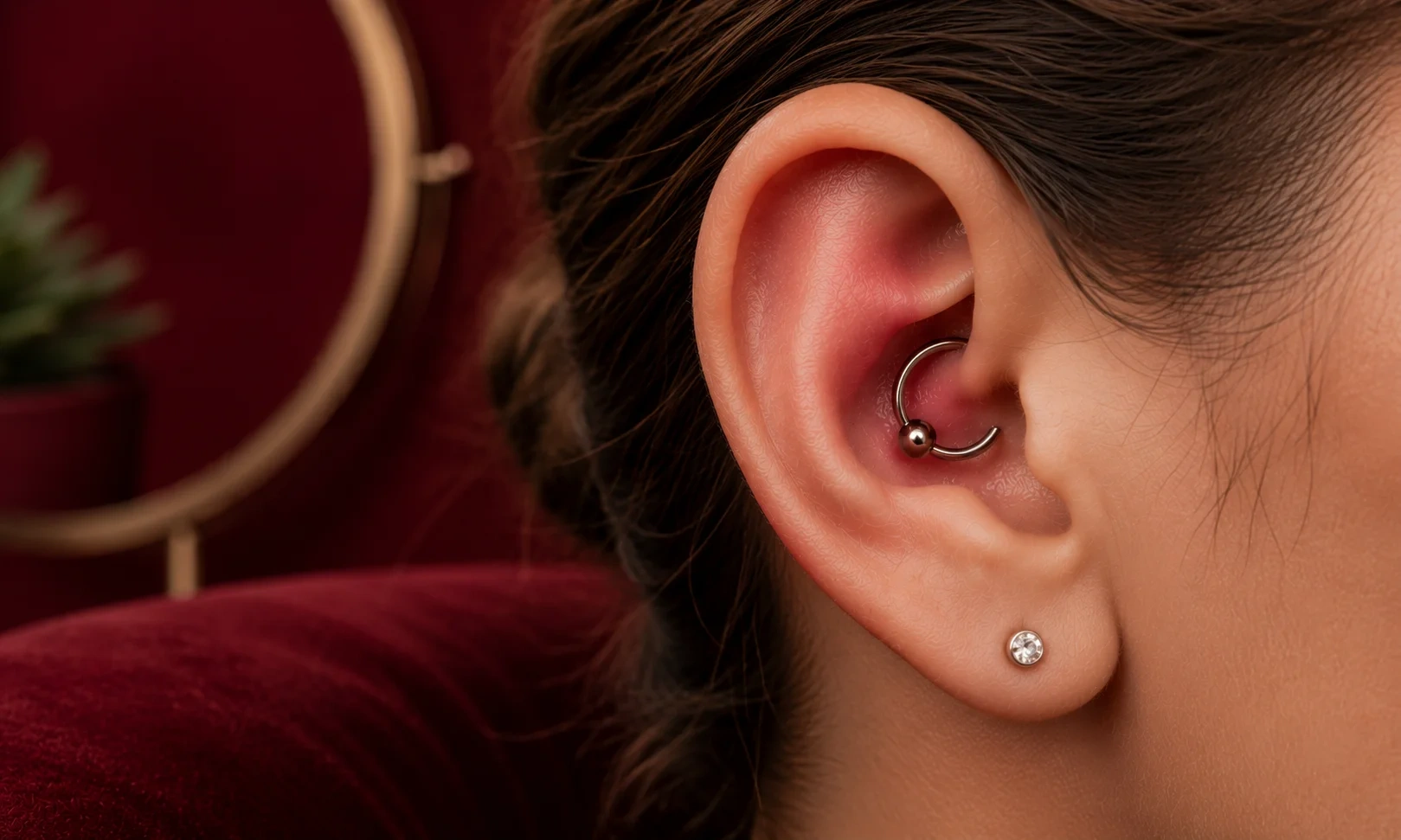
A deep-looking daith is not automatically a problem. Nevertheless, certain signs deserve attention.
Constant Pressure or Pain
Some soreness and tenderness are expected after a fresh cartilage piercing. The discomfort should generally become easier to manage as healing progresses.
Persistent pressure, worsening pain, or jewelry that seems to press tightly into the cartilage is more concerning. In addition, pain that becomes stronger rather than gradually improving should be assessed.
Jewelry Appears Embedded
If part of the jewelry appears to disappear into swollen tissue or the skin seems to grow over it, contact a professional piercer or healthcare professional.
Do not try to pull, push, or reposition the jewelry yourself.
Severe Swelling
Mild swelling can happen after a new piercing. However, significant swelling combined with heat, increasing redness, severe tenderness, or discharge can indicate a complication.
According to the NHS, an infected piercing can become serious and requires prompt medical attention when symptoms such as marked swelling, heat, pain, pus, or systemic illness occur.
The Jewelry Constantly Rubs the Ear
A placement problem can become more noticeable when the jewelry repeatedly presses against surrounding tissue.
For example, a ring that is too small can create unnecessary pressure even when the original piercing position is reasonable.
Why Can a Daith Piercing Be Pierced Too Deep?
Several factors can contribute to poor placement.
Individual Ear Anatomy
Every ear has a different shape. The size, thickness, and angle of the inner cartilage fold can vary considerably.
Therefore, a placement that works well on one person’s ear may not be appropriate for another person’s anatomy.
Inexperienced Piercing Technique
Daith piercings are technically demanding because the area is small and difficult to access.
The Association of Professional Piercers emphasizes anatomical assessment, proper placement, sterilization, appropriate jewelry, and professional training as important parts of safe piercing.
Incorrect Jewelry Size
Even a well-positioned piercing can develop problems when jewelry is too tight.
Jewelry needs enough room to accommodate normal swelling without applying unnecessary pressure. Conversely, excessively large jewelry can catch on objects and cause trauma.
Early Swelling
Fresh cartilage naturally changes during healing. Swelling can temporarily alter the appearance and make the jewelry look closer to the surrounding tissue.
For this reason, an experienced piercer should evaluate a fresh piercing rather than relying only on how deep it looks immediately after the procedure.
Possible Complications of a Daith Piercing Too Deep
Poor placement can increase mechanical irritation and make healing more difficult. However, not every complication is caused by depth alone.
| Problem | What it may look like | What to do |
|---|---|---|
| Pressure | Jewelry feels constantly tight | Ask a professional to assess placement and jewelry |
| Irritation | Redness, tenderness, or bumps | Reduce friction and follow proper aftercare |
| Embedding | Jewelry appears buried in tissue | Seek professional or medical assessment promptly |
| Delayed healing | Piercing remains irritated for a long time | Have placement and jewelry checked |
| Infection | Increasing pain, heat, swelling or pus | Seek medical care |
| Scarring | Thickened or raised tissue | Get professional assessment |
| Migration | Piercing gradually shifts position | Have a qualified piercer examine it |
Cartilage piercings deserve particular care because serious infection can damage cartilage. The Association of Professional Piercers notes that severe cartilage infection can potentially lead to deformity.
Medical literature also describes infections, allergic reactions, hypertrophic scars, keloids, and delayed healing among possible complications associated with daith and other ear cartilage piercings.
Too Deep vs Properly Placed
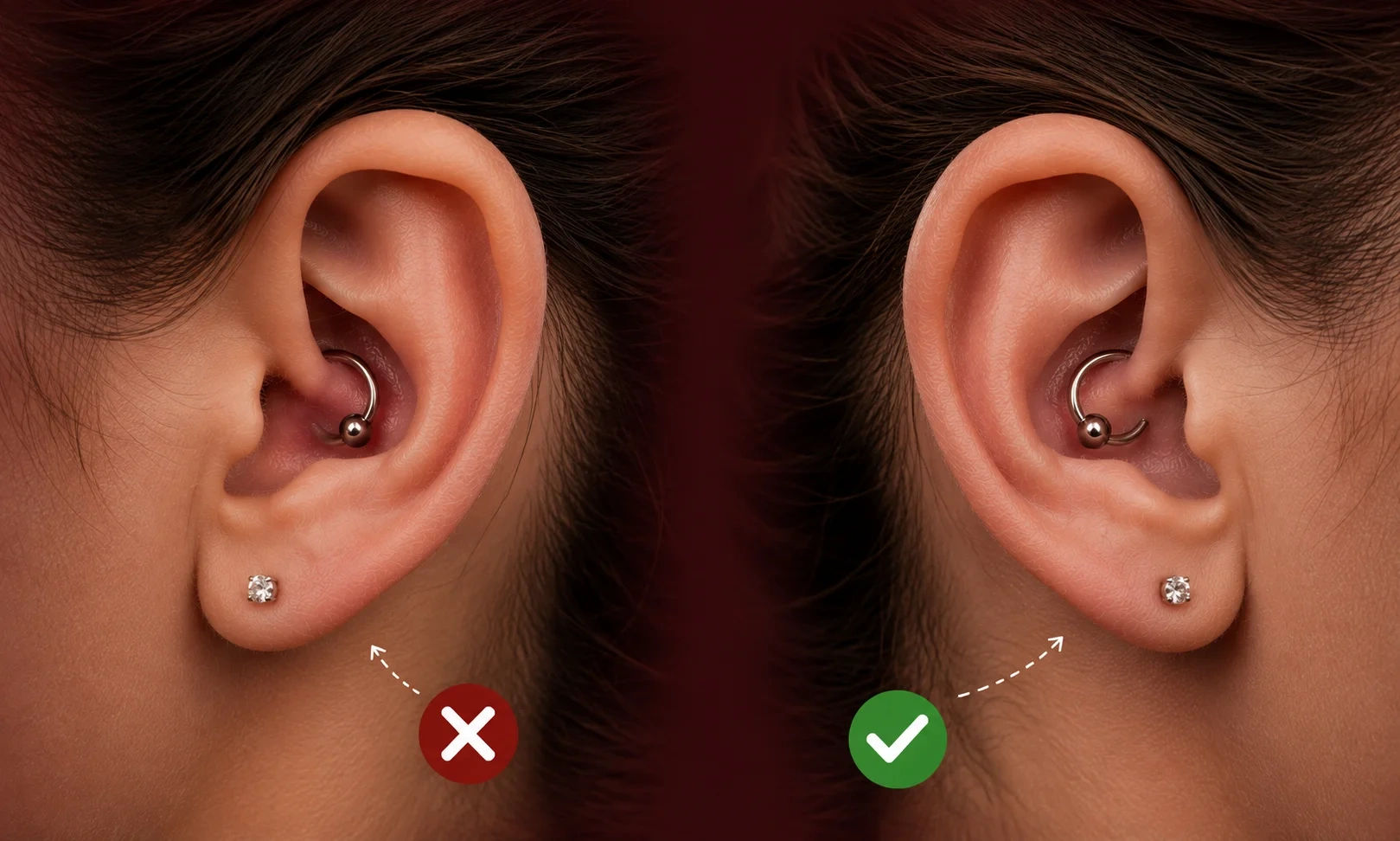
It is useful to separate appearance from actual problems.
| Feature | Potentially normal | More concerning |
| Depth | Looks tucked into the inner ear | Jewelry appears excessively compressed |
| Pain | Mild and gradually improving | Severe or worsening pain |
| Swelling | Mild temporary swelling | Increasing or substantial swelling |
| Jewelry | Sits comfortably | Feels tight or becomes embedded |
| Skin | Normal healing appearance | Skin appears to grow over jewelry |
| Discharge | Small amount of normal healing fluid | Thick, foul-smelling pus |
| Healing | Slowly becomes calmer | Persistent or worsening irritation |
The key point is simple: a deep-looking daith is not necessarily a badly placed daith.
What to Do If Your Daith Is Too Deep
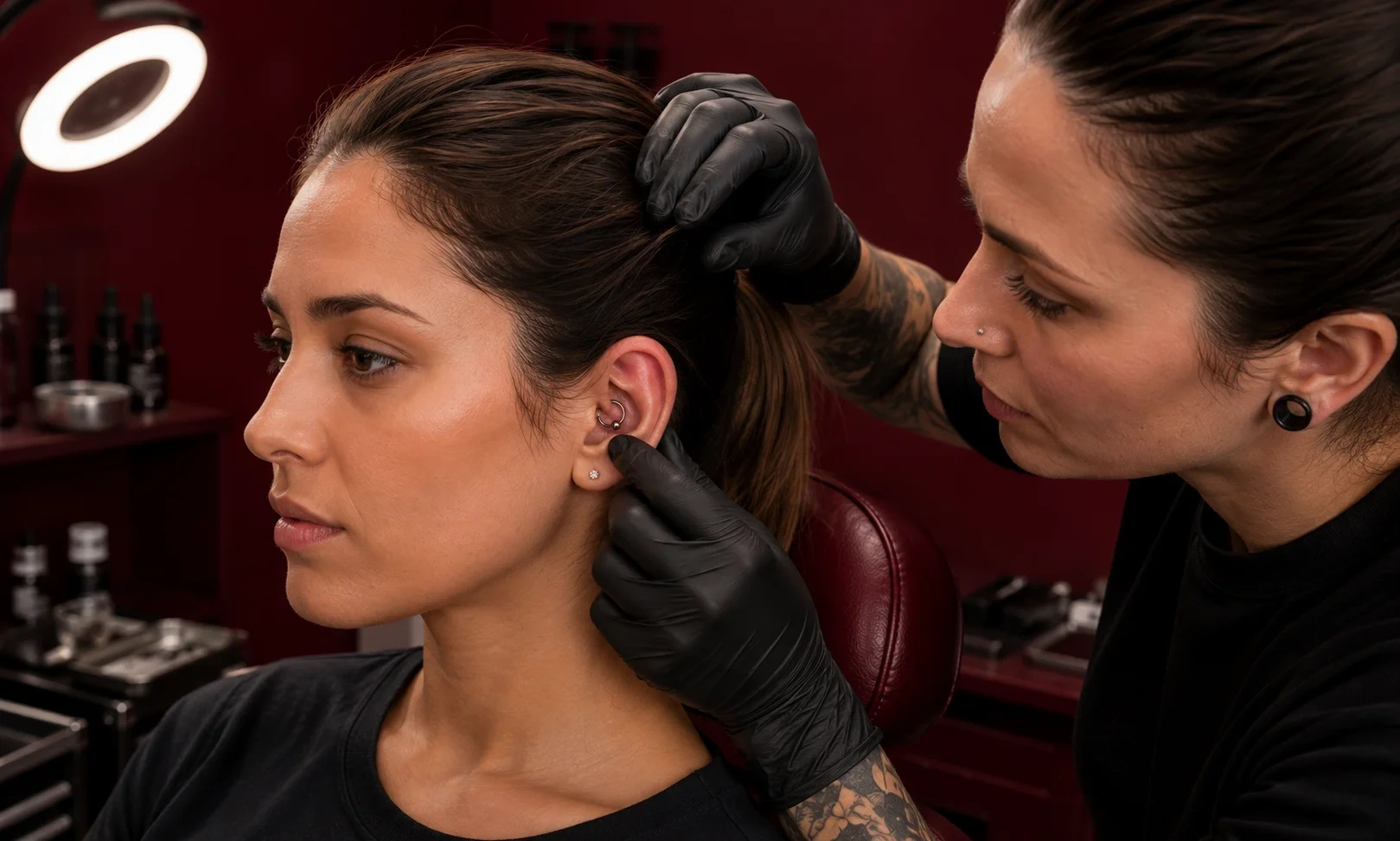
First, do not attempt to push the jewelry outward or change the piercing yourself.
Instead, arrange an assessment with a reputable, experienced piercer who understands daith anatomy. If possible, choose someone who can evaluate placement, jewelry size, angle, and the condition of the surrounding tissue.
If the piercing is clearly unsuitable for your anatomy, the professional may recommend allowing it to heal and considering a new piercing later.
However, if infection is suspected, medical assessment takes priority. Do not assume that removing jewelry will solve an infection. The Association of Professional Piercers warns that removing jewelry during an infection can sometimes allow the surface to close while infection remains trapped underneath.
Can a Too Deep Daith Piercing Be Fixed?
Sometimes the problem can be managed without removing the piercing. For example, a professional may determine that the main issue is inappropriate jewelry size rather than incorrect placement.
In other cases, the original placement may simply not be suitable for the person’s anatomy. If so, keeping the piercing may continue to irritate.
A professional may recommend removing it and allowing the tissue to recover before considering another piercing.
The exact timing for repiercing should be decided after examining the tissue. There is no universal number of weeks that is appropriate for every ear.
Aftercare Tips for a Deep Daith Piercing
Good aftercare cannot correct poor placement, but it can reduce unnecessary irritation while the piercing is being assessed.
Keep It Clean
Use appropriate sterile saline wound care according to professional aftercare guidance. Avoid harsh products that can irritate healing tissue.
The Association of Professional Piercers recommends avoiding unnecessary manipulation and using appropriate aftercare rather than repeatedly disturbing the piercing.
Avoid Touching It
Do not twist, rotate, squeeze, or repeatedly move the jewelry.
Moreover, touching the piercing with unwashed hands can introduce contaminants and increase irritation.
Reduce Pressure
Avoid sleeping directly on the piercing whenever possible.
Likewise, be careful with headphones, earbuds, hats, hair, and anything else that repeatedly contacts the inner ear.
Do Not Use Harsh Home Remedies
Alcohol, hydrogen peroxide, strong antiseptics, and other irritating products can damage healing tissue.
If a product causes burning or excessive dryness, stop using it and seek advice from a qualified professional.
When to See a Doctor
A suspected placement issue should be checked by a professional piercer, but infection symptoms require medical attention.
Seek medical advice if you notice:
- Severe or worsening pain
- Significant swelling
- Increasing heat around the piercing
- Spreading redness or darkening of the skin
- Thick yellow, green, or foul-smelling discharge
- Fever or chills
- Feeling generally unwell
- Red streaks extending from the piercing
The NHS recommends urgent medical assessment when an infected piercing is suspected, particularly when symptoms are significant or worsening.
Similarly, the Association of Professional Piercers advises medical evaluation for severe redness, swelling, pain, substantial discharge, fever, chills, or symptoms that persist or worsen.
Common Mistakes to Avoid
Removing Jewelry Immediately
Removing jewelry without understanding the problem can sometimes make an infection harder to drain.
Instead, get appropriate professional or medical advice first.
Trying to Reposition the Jewelry
Never attempt to force a ring into a different position.
This can cause additional tissue trauma and make irritation worse.
Comparing Your Ear With Photos Online
Social media photos can be useful for inspiration, but they cannot determine whether your own anatomy is suitable for a particular placement.
Every ear has different cartilage folds and available tissue.
Changing Jewelry Too Early
Premature jewelry changes can disturb the healing channel.
Therefore, let an experienced piercer decide when a jewelry change is appropriate.
Ignoring Worsening Symptoms
A piercing that becomes increasingly painful, swollen, hot, or infected should not simply be “waited out.”
Early assessment can help prevent a minor problem from becoming more serious.
Daith Piercing Too Deep Checklist
Before deciding that your piercing is too deep, consider:
- Does the jewelry feel excessively tight?
- Is the pain getting worse?
- Is the jewelry becoming embedded?
- Is swelling increasing rather than decreasing?
- Is there thick or foul-smelling discharge?
- Does the jewelry constantly rub surrounding tissue?
- Has an experienced piercer examined the placement?
- Do you have symptoms that require medical attention?
If several of these apply, arrange an assessment rather than trying to correct the piercing yourself.
Conclusion
A daith piercing too deep is not always easy to identify because the piercing naturally sits deep inside the ear. Consequently, a tucked-in appearance can be completely normal for one person while excessive pressure or poor placement may be a genuine problem for another.
The safest approach is to focus on symptoms rather than appearance alone. If the jewelry feels excessively tight, becomes embedded, causes persistent irritation, or the piercing is not healing normally, have it examined by an experienced piercer.
Furthermore, signs such as severe swelling, spreading redness, increasing pain, pus, fever, or feeling unwell should be treated as potential medical concerns rather than simple piercing irritation.
For more practical guidance on daith placement, jewelry, healing, and aftercare, daithpiercing can help readers understand what to look for before making changes to a healing piercing.
FAQs
How do I know if my daith piercing is too deep?
A deep appearance alone does not prove that the piercing is too deep. Persistent pressure, embedding, significant irritation, or an unsuitable angle may be more important warning signs.
Can a daith piercing be too deep to heal?
Yes, a poorly positioned piercing can have difficulty healing. However, healing problems can also result from jewelry, friction, aftercare, anatomy, or infection.
Should I take out a daith piercing that is too deep?
Not automatically. Have it assessed first. If infection is suspected, speak with a healthcare professional before removing jewelry unless they advise otherwise.
Can a piercer fix a daith piercing that is too deep?
A piercer may be able to correct a jewelry-related problem, but an incorrectly positioned piercing may need to be removed and allowed to heal before it can potentially be repierced.
Is a deep-looking daith piercing normal?
It can be. Daith piercings naturally sit in a recessed area of the ear, and anatomy varies. The actual comfort, tissue condition, and placement matter more than appearance alone.
How long does a daith piercing take to heal?
Healing varies between individuals and can take many months. Cartilage generally heals more slowly than soft tissue, so it is important not to assume that a piercing is fully healed simply because it feels comfortable.
Can a deep daith piercing damage cartilage?
A badly placed or seriously infected cartilage piercing can cause significant tissue damage. If you have severe pain, swelling, heat, discharge, or worsening symptoms, seek medical assessment.