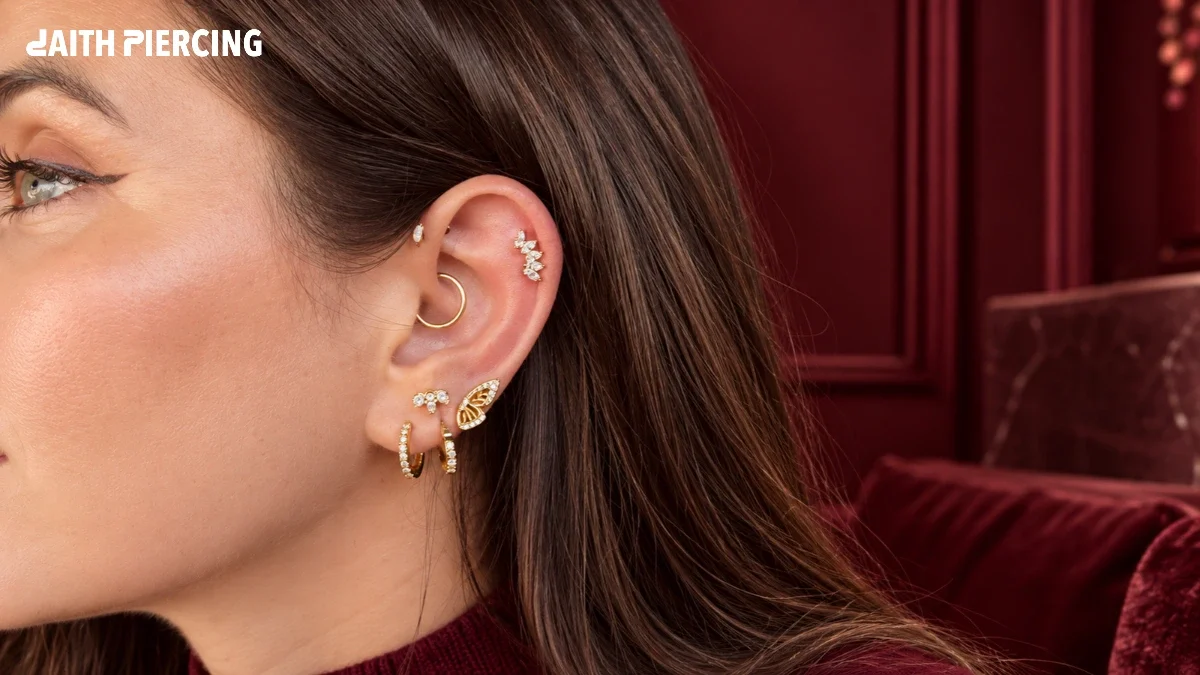
Forward Helix vs. Daith: Choosing between a forward helix and a daith can feel like a small decision until you start looking at placement, healing, jewelry, comfort, and everyday practicality. Both are cartilage piercings, but they create very different looks and can fit very different lifestyles.
The forward helix sits at the upper front edge of the ear, close to the face. The daith sits deeper inside the ear, through the cartilage fold above the ear canal. So, while both belong to the cartilage-piercing family, they are not interchangeable styles.
If you are deciding which one suits you better, this guide from daithpiercing breaks down the differences without making the choice more complicated than it needs to be.
Key Takeaways
- A forward helix sits on the front upper rim of the ear, while a daith sits in the inner cartilage above the ear canal.
- Forward helix piercings are generally more visible and work well with small studs and stacked looks.
- Daith piercings are more tucked away and commonly styled with curved rings or clickers.
- Both are cartilage piercings and can take several months to fully heal.
- Proper jewelry fit, gentle aftercare, and avoiding unnecessary pressure can support healing.
- A daith piercing should not be considered a proven migraine treatment.
- Your ear anatomy should guide the final placement and jewelry choice.
Forward Helix vs. Daith: The Main Difference
The easiest way to understand the difference is to picture the ear from the side. A forward helix is visible on the front-facing outer rim near where the ear meets the head. A daith is tucked farther inside the ear, where the inner cartilage creates a small fold.
A forward helix usually gives a clean, delicate look. It works especially well with tiny studs and can be styled with two or three piercings to create a neat upper-ear arrangement.
A daith has a more hidden, curved appearance. Small hoops and clickers are especially common because the jewelry follows the natural shape of the inner cartilage.
Neither is automatically better. The better choice depends on whether you want your piercing to stand out from the front or sit more subtly inside the ear. Think about your daily routine before making the final decision.
What Is a Forward Helix Piercing?
A forward helix piercing goes through the cartilage at the front section of the outer ear, near the temple. It is positioned higher than a standard helix and closer to the face.
Because the area is relatively small, anatomy matters. Not every ear has enough suitable cartilage for multiple placements. A professional piercer should assess the shape and thickness of your ear before deciding the exact position.
Forward Helix Jewelry

Flat-back labret studs are commonly suited to this placement because they can sit neatly against the ear. Jewelry should be properly sized rather than chosen only for appearance.
For a fresh piercing, quality and fit matter. The Association of Professional Piercers recommends smooth, appropriate body jewelry and notes that initial jewelry should be selected with the anatomy and piercing placement in mind.
What Is a Daith Piercing?
A daith piercing passes through the inner cartilage fold above the opening of the ear canal. Unlike the forward helix, it is not placed on the visible outer rim.
Daith piercings are also surrounded by a common migraine claim. However, there is currently no good scientific evidence that getting a daith piercing prevents or treats migraines. A piercing should therefore be chosen for its appearance and personal style rather than as a medical treatment.
Daith Jewelry
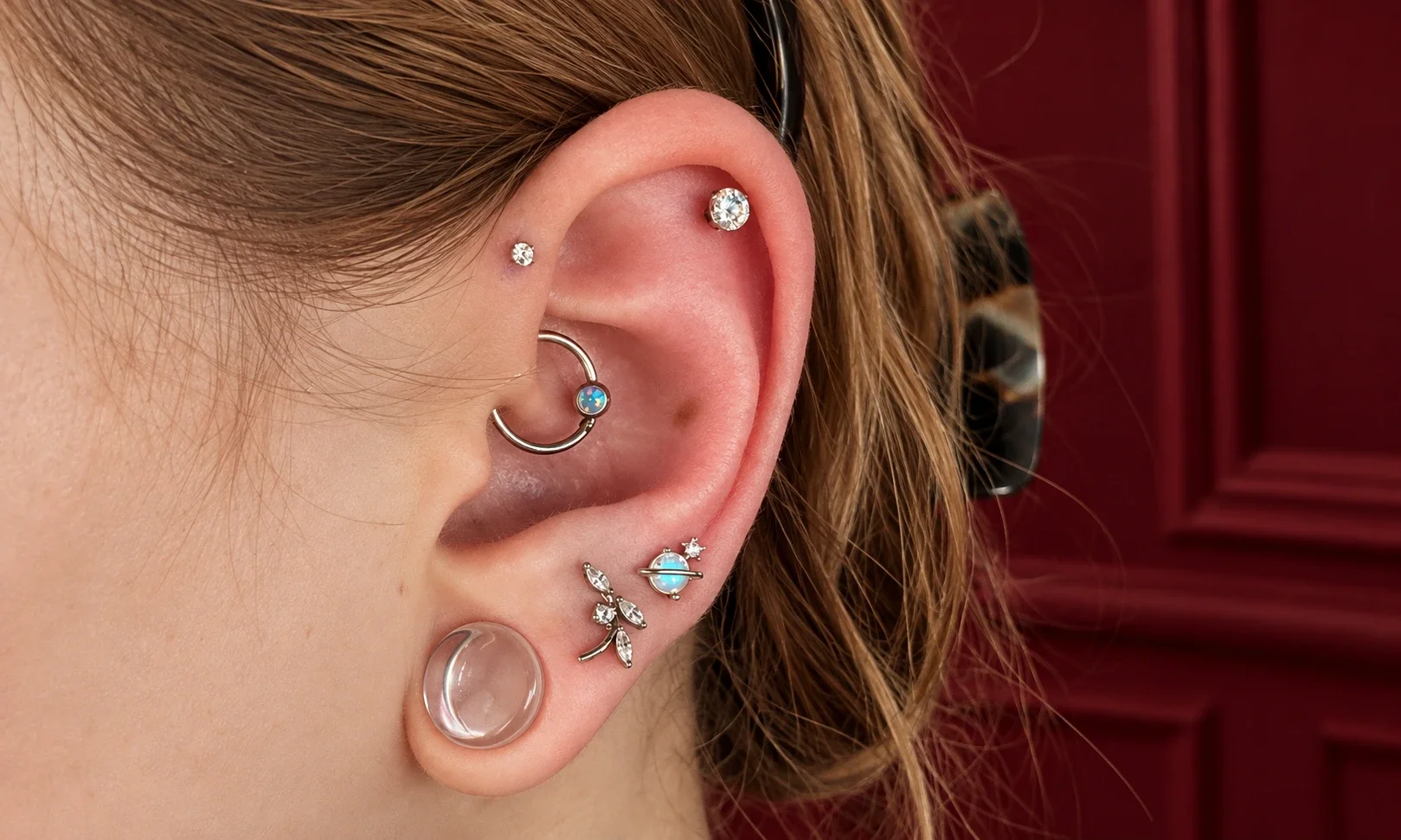
A properly fitted ring or clicker is often associated with the daith look. The exact jewelry choice should be based on anatomy, placement, and professional advice rather than copying a photo from social media.
Since the area is deeper and more enclosed, getting the jewelry size right is particularly important. A professional piercer can determine what works with your ear instead of forcing a particular style. This small check can prevent avoidable pressure, irritation, and poor jewelry fit later too, for comfort.
Forward Helix vs. Daith: Pain and Comfort
When people compare a forward helix and a daith, pain is usually one of the first things they want to know about. The problem is that there is no universal pain score that works for everyone. Your ear anatomy, pain tolerance, piercing technique, and even how relaxed you are on the day can change the experience.
Both piercings go through cartilage, so neither should be expected to feel like a simple earlobe piercing. Cartilage also receives less blood supply than soft tissue, which is one reason these piercings can take considerably longer to heal. Cleveland Clinic notes that daith and other cartilage piercings can take around six to 12 months to fully heal.
What Does a Forward Helix Feel Like?
A forward helix piercing is placed through the cartilage at the front upper part of the ear. During the piercing, you may feel a quick, sharp pressure followed by soreness around the area.
Because the forward helix is close to the front edge of the ear, the area can feel tender when touched during the early healing period. The initial piercing itself is usually very quick, but the sensitivity afterward can last much longer than the actual piercing procedure.
The experience can also vary depending on how much cartilage is available in that particular part of your ear. A professional piercer should examine your anatomy before deciding whether the placement is suitable and where exactly the jewelry should sit.
What Does a Daith Piercing Feel Like?
A daith piercing goes through the inner cartilage fold above the ear canal. Its deeper position can make the piercing experience feel different from a forward helix.
Some people describe the sensation as strong pressure followed by a short burst of pain. Others find it easier than expected. Because the daith sits in a small, curved area, the piercer needs to work carefully around the individual shape of the ear.
The location can also make the area feel awkward during the first few days. You may notice tenderness when cleaning around it or when anything puts pressure against the ear.
Which One Hurts More: Forward Helix or Daith?
There is no reliable winner when it comes to pain. One person may find a forward helix easier, while another may prefer the sensation of a daith.
Online pain rankings can be useful for getting a general idea, but they should not be treated as a measurement. Professional placement, individual anatomy, and personal pain sensitivity can have a much bigger effect on your experience.
Instead of asking only which one hurts more, it makes more sense to ask which one will be easier for you to live with while it heals.
What Happens After the Piercing?
The piercing itself is only a small part of the experience. For cartilage piercings, the healing period is where comfort becomes more important.
You might experience mild tenderness, swelling, or sensitivity during the early stages. This does not automatically mean something is wrong. However, increasing pain, significant swelling, heat, spreading redness, or other concerning symptoms should not simply be ignored.
The Association of Professional Piercers recommends avoiding unnecessary pressure and physical trauma while a cartilage piercing heals.
Sleeping Can Make a Difference
Sleeping directly on a fresh cartilage piercing can be surprisingly uncomfortable. More importantly, repeated pressure can irritate the piercing and may even affect its angle during healing.
This can be especially frustrating if you naturally sleep on the side where you want the piercing.
A clean pillowcase can help reduce exposure to dirt and buildup, while a travel pillow can provide a gap for the ear so it is not pressed directly against the pillow. The Association of Professional Piercers specifically recommends avoiding direct pressure on healing cartilage piercings.
Hair, Headphones and Everyday Contact
A forward helix is positioned where hair can easily catch on the jewelry. Hair brushing, styling, masks, glasses, and other objects around the ear may occasionally cause unwanted pulling.
A daith has a more protected position, but that does not make it impossible to irritate. Earbuds or anything that presses against the inner ear can become uncomfortable depending on your anatomy and jewelry.
The goal is simple: reduce unnecessary touching, pressure, pulling, and friction while the piercing is healing.
How to Make Either Piercing More Comfortable
The best approach is not to constantly manipulate the piercing or cover it with unnecessary products. Clean hands, appropriate aftercare, correctly fitted jewelry, and patience are much more useful.
The Association of Professional Piercers recommends washing your hands before touching a healing piercing and avoiding unnecessary movement of the jewelry. Keeping items that regularly touch your ear, such as headphones and pillowcases, clean can also reduce avoidable irritation.
Choose a Professional Piercer
Comfort starts before the needle even touches your ear.
A qualified piercer should assess your anatomy, explain the placement, use appropriate sterile equipment, and select jewelry that suits the piercing. The Association of Professional Piercers warns against DIY piercing kits because incorrect placement, poor hygiene, and improperly sized jewelry can create avoidable complications.
A good consultation can also help you decide whether a forward helix or daith actually fits your ear.
Give the Piercing Time
One of the biggest mistakes is expecting cartilage to feel completely normal after a few days.
A piercing can appear calm on the outside while the inside is still healing. Cartilage healing can take months, so occasional tenderness does not necessarily mean the piercing has failed.
Instead of rushing to change jewelry or repeatedly checking the area, give the tissue time to settle.
Which Is More Comfortable for Everyday Life?
This depends heavily on your routine.
A forward helix may be easier if you rarely wear anything that touches the upper front of your ear and you like being able to see the jewelry easily.
A daith may feel more protected because of its tucked-away position, but earbuds and other in-ear devices can become an issue during healing.
Your sleeping position also matters. If you sleep heavily on one side, choosing the opposite ear may make the healing period much easier.
The Better Choice Depends on Your Lifestyle
If you want a visible piercing and do not mind being careful around hair and the outer ear, a forward helix can be a great choice.
If you prefer a more discreet piercing and are comfortable being careful with anything that enters or presses against the ear, a daith may suit you better.
Neither should be chosen purely because someone online described it as painless. Your anatomy and daily habits are much more important when it comes to long-term comfort.
Healing Time: Which One Heals Faster?
Neither should be treated like a quick-healing lobe piercing. Cartilage piercings can take many months to fully heal, and Cleveland Clinic notes that cartilage placements such as helix and daith may take roughly six to 12 months.
One important point is that a piercing can look fine before the inside has completely healed. The Association of Professional Piercers explains that piercings heal from the outside toward the inside, so an apparently calm surface does not always mean the channel is fully healed.
Which One Is Easier to Live With?
This depends on your routine. A forward helix is more exposed, so hair, glasses, masks, and accidental bumps can become annoying during healing. It is also easier to notice and accidentally touch.
A daith is more protected by the shape of the ear, but its inner location can make cleaning and jewelry changes less straightforward. Earbud use can also be a consideration depending on your anatomy and device.
Aftercare for Both Piercings
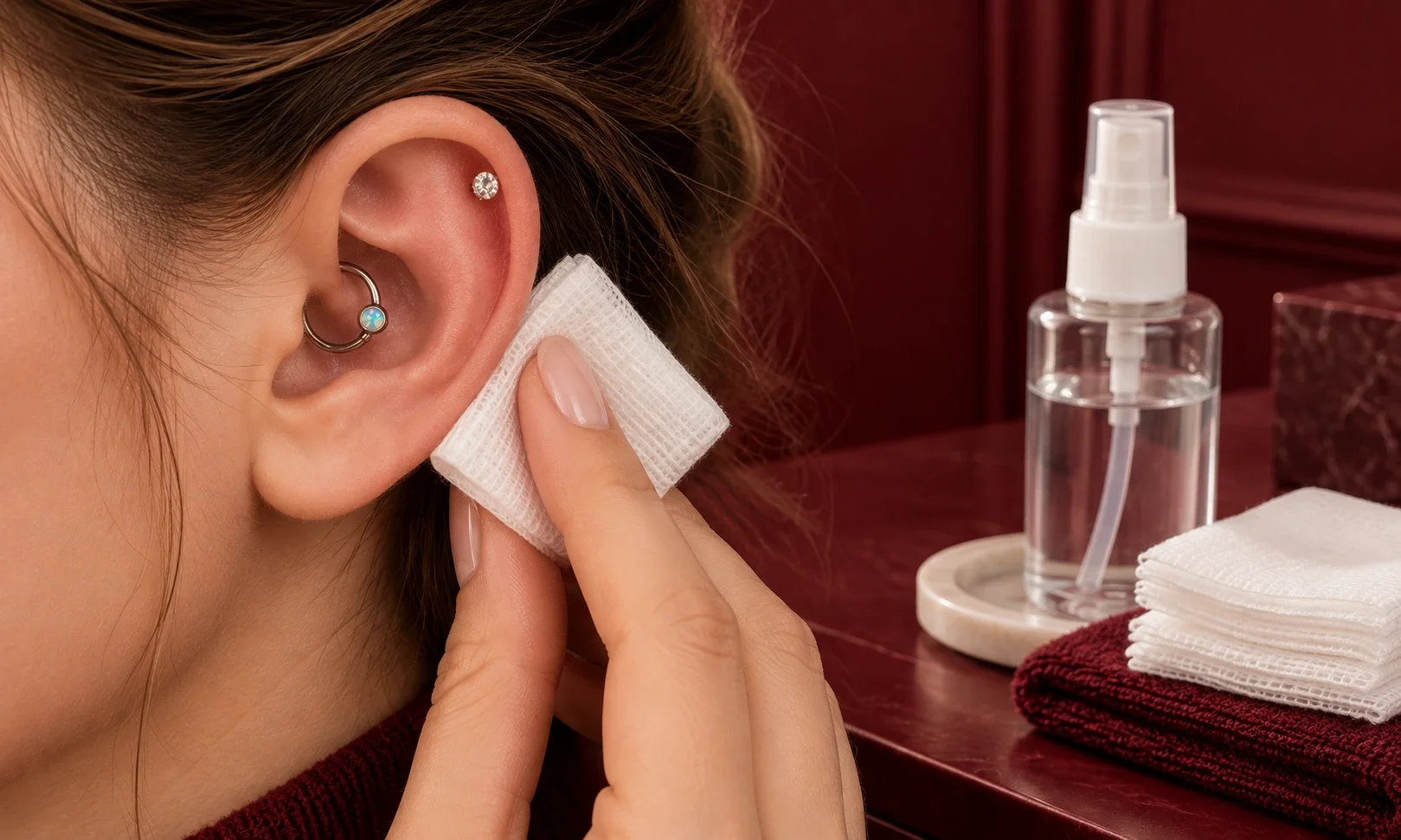
Good aftercare is simple, but consistency matters more than using lots of products. The Association of Professional Piercers recommends washing your hands before touching a healing piercing and using sterile saline wound wash. It also advises against twisting or rotating the jewelry because unnecessary movement can irritate healing tissue.
Avoid alcohol, hydrogen peroxide, harsh products, and unnecessary ointments. Do not pick crusting, and avoid swimming or submerging a fresh piercing in pools, hot tubs, lakes, or other bodies of water while it heals.
Try to reduce pressure and friction. Keep pillowcases clean, be careful with hair and headphones, and avoid playing with the jewelry.
If you suspect an infection, do not rely only on home remedies. Increasing redness, warmth, swelling, significant pain, or pus can require medical evaluation.
Forward Helix vs. Daith: Which Looks Better?
This is where personal style takes over. Choose a forward helix if you like visible, delicate jewelry and want your piercing to become part of an upper-ear stack. It is especially appealing if you enjoy minimalist studs and want something noticeable without dominating the whole ear.
Choose a daith if you prefer a more hidden, distinctive detail. Its inner placement can make the jewelry feel like a small surprise when someone notices it.
E-E-A-T Note
This guide is based on current guidance from the Association of Professional Piercers and medical information from Cleveland Clinic. Piercing placement and jewelry selection are anatomy-dependent, so an in-person assessment from a qualified professional is more reliable than copying a placement from a photograph. Medical concerns, especially suspected infection, should be assessed by an appropriate healthcare professional.
FAQs
Is a forward helix or daith more painful?
There is no reliable universal answer. Both pass through cartilage, and discomfort depends on anatomy, technique, and individual pain tolerance.
Does a forward helix heal faster than a daith?
Not necessarily. Both can require many months to heal fully. Cleveland Clinic gives a general six-to-12-month range for several cartilage piercings, including helix and daith.
Can I sleep on a forward helix or daith piercing?
It is better to avoid direct pressure while either piercing is healing. Sleeping on it can increase irritation and prolong recovery.
Can a daith piercing cure migraines?
No. Current evidence does not establish daith piercing as an effective migraine treatment. Its popularity for migraines comes from a theory related to acupuncture, not strong clinical evidence.
Can I wear earbuds with a daith piercing?
It depends on your ear anatomy, jewelry size, and the type of earbuds you use. Pressure or friction against a healing daith can irritate, so ask your piercer about your specific setup.
Which one is better for an ear stack?
A forward helix is usually the more obvious choice for a visible ear stack because it sits along the outer upper ear. A daith can still complement an ear setup, but its placement creates a more tucked-away detail.
Disclaimer:
This article is for informational and educational purposes only. Piercing experiences, healing times, and results can vary depending on individual ear anatomy and aftercare. Always consult a qualified professional piercer before getting a forward helix or daith piercing. If you notice unusual swelling, increasing pain, or signs of infection, seek advice from a healthcare professional. A daith piercing is a fashion choice and should not be considered a proven treatment for migraines.