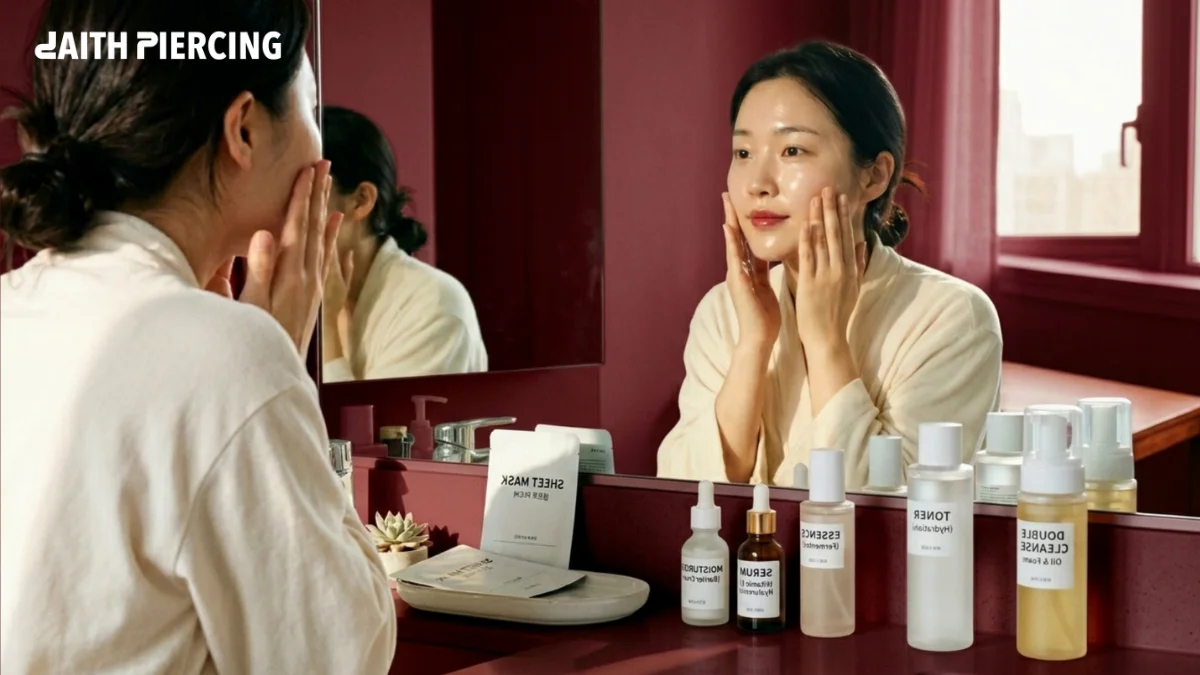
Achieving a dewy, lit-from-within glow that looks effortlessly reflective in selfies is the ultimate skincare goal, but it often feels out of reach. The secret to a successful glass skin routine is not found in heavy makeup or shimmering highlighters; it is rooted entirely in deep hydration science. Glass skin refers to a complexion so smooth, clear, and intensely hydrated that it takes on the translucent appearance of a pane of polished glass.
At DaithPiercing, we break down the glass skin routine into steps any beginner can follow without buying 15 products. This guide fills the gaps left by standard tutorials by tailoring the process to your specific skin type, offering distinct AM/PM strategies, and providing budget-friendly pairings. Here are the 7 essential steps to achieving a poreless, luminous finish.
What Is Glass Skin and Why Everyone Wants It in 2026?
At its core, glass skin is a skincare-first aesthetic defined by a dewy complexion that appears translucent, smooth, and remarkably poreless. Unlike the matte trends of previous decades, this look prioritizes a lit-from-within glow that mimics the reflective quality of polished glass.
Originally emerging from Korean beauty culture, the term was popularized globally by pioneers like Alicia Yoon, founder of Peach & Lily. While the K-beauty glass skin ideal once required a daunting 10-step process, the 2026 iteration has evolved. Today, the trend is fueled by the skinimalism movement a shift away from heavy foundation in favor of high-performance hydration and an anti-filter philosophy that celebrates real, healthy texture.
Glass Skin vs. Honey and Dolphin Skin
While these trends all celebrate a luminous look, they differ in their primary focus and the specific finish they leave on the skin. Here is how they compare:
| Feature | Glass Skin | Honey Skin (Kkul-Pibu) | Dolphin Skin |
| Primary Goal | Translucency and smooth, poreless texture. | Deep nourishment and a syrupy glow. | A wet look that mimics a glistening surface. |
| Origin | K-Beauty (Modern) | K-Beauty (Classic) | Western Editorial / Social Media |
| Visual Finish | Reflective, clear, and hydrated. | High-shine, glossy, and supple. | Slippery, ultra-dewy, and almost metallic. |
| Core Method | Layering watery hydration (toners/essences). | Using rich oils, propolis, and honey-based balms. | Using face oils, balms, and dewy makeup toppers. |
| Skin Feel | Weightless and smooth. | Tacky or slightly sticky (in a healthy way). | Slick and emollient. |
7 Glass Skin Steps That Actually Work
These glass skin steps form the backbone of every K-beauty glass skin routine. Apply them in this exact order from thinnest to thickest formula to ensure maximum absorption and a mirror-like finish.
1: Double Cleanse for the Glass Skin Korean Routine
The foundation of a glass skin Korean routine is a perfectly clean canvas. Double cleansing ensures you remove both oil-based and water-based impurities without compromising the skin barrier. Start with an oil-based cleanser or balm to dissolve stubborn makeup, water-resistant sunscreen, and oxidized sebum.
Follow up with a gentle, water-based foaming or milk cleanser to sweep away any remaining residue. To maintain a healthy glow, ensure your second cleanser is pH-balanced; stripping your skin of its natural acidity will lead to dullness and irritation.
2: Gentle Exfoliation for Glass Skin (2-3x Per Week)
You cannot have reflective skin if dead cells are scattering the light. However, physical scrubs can create micro-tears that ruin your texture. Instead, opt for chemical exfoliants:
-
BHA (Salicylic Acid): Best for oily or acne-prone skin to clear pores.
-
PHA (Gluconolactone): The gold standard for sensitive skin as it hydrates while exfoliating.
-
AHA (Glycolic or Lactic Acid): Ideal for brightening dull skin and smoothing fine lines.
Limit this step to 2–3 times per week. On days when your skin feels sensitized or tight, skip exfoliation entirely to focus on repair.
3: Hydrating Toner for Glass skin Routine
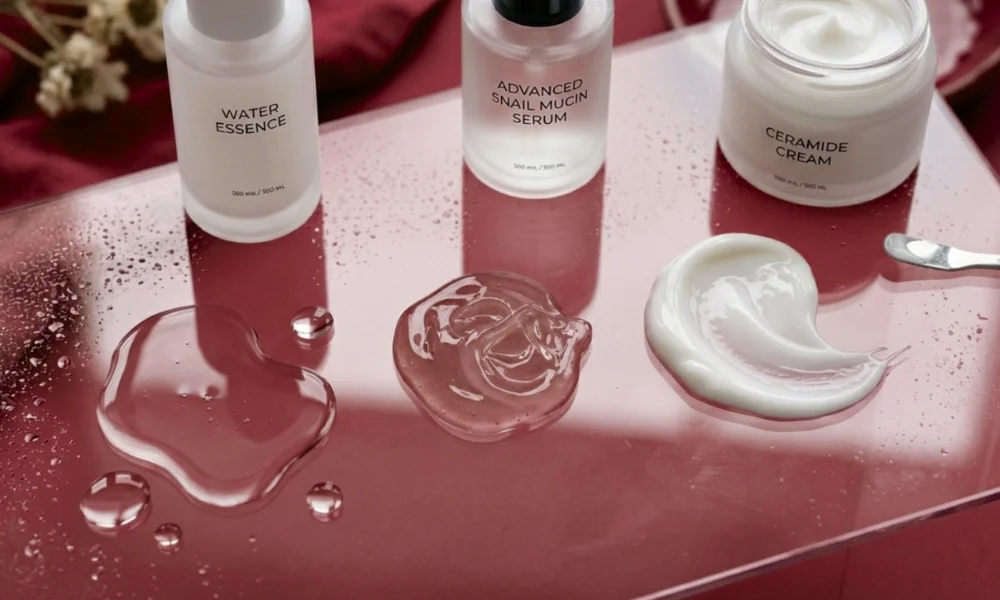
Forget the stinging, alcohol-based toners of the past. In a K-beauty glass skin context, toners are designed to reset hydration levels immediately after cleansing. Look for humectants like hyaluronic acid, glycerin, and panthenol.
Rather than using cotton pads which can be abrasive and wasteful pour a few drops into your palms and pat the product directly into your face. This warmth helps the skin drink up the moisture.
4: Essence (The Glass Skin Secret Step)
The essence is the single most defining step in any Korean glass skin routine. More concentrated than a toner but lighter than a serum, an essence provides a deep layer of hydration that gives skin its signature translucency.
For a true lit-from-within look, try the 3–5 light layers method: apply a small amount, let it absorb partially, and repeat. This creates a reservoir of moisture within the skin layers that lasts all day.
5: Glass Skin Serum (Targeted Treatment)
Serums are the heavy lifters. To achieve the glass skin effect, you should focus on ingredients that plump and brighten:
-
Niacinamide: Refines pore appearance and strengthens the barrier.
-
Vitamin C or Alpha Arbutin: Evens out skin tone and adds radiance.
-
Snail Mucin: A powerhouse ingredient often ignored by Western guides, snail mucin provides a unique bouncy texture and rapid repair.
If you are layering two serums, apply the thinnest one first. Wait about 30 seconds between layers to prevent pilling or product buildup.
6: Moisturizer to Lock It In
Your moisturizer acts as a seal, preventing all that previous hydration from evaporating.
-
Oily Skin: Use a lightweight gel-cream.
-
Dry Skin: Opt for a rich, emollient cream.
-
Sensitive Skin: Stick to ceramide-based formulas to keep the barrier intact.
For your nighttime routine, consider slugging applying a thin layer of an occlusive balm (like Vaseline) over your moisturizer to wake up with incredibly soft, glass-like skin.
7: SPF 30+ (Non-Negotiable)
Skipping sun protection renders the entire routine useless. UV damage causes hyperpigmentation, enlarged pores, and collagen loss all of which destroy the glass skin effect.
Korean sunscreens are often preferred for this routine because they are formulated to be essence-like, offering a dewy finish without the heavy white cast or greasiness common in some Western options. Remember to reapply every 2 hours if you are outdoors to maintain your protection and your glow.
AM vs PM Glass Skin Routine: Side-by-Side Schedule
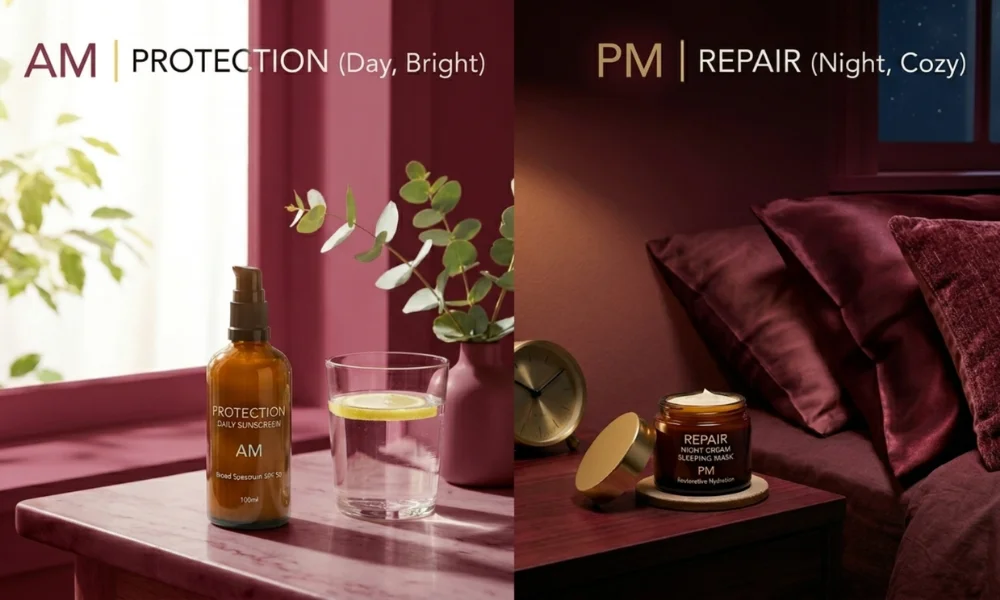
To maintain a glass skin routine effectively, your skin needs different support systems depending on the time of day. Morning routines focus on protection and hydration, while evening routines prioritize deep cleaning and repair.
| Step | Morning Routine | Night Routine |
| 1. Cleanse | Water-based cleanser | Oil cleanser + Water-based cleanser |
| 2. Prep | Hydrating toner | Exfoliating toner (2-3x/week) |
| 3. Treat | Vitamin C serum | Niacinamide + Hyaluronic serum |
| 4. Seal | Lightweight moisturizer | Rich moisturizer or sleeping mask |
| 5. Protect | SPF 30+ | Facial oil or “Slugging” (optional) |
How to Get Glass Skin at Home for Every Skin Type
Here is the breakdown:
Glass Skin Routine for Dry Skin
Dry skin lacks the natural oils necessary to sustain a glass look, so the strategy involves layering watery humectants like glycerin directly under thick occlusives. A pro move is to pat a few drops of facial oil over your moisturizer to lock everything in. You should strictly avoid foaming cleansers that leave your skin feeling squeaky clean, as this is a sign your moisture barrier has been stripped.
Glass Skin Routine for Oily and Acne-Prone Skin
The goal here is a dewy glow rather than a greasy shine. Use BHA (salicylic acid) to keep pores clear and stick to oil-free, water-based serums. Niacinamide is your hero ingredient for regulating oil while shrinking the appearance of pores. Finish with a lightweight gel-cream that absorbs instantly without clogging your skin.
Glass Skin Routine for Sensitive Skin
Redness and irritation are the enemies of translucency, so you must focus on barrier-repairing ingredients like Centella Asiatica, Panthenol, and Madecassoside. Safety is the priority; always patch test new products and avoid high-percentage acids or retinols that cause flaking.
Glass Skin Routine for Combination Skin
This requires a zonal approach where you apply different textures to different areas of the face. Use the multi-masking technique by applying a lightweight gel to your oily T-zone while reserving a richer, more emollient cream for your dry cheeks.
Best Products for Glass Skin Routine 2026 (Budget vs. Splurge)
| Category | Drugstore / Budget | High-End / Splurge |
| Cleansers | CeraVe Hydrating, The Face Shop Rice Water | Tatcha Rice Wash, Sulwhasoo Gentle Cleansing |
| Serums | The Ordinary Hyaluronic, COSRX Snail 96 | Peach & Lily Glass Skin, Drunk Elephant B-Hydra |
| Moisturizers | CeraVe Daily Lotion, Cetaphil Hydrating | Laneige Water Bank, Tatcha Water Cream |
| SPF | Beauty of Joseon, Round Lab Birch Juice | Supergoop Unseen, Tatcha Silken Pore |
5 Mistakes That Sabotage Your Glassy Skin
-
Over-Exfoliating: More is not better. Hitting the acids more than 3x a week destroys your barrier, leaving you red instead of radiant.
-
The Cloudy Day Trap: UVA rays penetrate clouds and glass. Skipping SPF today means sun damage tomorrow.
-
Active Ingredient Overload: Mixing Vitamin C, Retinol, and AHAs in one go is a recipe for a chemical burn. Space them out.
-
Mixing the Order: Applying oil before water-based serums creates a wall that no hydration can penetrate. Thinnest to thickest, always.
-
The Quitter’s Timeline: Skin cells take ~28 days to turn over. If you don’t stick to the plan for at least 4–6 weeks, you’ll never see the results.
How Long Does It Take to Get Glass Skin?
While social media filters might suggest an overnight transformation, the reality of the glass skin routine is tied to your skin’s natural 28-day cell turnover cycle. During the first two weeks, you will notice a significant boost in hydration and a softer texture as your moisture barrier begins to heal. By weeks three and four, flakiness typically subsides and the surface of your skin starts to smooth out.
The coveted glow and noticeable evening of your skin tone generally emerge between weeks six and eight. Achieving the true, high-definition glass skin effect where pores look refined and the skin appears translucent requires at least 12 weeks of dedicated consistency. This timeline ensures the deeper layers of the dermis are fully hydrated and healthy.
Glass Skin Lifestyle Habits Beyond Skincare
Your topical products do the heavy lifting, but your lifestyle determines the ceiling of your results. Getting 7 to 9 hours of sleep is non-negotiable because skin repair peaks during the overnight hours. Internally, drinking 2 to 3 liters of water daily and consuming a diet rich in omega-3s, vitamin C, and antioxidants provides the biological building blocks for a radiant complexion.
Environmental and mechanical factors also play a role. Using a humidifier in dry climates prevents trans-epidermal water loss, while swapping to a silk pillowcase reduces friction that can cause microscopic irritation. Finally, managing stress is vital, high cortisol levels are known to break down collagen and trigger inflammatory responses that dull your natural glow.
Conclusion
Achieving a mirror-like glow is not a matter of genetics; it is a result of science-backed hydration and disciplined consistency. By focusing on the 7 essential steps and supporting your skin with the right lifestyle habits, you can transform a dull complexion into a luminous, healthy one. Whether you are a K-beauty pro or just starting your glassy skin routine beginner journey, the steps in this DaithPiercing guide give you the structure to actually see results. Start layering your hydration today, and watch your skin find its most reflective, translucent version yet.
Frequently Asked Questions
Can I get glass skin in 7 days?
While you cannot achieve a permanent glass skin transformation in a week, you can certainly see a flash result. Within three to five days of intensive hydration and double cleansing, your skin will look significantly more plump and dewy, though true texture refinement takes at least a month.
What is the best glass skin serum for beginners?
A combination of Hyaluronic Acid and Niacinamide is the safest and most effective entry point. These ingredients work together to flood the skin with moisture while regulating oil production and calming redness without the risk of irritation.
How to get glass skin at home naturally?
You can start your journey with DIY methods like using fermented rice water as a brightening toner or applying honey masks for their antibacterial and humectant properties. Drinking adequate water and using green tea mists are also excellent natural ways to boost your antioxidant intake before investing in a full product lineup.
Is the K-beauty glass skin routine safe for sensitive skin?
Yes, it is entirely safe if you make the right modifications. Sensitive skin types should skip chemical exfoliants during the initial weeks, choose fragrance-free formulas, and always patch test new products to ensure the skin barrier is not overwhelmed by too many actives.
What ingredients should I look for in glass skin products?
To achieve that reflective look, prioritize products containing Hyaluronic Acid, Niacinamide, Snail Mucin, Ceramides, Glycerin, Centella Asiatica, and Panthenol. These ingredients focus on repair, hydration, and soothing.