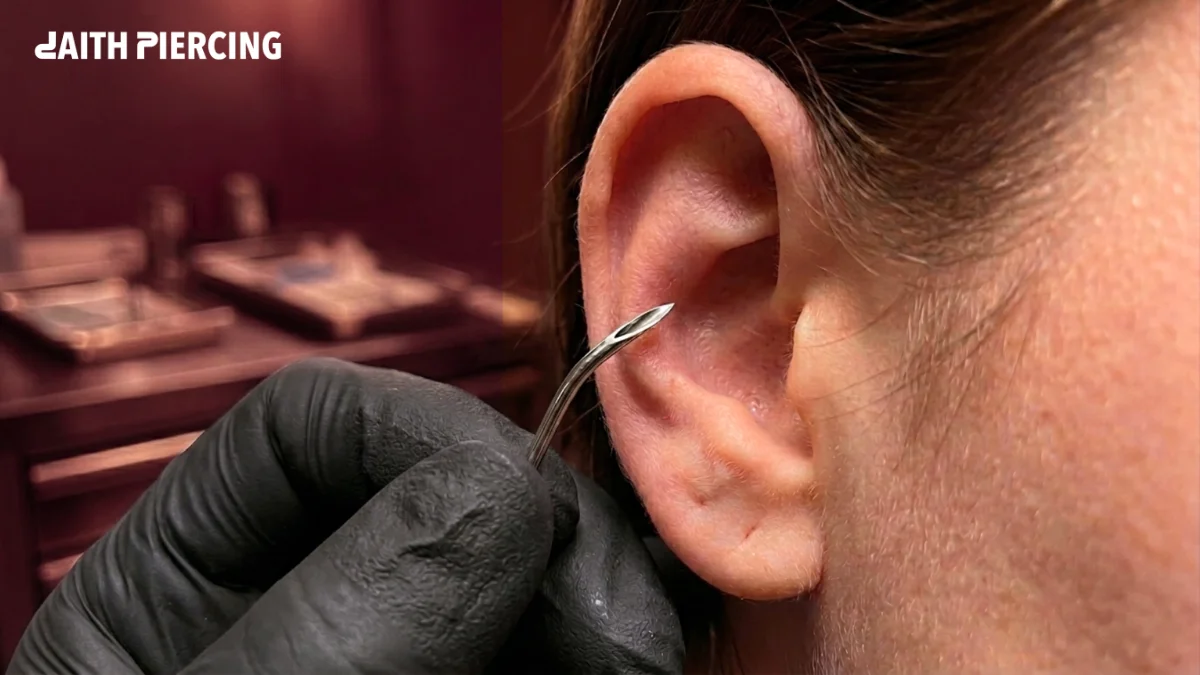
The curated ear trend is evolving, and the daith piercing has become its bold centerpiece. Whether you are drawn to its unique look or the viral claims about migraine relief, this piercing is a true standout in modern body art.
What is a daith piercing? A daith piercing is a professional ear cartilage piercing that passes through the innermost fold of the ear, called the crus helicis. It sits tucked away just above the ear canal entrance, offering a sleek and centered aesthetic.
At daithpiercing.io, we believe understanding the technical side is key to a successful heal. From the specific daith piercing placement to its symbolic meaning, this guide provides the expert insight you need for your next modification.
What Is a Daith Piercing? Placement, Pronunciation, and Origins
Understanding What is a daith piercing anatomy is essential for a successful experience. The daith is positioned at the crus of the helix, which is the innermost ridge of cartilage that bridges the gap between your ear’s outer rim and the opening of the ear canal.
To find your daith piercing location at home, try this simple trick:
-
Place your pinky finger at the entrance of your ear canal.
-
Slide it upward toward the top of your head.
-
The firm, curved shelf of cartilage you feel sitting directly above the canal is the target.
What makes this unique compared to a helix or tragus is its protected nature. Because it is tucked deep inside the ear’s bowl, it is less susceptible to external trauma though the ear cartilage piercing itself is much thicker and requires more pressure to perform.
The Pronunciation Gap: How Do You Say Daith?
One of the biggest tells of a piercing expert is how they say the name. Despite the common mistake of calling it a day-th, the correct pronunciation is doth (rhymes with goth).
The daith piercing meaning is steeped in history rather than just aesthetics:
-
The Origin: It was named in 1992 by legendary piercer Erik Dakota and a client.
-
The Meaning: It comes from the Hebrew word da’at, meaning knowledge or intellect.
-
The Debut: It first appeared in Fakir Musafar’s Body Play magazine, cementing its status as a smart piercing that requires both anatomical knowledge and technical precision.
True Daith vs. False Daith: What is a Daith Piercing?
At daithpiercing.io, we categorize piercings based on technical accuracy. A True Daith is a mark of master-level craftsmanship. Here is the difference:
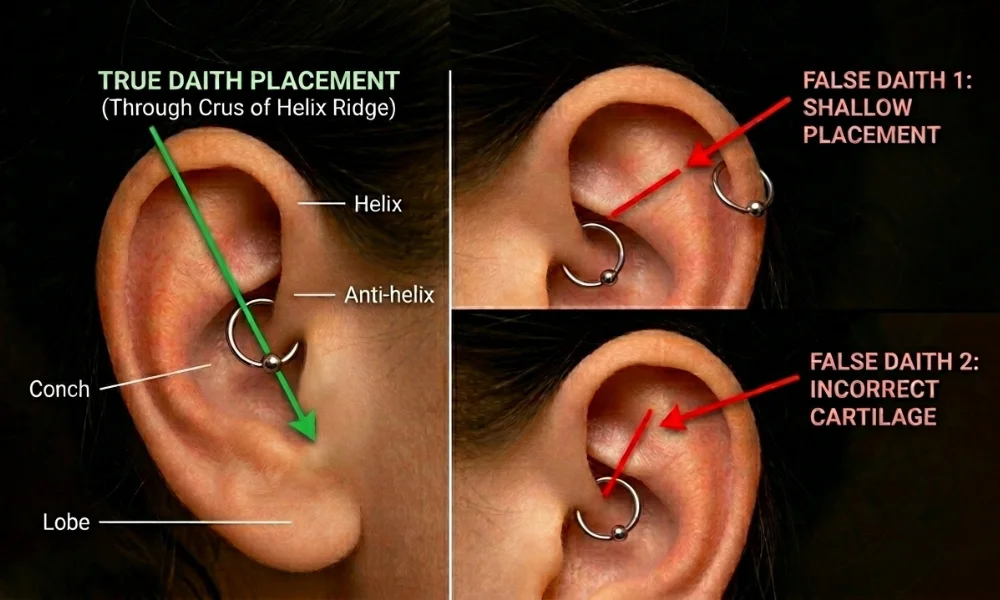
True Daith: The jewelry is placed so deeply that the ring appears to emerge directly from the ear canal. The entry and exit points should be invisible from a head-on view.
False Daith: The piercing is placed too shallow or too far outward on the ridge. This often happens when a piercer uses a straight needle instead of a specialized curved needle.
A false daith is not just an aesthetic issue, shallow daith piercing placement increases the risk of the body rejecting the jewelry, leading to migration or permanent scarring. Always verify that your piercer can achieve the sunken look of a true daith.
What Is Daith Piercing Pain Level? An Honest 1 to 10 Rating
If you want a sweetened response, then there is no room for that here. When you place it against a real-world scale, the majority of piercers give the daith piercing pain a rating of 5 out of 10 or even 6 out of 10.
The fact that the ear cartilage piercing is done in the crus of the helix, which is very sturdy and dense, means that you will have to deal with a lot of pressure and not the pain of being pricked. It is not really the pain that makes daith piercing special, it is more about the sound of cracking.
Since the piercing point is near the opening of your ears, you are likely to hear when the needle passes through the cartilage. Do not be scared of the noise since the feeling is only momentary. For a deeper dive into what to expect during the procedure, check out our full guide, Daith Piercing Pain: How Much Does It Really Hurt? (1–10 Scale).
What is a Daith Piercing? Daith Piercing Pain vs. Tragus vs. Rook
To help you gauge what to expect, we have compared the daith to other popular inner-ear placements.
| Piercing Type | Pain Rating | Sensation Description |
| Daith Piercing | 5–6 / 10 | Heavy pressure, distinct crunch sound, dull ache. |
| Tragus Piercing | 4–5 / 10 | Sharper pop, very quick, less cartilage density. |
| Rook Piercing | 6–7 / 10 | Intense pressure, passes through two layers of cartilage. |
What is a Daith Piercing Healing Timeline: Week by Week
Patience is vital for ear cartilage piercing success. Unlike soft tissue, the daith piercing healing process follows a strict biological schedule:
Days 1–3: Normal swelling, redness, and localized warmth.
Weeks 2–4: Minor crusting and clear fluid discharge (lymph) as the wound stabilizes.
Weeks 5–12: Surface pain fades, but the internal tunnel is still raw.
3–6 Months: The piercing looks healed on the outside, but it is not fully stable yet.
6–9 Months: Most people reach full internal healing in this window.
Up to 12 Months: The standard timeframe for slow healers or those with minor irritations.
Why Is the Daith a Slow Healer?
The daith piercing location is tucked away, making it a trap for moisture and hair products. Also, cartilage has a poor blood supply compared to earlobes, meaning the body takes longer to repair the tissue.
How Much Does a Daith Piercing Cost in the US?
When budgeting for your new addition, it is important to distinguish between the piercing fee (the professional service) and the jewelry cost. In 2026, the price reflects the technical expertise required for this specific daith piercing placement.
On average, you can expect the following price ranges across the United States:
| Studio Tier | Piercing Fee (Service Only) | Total Budget (Jewelry Included) |
| Budget Studios | $30 – $50 | $60 – $80 |
| Mid-Range Studios | $60 – $80 | $90 – $130 |
| High-End / APP-Certified | $80 – $100+ | $150 – $300+ |
What is a Daith Piercing The Hidden Cost: Jewelry and Aftercare
The total daith piercing cost is heavily influenced by your choice of metal. While surgical steel is the most affordable, we highly recommend investing in implant-grade titanium ($40–$80) or 14k gold ($120+) to ensure a smoother daith piercing healing process and avoid allergic reactions.
At daithpiercing.io, we always advise choosing your studio based on the piercer’s portfolio rather than the lowest price tag. A cheap daith performed with a straight needle can lead to permanent scarring, rejection, or chronic infection.
What is a Daith Piercing for Migraines: Does It Actually Work?
The buzz about the daith piercing revolves around how it is considered a cure for migraines. The belief stems from auricular acupuncture, where the daith piercing area is located at a certain pressure point associated with the vagus nerve. This idea works around the theory that stimulating the vagus nerve can disrupt the signal responsible for causing migraines.
Scientific Truth: What is a Daith Piercing?
Sure, while the tales of relief may be exciting, no scientific organization such as the American Migraine Foundation can claim the procedure as clinically effective. Most doctors believe any temporary relief comes from the placebo effect, and symptoms tend to reappear when the initial recovery period is over.
Here at daithpiercing.io, we encourage you to choose the piercing for its beautiful appearance. If you find yourself experiencing fewer headaches, it is just an added bonus always seek advice from a neurologist regarding medical treatment plans.
What Is Daith a Piercing Aftercare: Step-by-Step Cleaning Routine
Daith piercing success will depend on 50% of the piercing technique and 50% on how you care for it at home. As it goes about its unique daith piercing spot that lies deeply inside the ear, such a piercing tends to be particularly susceptible to bacteria. Here is an optimized aftercare routine that should guarantee the perfect daith healing:
Sanitize Your Hands: Always remember to carefully wash your hands using antiseptic hand soap before touching your ear.
Sterile Saline Spray: Utilize a specialized piercing aftercare spray with 0.9% sodium chloride solution. Spray from a distance of 3 to 6 cm from both sides of the ear.
Crust Care: In case there is any visible crust, wipe it with the help of a sterile saline-soaked cotton swab. Don’t try scrubbing it off with your nails.
No Rubbing Principle: Ear cartilage piercings hate moisture. Pat-dry the area using a one-time-use sheet of paper towel. Do not use tissues or cotton wool because its fibers may irritate your skin.
Keep Still: Never turn or play with the jewelry. This way, you disrupt the healing process.
Daith Piercing Sleeping Tips: What is a Daith Piercing?
Sleeping is where most people accidentally damage their daith piercing placement. To avoid piercing bumps and migration, follow these professional tips:

-
The Travel Pillow Trick: If you are a side sleeper, use a donut-shaped travel pillow. Place your ear in the center hole so the piercing suspended and under zero pressure.
-
Earbud Sabotage: Avoid using earbuds on the pierced side for at least 4–6 weeks. Since the daith sits right above the canal, earbuds press directly against the jewelry, causing pain and delaying healing.
-
Headphone Swap: Switch to loose-fitting over-ear headphones if you must listen to music, ensuring the cups do not touch the ear cartilage.
-
Satin Is King: Switch to a satin pillowcase. Unlike cotton, satin reduces friction and prevents your jewelry from snagging as you move during the night.
What is a Daith Piercing Infection Sign: When to Worry and What to Do
Distinguishing between a cranky piercing and a true infection is critical for your health. Because daith piercing anatomy involves deep cartilage, an infection can become serious if ignored. Use this side-by-side comparison to assess your daith piercing location:
| Normal Healing Signs | Potential Infection Signs |
| Mild redness and localized warmth | Deep purple or bright red discoloration |
| Light, clear, or pale crusting | Thick yellow, green, or foul-smelling discharge |
| Occasional dull ache or itching | Intense, throbbing pain that keeps you awake |
| Slight swelling in the first week | Excessive swelling that swallows the jewelry |
What Jewelry Is Used for Daith Piercings?
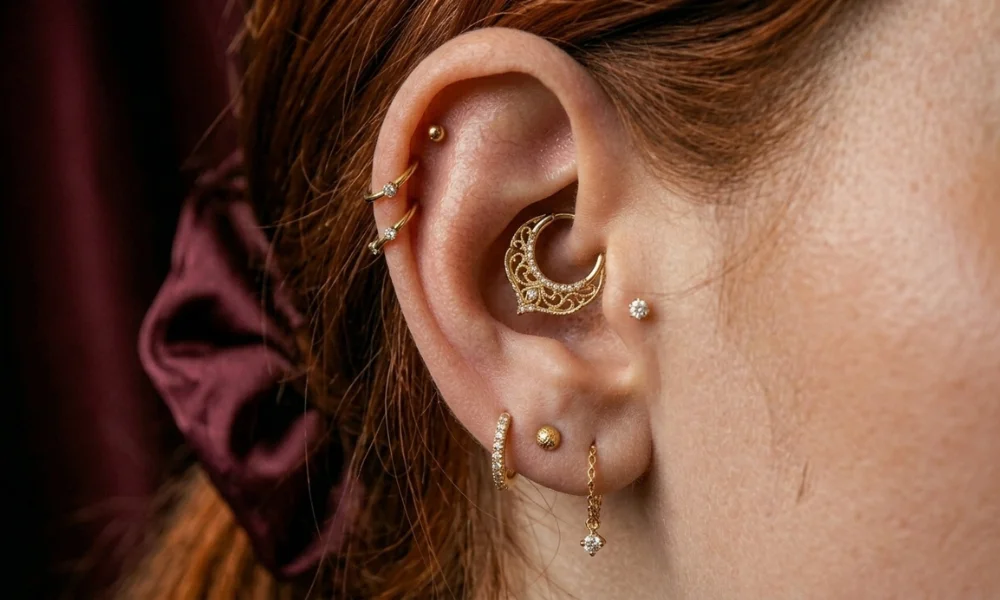
Selecting the right style is about balancing daith piercing anatomy with your personal aesthetic. Because the daith piercing location is a curved ridge, the jewelry needs to accommodate that specific shape.
-
Captive Bead Rings (CBR): The most iconic choice. The bead provides a focal point that sits perfectly centered in the ear’s bowl.
-
Clicker Hoops: These feature a hinged closure, making them the easiest to swap out once you have reached full daith piercing healing.
-
Curved Barbells: A minimalist option that offers a more subtle, tucked-away look.
-
Seamless Hoops: These provide a continuous, clean loop that is perfect for professional environments where you want a barely there feel.
Best Metals for a Daith Piercing: Especially While Healing
Metal quality is the number 1 factor in preventing piercing bumps. Implant-grade titanium is the gold standard for any ear cartilage piercing because it is nickel-free and hypoallergenic. For those who prefer luxury, 14k solid gold is an excellent biocompatible choice.
At daithpiercing.io, we strongly advise avoiding mystery metals or cheap surgical steel from mass marketplaces during the initial 6–9 months.
Conclusion: What is a Daith Piercing?
A daith piercing is more than just a trend. It is a sophisticated ear cartilage piercing that offers a unique blend of historical meaning and bold aesthetic appeal. While the links to migraine relief remain anecdotal, the visual impact of a well-placed daith is undeniable.
Before booking your appointment, remember that placement and aftercare are the keys to success. Whether you are here for the style or the science, daithpiercing is your ultimate resource. Explore our expert aftercare page, browse our premium jewelry guide, or use our studio directory to find a professional piercer near you.
Frequently Asked Questions
What side should I get my daith piercing on?
There is no medical rule on left vs. right. Some migraine believers get it on the side where they experience more pain. For aesthetics, choose based on which ear you sleep on less go for the opposite side.
Can you get a daith piercing with a small inner ear?
Yes, but anatomy matters. Some people have a very narrow daith fold. A professional piercer will assess your ear before proceeding and tell you if placement is possible.
How do I know if my daith piercing is healing properly?
Steady reduction in redness and swelling, mild crusting that clears up, and no fever or pus are all signs of healthy healing. If in doubt, visit your piercer.
Can I wear earbuds with a daith piercing?
Avoid earbuds for at least 4–6 weeks. They press directly against the daith and can cause irritation, trauma, and prolong healing.
What is the difference between a daith and a rook piercing?
A daith goes through the innermost cartilage fold above the ear canal. A rook sits higher up in the antihelix the ridge above the daith. Both are cartilage piercings but in completely different positions