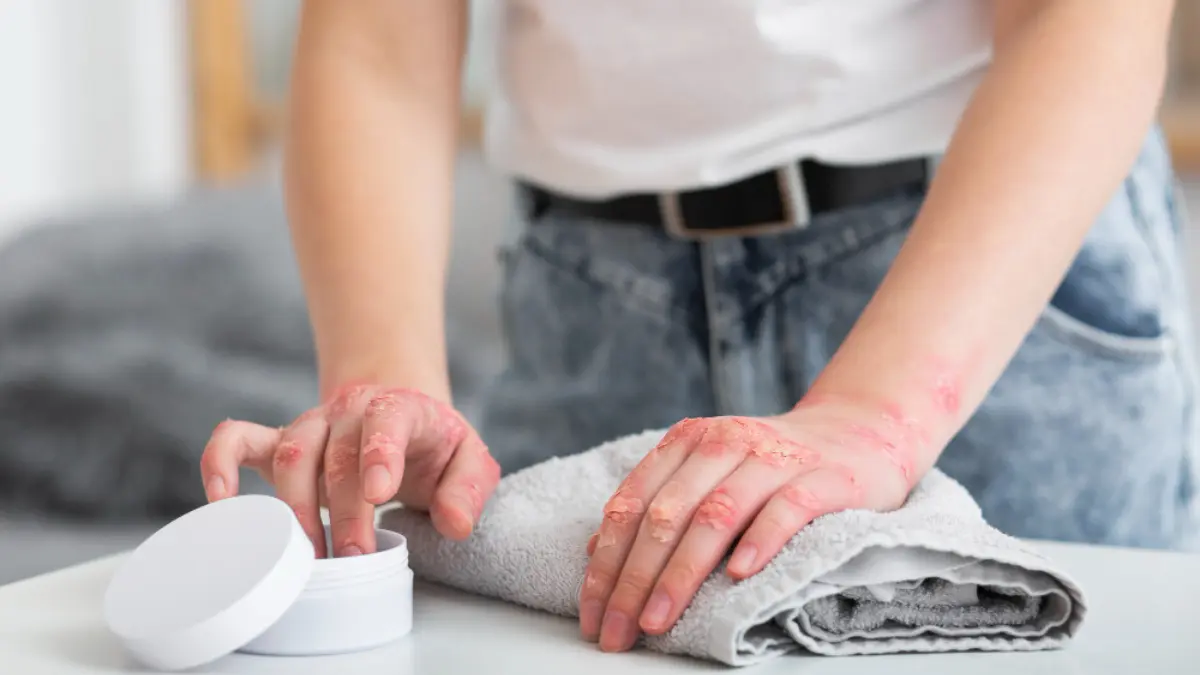
When pollen season hits, your skin gets attacked within hours of going outside, so skin barrier repair for allergies is very important. As immune cells break down your protective lipid layer, your face hurts, turns red, and itches. You’re not the only one who has trouble with a weakened skin barrier during allergy season.
Every spring, millions of people have skin that is sensitive to the weather, but most don’t know that their barrier is literally breaking down when their immune system attacks it. If you follow the right steps, skin barrier repair for allergies is completely reversible.
Understanding Skin Barrier Repair for Allergies: How Pollen Damages Your Protection
The stratum corneum forms a barrier to protect your skin. Think of it as a brick-and-mortar wall where skin cells are the bricks and lipids (ceramides, cholesterol, and fatty acids) are the mortar holding everything together. The job of this wall is easy: keep moisture in and things that bother you out.
During allergy season, when pollen particles touch your skin, they set off a chain reaction of immune responses. Histamine and cytokines (IL-4, IL-13) are chemicals that your body makes that cause inflammation. These chemicals wake up mast cells in your skin, which then go after the lipid structure of the barrier.
What happened? Your skin becomes leaky because the ceramide levels drop, moisture leaves faster, and irritants like pollen and bacteria can get deeper.
This process goes quickly. When you come into contact with pollen, you might notice that your skin feels tighter, more sensitive, and itchier than usual within a few hours. This is skin sensitivity that happens at certain times of the year.
Why Your Skin Feels Different: Seasonal Skin Sensitivity Explained
Seasonal skin sensitivity isn’t regular dryness. Key differences:
| Aspect | Pollen-Triggered Barrier Damage | Regular Dryness |
|---|---|---|
| Cause | Immune activation (IL-4/IL-13) | Low humidity, genetics |
| Sensation | Sharp stinging with any product | Tight, uncomfortable |
| Microbiome | Staphylococcus aureus overgrowth | Normal bacteria |
| Timeline | Worsens during high pollen days | Consistent year-round |
| pH Level | Elevated (6.5+) | Normal (4.5–5.5) |
| Recovery | 2–6 weeks with protocol | 1–2 weeks with moisturizer |
When pollen gets through your barrier:
- Water, moisturiser, and sunscreen all hurt.
- Red spots show up out of nowhere.
- The itch-scratch cycle starts
- You become more sensitive to things you used to be able to handle.
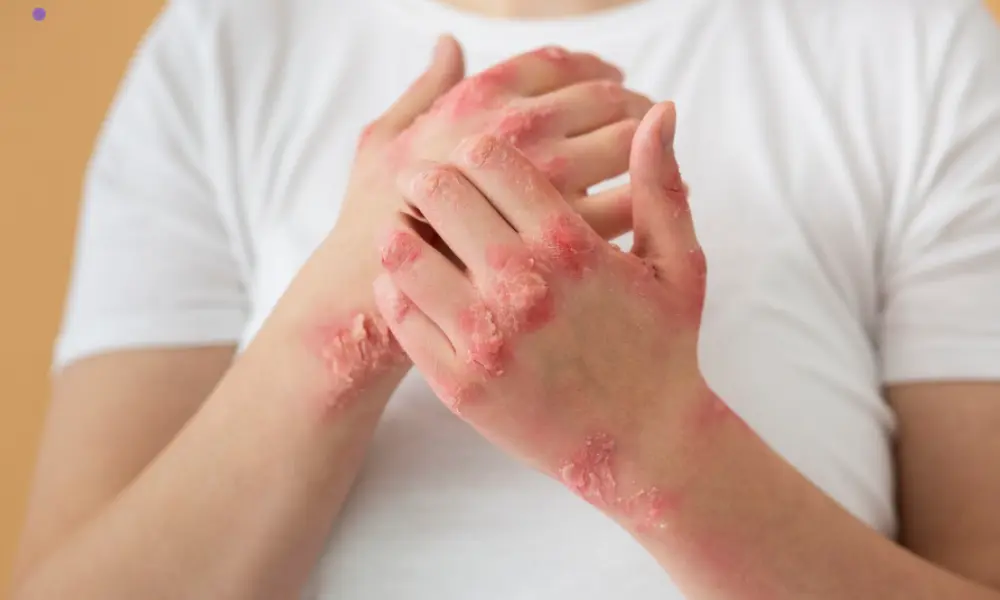
The Real Cause: Pollen Skin Rash vs. Regular Sensitivity
Not all red, irritated skin during allergy season is the same. Knowing which type you have changes your treatment approach.
| Symptom Type | Pollen Skin Rash | Contact Dermatitis | Regular Seasonal Dryness |
|---|---|---|---|
| Timing | High pollen count days | Specific areas (hands, cheeks) | Persistent throughout season |
| Associated Symptoms | Nose/eye itching, sinus pressure | Blisters or oozing | No allergic symptoms |
| Sting Response | Stings with any product | Localized stinging | Improves with moisturizer |
| Improvement Pattern | Better indoors, away from pollen | Doesn’t improve indoors | Consistent hydration helps |
| Itch Intensity | Visible scratching urge | Moderate itching | Tightness without intense itch |
If you have pollen-triggered barrier damage, recovery is different from regular moisturizing. Your immune system is actively attacking your barrier not just environmental stress drying it out.
Skin Barrier Repair for Allergies: The Three-Phase Recovery Protocol
In Skin barrier repair for allergies, there is a need for a phased approach where one suppresses the allergic immune system, restores the lipid matrix and gradually introduces other skincare products.
1: Skin Barrier Repair for Allergies: Immune System Suppression (Days 1–7)
The objective is to prevent further activation of mast cells and inflammation. This phase involves stripping down to the basics of a skincare regimen.
Cleanser: Use a pH-balanced cleanser with a pH value between 4.5 and 5.5 (similar to skin pH). Non-foaming, fragrance-free formulas are preferable since fragrances activate mast cells. Vanicream and CeraVe Hydrating are popular. The wash time should not exceed ten seconds because longer washing strips oils and induces inflammation.
Hydration: Hydrate your skin with hyaluronic acid or glycerine. Apply while the skin is still moist as dry skin is difficult to moisturize, and hydration can sting.
Moisturizers: Use a basic moisturizer free of ceramides, essential oils, and botanical extracts, which serve as hidden allergens. The purpose is a light hydrating layer that is unlikely to cause irritation.
Sunscreens: Use only mineral sunscreens (zinc oxide or titanium dioxide). Chemical sunscreens may oxidize on the surface and cause irritation due to damage to the skin.
What to put in: Nothing. Don’t use serums, essences, or actives. A lot of people use niacinamide or vitamin C to treat pollen sensitivity, but these make the stinging worse for the first week. Your barrier is too weak to handle active ingredients.
The sharp stinging should go away by day 3–5. Redness may last (this is normal and can take 2–3 weeks to go away completely).
2: Skin Barrier Repair for Allergies: Lipid Rebuilding (Days 8–21)
After acute inflammation resolves, it’s time for ceramides. This stage marks the start of real skin barrier repair, which in turn will address your allergic problems since you’ll repair your lipid barrier, rather than just address inflammation.
Apply a ceramide serum: Find products that contain ceramides AP, NP, and EOP in equal proportions to cholesterol and fatty acids. This formula imitates natural lipid composition of the epidermis. Apply it right after hydrator and before moisturizer.
Include a gentle active: Apply azelaic acid 10% (it is both anti-inflammatory and anti-bacterial, which makes it suitable for barrier issues with S. aureus overgrowth). Alternatively, try adding a 2-3% concentration of niacinamide to your moisturizer, not as an extra serum, but not higher than 5%, since it might be irritating even now.
Apply a moisturizer: It should now have ceramides among the top five ingredients listed or contain a ceramide complex.
Optional use of a probiotic product: It won’t hurt your barrier, but it might help restore healthy bacterial balance on your skin.
Products to continue avoiding: Fragrances, essential oils, strong retinoids, vitamin C, and highly concentrated niacinamide (5%).
On day 14, you should notice reduced reactivity of your skin. On day 21, your basic moisturizer shouldn’t sting anymore.
3: Skin Barrier Repair for Allergies: Tolerance Reintroduction (Days 22–56)
Once your barrier seems secure and can tolerate the basics without stinging, add back any additional products slowly.
Week 4: If you haven’t already done so in Phase 2, begin niacinamide 5%. You use this only 3 times per week because niacinamide boosts the production of ceramides and is anti-allergic; use too soon and it will sting. You know it is working if you feel some mild flushing.
Week 5: If the first product has been going well, try adding a second active. Azelaic acid 10% or a hydrating peptide serum is your best option. Allow for a 2–3 day gap between them.
Week 6+: If the above 4-5 weeks went smoothly, try retinoid or vitamin C again but only 1 time per week and always accompanied by ceramide moisturizer. Remember, retinoids promote increased cell turnover and your recovering barrier is not yet ready for that!
Avoid: Fragrances/essential oils until the end of allergy season. Your barrier is much stronger, but still sensitive. Just one fragrance-laden product may undo your hard work.
Hypoallergenic Skincare 2026 and Antihistamine Cream for Face
However, not all skin care products classified as hypoallergenic skincare can be relied upon when there is an allergy barrier breach. Hypoallergenic skincare in 2026 will entail fragrance-free, minimum preservatives, and ceramides abundant not just gentle skincare.
Criteria for hypoallergenic skincare:
- Fragrance free (no essential oils, plant extracts, or natural fragrances)
- Minimal preservatives (sodium benzoate, or no preservatives at all)
- Ceramides as main active
About antihistamine cream for the face: Topical antihistamines, such as hydrocortisone cream, can help with acute flares, but they are not long-term fixes. They hide the symptoms without fixing the barrier.
Some dermatologists suggest taking oral antihistamines (like fexofenadine or cetirizine) during pollen season along with topical barrier repair. This combination works better because oral antihistamines lower the body’s overall allergic response, and topical repair builds up your barrier again.
Common Mistakes During Allergy Season
Over-moisturization: Thick creams cause more damage because they hold heat and pollen particles against damaged skin. Lightweight moisturizers containing ceramides are preferable to heavy creams when actively rebuilding your barrier.
Incorporating soothing agents too early: Herbal extracts, colloidal oatmeal, and chamomile all sound soothing; however, they are all foreign substances that will set off mast cells if you have damaged skin. Do not use any of these until your barrier has stabilized (week 3 and up).
Continuing to exfoliate: Your barrier may be damaged due to pollen exposure. Until your skin’s barrier has healed (at least 3 weeks), refrain from using acids and physical exfoliants.
Constantly changing your routine/products: If a product stings, it’s easy to think the product itself is the issue and that you need to change it. Often, the issue is a damaged skin barrier, not the product. Give the product 3+ days.
Fragranced sensitive skin products: Fragrances are one of the most common allergens out there. Avoid all products that claim to be “for sensitive skin” but list “fragrance” or “parfum” as an ingredient.
The Bottom Line: Skin Barrier Repair for Allergies Works
You don’t need to see a dermatologist or pay for expensive treatments to fix your skin barrier repair for allergies. You just need to be patient and follow the right steps. Use the three-phase method: first, stop the immune response; second, rebuild with ceramides; and third, slowly add actives back in. Most people get better in 2 to 6 weeks.
You’ll know exactly what to do when pollen season comes around again. For now, use a pH-balanced cleanser and hypoallergenic skincare 2026 ceramide moisturiser. Your barrier will be grateful.
For more health and wellness tips besides skin care, check out daithpiercing.io for expert advice on how to stay healthy and recover during the seasons.
Frequently Asked Questions
How long does it take to recover skin barrier repair for allergies from pollen exposure?
Mild: 2–3 weeks. Moderate: 4–6 weeks. Severe: 8+ weeks. Most see improvement by day 5–7 following the three-phase protocol.
What’s the best hypoallergenic skincare 2026 for allergic skin barriers?
Zero fragrance, ceramides as primary ingredient, minimal preservatives. Best brands: Vanicream, CeraVe Hydrating. Avoid anything labeled natural or soothing they trigger mast cells.
Can I use antihistamine cream for face during the recovery protocol?
Yes, only during Phase 1 (first week). After day 7, switch to ceramide-based protocol. Antihistamine cream for face masks inflammation but doesn’t rebuild your barrier.
Does seasonal skin sensitivity get worse each year without treatment?
Yes. Untreated pollen skin rash damage worsens next season. Proper skin barrier repair for allergies breaks the cycle. Prevention: HEPA filters, indoor time on high pollen days, ceramide skincare year-round.