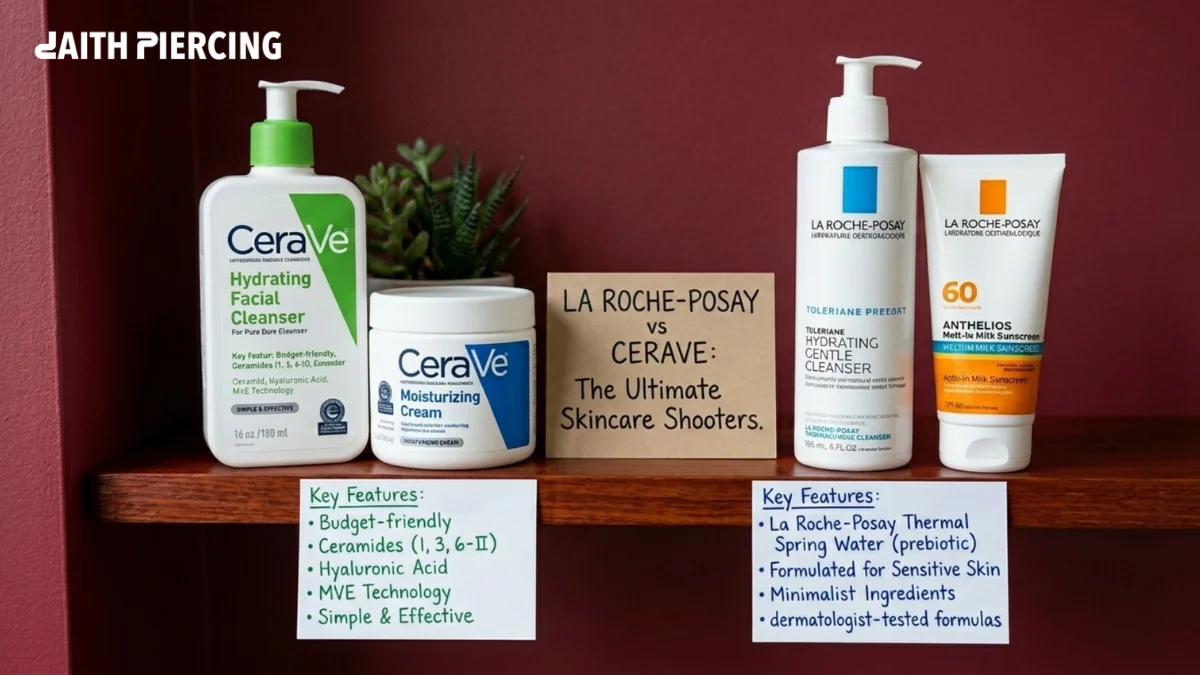
La Roche Posay vs CeraVe are the top dermatologist-recommended drugstore brands in 2026, both owned by L’Oréal. CeraVe wins for dry skin, barrier repair, and budget, priced at $10 to $20. La Roche Posay wins for sensitive skin, acne, and sun protection, priced at $15 to $45. Most dermatologists recommend using both together for the best routine.
You can find two skincare brands in almost every drugstore in the US: La Roche Posay vs CeraVe. Both are part of the L’Oréal family. There is no scent in either of them. Skin doctors and TikTok creators both love them. But they work on very different problems.
This 2026 head-to-head gives you a clear answer with real US prices, ingredient science, honest drawbacks, and expert insight if you can’t decide which one to choose.
La Roche Posay vs CeraVe: Quick Answer
This is the short version. CeraVe is better for dry or sensitive skin because it is cheaper and fixes barriers every day. La Roche Posay is the best for treating acne, redness, and protecting against the sun. Most people should mix the two. Read on for the full breakdown, which includes side-by-side product tests and honest pros and cons.
La Roche Posay vs CeraVe: At a Glance
Here is a snapshot of how the two brands stack up before we go deep.
| Feature | CeraVe | La Roche Posay |
|---|---|---|
| Founded | 2005, USA | 1975, France |
| Signature ingredient | 3 ceramides + MVE tech | Thermal spring water + selenium |
| Price range (US) | $10–$20 | $15–$45 |
| Best for | Dry, barrier repair, budget | Sensitive, acne, sunscreen |
| Weakness | Parabens in some formulas | Smaller sizes, higher cost |
| Core audience | Everyday users, teens, budget | Sensitive skin, adults, acne |
| Owned by | L’Oréal | L’Oréal |
Both brands belong to L’Oréal, which is why people often mix them up. But their DNA could not be more different.
La Roche Posay vs CeraVe: Ingredient Breakdown
Ingredients are where the real gap shows up between the two brands.
| Ingredient | CeraVe | La Roche Posay |
|---|---|---|
| Ceramides | Yes, 3 types (1, 3, 6-II) | In select products |
| Hyaluronic acid | Yes | Yes |
| Niacinamide | Most formulas | Select formulas |
| Thermal spring water | No | Yes, in every product |
| Selenium antioxidant | No | Yes, naturally present |
| Panthenol (B5) | Select products | Yes, Cicaplast range |
| Shea butter | Select products | Yes, Toleriane and Lipikar |
| Parabens | Yes, in some formulas | Paraben-free core lines |
| Fragrance | None in core range | None in core range |
CeraVe is the best at delivering ceramides. Over time, those ceramides will rebuild your skin barrier from the inside out.
La Roche Posay is the best at calming, soothing, and reducing inflammation. That’s why La Roche Posay works faster on reactive skin. Sensitive users will appreciate that both brands keep their main lines free of scents.
La Roche Posay vs CeraVe: Head-to-Head Product Face-Offs
Now for the real tests. Here is how their most popular products compare side by side.
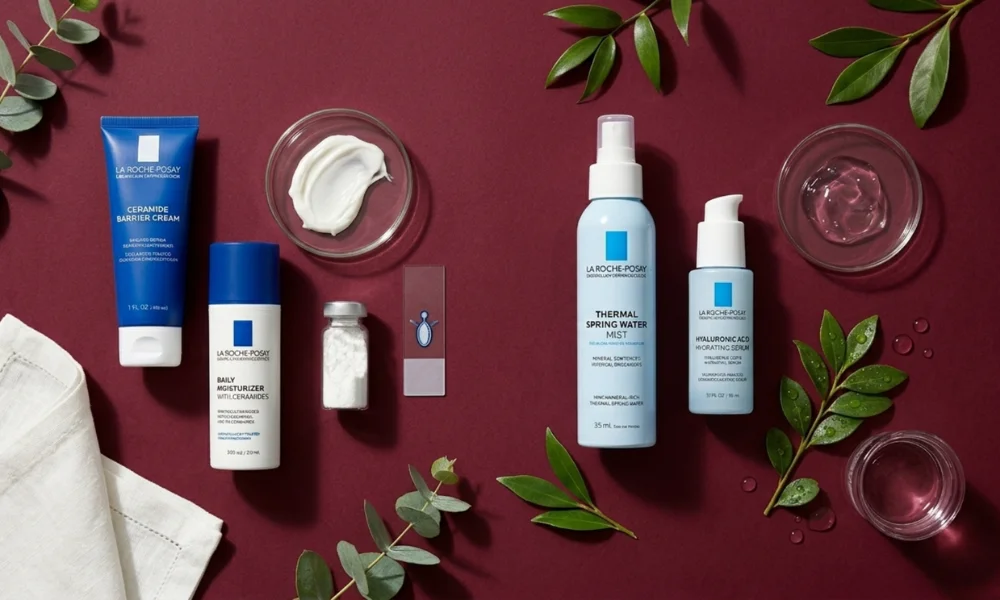
La Roche Posay vs CeraVe Cleanser
For 16 ounces, the CeraVe Hydrating Cleanser costs about $16. It is creamy, doesn’t foam, and is soft on dry skin.
It costs about $17 for 6.76 oz. of the La Roche Posay Toleriane Hydrating Gentle Cleanser. It uses micellar technology and feels softer on easily irritated skin. Both get rid of dirt, sunscreen, and light makeup without hurting the skin.
CeraVe is the best choice for everyday use and value. La Roche Posay is good for skin that is sensitive and reactive.
La Roche Posay vs CeraVe Moisturizer
For 19 ounces, the CeraVe Moisturizing Cream costs about $20. It is thick, creamy, and full of ceramides.
The La Roche Posay Toleriane Double Repair Face Moisturizer costs about $25 for 2.5 ounces. It is lighter and looks good under makeup and sunscreen.
CeraVe wins for deep hydration and value. La Roche Posay for layering during the day.
La Roche Posay vs CeraVe Sunscreen
You can get the CeraVe Hydrating Mineral SPF 30 for about $17. It works well, but it can leave a white cast on medium and dark skin tones.
The La Roche Posay Anthelios Melt-in-Milk SPF 60 costs about $37 and goes on smoothly without leaving any residue. People all over the world think Anthelios is one of the best sunscreens out there.
La Roche Posay is the winner. Every dollar spent on Anthelios is worth it.
La Roche Posay vs CeraVe for Acne
The CeraVe Acne Control Cleanser has 2% salicylic acid and costs about $16.
The La Roche Posay Effaclar Duo costs about $30 and has benzoyl peroxide and niacinamide in it. Their Effaclar Adapalene Gel 0.1% is also available without a prescription for $35 and is thought to be almost as strong as a prescription in the US.
La Roche Posay is the winner. The Effaclar line is more clinical and exact.
La Roche Posay vs CeraVe by Skin Type and Concern
Different skin, different winner. Here is a quick guide broken down by real-world skin needs.
Sensitive and Rosacea Skin
La Roche Posay wins this time. The thermal water and Cicaplast Baume B5 quickly calm redness and flushing. CeraVe is good for mild sensitivity, but La Roche Posay is better for rosacea because it has more anti-inflammatory properties.
Dry and Eczema-Prone Skin
This one is a draw. CeraVe is a great deal for skin that is only slightly or moderately dry. La Roche Posay Lipikar Baume AP+M is the best choice for severe eczema because its microbiome-repair formula helps balance bacteria on skin that is already damaged.
Oily and Acne-Prone Skin
La Roche Posay is the best for skin that is oily and prone to acne. The Effaclar line is better at getting rid of clogged pores, blackheads, and active breakouts than CeraVe’s acne line. The Effaclar Adapalene Gel is also one of the strongest over-the-counter retinoids you can buy in the US.
Mature and Aging Skin
La Roche Posay’s Retinol B3 Serum and Hyalu B5 line are better for fine lines and dull skin. These products mix retinol or hyaluronic acid with other ingredients that calm the skin. The Resurfacing Retinol Serum from CeraVe is gentler and better for people who are new to retinol and want to ease into anti-aging.
La Roche Posay vs CeraVe for Pregnancy, Teens, and Men
CeraVe is a better option during pregnancy because many of their staple products do not contain ingredients such as retinoids and salicylic acid that are usually prohibited. Consult your physician before using any of the two brands. Teens should use CeraVe because of affordability, compact size, and less complicated formulation. Men can use either of the two brands.
La Roche Posay vs CeraVe: Pricing and Where to Buy in the US
Price matters. Here is how the two compare across major US retailers.
| Product | Amazon | Ulta | Walmart | Target |
|---|---|---|---|---|
| CeraVe Moisturizing Cream (19 oz) | ~$20 | ~$22 | ~$18 | ~$19 |
| LRP Toleriane Double Repair (2.5 oz) | ~$25 | ~$25 | ~$24 | ~$24 |
| CeraVe Hydrating Cleanser (16 oz) | ~$16 | ~$18 | ~$15 | ~$16 |
| LRP Anthelios Melt-in-Milk SPF 60 | ~$37 | ~$40 | ~$36 | ~$37 |
CeraVe tends to be cheaper at Walmart and Target. La Roche Posay runs better deals on Amazon and during Ulta’s 21 Days of Beauty. Ulta Platinum and Diamond members get extra points on La Roche Posay purchases. Prices are estimates based on available data and change with seasonal sales.
La Roche Posay vs CeraVe: Honest Drawbacks
No brand is perfect. Here is what reviewers and dermatologists flag.
CeraVe Drawbacks You Should Know
Methyl and propylparaben ingredients are present in some CeraVe products for preservation purposes. There was a lawsuit against the product in 2022 due to possible PFAS in some items; however, the formula was changed afterwards. Some people experienced acne or stinging reactions, and these were possibly related to their skin type.
Drawbacks to La Roche Posay That You Should Be Aware Of
Firstly, it may be expensive for you because of small quantities provided. It can even overdry the skin that is already dry in some people due to the Effaclar line.
La Roche Posay vs CeraVe: Can You Use Both Together?
Definitely yes, and most dermatologists even suggest it. Both products are free from perfumes and comedogenic substances, and they share similar scientific principles. When combined, you get the affordability of CeraVe basics along with the clinical effectiveness of La Roche Posay solutions.
An effective combination regimen:
- Morning: CeraVe Hydrating Cleanser, CeraVe Moisturizing Cream, LRP Anthelios SPF 60
- Night: CeraVe Hydrating Cleanser, LRP Cicaplast Baume B5 or LRP Toleriane Double Repair
The total cost for the regimen is around $80. With daily application, the products will last you up to 2-3 months, making the cost equal to roughly $1 per day. You should notice some changes in your skin in 3-4 weeks.
Final Verdict: Is La Roche Posay Better Than CeraVe?
There are no winners overall. Choose CeraVe if you prefer budget-friendly barrier restoration, easy-to-understand ingredients, and larger bottles. Choose La Roche Posay if you require treatment for acne, rosacea, sunscreen, or skin sensitivity issues. For many, the combination of both will be the ultimate winner. These two products complement each other flawlessly and provide dermatologist-quality treatment at an affordable price point.
Conclusion
Deciding on La Roche Posay vs CeraVe doesn’t mean deciding on a better brand but rather finding one that aligns with your skin needs. CeraVe makes things easy by ensuring simplicity, affordability, and focusing on the skin barrier. On the other hand, La Roche Posay provides clinical products to address issues such as acne, irritation, and sun damage. Between the two brands, there’s almost everything you can expect from a good skin routine without having to pay extra. For more unbiased skincare insights and reliable product recommendations, visit here daithpiercing.
Frequently Asked Questions
Why do dermatologists recommend CeraVe?
Dermatologists recommend CeraVe because it contains three essential ceramides, hyaluronic acid, and niacinamide in simple, fragrance-free formulas. The MVE delivery system also keeps skin hydrated for up to 24 hours, which supports long-term barrier repair.
Is La Roche Posay safe for daily use?
Yes. La Roche Posay is safe for daily use on most skin types, including sensitive and acne-prone skin. Its fragrance-free Toleriane and Cicaplast ranges are tested on reactive skin and are gentle enough for morning and night routines.
Does La Roche Posay cause breakouts?
Most La Roche Posay products are non-comedogenic, meaning they do not clog pores. However, richer creams like Toleriane Intense may trigger breakouts in very oily skin. Stick to the Effaclar line if you are acne-prone.
Can I use CeraVe and La Roche Posay in the same routine?
Yes. The two brands work well together because they share fragrance-free, non-comedogenic, and science-backed formulas. A popular combo is CeraVe Hydrating Cleanser with La Roche Posay Toleriane Double Repair moisturizer.
Is La Roche Posay good for acne?
Yes. La Roche Posay is one of the best drugstore options for acne. The Effaclar line, especially the Adapalene Gel 0.1%, is considered near-prescription strength and works on whiteheads, blackheads, and inflamed pimples.