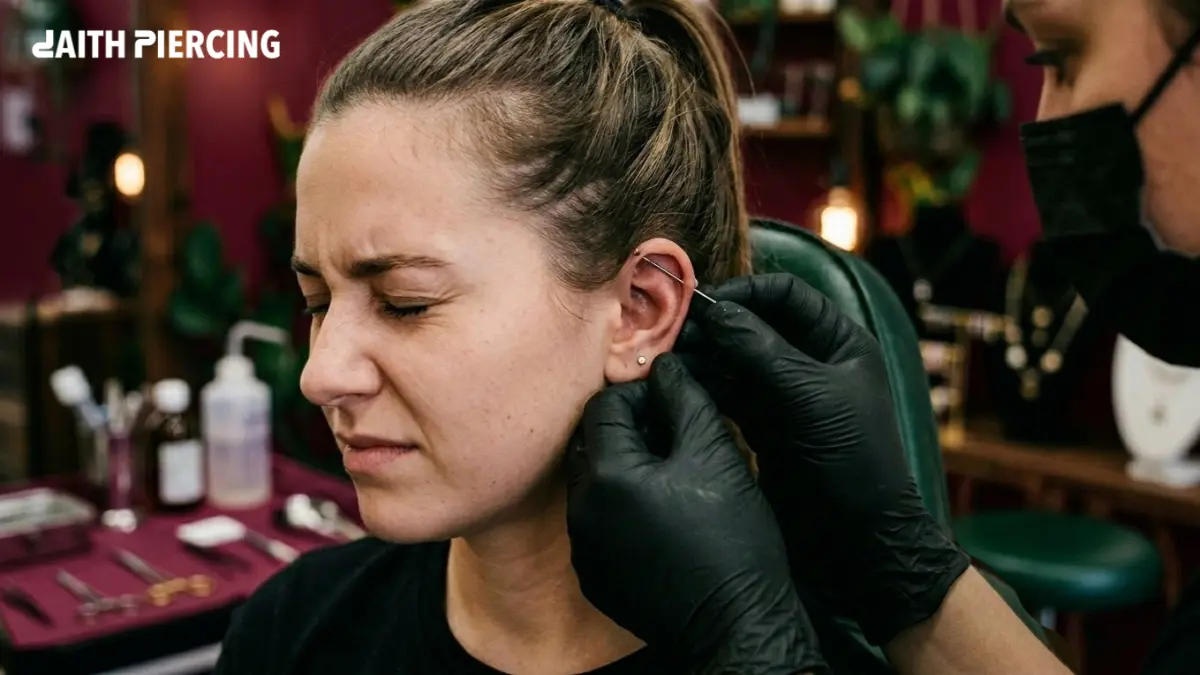
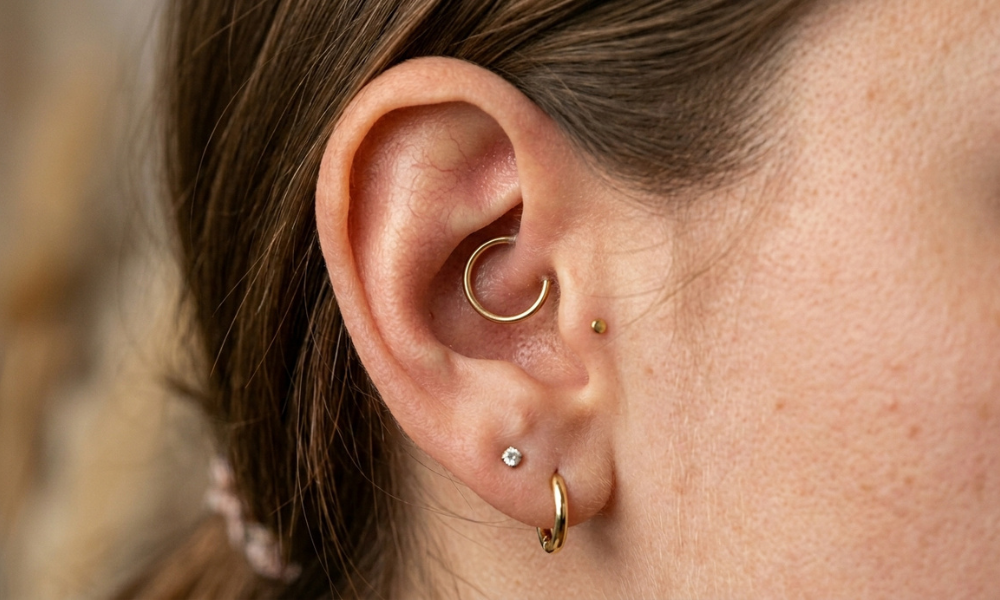
Daith piercing pain is real, but it doesn’t last long, and for most people, it’s easier to deal with than they thought. Daith piercing pain usually falls between a 5 and 7 on a scale of 1 to 10, which means it is a moderate to moderately high sensation. The needle goes through the crus helicis, which is the thick fold of cartilage above your ear canal. This will cause a sharp pinch and then a few seconds of intense pressure.
At DaithPiercing.io we give you honest, experience-based advice to help you get ready. This guide explains the daith pain scale, compares daith pain to helix pain directly, and tells you exactly how bad a daith hurts during the procedure and while it heals. If you’re nervous about the crunch or the recovery, we have the practical tips you need for a smooth daith piercing experience.
How Much Does Daith Piercing Pain Actually Feel Like?
Before addressing what you can expect in terms of daith pain, you need to get your expectations in check. First of all, this is definitely not the same type of experience you would have with an earlobe snap. We’re talking about piercing crus helicis, one of the sturdiest types of cartilage in the ear.
What You Feel When Undergoing the Procedure
Contrary to popular opinion, the sensation felt when piercing daith is not necessarily sharp or quick. For the most part, the experience resembles squeezing something tightly. The cartilage is hard and located inside your ear, thus the piercing needle has to move along a particular curve, and the time to pierce is around 6 to 9 seconds quite unlike the average helix and earlobe piercings.
The experience is typically divided into three phases:
- The first pinch: Sharp localized sensation at the point where the needle is inserted.
- The crunch: An interesting audio sensation associated with the needle moving along the cartilage.
- The dull throb: After transferring the piercing piece to the ear, the sensation changes to a warm and heavy feeling which can last up to several hours.
Remember: While piercing itself is quite uncomfortable, the entire process is completed way faster than you tie your shoes.
Daith Piercing Pain Scale: Rated 1 to 10
To help you visualize where this sits in the hierarchy of body modification, we’ve broken down the daith pain scale compared to other popular placements. Based on available data and client feedback, here is how the daith stacks up:
| Piercing Type | Pain Rating (1–10) |
| Earlobe | 2–3 |
| Helix | 4–5 |
| Tragus | 5–6 |
| Daith | 6–7 |
| Conch | 6–7 |
| Rook | 7–8 |
| Industrial | 8–9 |
Does Cartilage Thickness Affect Daith Piercing Pain?
One thing that generic guides often miss is the anatomy of each person. Not all ears are the same. The thicker your crus helicis is, the worse the daith will hurt during the first procedure.
If you have naturally thick or stiff cartilage in that area, the needle will have a harder time getting through. This could make the crunch last a little longer and hurt more. On the other hand, people with thinner, more flexible cartilage often say that their experience is smoother and faster.
Before you make an appointment, ask your piercer to look at the structure of your ear. They can tell you how much pain you can expect based on how dense your cartilage is and the exact angle they need to use to get the best aesthetic result.
Daith Piercing Pain During Healing: Stage by Stage
The first needle poke is just the beginning. Being buried so far back in the ear makes it more protected from bumps, but the daith piercing pain healing process takes an almost predictable path. Learning about the steps involved can help you understand whether you’re dealing with typical healing or something that needs extra attention.
Step 1: The First Two Weeks (Painful Acute Period)
Right after you leave the studio, the pierced region will feel warm, sensitive, and swollen. For the next two weeks, it is expected for the pain to shoot through when you move your jaw or touch your earlobe. Continuous throbbing pain, inflammation, and swelling around the site are common physical reactions to the injury.
The most frequent cause of daith piercing pain at this stage is sleep. As you turn to one side in your bed, you may put pressure on the cartilage, increasing the pain.
Tip: Get yourself a travel pillow and place your earlobe in the middle hole for added protection.
If you notice more than just a throb such as an unusual growth be sure to read our guide on Daith Piercing Bumps: Why They Happen and Proven Ways to Heal Fast to stay ahead of the curve.
Phase 2: Weeks 3-12 (Sensitivity Period)
By the end of the first month, the pulsing sensation should have disappeared. Nevertheless, the daith piercing process gets into its tricky phase when the ear feels okay until something is done to irritate it.
Pain at this stage tends to be reactive pain when you encounter sharp stabs due to Hair strands, Wearing knitted caps and beanies and also putting on T-shirts while dressing up.
In addition, you should expect the formation of crusties (lymph fluids) from your piercing sites. Even if the crusts appear to be itchy, don’t scratch them because that would pull on the newly healed fistula, making the pain worse.
Stage 3: Months 3 to 9 (The Last Healing Stage)
Your piercing may look and feel done by the fourth month, but the tissue inside is still very fragile. It usually takes 6 to 9 months for a full daith piercing to heal, but for some people, it can take up to a year, depending on how thick their cartilage is and how well their blood flows.
During this last stretch, any pain you feel is usually a sign of irritation rather than the pain you felt at the beginning of the procedure. It’s time to see your piercer if the area gets hot to the touch or starts to leak fluid that isn’t clear.
For most people, though, this stage is just about being patient. The best way to avoid a late-stage pain relapse is to not change your jewelry too soon.
Daith Piercing Pain vs Other Ear Piercings: Which Hurts More?
When deciding on a new addition to your ear stack, the daith piercing pain compared to other cartilage spots is usually the deciding factor. While the pain scale gives you a number, the feeling of the pain varies wildly depending on the location of the nerves and the thickness of the tissue.
Quick Comparison: Daith vs. Other Popular Ear Piercings
| Piercing Type | Pain Level (1-10) | Sensation Type | Healing Time |
| Earlobe | 2/10 | Quick, sharp pinch | 6–8 Weeks |
| Helix | 4/10 | Fast sting | 6–9 Months |
| Tragus | 5/10 | Pressure “pop” | 6–12 Months |
| Conch | 6/10 | Deep, dull thud | 6–12 Months |
| Daith | 6.5/10 | Intense pressure & “crunch” | 6–12 Months |
| Rook | 7/10 | Thick, sharp pressure | 6–12 Months |
| Industrial | 8/10 | Double puncture sting | 9–12 Months |
The Verdict: Daith vs. Tragus
Most piercers and body piercers in the US agree that the daith hurts a little more than the tragus if you have to choose between the two. The tragus is a quick puncture, but the daith is a thicker, curved fold of cartilage that needs a longer “push” time, usually 6 to 9 seconds.
The daith, on the other hand, is often thought to be easier to deal with in the long run than a helix or industrial because it is hidden away and won’t get caught on hair or glasses.
If you are planning to build a 2026 constellation stack, the daith is a high-impact choice that is well worth the few seconds of intense pressure.
How to Reduce Daith Piercing Pain: Before, During, and After
To lessen the pain of daith piercing, you should prepare for your appointment 24 hours in advance by eating a big meal to keep your blood sugar stable and staying away from alcohol or blood thinners that make you more sensitive.
Practicing box breathing and consciously relaxing your jaw and shoulders during the procedure makes it easier for the needle to move through the dense crus helicis. The LITHA method, which means leaving the jewelry alone, is the best way to deal with pain after that.
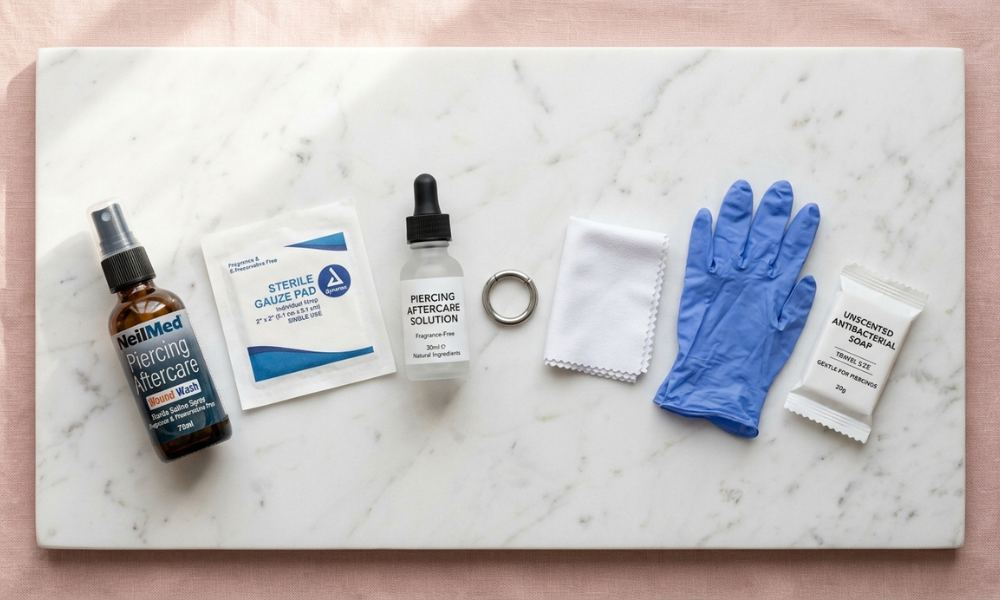
A travel pillow can help relieve pressure overnight. A simple sterile saline spray twice a day can help keep irritated skin calm while it heals. This way, the site will heal without the extra flare-ups that can happen when you clean it too much or use harsh chemicals.
Daith Piercing Pain and Migraines: What the Research Says
A lot of people study daith piercing pain due to its miracle cure effect on migraines. Yet, it is important to draw a line between viral information and facts.
The Science: Does It Exist?
Here’s the thing: There’s no clinical proof that supports a correlation between daith piercing and migraines relief. Neither does any reputable organization, like the American Migraine Foundation, recognize the piercing as a clinical treatment, due to the lack of information.
The Vagus Nerve Theory
This idea originates from auricular acupuncture therapy. Daith is close to the pressure point that affects the vagus nerve. It is claimed that piercing induces neuromodulation, which interrupts pain signals being sent to the brain.
Anecdotes vs. Placebo
Although many people have noted substantial migraines being cured by daith piercing, most researchers believe this is simply the effect of the placebo. With an intense feeling of cure, there is likely to be a momentary release of endorphins, but once the piercing heals, causing the throb sensation to reduce, the migraines will be back.
Responsibility Disclaimer: In case you regularly suffer from migraines, please make sure to see a neurologist for advice. A daith piercing is first and foremost an attractive one; the benefit of curing migraines is merely an added advantage.
Signs Your Daith Piercing Pain Is Not Normal
Healing pain is expected to get better within one week. In case your daith piercing pain worsens or fails to heal in a typical manner, be on the lookout for these warning signs:
- Warning Signs: When to Consult a Physician
- Worsening Pain: Pain that increases after the first 7 to 10 days.
- Increasing Redness: Irritation and warmth spreading outside the pierced area.
- Discharge: Pus discharge that is thick and yellowish-green (not the usual clear lymphatic fluid).
- Systemic Reaction: Fever or chills.
- Incorporation: Jewelry starts becoming embedded in the skin or disappears.
Safety Alert: Should you observe any of these signs, seek medical attention without delay. Attempting to take out the jewelry on your own may result in the formation of a closed fistula in the cartilage.
Conclusion
In the end, daith piercing pain is a mild, manageable, and short-lived experience that usually falls between a 5 and 7 on the pain scale. The first crunch and pressure may feel strong, but the pain doesn’t last long compared to the years of style the jewelry gives you. Three main things will affect how your piercing feels: the way your cartilage is shaped, how skilled your piercer is, and how well you take care of it afterward.
At daithpiercing.io, we explain each step of the piercing process so you know what to expect and feel good about it when you’re done. Want to know more? Read our guide on the Daith Piercing Bump to learn what to look out for as it heals.
Your pain will go away. Your piercing will last forever.
Frequently Asked Questions
How bad is daith piercing pain on a scale of 1 to 10?
Most people rate the daith piercing pain between a 6 and 7 out of 10. While it involves a sharp pinch and intense pressure, many report it is far more manageable than they initially feared.
How long does daith piercing pain last?
The intense procedural pain lasts only 6–9 seconds. Post-piercing soreness typically fades within 2–4 weeks, though the area may remain sensitive to touch for 3–6 months.
Is a daith piercing more painful than a tragus piercing?
The daith is generally considered slightly more painful than a tragus because the cartilage is thicker and the needle must follow a longer, curved path.
Can I use numbing cream for a daith piercing?
Yes, topical creams can dull surface pain, but you must confirm with your piercer first; some professionals prefer the skin to be in its natural state for better precision.
Does a daith piercing help with migraine pain?
There is no scientific evidence proving daith piercings treat migraines. While anecdotal success exists, any relief is likely a temporary placebo effect or nerve response.