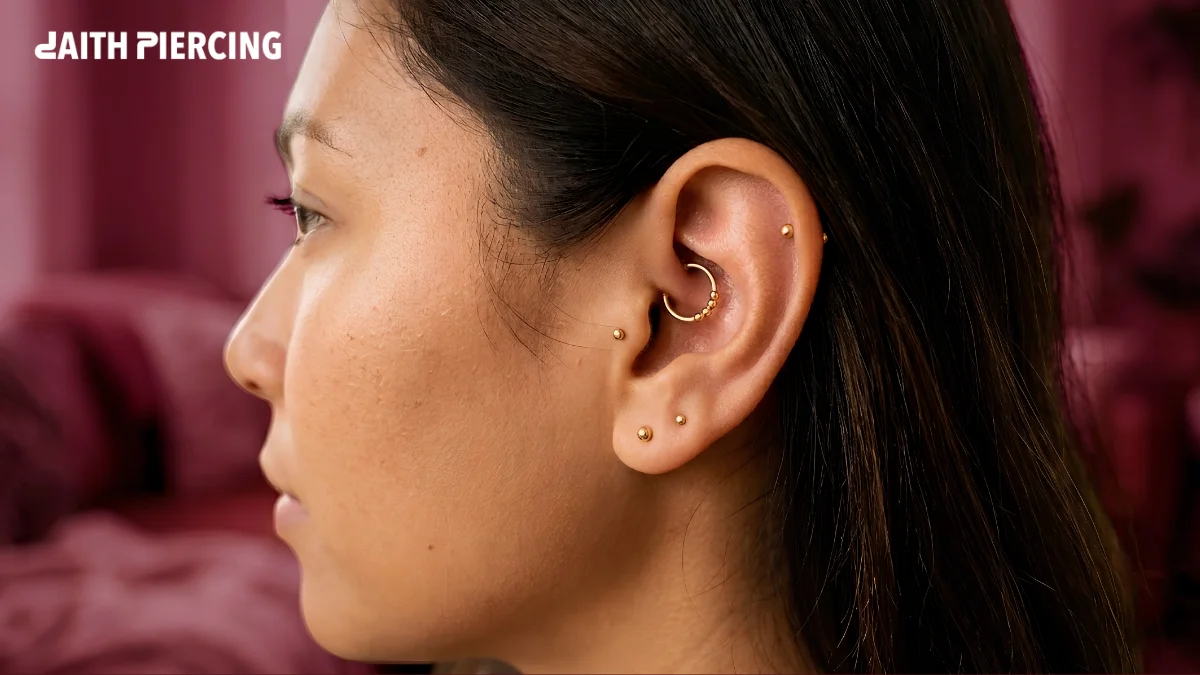
If you have just gotten your new ear curation started, you might be tempted to think you are in the clear after a few weeks of minimal redness. However, the most common mistake we see is assuming a piercing is healed just because the surface looks fine. At DaithPiercing, we get asked about daith piercing healing time more than any other topic. Generally, a daith piercing healing period can last anywhere from 6 to 12 months, though for some, it may take even longer to reach full maturation.
Before we dive into the details, here is a quick look at the daith piercing recovery time expectations:
| Phase | Timeline |
| Average daith piercing healing time | 6–12 months |
| Minimum healing before jewelry change | 6–8 months |
| Initial swelling subsides | 2–4 weeks |
| Downsizing window | 6–8 weeks |
| Signs it’s fully healed | No discharge, no soreness, no crusting for 2+ weeks |
| Biggest healing mistake | Changing jewelry too early |
| Best aftercare product | Sterile saline solution (0.9% NaCl) |
What Is the Average Daith Piercing Healing Time?
When you want to know how long does it take daith piercings to heal you need to know that cartilage is a different animal than soft tissue like a lobe. Cartilage is dense and avascular . This means it has low blood flow . The daith piercing naturally takes a longer time to heal because blood is responsible for carrying the oxygen and nutrients needed for tissue regeneration.
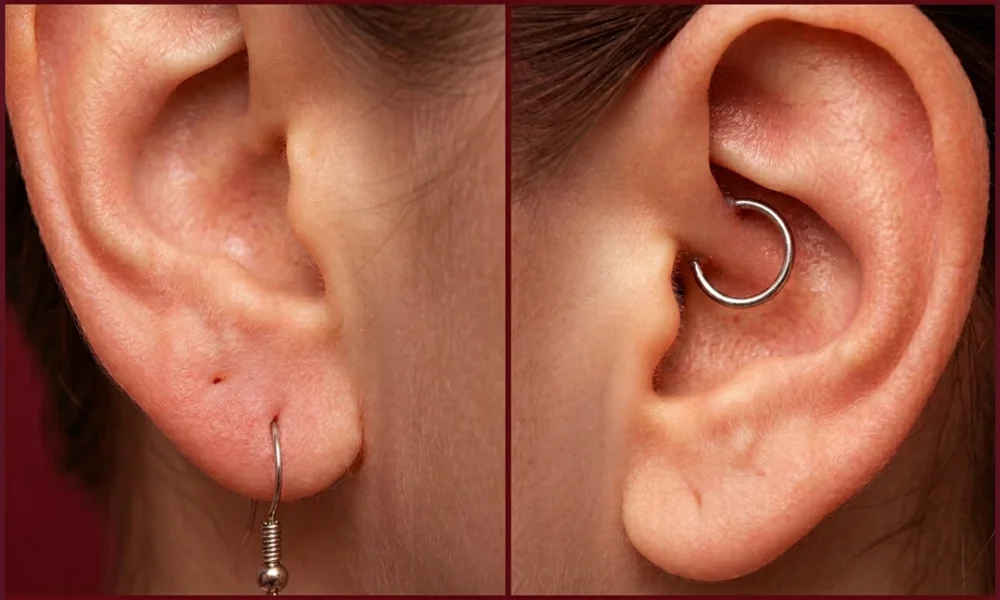
Normal daith piercing healing time is 6 to 12 months. However, complex cases or cases susceptible to irritation can easily increase healing time to 12-18 months. Remember that with your piercing recovery, healing happens from the outside-in. The skin on the surface closes fairly quickly, which can be deceptive.
If you are still in the early weeks and concerned about discomfort, our daith piercing pain guide explains what’s normal versus what is not during the initial daith piercing recovery time.
Daith Piercing Healing Time by Stage: Month-by-Month Breakdown
Most online guides offer a vague three-stage summary, but the daith piercing healing period is much more nuanced. Understanding exactly what is happening beneath the surface during your piercing recovery can prevent you from making mistakes that reset your progress.
Week 1 to 2: The Inflammatory Stage
Immediately after the needle passes through the cartilage, your body initiates an emergency response. During these first 14 days of daith piercing recovery time, you will experience swelling, redness, and a distinct throbbing sensation. You will also notice crusties a clear or pale-yellow lymph fluid. This is not pus; it is a sign of wound healing as your body attempts to seal the site. Your only job during this week is to let the area rest do not touch, rotate, or pick at the jewelry.
Weeks 3 to 8: Early Proliferative Stage
By now, the initial heat and throbbing should subside. This is the proliferative phase, where tissue regeneration begins in earnest. Your piercer may recommend a downsizing window between weeks 6 and 8. Swapping to a shorter post or smaller diameter ring prevents the jewelry from sliding excessively, which protects the newly forming fistula. This is the danger zone the piercing looks better, and many people get careless with their aftercare, leading to irritation bumps.
Months 3 to 6: Mid-Healing Stage
This is the stage where the daith piercing time to heal feels like it has stalled, but the fistula formation is working deep within the cartilage. The tunnel of skin is thickening, though it remains incredibly thin and prone to tearing. Occasional flare-ups are normal during this stage, often triggered by a snagged towel or sleeping on the ear. Even if it feels fine, do not attempt a jewelry change yet; the internal walls are still too weak to withstand the friction.
Months 6 to 12: Final Healing Stage
In the final maturation phase, the fistula strengthens and the surrounding skin becomes supple and healthy. Most articles skip this part, but it is the most critical for long-term success. You are looking for a total absence of discharge, soreness, or redness for at least two consecutive weeks. Once you hit this milestone, visit your professional piercer for a final check-in to confirm that full internal healing is complete before you begin experimenting with different jewelry styles.
How Daith Piercing Healing Time Compares to Other Cartilage Piercings
While all cartilage piercings require patience, the daith piercing healing time sits firmly in the mid-to-long range compared to other ear placements. Unlike a standard lobe that heals in weeks, a daith is a long-term commitment to aftercare.
| Piercing Type | Average Healing Time |
| Earlobe | 4–6 weeks |
| Helix | 6–9 months |
| Tragus | 6–9 months |
| Daith | 6–12 months |
| Rook | 8–12 months |
| Conch | 6–9 months |
| Industrial | 8–12 months |
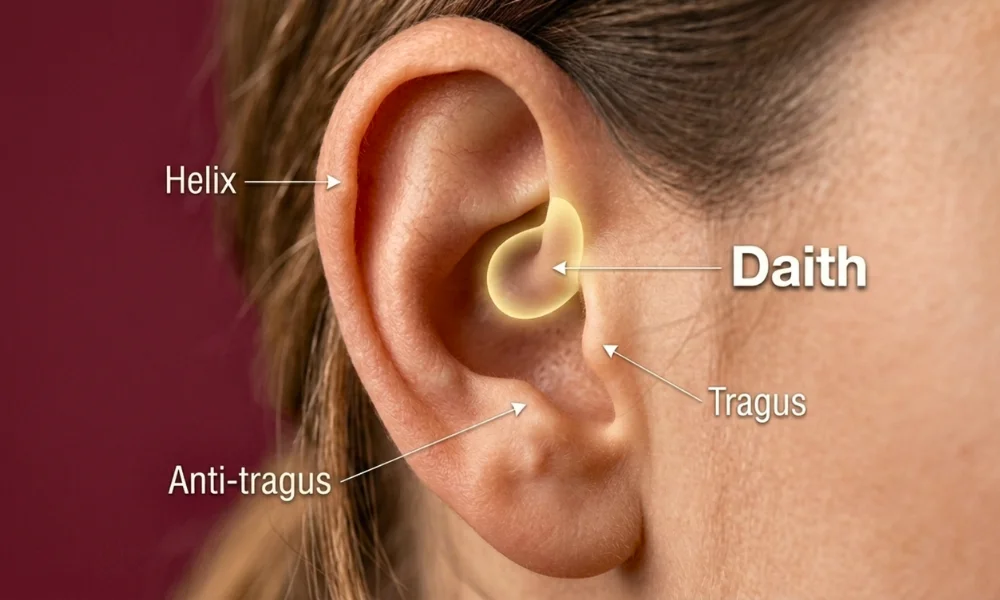
The reason for this extended daith piercing recovery time lies in its unique anatomy. The daith is located on a thick, curved fold of cartilage that is tucked deep inside the ear. This hidden location creates a warm, moist environment near the ear canal, making it more prone to bacteria buildup and moisture-related irritation.
7 Signs Your Daith Piercing Is Fully Healed
One of the most frequent questions we receive is how to know when the daith piercing healing period has truly ended. Because the fistula formation occurs deep within the ear, you cannot rely on a quick mirror check.
Use this definitive checklist to determine if your piercing recovery is complete:
-
Zero discharge or crusties: No pale fluid or crust for at least 2 consecutive weeks.
-
No redness or warmth: The skin color should match the rest of your ear perfectly.
-
Jewelry moves freely: The ring moves without any resistance, sticking, or sharp pain.
-
Impact resistance: No soreness or throbbing if the ear is accidentally touched or bumped.
-
Smooth entry/exit points: The skin around the hole is flat and healthy, with no signs of raised tissue.
-
Comfortable sleeping: You can sleep on that side through the night without any morning-after sensitivity.
-
Professional confirmation: Your piercer gives you the all clear after a physical inspection.
Warning: Meeting 6 out of 7 criteria does NOT mean you are healed. To ensure the daith piercing time to heal is fully concluded, all 7 must be true and consistent for several weeks.
If you notice raised tissue around the hole, read our guide on daith piercing bumps before assuming it is healed. Often, what looks like a minor irritation is a sign that the maturation phase is still ongoing and fragile.
What Slows Down Daith Piercing Healing Time?
Reaching the finish line of your daith piercing healing period depends on more than just saline sprays. Several factors can silently stall tissue regeneration, turning a 6-month recovery into a year-long ordeal.
Lifestyle and Health Factors That Affect Daith Healing Time
Biologically, wound healing is an energy-intensive process. Clinical realities show that certain conditions can significantly extend your daith piercing recovery time:
-
Systemic Health: Conditions like diabetes, autoimmune disorders, or poor circulation slow the delivery of white blood cells to the dense cartilage.
-
Age: Younger adults typically experience faster fistula formation due to higher collagen production and more efficient cell turnover.
-
Nutrition and Habits: Smoking constricts blood vessels, while a diet lacking in zinc, vitamin C, and protein deprives your body of the building blocks needed for the maturation phase.
-
Stress: High cortisol levels are known to suppress the immune system’s healing response, making the site more prone to irritation.
Behavioral Mistakes That Reset Your Daith Healing Timeline
Often, it is daily habits that reset the clock on your daith piercing time to heal:
-
Pressure and Friction: Sleeping on the piercing is the number 1 cause of setbacks and irritation bumps.
-
Earbuds and Headphones: In-ear buds introduce bacteria and physical pressure. We recommend switching to bone conduction headphones after week two to keep the ear canal clear.
-
Chemical Irritants: Hair products, dry shampoo, and hairspray are death to a new piercing. Always cover your ear when styling.
-
Harsh Cleaning: Avoid hydrogen peroxide or alcohol, which kill the healthy cells responsible for piercing recovery.
-
External Snags: Be mindful of beanies, hats, or hoodies that can rub against the jewelry and tear the delicate new fistula.
When Can You Change Daith Piercing Jewelry? The Exact Criteria
The most common way to reset your daith piercing healing time is by swapping jewelry too early. Even if the surface looks calm, the internal fistula formation is often still as thin as tissue paper. You should never go by the calendar alone; instead, use a strict pass/fail approach.
The 7-Day Clean Window Rule
Before considering a change, you must meet the 6-month minimum requirement. Beyond that, we recommend the 7-Day Clean Window rule, if your piercing has been completely symptom-free no discharge, crusties, soreness, or redness for seven consecutive days, you may be ready.
Professional First Swap
Your first jewelry change should always be performed by a professional piercer. They can inspect the site for full internal healing and ensure the new piece is high-quality. Stick to biocompatible materials like implant-grade titanium or solid 14k gold to avoid a late-stage inflammatory response. Not sure what jewelry to start with? Our full guide on daith piercing aftercare covers starter jewelry recommendations and long-term maintenance.
Does a Daith Piercing for Migraines Affect Healing Time?
Many people seeking a daith piercing specifically for migraine relief often wonder if the therapeutic intent changes the daith piercing recovery time. While some report anecdotal relief during the inflammatory phase, the biological reality remains the same: the site is a wound that requires significant tissue regeneration.
Regardless of your reason for getting the piercing, the daith piercing healing time is not accelerated by the potential for migraine relief. Proper aftercare is non-negotiable to ensure the fistula formation completes without infection. For a full breakdown of the science, read our deep-dive on daith piercing for migraines.
Conclusion
Ultimately, the daith piercing healing time is a commitment to your body’s recovery, not just a countdown on a calendar. While the daith piercing recovery time can be long, the result is a beautiful, lifelong addition to your style. The three most vital takeaways for a successful daith piercing healing period are simple: remain patient, stay consistent with your sterile saline aftercare, and always seek a professional check-in before changing jewelry.
At DaithPiercing, our guides are built to take you from your first day post-piercing to a fully healed, healthy daith, without the guesswork. If you need more specific help, check out our aftercare guide, our bump guide, or our pain guide to stay on track. You have done the hard part by getting the piercing; now, just give your body the time it needs to finish the job.
Frequently Asked Questions
How long does a daith piercing take to heal completely?
For most people, it takes 6 to 12 months, though full internal tissue regeneration can take up to 18 months.
Is my daith piercing healed if it stops hurting?
No. The absence of pain is just the first stage; the internal fistula formation continues long after the surface feels fine.
Can I sleep on my daith piercing while it heals?
No, avoid direct pressure for at least 3–6 months. Use a travel pillow with a center hole to keep the site suspended and protected.
Why is my daith piercing still not healed after 6 months?
Common setbacks include sleeping on the ear, using poor-quality jewelry, frequent touching, or irritation from earbuds and hair products.
When can I wear earbuds again after a daith piercing?
Avoid in-ear buds for a minimum of 3 months to prevent bacteria and pressure; use over-ear or bone conduction headphones instead.