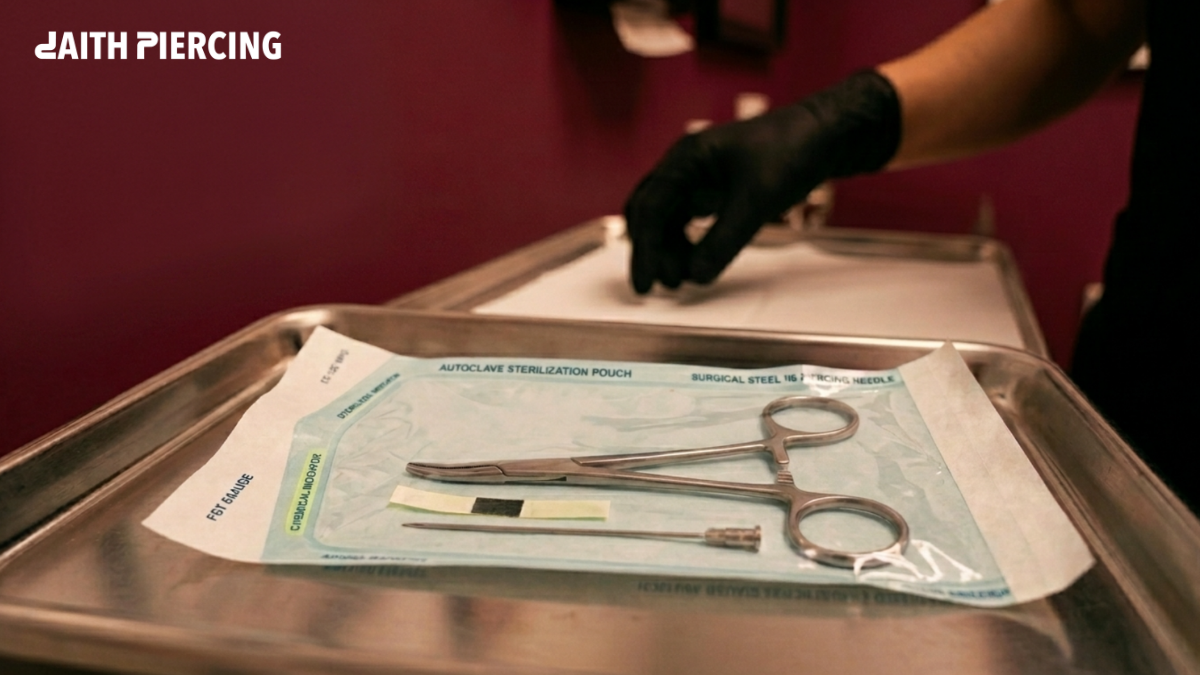
Yes, a daith piercing is safe, provided you prioritize clinical sterility over a cheap price tag. While the procedure is standard, the thick cartilage of the inner ear makes it a high-stakes heal where mostly clean is not enough to prevent permanent scarring.
At DaithPiercing, we put facts ahead of viral claims. If you are wondering, is daith piercing safe? you deserve more than an anecdote, you need an honest breakdown of the physiological daith piercing risks. We have stripped away the social media fluff, using medical literature and professional piercer data to show you exactly who should avoid this piercing, how to vet a high-caliber studio, and what the long-term safety reality looks like. Forget the trends here is the science-backed truth about your ear health.
Is Daith Piercing Safe? The Honest Answer
Yes, is daith piercing safe? The short answer is yes, but with a necessary caveat: it carries a significantly higher risk profile than standard lobe piercings. While millions have successfully healed this piercing, the daith passes through the thickest fold of auricular cartilage, a zone with limited blood flow that is notoriously slow to recover.
Medical data underscores this reality, according to reports from sources like WebMD, over one-third of all cartilage piercings develop some form of minor or major complication. True daith piercing safety is determined by four non-negotiable factors:
Studio Hygiene: Use of a medical-grade autoclave and single-use needles.
Jewelry Quality: Utilizing implant-grade titanium or 14k gold to prevent allergic reactions.
Aftercare Discipline: Strict adherence to saline-only cleaning protocols.
Individual Health: Your body’s unique inflammatory response and healing speed.
Understanding these daith piercing risks is the first step toward a successful outcome. Without a professional piercer and high-quality materials, a safe procedure can quickly turn into a chronic health headache.
Daith Piercing Risks and Side Effects You Should Know
Before committing to this procedure, you must look past the aesthetic and understand the full inventory of physiological responses your body may have. Because the daith is located in a deep, curved fold of the ear, it is more susceptible to trapped bacteria and physical trauma than almost any other auricular piercing.
Common Daith Piercing Side Effects
Most individuals will experience a standard set of daith piercing side effects during the first few months. These are generally considered part of the natural inflammatory response rather than dangers, provided they do not escalate.
- Initial Swelling and Redness: Expect the area to be tender and slightly inflamed for the first 7–14 days.
- Piercing Bumps: The most common issue; these are usually irritation bumps (granulomas) caused by moisture or friction, not necessarily a sign of infection.
- Lymph Fluid Discharge: A crusty, clear, or pale yellow fluid is normal as the body attempts to seal the wound.
- Long-term Sensitivity: Due to the thickness of the cartilage, deep-seated soreness can persist for 3–6 months.
Serious Daith Piercing Complications
While rare in professional settings, daith piercing complications can become permanent if ignored. Understanding these daith piercing dangers is vital for early intervention.
- Infection Risk: Beyond minor redness, there is a risk of cellulitis or perichondritis a severe cartilage infection that can lead to ear deformity (cauliflower ear) if not treated with antibiotics.
- Bloodborne Pathogens: Using unsterilized equipment carries a risk of serious diseases, including HIV, Hepatitis B and C, or Tetanus.
- Keloid Risk: Unlike simple irritation bumps, keloids are raised, aggressive scar tissue formations, typically occurring in genetically prone individuals.
- Allergic Reaction: Often triggered by nickel in low-quality surgical steel.
- Nerve Damage: A rare risk involving the vagus nerve branches that reside in the inner ear.
- Rejection and Migration: The body may view the jewelry as a foreign object and slowly push it toward the surface, leading to permanent scarring.
Is Daith Piercing Safe for Everyone? Who Should Avoid It
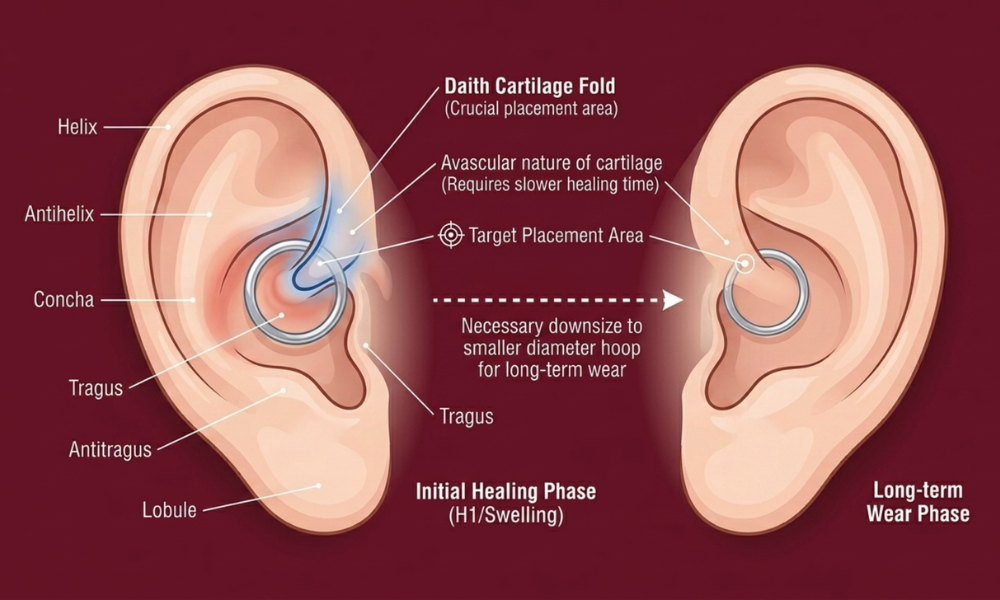
While many seek this piercing for its unique look, the answer to is daith piercing safe for everyone is a definitive no. Because the daith passes through a dense, avascular fold of cartilage, your body’s ability to heal is the primary safety constraint. If your system is already under stress or has a compromised healing response, a daith piercing can quickly transition from a cosmetic choice to a medical liability.
Health Conditions and Daith Piercing Safety
Medical history is the most overlooked factor in who should not get daith piercing. Conditions like Diabetes or Autoimmune disorders (such as Lupus) significantly increase the infection risk because they slow down cellular repair. Similarly, those with active skin conditions like eczema or psoriasis near the ear should wait for a total flare-up clearance, as broken skin acts as a gateway for bacteria.
We’ve summarized the specific safety concerns for various health profiles below:
| Condition Profile | Safety Concern | Recommendation |
| Diabetic/Immunocompromised | Poor blood flow; high infection risk | Consult a doctor first |
| History of Keloids | Permanent, aggressive scar tissue | High risk; generally avoid |
| Blood Thinners/Hemophilia | Excessive bleeding; hematoma risk | Seek medical clearance |
| Nickel Sensitivity | Chronic inflammation and “bumps” | Use Titanium only |
| Active Ear Infections | Bacterial transfer to the wound | Postpone until healed |
Studio Hygiene and Jewelry Quality: The Two Biggest Safety Factors
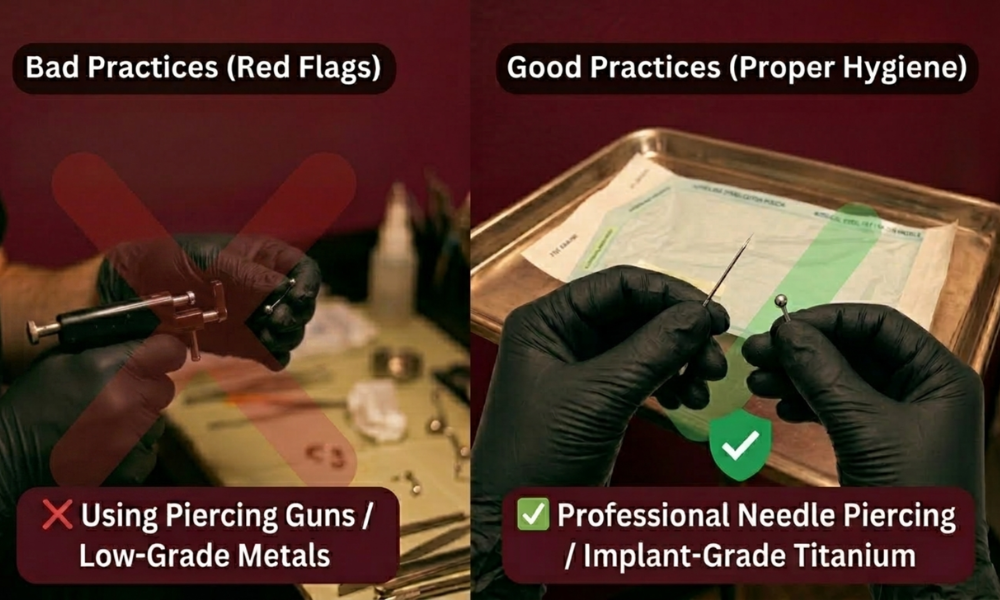
In the world of body modification, daith piercing safety is determined by the environment and the equipment long before the needle ever touches your skin. You are not just paying for a piercing; you are paying for a sterile, controlled environment that prevents the transmission of bloodborne pathogens. At DaithPiercing.io, we categorize these as the two non-negotiables that separate a safe studio from a dangerous one.
Studio Hygiene Red Flags
A professional studio should resemble a clinical environment. If you do not see a medical-grade autoclave for sterilization or if the piercer suggests using a piercing gun, you should leave immediately. Guns cause blunt-force trauma to the cartilage and cannot be properly sterilized, leading to severe daith piercing complications. Ensure your piercer uses single-use needles and wears fresh, disposable gloves throughout the entire process.
Jewelry Quality as a Safety Barrier
The metal you choose is the only thing standing between your healing tissue and a chronic allergic reaction. Many surgical steel options contain hidden nickel, which is the leading cause of irritation bumps and rejection. To ensure jewelry quality that actually keeps you safe, prioritize ASTM F-136 implant-grade titanium or solid, nickel-free 14k gold. These materials are biocompatible, meaning the body is far less likely to treat the jewelry as a foreign invader and attempt to push it out.
How to Make Your Daith Piercing Safer: Aftercare That Prevents Complications
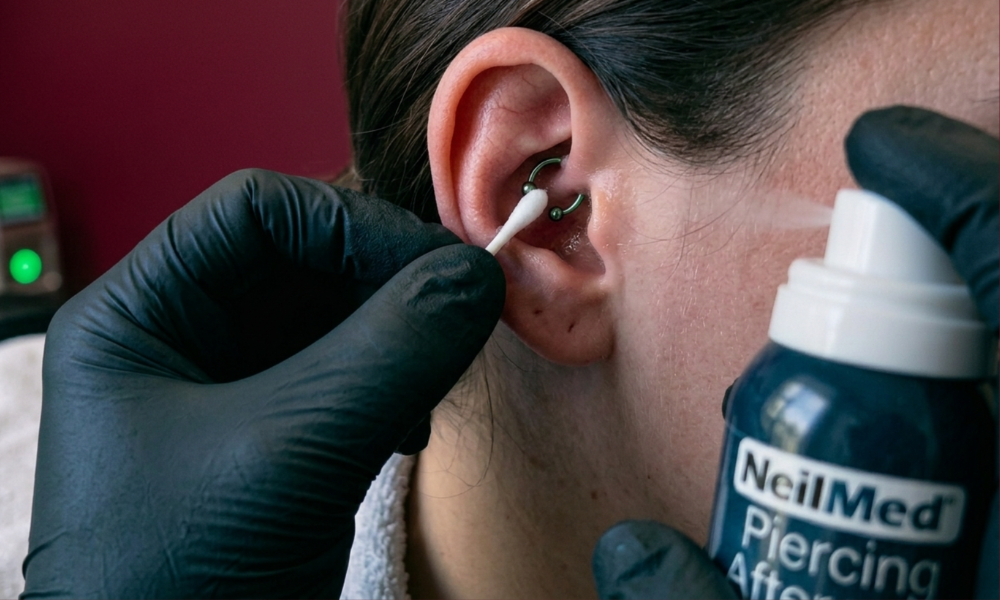
The procedure is only the first half of the safety equation; the second half is determined by your daily discipline. Because cartilage lacks its own blood supply, it is exceptionally vulnerable to infection risk during the first six months. Proper aftercare is not just about aesthetics it is a medical necessity to prevent long-term daith piercing complications.
Daily Safety Practices for the First 6 Months
To maintain peak daith piercing safety, follow this clinical checklist and avoid the common mistake of over-cleaning, which can irritate the wound:
Saline Rinses Only: Use a sterile saline spray twice daily. Never use rubbing alcohol or hydrogen peroxide, as these destroy healing cells.
The LITHA Rule: Leave It The Hell Alone. Do not twist, rotate, or touch the jewelry, as this introduces bacteria and causes micro-tears.
Environmental Hazards: Avoid pools, hot tubs, and natural bodies of water for at least 8 weeks to prevent bacterial contamination.
Physical Protection: Sleep on the opposite side of the piercing and keep hair products, makeup, and perfume completely away from the inner ear.
Warning Signs That Need a Doctor
While some crusting is normal, you must monitor for signs of a serious infection. If you experience yellow or green discharge with a strong odor, fever, or spreading redness, seek medical attention immediately. For a deep dive into managing irritation, see our comprehensive aftercare guide.
Long-Term Daith Piercing Dangers
Beyond the initial heal, daith piercing safety involves risks that many guides ignore. Because cartilage lacks a direct blood supply, severe infections like perichondritis can lead to cauliflower ear a permanent structural deformity. Even a successful piercing carries the risk of permanent scarring if removed later, as the puncture track in thick cartilage rarely closes seamlessly.
Another overlooked danger is migration. If you fail to downsize your jewelry after swelling subsides, the extra length can cause the piercing to shift, leading to an off-angle, shallow placement that never settles. Daith jewelry can complicate medical logistics, it must be disclosed during MRIs to avoid thermal burns or image distortion. Acknowledging these long-term daith piercing complications now ensures you are not blindsided by the physiological reality of cartilage modification years down the road.
Conclusion
Ultimately, a daith piercing is safe for most healthy adults, provided you prioritize professional standards over convenience. Your safety rests on three non-negotiable pillars: verified piercer credentials, high-quality biocompatible jewelry, and strict aftercare discipline. At DaithPiercing, we are dedicated to providing honest, experience-based guides that cut through the social media noise to protect your health.
If you are ready to move forward, we suggest exploring our detailed aftercare and pain management guides next, or booking a consultation with a licensed studio to assess your ear anatomy. Remember, the answer to is daith piercing safe? depends entirely on the choices you make before the needle ever touches your ear.
Frequently Asked Questions
Is daith piercing safe during pregnancy?
Most experts recommend waiting until after delivery. Pregnancy triggers significant immune system shifts and increased fluid retention, which can stall the healing of dense cartilage. To maintain daith piercing safety, it is vital to allow your body to focus on the pregnancy rather than a new wound.
Can a daith piercing cause permanent nerve damage?
The inner ear contains branches of the vagus nerve, but professional placement makes permanent damage highly unlikely. The risk is primarily associated with unlicensed practitioners. When evaluating is daith piercing safe, the anatomical knowledge and precision of your chosen piercer are the most critical factors.
How long until a daith piercing is fully safe and healed?
Expect a full recovery timeline of 6 to 12 months. Because the inner ear lacks a direct blood supply, the tissue remains prone to internal complications long after the exit holes appear closed. Ignoring aftercare during this window is the leading cause of chronic daith piercing risks.
Is daith piercing safer than tragus or helix piercing?
Technically, the daith has a slightly higher risk profile than a helix or tragus. Its deep, recessed position in the ear canal makes it a magnet for moisture and hair product buildup. Determining is daith piercing safe for your anatomy requires a commitment to keeping that specific fold clean and dry.
What’s the safest age to get a daith piercing?
While 16 is the standard recommendation for stable cartilage development, anyone under 18 generally needs a legal guardian’s consent in the US. Ultimately, whether is daith piercing safe for a younger individual depends on their personal discipline and ability to manage a complex, multi-month healing process.