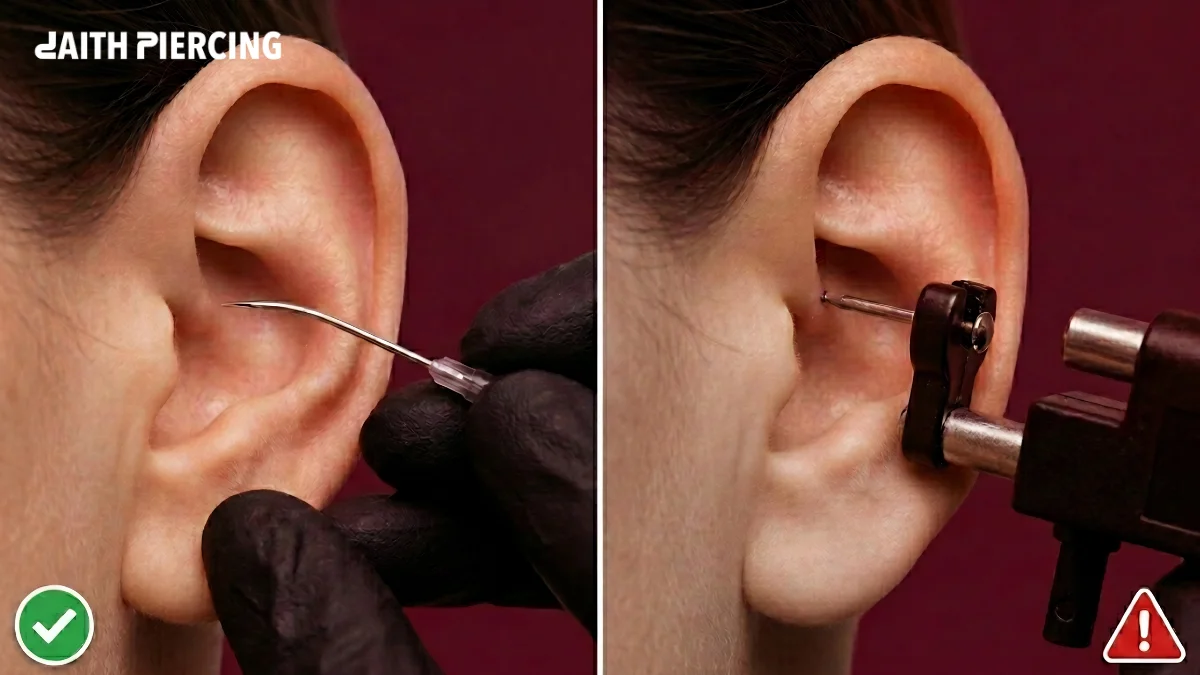
Choosing between daith piercing needle vs gun is the first question most people ask before booking an appointment. At DaithPiercing.io, we get this question every single day from nervous first-timers and curious clients alike. Mall kiosks won’t tell you the truth, but professional piercers will. The needle wins by a long shot.
This guide breaks down why, with real cost data, healing times, pain comparisons, and the one fact about cartilage damage that should end the debate forever. The Association of Professional Piercers (APP) has a clear stance, and so do we. Read on before you book anything anywhere.
Quick Answer: Is Needle or Gun Better for Daith?
A needle is the only safe method for daith piercings. Guns crush cartilage with blunt force, while needles cut clean through the tissue. Pro piercers never use guns on cartilage, and neither should you if you care about healing right.
Daith Piercing Needle vs Gun at a Glance
Here’s how both methods stack up side by side:
| Factor | Needle | Piercing Gun |
|---|---|---|
| Cartilage safety | Safe | Shatters tissue |
| Pain level | 5/10 | 7/10 |
| Healing time | 6 to 9 months | 9 to 12+ months |
| Sterilization | Single-use | Hard to clean |
| Precision | High | Low |
| Cost in the US | $40 to $80 | $20 to $40 |
| Jewelry quality | Titanium or gold | Nickel-heavy studs |
| APP approved | Yes | No |
This table covers the big picture. Now let’s dig into the details that matter most for your ear.
Why You Cannot Pierce Cartilage With a Gun or Needle the Same Way
The daith sits inside the curl of cartilage right above your ear canal. This spot is dense, curved, and tucked deep into the ear. Anatomy makes everything different here compared to a basic earlobe.
A needle slides through with a clean cut. The body heals fast because the wound stays small and tidy. A gun does the opposite. It uses spring pressure to ram a blunt stud through the tissue. That blunt force tears cartilage instead of cutting it cleanly. Once cartilage tears, the damage often shows up months later as bumps or shape changes you cannot reverse.
Erik Dakota invented the curved 16-gauge needle in 1992 just for this spot. No gun can match that angle or precision. Some mall kiosks still try, mostly because staff lack training. The APP has warned against this practice for decades. Smart piercers listen.
Daith Piercing Needle vs Gun for Ear: How the Procedures Differ
Both methods look fast from the outside, but the steps are worlds apart. Here’s what really happens during each one.
How a Pro Piercer Uses a Needle
A trained piercer follows a strict process from start to finish:
- Cleans the ear with medical-grade solution
- Marks placement based on your unique anatomy
- Picks a curved 16G or 18G hollow needle
- Pushes the needle through in one smooth move
- Inserts your jewelry, usually a titanium clicker or hoop
- Wraps up in under 60 seconds
The piercer keeps full control over angle and depth. Your specific ear shape guides every choice they make.
How a Piercing Gun Works (And Why It Fails)
A gun runs on a spring-loaded mechanism. The pre-loaded earring acts as the piercing tool itself. The blunt stud cannot reach the inner curl of daith cartilage. Even if it could, blunt force shatters cartilage rather than slicing it. Guns also cannot hit the vagus nerve pressure point with any accuracy. Worst of all, the plastic body cannot survive an autoclave, which means real sterilization is off the table.
What Hurts More, Daith Piercing Needle vs Gun
A piercing gun hurts more on cartilage. The science backs this up clearly. A needle makes a clean cut, so your body feels a sharp pinch that fades in two seconds flat. A gun smashes through tissue with blunt pressure, and that creates a deeper ache that lingers for hours.
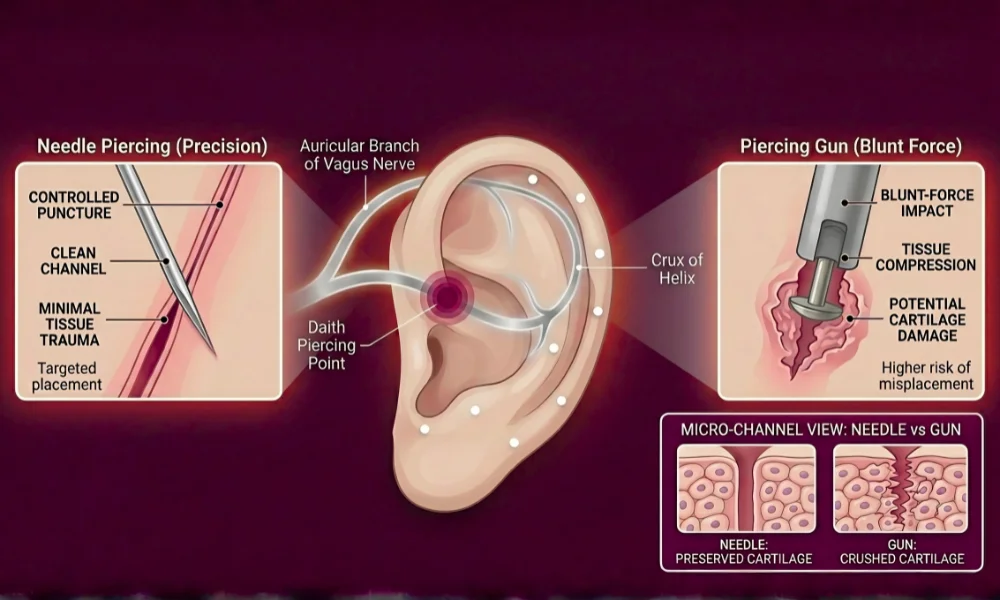
Most clients describe a needle daith as a quick pinch followed by warm pressure. Gun piercings feel like a dull crunch with throbbing pain that shows up later. Pain tolerance varies, sure. But the trauma to your cartilage is measurable and real, not just in your head.
Pro piercers can also offer lidocaine numbing cream before the procedure starts. Gun kiosks rarely do because their setup moves too fast for proper prep.
Piercing Gun vs Needle Damage: Hidden Risks
This is where things get serious.
Cartilage Shattering and Long-Term Deformity
Gun pressure can crack the cartilage matrix inside your ear. That leads to bumps, lumps, and shape changes that never go away on their own. Some people end up needing surgery to fix it years later. The damage often hides for weeks before showing up.
Keloid Risk and Scarring: Daith Piercing Needle vs Gun
Gun-pierced cartilage shows much higher keloid rates than needle work. Blunt trauma kicks your body into overdrive on collagen production. The result is thick, raised scars that stick around for years and rarely shrink without treatment.
Embedded Jewelry and Infection
Cheap nickel studs can sink right into swollen cartilage. The FDA flags nickel as one of the top jewelry allergens worldwide. Plastic seams on guns trap bacteria too, so infection rates climb fast. Antibiotics often follow.
What to Do If You Already Got a Daith With a Gun
Do not panic if this is you. Take these steps right away:
- Visit a pro piercer for an honest assessment
- Swap that cheap stud for implant-grade titanium
- Switch to saline-only aftercare twice a day
- Watch for signs of embedding and act fast if you see any
Most gun-pierced daiths can recover with the right care, but speed matters here.
Daith Piercing Needle vs Gun for Lobe: Is It Different From Daith?
People mix these two up all the time, and it costs them. Earlobes are soft tissue. Daith is dense cartilage. The rules change completely between them.
A gun on a lobe is okay but not ideal. A needle on a lobe heals faster with less swelling and bruising. A gun on a daith is dangerous and often impossible thanks to the inner curl shape. A needle on a daith is the only safe path forward, no exceptions.
This is also why Claire’s, Walmart, and most mall kiosks pierce lobes but refuse daith. Their tools and training cannot handle cartilage safely, and their lawyers know it. The liability alone keeps them away.
Cost Breakdown: Daith Piercing Needle vs Gun
Real US pricing tells the full story most blogs leave out:
- Mall kiosk gun piercing: $20 to $40, cheap studs included
- Pro needle studio: $40 to $80 plus jewelry ($30 to $150)
- Full daith piercing with quality jewelry: $80 to $200
- Fixing a botched gun daith: $150 to $500+ in medical visits and scar treatment
Doing the math, paying double upfront for a needle saves you real money down the road. Cheap now means expensive later. Add medical bills and the gap widens fast.
How to Choose a Safe Daith Piercer
Before you book anywhere, run through this checklist with the studio:
- Ask if they only use single-use sterile needles
- Confirm they do not own or use a piercing gun at all
- Check APP membership status on the official directory
- Verify autoclave sterilization on every tool
- Ask to see bloodborne pathogen certification
- Confirm jewelry is implant-grade titanium or 14k gold
- Read at least 20 recent reviews that mention daith specifically
- Visit the studio in person before booking your slot
A solid piercer will welcome every one of these questions. If they push back or rush you, walk out and find someone better.
Daith Piercing Needle vs Gun: What the Experts Actually Say
The pros all agree on this one. The APP holds a firm public stance against piercing guns on any cartilage. The FDA backs up sterile single-use tools as the standard for body piercing safety nationwide. A 2017 review of 186 daith studies on migraine relief noted that proper placement matters, which only a needle can deliver with accuracy.
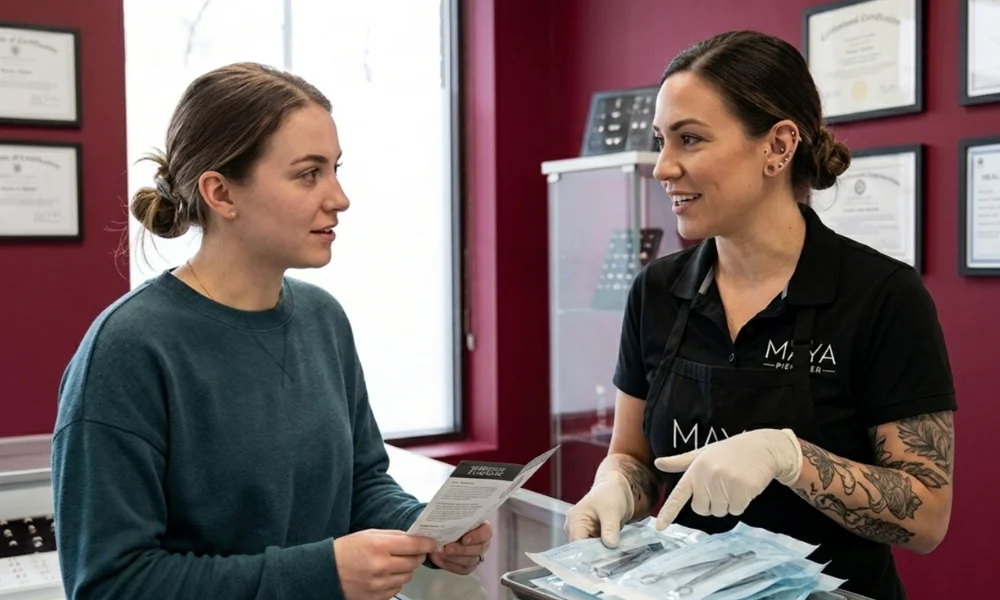
No licensed pro piercer in the US uses a gun on cartilage. Fourteen states have passed laws limiting gun use, and more bills are pending in 2026. The industry has spoken loud and clear, and the data backs them up.
Conclusion
When you weigh daith piercing needle vs gun, the needle wins on every count that matters. Safety, pain, healing speed, jewelry quality, and long-term cost all favor the needle method by a wide margin. Your ear deserves the right tool the first time around.
At DaithPiercing.io, we help you find safe piercers, smart jewelry, and real answers about healing your daith. Check out our daith healing guide and jewelry tips next to keep going. Investing in a pro piercer once beats paying for fixes later. Your future self will thank you for the choice.
Frequently Asked Questions
Can you get a daith piercing with a gun?
No, you should not. The daith sits in a curved inner cartilage spot that guns cannot reach safely. The APP and every pro piercer in the US say no, and most reputable studios will refuse to even attempt it.
What hurts more, needle or gun piercing for the ear?
Guns hurt more on cartilage because of blunt trauma to the tissue. Needles make a clean cut that feels like a quick pinch lasting two seconds. The pain after a gun piercing also lingers for hours.
Can a gun-pierced daith be fixed?
Yes, in most cases. A pro piercer can assess the damage, swap out cheap jewelry for titanium, and guide you through proper healing. Severe cartilage damage may need a doctor, but early action prevents most long-term issues.
How much does a daith piercing cost in the US?
The piercing itself runs $40 to $80 at a pro studio, with jewelry adding another $30 to $150. Quality matters here, so budget $80 to $200 total for a needle daith done right the first time.