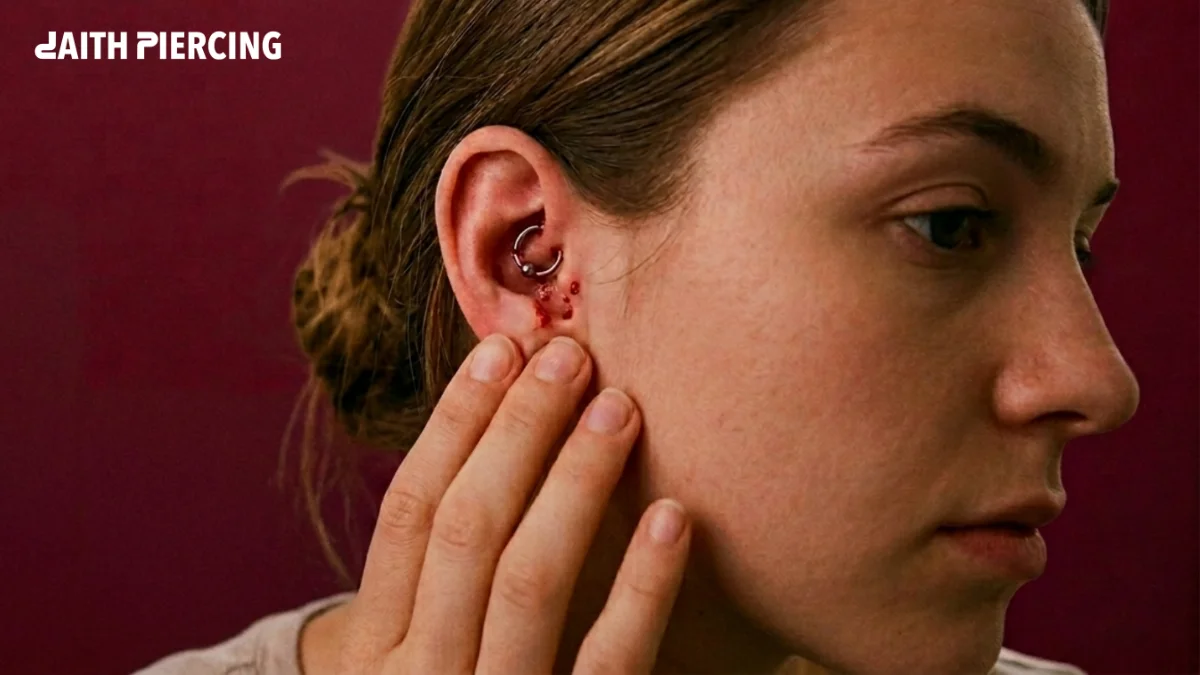
Finding blood on your pillow, jewelry, or fingers after a daith piercing bleeding episode can be startling, but it is often a standard part of the body’s inflammatory response. During the initial stages of healing, the dense cartilage of the ear undergoes significant stress, making minor spotting a common occurrence.
At daithpiercing.io, we understand how unnerving this can be, which is why we have compiled this guide to help you distinguish between a healthy recovery and a potential complication.
Is daith piercing bleeding normal? Yes, minor bleeding is normal during the first 7 to 14 days of healing or if the piercing is accidentally bumped, provided it is not accompanied by severe pain or yellow discharge.
Is Daith Piercing Bleeding Normal?
Yes, daith piercing bleeding is normal during the first 24 to 72 hours, but heavy or long-lasting bleeding is not. Because the daith is located in a thick fold of cartilage, the initial trauma of the needle can cause minor spotting as the tissue reacts to the jewelry.

While cartilage has fewer blood vessels than an earlobe, the pressure applied during the procedure often results in a small amount of seepage. Understanding this distinction is key to a stress-free recovery and helps you identify when a minor issue requires professional attention.
How Long Does Daith Piercing Bleeding Last?
The duration of daith piercing bleeding varies depending on your body’s unique healing rate and how well the site is protected. Generally, you can expect the most activity within the first few days, tapering off into the crusty stage. To help you track your progress, refer to the timeline below:
| Time After Piercing | What’s Normal | What’s a Red Flag |
| First 24 hours | Light spotting, pink fluid | Constant dripping or pooling blood |
| 2 to 3 days | Tiny dried specks, mild crust | Fresh blood soaking jewelry |
| After a week | Rare, only if bumped or snagged | Daily fresh blood, swelling, pain |
| After 1 month | Should be stopped fully | Sign of irritation or trauma |
| After 3 months | Not normal | Likely infection, rejection, or injury |
| After 6 months | Not normal | Visit a piercer or doctor |
| After 2 years | Never normal | Trauma, infection, or jewelry issue |
While minor spotting during the first week is rarely a cause for alarm, the transition from fresh blood to crusties (dried lymph fluid) is the goal. If you notice a sudden return of bleeding after a month of stability, it usually indicates external trauma such as snagging the jewelry on a towel or sleeping on the ear rather than a standard healing phase.
Why Is My Daith Piercing Bleeding? (8 Common Causes)
If you notice daith piercing bleeding beyond the initial procedure, it is usually triggered by external irritation or lifestyle factors. Identifying the specific cause is the first step toward effective troubleshooting. In many cases, one of the following eight factors is the culprit:
-
Sleeping on the piercing: Constant pressure throughout the night reopens the healing wound and disrupts the delicate tissue.
-
Snagging on hair, towels, or clothing: This is the most common cause of sudden bleeding, as physical trauma pulls the jewelry against the cartilage.
-
Cleaning too hard: Also covered in detail below, aggressive scrubbing can dislodge protective scabs before the skin underneath has closed.
-
Low-quality jewelry: Next, nickel or cheap mystery metals can trigger allergic reactions that lead to chronic bleeding and inflammation.
-
Blood thinners: Consuming aspirin, ibuprofen, or alcohol can thin the blood and make minor spotting more persistent.
-
Changing jewelry too soon: Attempting a swap before full inner healing occurs can tear the new fistula.
-
Infection: In some instances, bleeding accompanied by pus, localized heat, or fever indicates a bacterial issue.
-
Rejection or migration: Finally, bleeding may occur if the body begins pushing the jewelry toward the surface of the skin.
Daith Piercing Bleeding When Cleaning: Why It Happens
Daith piercing bleeding when cleaning usually happens because of rough handling, twisting the jewelry, or using harsh products. While you may have the best intentions, the healing tissue inside the ear is incredibly fragile. Common cleaning mistakes include, Twisting or rotating the jewelry, Using cotton balls, Using alcohol, peroxide, or tea tree oil, these substances are too caustic and dry out the skin, leading to cracks and bleeding.
The quickest fix is to switch to a sterile saline spray twice daily. Simply mist the area and gently pat it dry with clean, non-woven gauze to avoid further trauma.
Why Is My Daith Piercing Bleeding After a Year or Longer?
Why is my daith piercing bleeding after a year? is a question that points to trauma, infection, jewelry issues, or rejection not normal healing. By this stage, the fistula should be fully matured and stable. If you notice daith piercing bleeding after 6 months, it is usually a sign of persistent trauma or irritation from low-quality jewelry.
For those experiencing bleeding after 2 years, the cause is almost always external. This could be a severe snag, a developed allergic reaction to the metal, or a biofilm infection where bacteria colonize the jewelry surface.
At this stage, your body is no longer in a healing phase, so any blood indicates an active problem. Do not attempt to self-diagnose, see a professional piercer or a healthcare provider immediately to determine if the piercing can be saved.
How to Stop Daith Piercing Bleeding: Step-by-Step
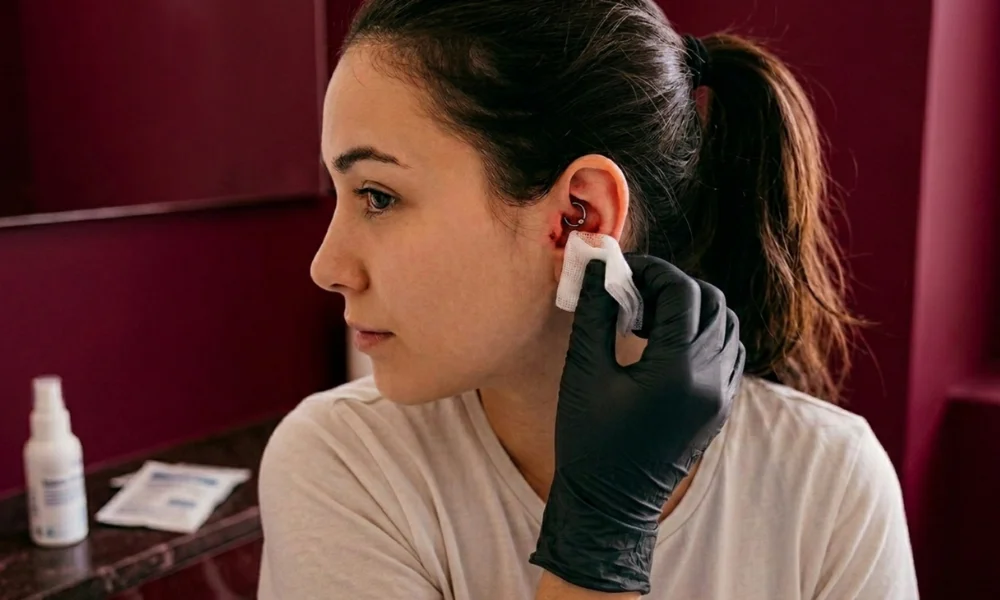
How to stop daith piercing bleeding takes 4 simple steps: clean, compress, rest, and monitor. If your piercing starts to bleed, act quickly but stay calm. Follow this professional protocol to stop the flow and protect your cartilage:
-
Sanitize: Wash your hands thoroughly with antibacterial soap and warm water.
-
Apply Pressure: Press a sterile saline-soaked gauze against the site for 5–10 minutes. This is the most effective way to encourage natural clotting.
-
Cool Down: Use a cold compress wrapped in a clean cloth to constrict blood vessels and reduce localized throbbing.
-
Zero Contact: Avoid touching, twisting, or removing the jewelry. Movement breaks the scab and restarts the bleeding cycle.
For the next 24 hours, sleep on the opposite side with a fresh pillowcase and skip intense workouts, swimming, and alcohol.
Important: Never use tissue, toilet paper, or cotton balls; these leave behind micro-fibers that stick to the wound and trigger more daith piercing bleeding when removed.
How to Stop Daith Piercing Bleeding After a Week or Month
For daith piercing bleeding after a week or even a month, the cause is likely an external trigger such as a snag, sleeping on the ear, or aggressive cleaning. While the immediate steps for stopping the blood remain the same, you must also address the underlying issue.
At this stage, check your jewelry quality; switching to implant-grade titanium or 14k gold can reduce irritation. Furthermore, ensure you are strictly avoiding sleeping on that side. If the bleeding repeats for more than 3 consecutive days, visit your piercer for a professional assessment.
Normal vs. Abnormal Daith Piercing Bleeding: Quick Comparison
Knowing the difference between a standard healing response and a potential complication can save your piercing. While minor daith piercing bleeding is common, identifying red flag symptoms early is essential for preventing infection.
| Feature | Normal Healing | Abnormal (Red Flag) |
| Fluid Color | Light pink or bright red spotting | Yellow or green discharge mixed with blood |
| Duration | Stops within minutes of pressure | Persistent or recurs for more than 3 days |
| Sensation | Mild tenderness or itching | Intense throbbing pain or radiating heat |
| Timing | Occurs within the first 72 hours | Starts weeks or months after the procedure |
| Physical Signs | Minimal swelling; no odor | Red streaks on skin, fever, or foul smell |
When to See a Doctor or Piercer
If your daith piercing bleeding persists, professional intervention is vital for your safety standards. Consult a specialist immediately if you notice:
-
Bleeding lasting longer than 3 days without stopping.
-
Systemic signs like fever, chills, or dizziness.
-
Thick pus, a foul odor, or hard lumps (granulomas) near the site.
-
Bleeding after 3 months, 6 months, or longer.
-
Jewelry tilting, shifting, or migrating toward the surface.
Conclusion
In summary, light daith piercing bleeding is a normal part of the early healing process, but long-term or recurring blood is a sign that something needs your attention. To keep your recovery on track, remember the four-step fix: clean with saline, apply gentle compression, rest the area, and monitor for red flags. For expert guidance on maintaining a healthy piercing, visit daithpiercing.io, your trusted resource for safe daith care.
Explore our comprehensive guides or connect with a professional piercer today to ensure your piercing journey remains smooth and successful.
Frequently Asked Question
Is it normal for my daith to bleed after a week?
Minor daith piercing bleeding after a week can occur if you accidentally snag the jewelry or sleep on it. While the initial wound should be closing, the cartilage is still highly sensitive to any physical trauma or pressure during this stage.
Why does my daith bleed when I clean it?
Daith piercing bleeding when cleaning usually happens because you are being too aggressive. Twisting the jewelry or using cotton swabs can tear the fragile new tissue and break away the protective crusties before the wound has fully healed.
What does it mean if my daith bleeds after 1 month?
Experiencing daith piercing bleeding after 1 month is typically a sign of irritation rather than normal healing. It often points to jewelry friction, a sudden bump, or a reaction to low-quality metal that is preventing the fistula from maturing.
Can a daith piercing bleed after 2 years?
Yes, but it is never normal. Daith piercing bleeding after 2 years indicates significant trauma, a localized infection, or a jewelry allergy. At this point, the piercing is mature, so blood suggests the skin has been broken by an external force.
How do I stop my daith piercing from bleeding fast?
To learn how to stop daith piercing bleeding quickly, apply firm but gentle pressure using sterile saline-soaked gauze for five minutes. Avoid moving the jewelry, as stillness is essential for a stable clot to form and seal the wound.