
Daith piercing dizziness can be an unsettling surprise, leaving you feeling lightheaded or off-balance the moment you leave the piercer’s chair. While often a temporary physiological response, it is crucial to distinguish between a minor piercing rush and more serious complications. As a leading authority on piercing safety, daithpiercing.io breaks down the primary causes, recovery timelines, and essential treatments to manage your symptoms effectively.
Yes, daith piercings can cause short-term dizziness, but persistent vertigo or severe disorientation requires a professional medical evaluation.
What Is a Daith Piercing?
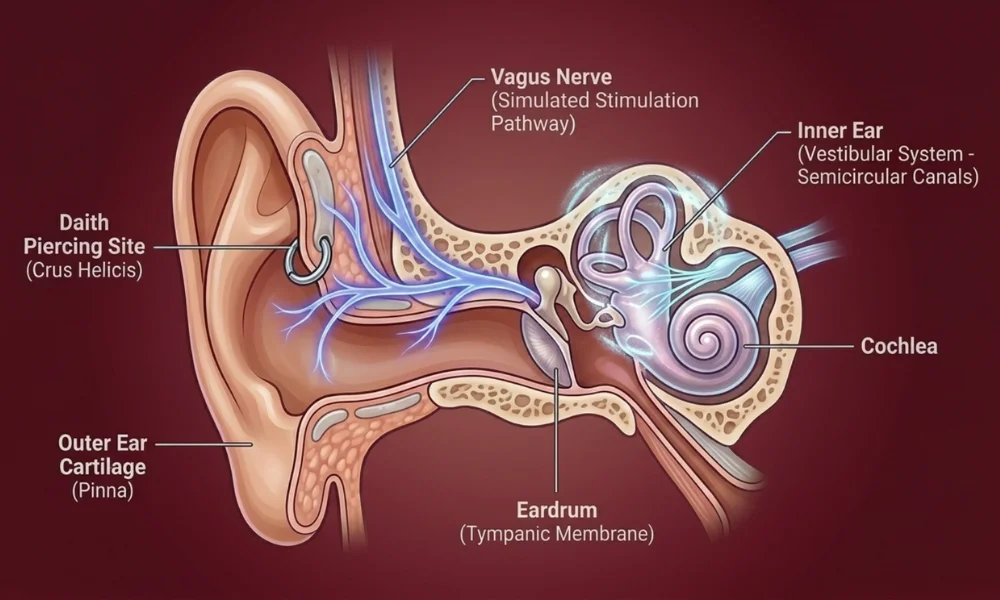
A daith piercing involves perforating the crus helicis, the innermost fold of cartilage located just above the ear canal. This specific placement is significant because it sits in a dense cluster of pressure points and resides near the vagus nerve, a key component of the parasympathetic nervous system. Because of this proximity, the daith has surged in popularity as a potential holistic remedy for chronic migraines, anxiety, and even vertigo, making it as much a functional choice as a stylish one.
Can a Daith Piercing Cause Dizziness?
Yes, a daith piercing can make you dizzy, especially during the first few hours or days. Most people experience daith piercing dizziness symptoms as temporary lightheadedness, a swimming sensation, or minor balance issues, often accompanied by a brief wave of nausea.
This is usually a standard vasovagal response your body’s natural reaction to the physical stress or pain of the needle. While this piercing rush is common and short-lived, it differs from true vertigo, which involves a persistent spinning sensation. Most dizziness subsides quickly as your system stabilizes, but any lingering disorientation should be monitored as you move into the initial healing phase.
Why Daith Piercings Cause Dizziness
Understanding why you feel off-balance is key to managing your recovery. Several physiological factors contribute to daith piercing dizziness:
-
Vasovagal Response: The most common culprit; a sudden drop in heart rate and blood pressure triggered by pain, sight of the needle, or anxiety.
-
Vagus Nerve Stimulation: Many wonder, do daith piercings stimulate the vagus nerve? The answer is yes, partially. The daith is located near auricular vagal afferent branches. While not a direct off-switch for pain, stimulating these pathways can temporarily affect the parasympathetic nervous system, leading to a fuzzy or dizzy sensation.
-
Adrenaline and Endorphin Spikes: Your body’s fight or flight response releases a rush of chemicals that can cause shakiness or lightheadedness once the initial excitement wears off.
-
Postural Changes: Sitting up too quickly after lying down for the procedure can cause orthostatic hypotension.
-
Low Blood Sugar: If you skipped a meal before your appointment, your body lacks the glucose needed to handle the stress of the piercing.
-
Localized Inflammation: Swelling in the cartilage so close to the ear canal can occasionally create a sense of fullness that impacts your equilibrium.
Daith Piercing Dizziness Symptoms to Watch For
Recognizing the difference between a standard piercing rush and a complication is vital. Normal daith piercing dizziness symptoms typically include mild lightheadedness, a brief spinning sensation immediately after the procedure, slight nausea, or a feeling of fatigue as your adrenaline levels stabilize. These usually resolve within a few days.
However, you should stay alert for warning signs that indicate a deeper issue. If you experience persistent vertigo lasting beyond two weeks, high fever, yellow or green pus, severe throbbing ear pain, or fainting spells, these are not standard recovery symptoms. These red flags could signal an infection or an adverse reaction that requires immediate attention, especially when considering the risk of sepsis.
How Long Does Daith Piercing Dizziness Last?
Understanding the recovery timeline is essential for a stress-free healing process. Most daith piercing dizziness is temporary and resolves as your body adjusts to the new jewelry.
| Timeline | What’s Normal | When to Worry |
| First 30 Mins | Mild lightheadedness or floaty feeling. | Fainting, vomiting, or cold sweats. |
| First 24 Hours | Slight balance issues or fatigue. | Severe vertigo or high fever. |
| First 1–2 Weeks | Brief dizzy spells if the piercing is bumped. | Constant spinning or yellow/green pus. |
| After 2 Weeks | Dizziness should be fully resolved. | Persistent vertigo, see a doctor. |
If you are wondering daith piercing dizziness how long it should persist, the answer is rarely more than a few days. Any disorientation lasting beyond two weeks requires a professional medical evaluation to rule out inner ear issues or infection.
Daith Piercing Dizziness Treatment and Relief
Finding immediate daith piercing dizziness relief starts with simple, proactive care. To stabilize your equilibrium and ensure a smooth healing process, follow these targeted recovery steps:

At-Home Care and Prevention
-
The Slow Rise Rule: Always sit or lie down slowly after your appointment to prevent sudden blood pressure drops.
-
Fuel & Hydration: Eat a balanced meal and hydrate well before your session to keep blood sugar stable.
-
Cooling Comfort: Apply a cold compress around (not directly on) the piercing to soothe inflammation.
-
Sleep Strategy: Use a travel pillow or sleep on the opposite side to avoid putting pressure on the ear.
-
Cleanliness: Stick to a strict saline rinse twice daily to keep the site sterile and reduce swelling.
In cases where home care is not enough, professional daith piercing dizziness treatment may be necessary. If an infection is present, a doctor may prescribe antibiotics to stop the inflammation from reaching the inner ear. For rare cases of ongoing vertigo, vestibular therapy or over-the-counter antihistamines can help stabilize your equilibrium and reduce inner ear pressure.
Can Daith Piercing Cause Vertigo or Treat It?
This is the double-edged angle often overlooked: a daith piercing can be both a trigger and a purported remedy. Many individuals seek an ear piercing for vertigo or daith piercing for migraines, reporting fewer episodes due to the stimulation of vagal afferents. However, that same nerve response can paradoxically cause temporary vertigo in others during the initial healing phase.
It is important to note that using a daith piercing for migraines or balance issues remains largely anecdotal. While the London Migraine Clinic survey showed promising self-reported results, no large-scale clinical studies confirm long-term relief. Whether the benefits stem from the placebo effect or actual nerve modulation, the relationship between the daith and your equilibrium is undeniably unique.
Is It Normal to Feel Dizzy After a Piercing?
Yes, it is perfectly normal and common to feel brief dizziness after any piercing, especially cartilage piercings like the daith. This sensation is usually a temporary reaction to pain or the piercing rush of adrenaline. In most cases, lightheadedness passes within a few minutes as your blood pressure stabilizes, though minor balance shifts can occasionally occur during the first two weeks as localized swelling subsides.
When to See a Doctor About Daith Piercing Dizziness
While a brief piercing rush is common, certain symptoms require professional medical attention to rule out infection or inner ear trauma. Consult a healthcare provider immediately if you experience:
-
Persistent Vertigo: Dizziness or spinning lasting longer than two weeks.
-
Signs of Infection: Fever, chills, or yellow/green pus discharging from the site.
-
Auditory Changes: Sudden hearing loss or persistent ringing in the ears (tinnitus).
-
Severe Reactions: Any loss of consciousness or extreme fainting spells.
Seeking early care is the best way to prevent serious complications and ensure your piercing heals safely.
Conclusion
In most instances, daith piercing dizziness is a short-term physiological response linked to nerve stimulation, temporary blood pressure shifts, or the initial healing phase. While the sensation can be startling, rest assured that for the vast majority of people, balance returns to normal within just a few days.
For comprehensive aftercare protocols, safe piercing tips, and trusted answers to all your cartilage questions, visit daithpiercing.io. Explore our expert guides to ensure your piercing journey is as smooth and stylish as possible.
Frequently Asked Questions
Can a daith piercing make you dizzy?
Yes. A daith piercing can cause dizziness primarily through a vasovagal response (a sudden drop in heart rate/blood pressure) or by stimulating the vagal afferent nerves located in the ear’s inner cartilage.
Is it normal to feel dizzy after a piercing?
It is very common. Most people feel lightheaded immediately after the needle passes due to adrenaline or stress. While typically lasting only minutes, minor swimming sensations can persist intermittently for a few days during early healing.
Do daith piercings stimulate the vagus nerve?
Yes, partially. The daith is placed in the auricular branch of the vagus nerve. While not a direct medical treatment, this neurological link is why some users report changes in migraines or equilibrium.
What are the signs of piercing sepsis?
Sepsis is a medical emergency. Watch for high fever, chills, spreading red streaks from the piercing, extreme confusion, a racing pulse, or feeling critically ill.
How long does daith piercing dizziness last?
Most cases resolve within 1 to 14 days. Immediate lightheadedness usually fades in minutes, while balance issues related to swelling should disappear as the tissue stabilizes within two weeks.