Key Takeaways
- A daith piercing hypertrophic scar is more common than a true keloid.
- It stays within the edges of the piercing wound.
- Ongoing irritation is the main cause of these bumps.
- Sterile saline solution and reducing pressure are usually the safest first steps.
- Avoid harsh home remedies that can delay healing.
- High-quality jewelry helps minimize irritation.
- Cartilage piercings heal slowly, so patience is essential.
- Seek professional advice if symptoms suggest infection or the bump continues to grow.
Quick Answer
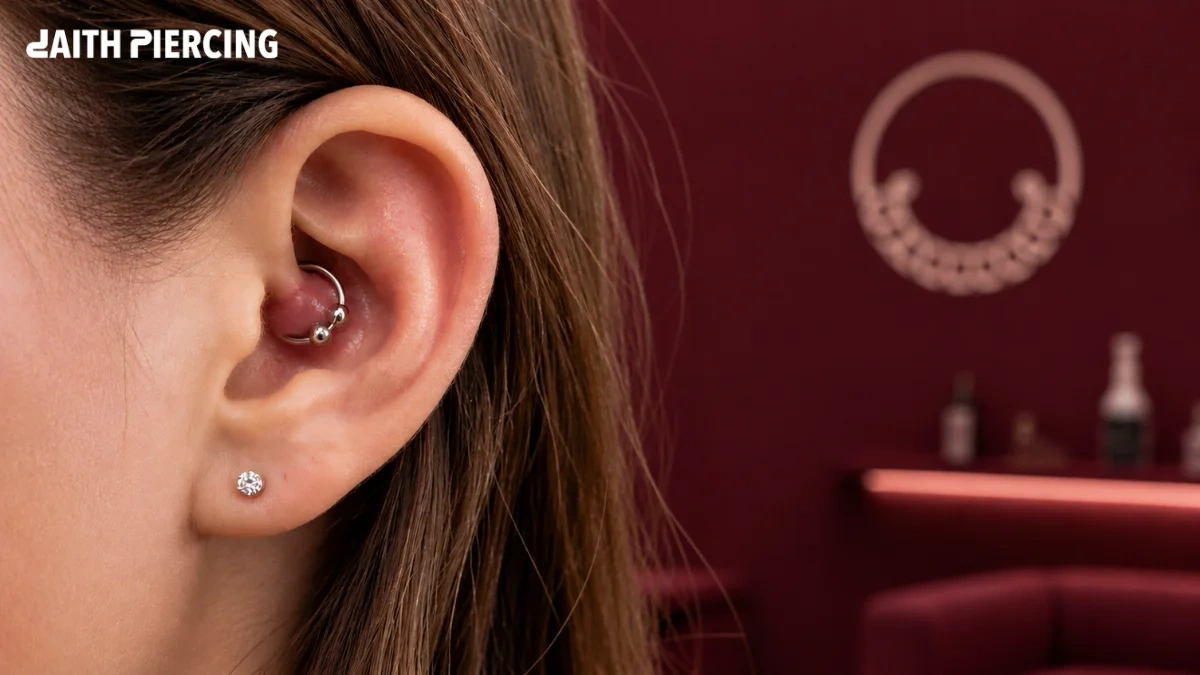
A daith piercing hypertrophic scar is a raised bump that forms because the piercing becomes irritated during healing. Unlike a keloid, it stays within the edges of the piercing wound and often becomes smaller with proper aftercare. Keeping the area clean, avoiding pressure, wearing quality jewelry, and being patient are usually the most effective ways to help it heal.
What Is a Daith Piercing Hypertrophic Scar?
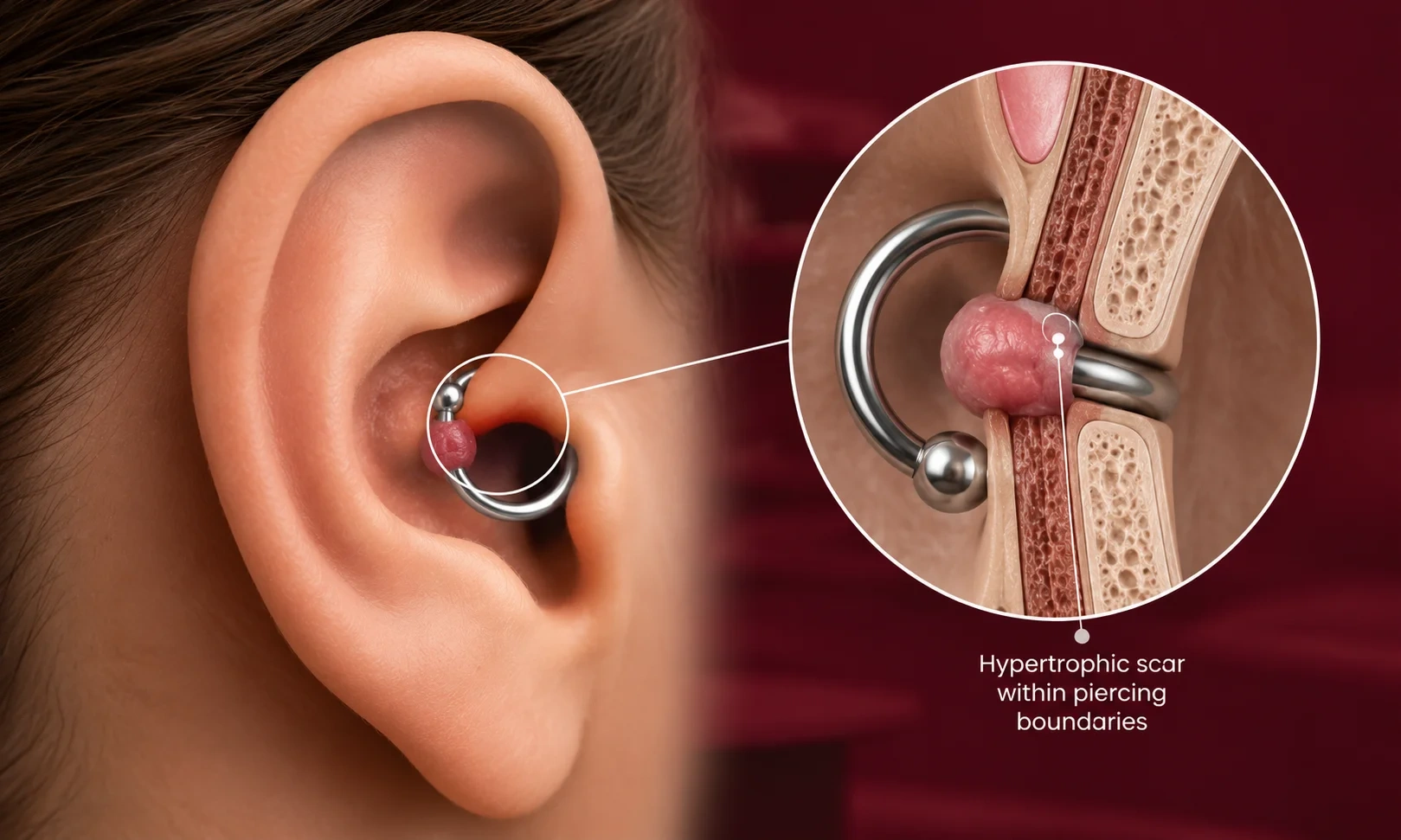
A hypertrophic scar is an overgrowth of scar tissue that develops while your body repairs a wound. In a daith piercing, this scar forms around the piercing channel instead of spreading beyond it.
Your body naturally produces collagen to heal damaged skin. Sometimes, if the piercing experiences repeated irritation, the body produces more collagen than necessary. As a result, a raised, firm bump appears around the jewelry.
Although it may look alarming, a hypertrophic scar is generally harmless and is much more common than a true keloid.
One important thing to remember is that these scars do not appear overnight. They usually develop gradually during the healing process, especially within the first few months after getting pierced.
What Does a Hypertrophic Scar Look Like?
Recognizing the bump correctly is the first step toward choosing the right treatment.
Common signs include:
| Feature | Hypertrophic Scar |
|---|---|
| Appearance | Raised, smooth bump |
| Color | Pink, red, or close to skin tone |
| Texture | Firm but slightly flexible |
| Growth | Stays around the piercing hole |
| Pain | Mild tenderness if irritated |
| Size | May shrink over time |
Some scars appear small, while others become more noticeable because of repeated friction. The bump may also look slightly swollen after sleeping on that ear or wearing tight headphones.
It is completely normal for the appearance to change from day to day during healing.
Why Does a Daith Piercing Hypertrophic Scar Develop?
Several factors can irritate the piercing and encourage excess scar tissue to form.
Constant Pressure
The daith is located in a part of the ear that easily experiences pressure. Sleeping on the pierced side, wearing earbuds, or using over-ear headphones for long periods can repeatedly stress the healing tissue.
Jewelry Movement
Jewelry that moves too much can repeatedly disturb the healing channel. Frequent twisting or spinning may delay recovery rather than help it.
Low-Quality Jewelry
Jewelry made from poor-quality metals can irritate sensitive skin. Implant-grade titanium, solid gold, or high-quality niobium is generally preferred because it is less likely to irritate.
Cleaning Too Much
Many people believe cleaning several times a day helps healing. In reality, excessive cleaning can dry the skin, damage new tissue, and keep the piercing inflamed longer.
Gentle care is usually more effective than aggressive cleaning.
Accidental Trauma
Hairbrushes, towels, helmets, hats, phone calls, and even hugs can accidentally pull or bump a daith piercing. Small injuries repeated over time often contribute to hypertrophic scars.
Changing Jewelry Too Early
Daith piercings usually require several months to heal completely. Replacing jewelry before the piercing is ready can restart the healing process and increase irritation.
Healing takes patience, especially with cartilage piercings.
Risk Factors That Increase Your Chances
Some people are naturally more likely to develop hypertrophic scars than others.
Factors that may increase the risk include:
- Frequent touching of the piercing
- Sleeping on the pierced ear
- Wearing earbuds every day
- Poor aftercare habits
- Improper jewelry size
- Low-quality jewelry materials
- Piercing performed at the wrong angle
- Delayed healing caused by repeated irritation
- Existing sensitive skin
Having one or more of these risk factors does not mean you will definitely develop a scar. However, reducing unnecessary irritation gives your piercing a much better chance of healing smoothly.
How to Tell a Hypertrophic Scar from a Keloid
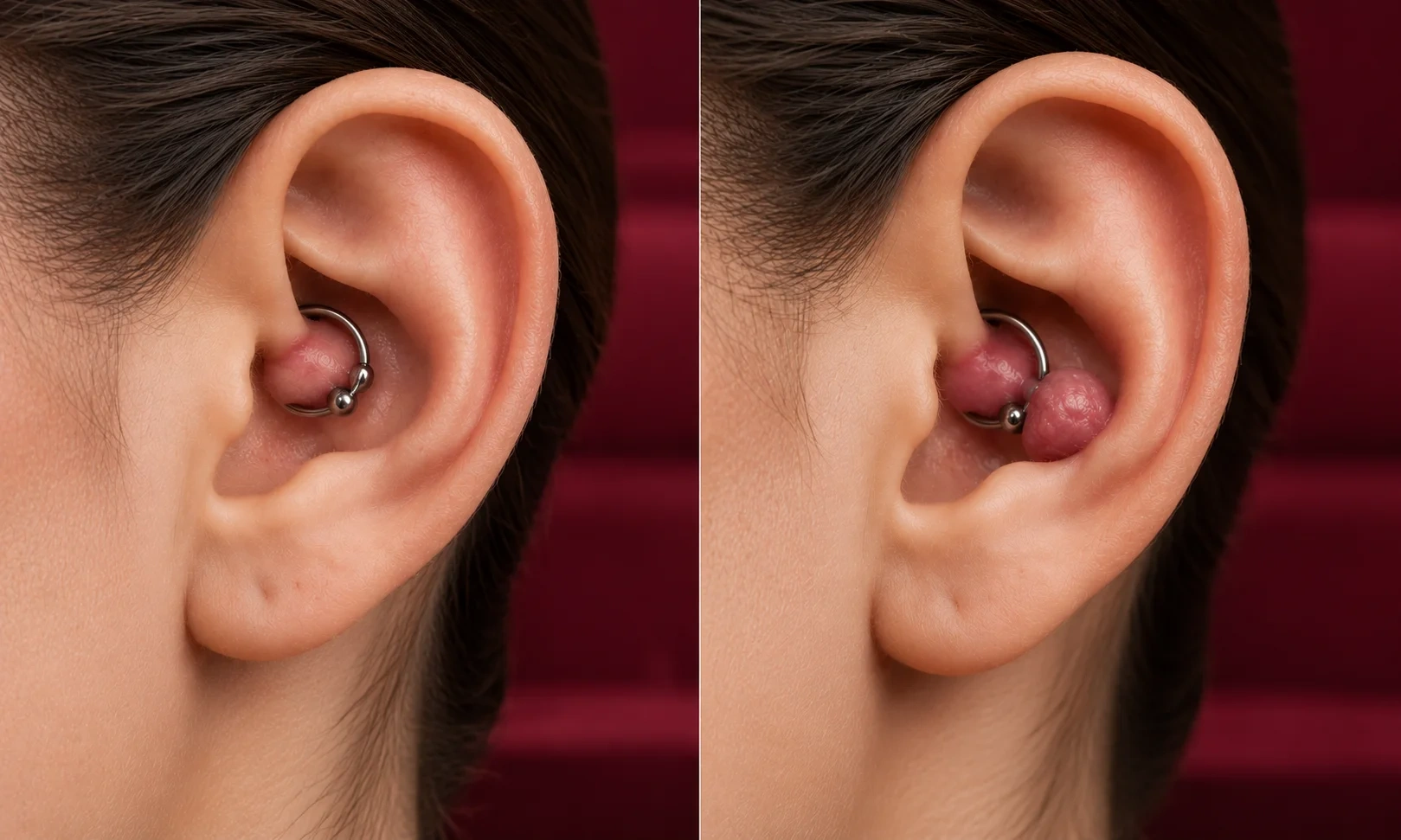
Many people use the terms hypertrophic scar and keloid interchangeably, but they are not the same. Knowing the difference helps you choose the right treatment and avoid unnecessary worry.
| Feature | Hypertrophic Scar | Keloid |
|---|---|---|
| Growth | Stays within the piercing site | Extends beyond the piercing |
| Cause | Irritation during healing | Excessive scar tissue, often genetic |
| Appearance | Small raised bump | Larger, thicker mass |
| Chance of Improving | Often improves over time | Usually needs medical treatment |
| Common in Daith Piercings | Yes | Much less common |
If the bump keeps growing beyond the piercing, becomes very large, or continues to enlarge after the piercing has healed, it’s a good idea to consult a healthcare professional. A true keloid usually requires medical treatment rather than home care.
Safe Treatment Options
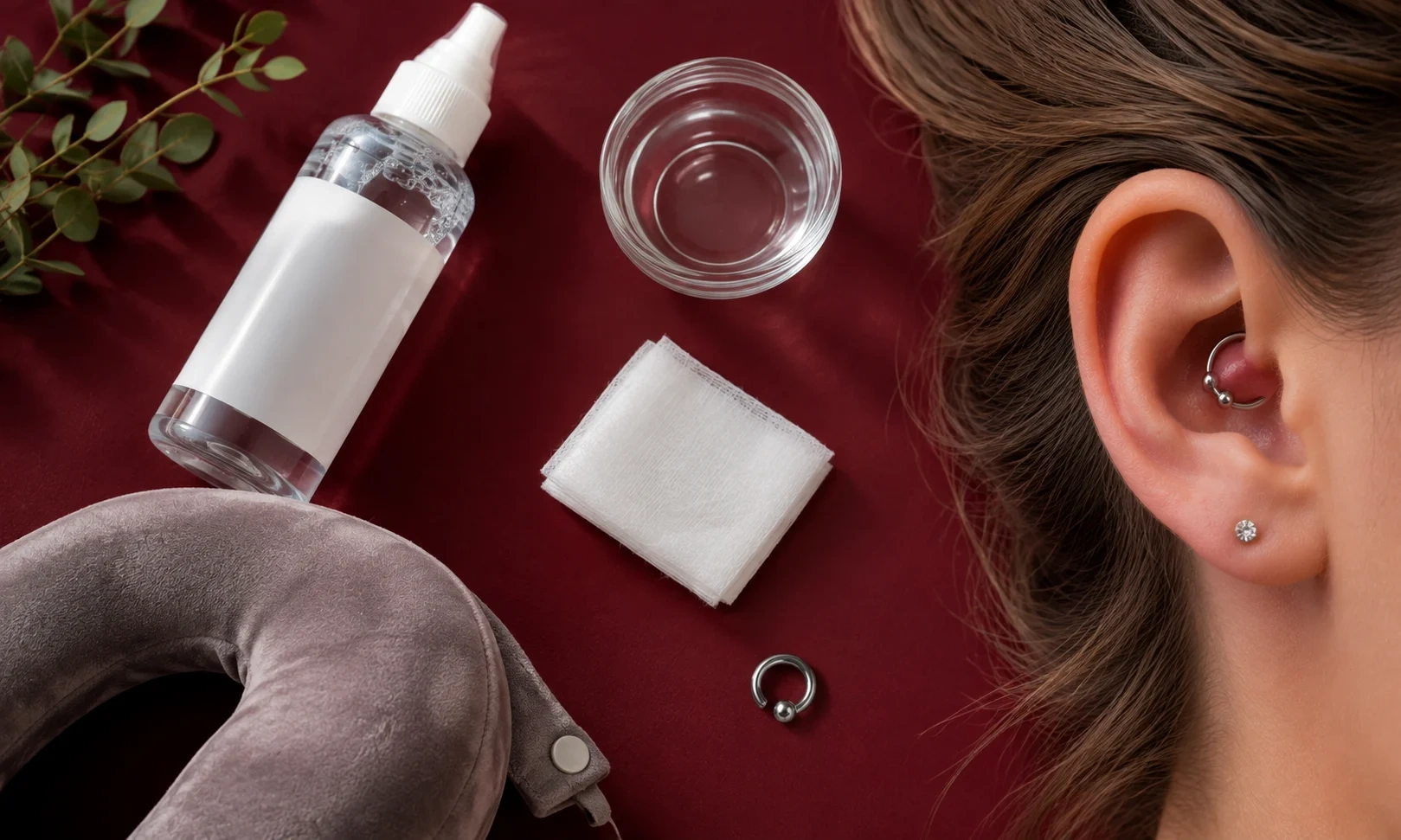
There is no overnight fix for a hypertrophic scar. The goal is to reduce irritation so your body can heal naturally.
Continue Gentle Saline Aftercare
Clean the piercing once or twice a day with sterile saline solution. Let the area air dry or gently pat it dry with clean gauze.
Avoid using alcohol, hydrogen peroxide, or harsh antiseptics. These products can dry the skin and slow healing instead of helping it.
Leave the Jewelry Alone
It may be tempting to twist or remove the jewelry, but doing so often makes the irritation worse.
Unless advised by a professional piercer or healthcare provider, leave the jewelry in place while the piercing heals.
Reduce Pressure
Pressure is one of the biggest reasons a daith piercing becomes irritated.
Try to:
- Sleep on the opposite side.
- Avoid earbuds until the piercing feels comfortable.
- Limit the use of tight headphones.
- Be careful when brushing your hair or changing clothes.
Small changes in your daily routine can make a noticeable difference.
Wear High-Quality Jewelry
If the jewelry is irritating, visit an experienced professional piercer. They can check whether the size, style, or material is suitable.
Implant-grade titanium is often recommended because it is lightweight, durable, and suitable for many people with sensitive skin.
Never change the jewelry yourself if the piercing is still healing.
Be Patient
Cartilage piercings heal slowly. Even after the pain disappears, the inside of the piercing may still be healing.
A hypertrophic scar often becomes flatter over several weeks or months once the source of irritation is removed.
Treatments to Avoid
Many online remedies promise quick results, but some can make the problem worse.
Avoid these common mistakes:
| Avoid | Why It Can Be Harmful |
| Tea tree oil | May irritate sensitive skin |
| Toothpaste | Not made for wound care |
| Aspirin paste | Can damage healing tissue |
| Alcohol | Dries and irritates the skin |
| Hydrogen peroxide | Slows healthy tissue repair |
| Constant twisting | Reopens the healing channel |
If a treatment sounds like a home remedy with little evidence behind it, it is usually safer to skip it.
When to See a Professional
Most hypertrophic scars improve with proper aftercare. However, some symptoms should not be ignored.
Seek advice from a professional piercer or healthcare provider if you notice:
- Severe or increasing pain
- Thick yellow or green discharge
- Fever or spreading redness
- Rapidly growing tissue
- Jewelry becoming embedded
- The bump continues growing despite several weeks of proper care
These signs may indicate an infection or another condition that requires professional evaluation.
How to Prevent a Hypertrophic Scar
Good aftercare is easier than treating an irritated piercing later.
Choose an Experienced Piercer
A correctly placed piercing with quality jewelry gives your ear the best chance to heal properly.
Follow a Simple Cleaning Routine
Clean with sterile saline solution and avoid overcleaning. Consistency matters more than frequent cleaning.
Avoid Touching the Piercing
Only touch your piercing after washing your hands, and only when necessary.
Sleep Carefully
Using a travel pillow or donut pillow can reduce pressure on your ear while sleeping.
Wait Before Changing Jewelry
Even if the piercing looks healed, the inside may still be delicate. Wait until your piercer confirms it is ready for a jewelry change.
Expert Tips for Faster Healing
- Wash your hands before touching the piercing.
- Keep hair products away from the area.
- Dry the piercing after showering.
- Avoid swimming in pools or hot tubs during early healing.
- Eat a balanced diet and stay hydrated to support normal wound healing.
- Be consistent with aftercare rather than trying multiple remedies.
These simple habits often have a bigger impact than expensive products.
Conclusion
A daith piercing hypertrophic scar can look concerning, but it is usually a sign that your piercing has become irritated rather than permanently damaged. In many cases, simple changes such as reducing pressure, using sterile saline, avoiding unnecessary touching, and wearing high-quality jewelry allow the bump to settle over time.
Healing cartilage takes patience, and every person heals at a different pace. Instead of looking for quick fixes, focus on consistent aftercare and monitor the piercing for signs of improvement. If the bump continues to grow, becomes extremely painful, or shows signs of infection, seek advice from an experienced piercer or a healthcare professional.
At DaithPiercing, we encourage safe piercing practices, evidence-based aftercare, and realistic healing expectations so you can enjoy your piercing with confidence.
Frequently Asked Questions
How long does a daith piercing hypertrophic scar last?
It varies from person to person. Many bumps begin improving within a few weeks after the irritation is removed, while others may take several months to flatten.
Can I remove the bump completely?
Many hypertrophic scars become much smaller or disappear over time. The outcome depends on the cause of the irritation and how well the piercing is cared for.
Should I remove my jewelry?
No. Removing jewelry during healing can cause additional problems unless a professional advises otherwise.
Is my bump infected?
Not necessarily. A hypertrophic scar is different from an infection. If you have severe pain, fever, foul-smelling discharge, or spreading redness, seek medical advice promptly.
Can I use silicone scar sheets?
Silicone scar products are commonly used for healed scars on the skin, but they are generally not practical for a healing daith piercing. Speak with a healthcare provider before using scar treatments on a fresh piercing.