Key Takeaways
- A Daith Piercing Too Shallow can naturally look different because ear anatomy varies.
- Very little tissue around the jewelry can be a warning sign.
- Migration and increasingly thin-looking tissue deserve professional attention.
- A photograph cannot reliably diagnose shallow placement.
- Avoid twisting, pulling, or forcing healing jewelry.
- Sleeping directly on healing cartilage can irritate.
- Have an experienced piercer assess questionable placement.
- Seek medical care for worsening pain, swelling, warmth, pus, fever, or chills.
- Never attempt to re-pierce a shallow daith yourself.
Quick Answer
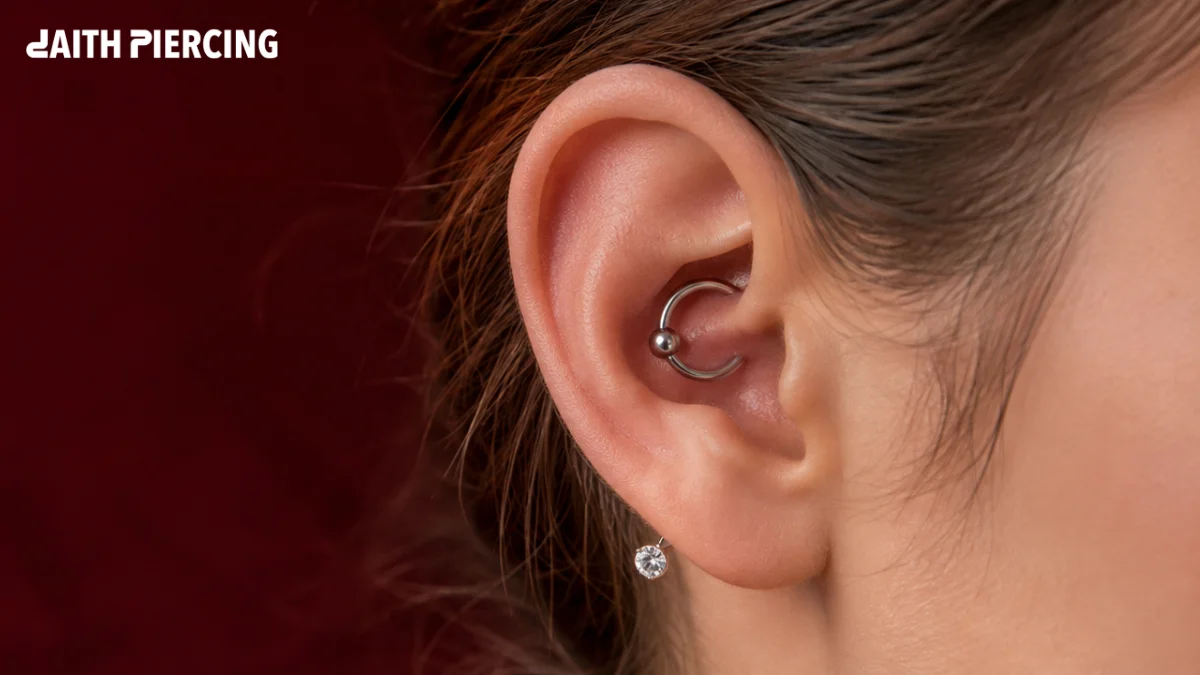
A daith piercing too shallow usually means the piercing channel appears to pass through an insufficient amount of tissue or sits too close to the edge of the daith fold.
Common warning signs include very little tissue around the jewelry, an unusual angle, persistent irritation, migration, or jewelry that seems to press against the surrounding skin.
However, appearance alone cannot confirm poor placement. Ear anatomy varies considerably, so an experienced piercer should assess the piercing in person before you decide to remove or replace it.
What Does a Too-Shallow Daith Piercing Mean?
A daith piercing passes through the inner cartilage fold of the ear. Because this area is small and anatomy differs between people, there is no single visual position that looks identical on every ear.
A piercing may be considered too shallow when the channel is placed too close to the edge of the available tissue. In that situation, the jewelry may have less support and can experience more pressure or movement.
Furthermore, a piercing can look shallow because of swelling, jewelry size, camera angle, or the natural shape of the ear. That is why judging it from one photograph can be misleading.
The Association of Professional Piercers recommends having jewelry changes and downsizing performed by a qualified piercer during healing, while also emphasizing that sleeping directly on healing cartilage can contribute to irritation and changes in angle.
Signs Your Daith Piercing May Be Too Shallow
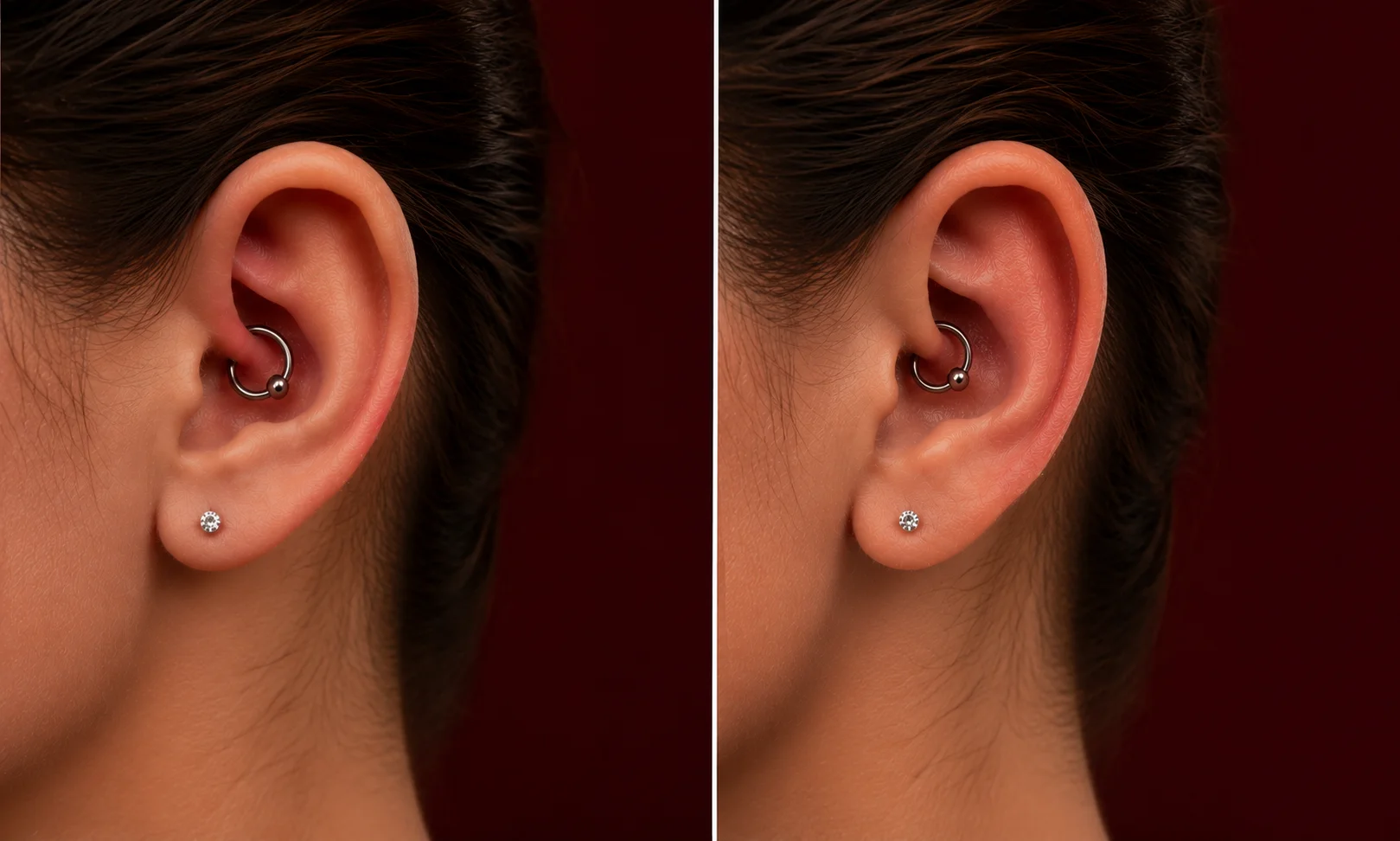
There is no reliable home measurement that can tell you whether your daith is correctly placed. Instead, look for several signs together.
1. Very Little Tissue Around the Jewelry
One possible warning sign is that the jewelry appears to sit extremely close to the edge of the cartilage fold.
If the jewelry seems to have barely any tissue supporting it, have a professional piercer examine the placement.
2. The Jewelry Sits at an Unusual Angle
A daith ring should follow the shape of the piercing rather than constantly pulling against one side.
If the jewelry appears strongly tilted or the two openings do not seem properly aligned, placement may need professional evaluation.
3. Persistent Irritation
Some tenderness, swelling and localized irritation are expected during early healing. However, continuing irritation can indicate mechanical problems, unsuitable jewelry, pressure, or poor aftercare.
The APP notes that irritation can occur when a healing piercing is repeatedly disturbed, while Cleveland Clinic also explains that redness, swelling and pain can be normal initially but deserve attention when they persist or return.
4. The Piercing Appears to Be Moving
Migration occurs when a piercing gradually shifts position.
If the jewelry appears to be moving toward the edge of the tissue or the amount of tissue around it seems to be decreasing, get it assessed rather than waiting for the problem to become severe.
5. Skin Looks Stretched or Thinned
A concerning sign is skin that appears increasingly thin around the jewelry.
This can indicate that the piercing is under excessive pressure or migrating. In that situation, do not try to push the jewelry deeper or reposition it yourself.
6. The Jewelry Constantly Presses Against the Ear
Jewelry that is too tight or unsuitable for the anatomy can create unnecessary pressure.
However, this does not automatically mean the piercing itself is too shallow. Jewelry size, style and swelling should also be considered.
Why a Daith Piercing Can Look Shallow
There are several reasons a daith piercing may appear shallow even when the placement is appropriate.
| Possible reason | What it can look like |
|---|---|
| Natural anatomy | Less visible tissue around the jewelry |
| Swelling | Jewelry appears closer to the edge |
| Jewelry diameter | A larger ring can change the visual appearance |
| Camera angle | The piercing may look shallower in photographs |
| Piercing angle | Jewelry may appear tilted |
| Actual shallow placement | Very little supporting tissue and possible migration |
Therefore, do not rely on a single photograph to decide whether your piercing needs to be removed.
Recent online discussions about daith placement also show why photographs can create uncertainty: people can interpret the same placement differently, while experienced piercers emphasize that anatomy and an in-person assessment matter.
Is a Shallow Daith Piercing Dangerous?
A shallow placement does not automatically mean an emergency.
Nevertheless, a poorly positioned cartilage piercing may have difficulty healing and can experience continuing irritation or migration. If the jewelry is putting excessive pressure on the tissue, leaving the problem unaddressed may make matters worse.
In addition, cartilage piercings require extra care because cartilage has less blood flow than the earlobe. Ear cartilage infections can become more serious than ordinary earlobe infections.
The important point is that placement and infection are different problems. A shallow piercing is primarily a placement or mechanical concern, while increasing warmth, swelling, pain, pus or systemic symptoms may indicate infection.
Too Shallow vs Normal Placement
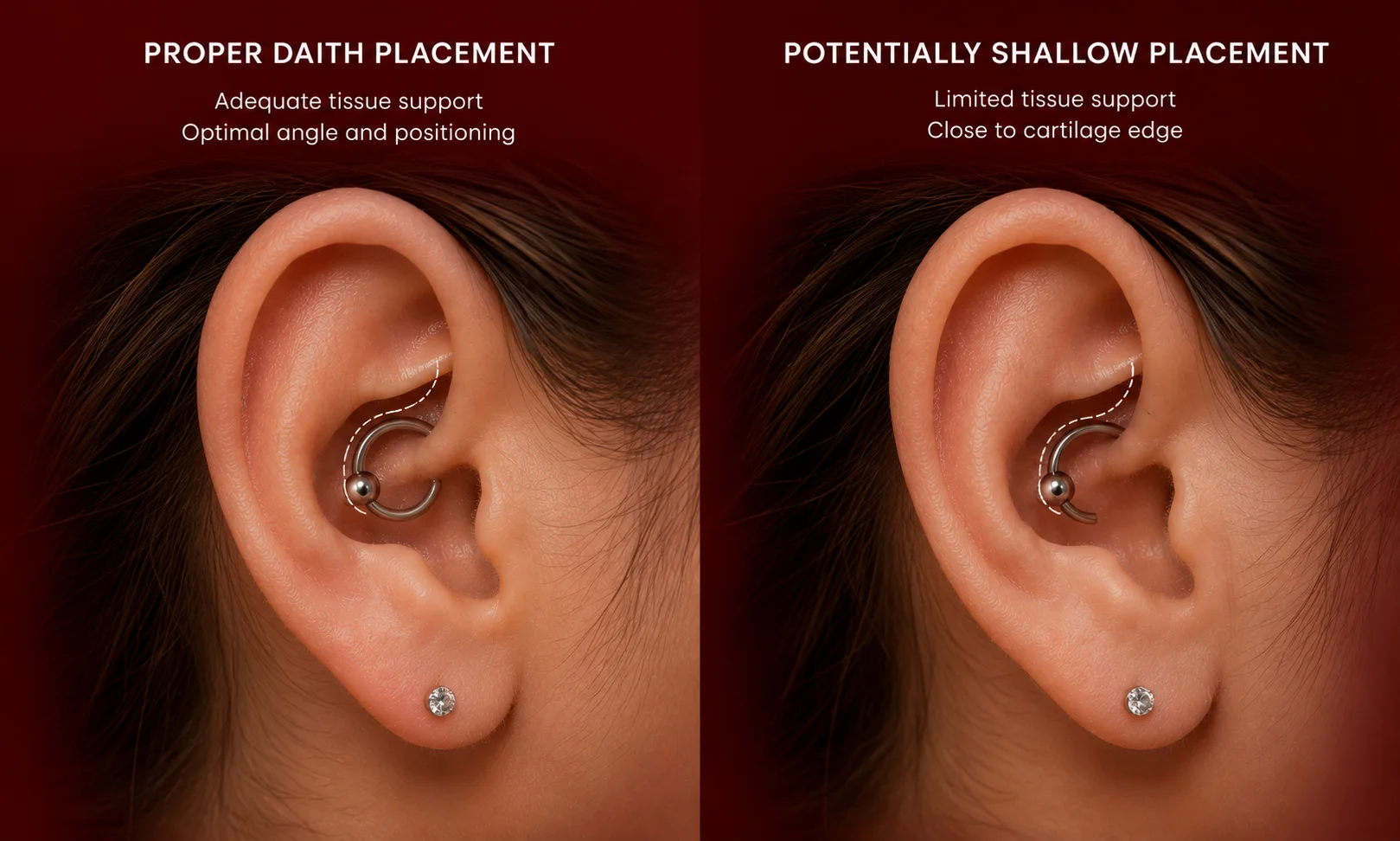
| Feature | Possible normal variation | Possible shallow placement |
| Tissue around jewelry | Varies with anatomy | Very little supporting tissue |
| Jewelry position | Follows ear anatomy | Appears close to the edge |
| Angle | May differ slightly | Strongly tilted or poorly aligned |
| Healing | Gradually settles | Persistent irritation or migration |
| Appearance | Changes with jewelry size | Looks increasingly stretched |
| Best next step | Continue appropriate aftercare | Professional assessment |
This table is a guide rather than a diagnostic test. A qualified piercer should physically examine the ear before deciding whether placement is acceptable.
What to Do If Your Daith Is Too Shallow
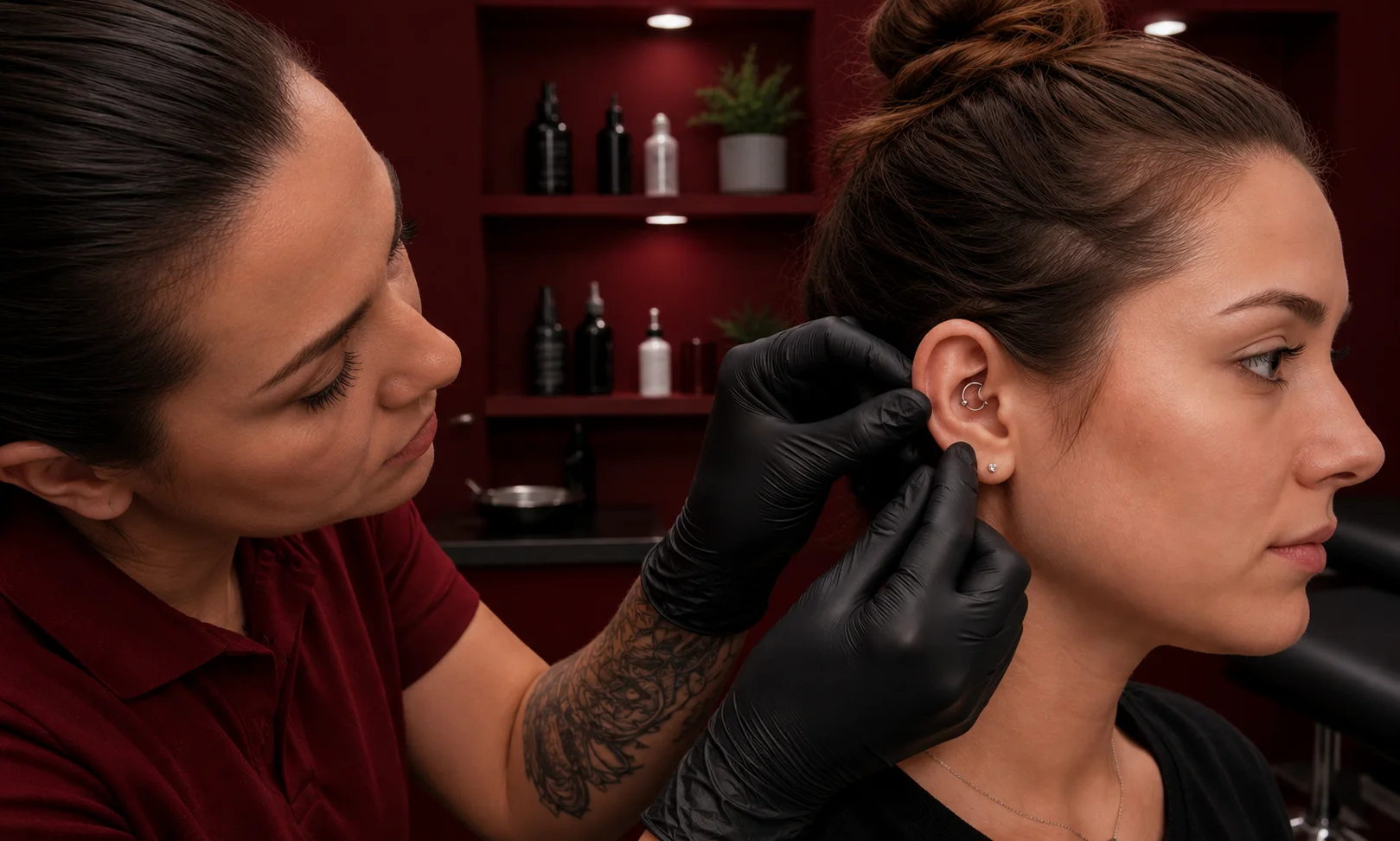
Get a Second Opinion
If you are concerned, visit an experienced piercer who did not perform the original piercing.
Do Not Re-Pierce It Yourself
Never attempt to create another channel next to the existing piercing.
Cartilage requires careful placement, sterile equipment, and appropriate jewelry. An experienced professional can decide whether the piercing should remain, be removed, or eventually be redone.
Do Not Force the Jewelry
Avoid pushing, pulling, twisting, or rotating the ring to make the piercing look deeper.
The APP specifically advises against twisting or rotating jewelry during healing because unnecessary movement can irritate the developing channel.
Consider Whether the Jewelry Is the Real Problem
Sometimes the piercing itself is acceptable, but the jewelry is too large, too tight, poorly suited to the anatomy, or irritating the channel.
A professional piercer can assess whether a suitable jewelry change or later downsize would help. Jewelry changes during healing should be performed by a qualified piercer rather than attempted at home.
Can a Too-Shallow Daith Be Saved?
It depends on the actual placement.
If the piercing is correctly positioned but simply looks different because of anatomy or jewelry, it may not need any intervention.
On the other hand, if the channel genuinely has inadequate tissue support or is migrating, continuing to force it to heal may not be the best approach. A professional piercer can determine whether it should be retired and allowed to heal before considering a new piercing.
Importantly, do not remove jewelry simply because a photograph makes the piercing look unusual. If infection is suspected, speak with a healthcare professional about appropriate management rather than making an independent decision about jewelry removal. The APP specifically recommends discussing jewelry removal or an appropriate substitute with a physician when infection is suspected.
Aftercare While You Get It Checked
Until a professional assesses the placement, keep your routine simple.
Wash your hands before touching the area, avoid unnecessary contact, and follow appropriate saline-based aftercare recommended by your piercer.
Also, avoid sleeping directly on the healing piercing. Keep pillowcases clean, and be careful with headphones, phones, hair products, and other objects that can rub against the ear.
Furthermore, do not use harsh products simply because the piercing is irritated. Excessive cleaning can also contribute to irritation.
Avoid swimming or submerging a healing piercing in pools, hot tubs, lakes and similar water sources when possible.
When to See a Doctor
A placement concern should generally be assessed by a professional piercer. However, symptoms suggesting infection require medical attention.
Seek healthcare advice if you develop worsening redness, significant swelling, increasing pain, warmth, pus-like discharge, fever or chills.
Cleveland Clinic notes that cartilage infections can sometimes become serious and may lead to complications such as perichondritis if left untreated.
Therefore, do not assume every bump or painful episode is simply an irritation bump.
Common Mistakes to Avoid
Removing the jewelry immediately: A placement concern is not the same as an infection, so get professional advice first.
Twisting the ring: Movement can irritate healing tissue.
Using harsh chemicals: Strong products can irritate the piercing rather than solve the underlying problem.
Sleeping on it: Pressure can aggravate cartilage and potentially affect the piercing angle.
Trusting one photograph: Camera angle and anatomy can make a correctly placed daith look different.
Changing jewelry yourself: A qualified piercer can assess the size, style, and fit more safely.
Conclusion
A daith piercing too shallow can be a genuine placement concern, but it can also be an illusion caused by anatomy, swelling, jewelry size or camera angle.
Therefore, look for patterns rather than judging the piercing from one photograph. Very little supporting tissue, migration, stretched skin, unusual angling and ongoing irritation are good reasons to seek a professional assessment.
Most importantly, do not force the jewelry, twist it, or attempt to re-pierce the area yourself. Instead, choose an experienced piercer for a second opinion and seek medical care if you notice signs of infection.
For readers researching daith placement, jewelry and aftercare, DaithPiercing can also serve as a useful starting point for exploring related piercing information.
Frequently Asked Questions
How do I know if my daith piercing is too shallow?
Look for very little supporting tissue, unusual positioning, increasing migration, stretched-looking skin or persistent mechanical irritation. However, only an in-person professional assessment can reliably determine whether the placement is too shallow.
Can a shallow daith piercing still heal?
It may heal, depending on the actual placement and your anatomy. However, a genuinely shallow or migrating piercing may continue to experience mechanical problems.
Should I remove a daith piercing that looks too shallow?
Not automatically. First, have an experienced piercer examine it. If infection is suspected, seek medical advice before deciding what to do with the jewelry.
Can a piercer fix a shallow daith?
A piercer cannot simply move an existing piercing deeper. Depending on the situation, they may recommend leaving it alone, changing unsuitable jewelry, or retiring the piercing and allowing the area to heal before considering another attempt.
Does a larger ring make a daith look shallower?
Yes, jewelry diameter can change how the placement appears. A large ring may make the piercing look more exposed, so appearance alone is not enough to diagnose shallow placement.
Is a daith piercing supposed to be deep?
It should be placed through suitable tissue according to the individual’s anatomy. There is no universal depth that looks identical on every ear.
Can sleeping on a daith change its position?
Repeated pressure and irritation can contribute to problems with healing and may affect the angle of a healing cartilage piercing. The APP recommends avoiding direct pressure on healing cartilage.