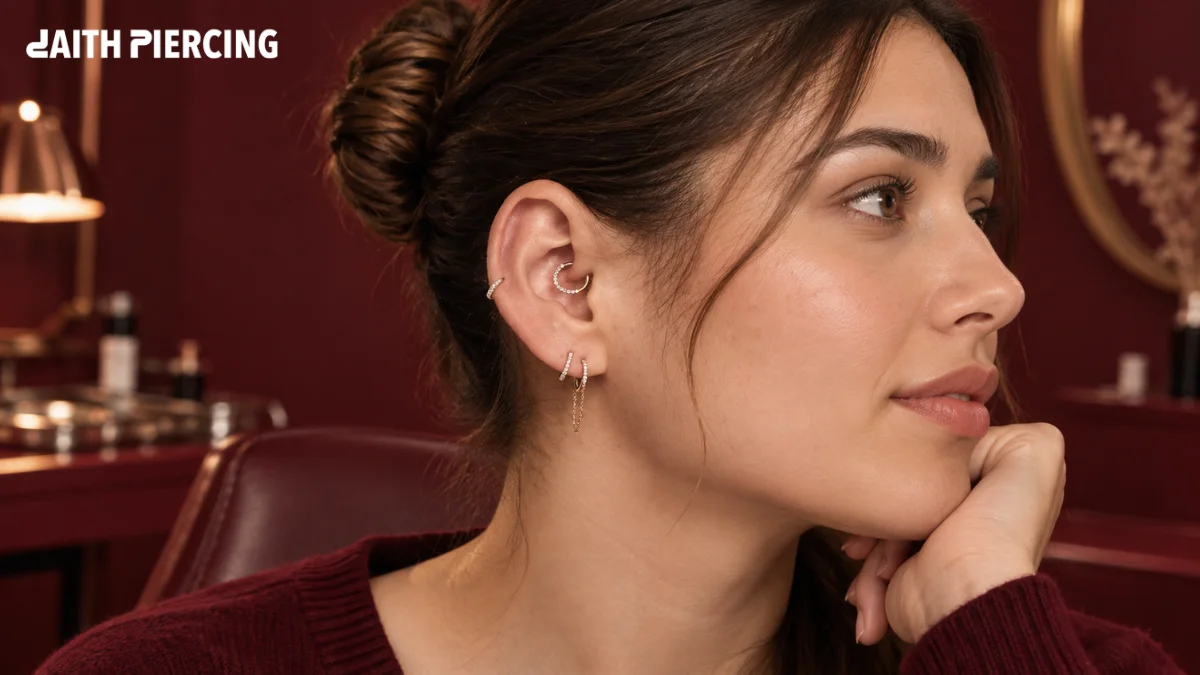
Migraine attacks can turn an ordinary day into a difficult one. That is why some people look beyond medicines for relief. One option that often appears online is migraine piercing, usually referring to a daith piercing.
But an interesting theory is not the same as a proven treatment. Current research does not show that a daith or other ear piercing can reliably prevent or treat migraine. A 2024 review found only three case reports and one retrospective study, with no clinical trial supporting the treatment.
What Is Migraine Piercing?
“Migraine piercing” is not the name of a medically recognized procedure. The phrase is mainly used online for a daith piercing that people hope will reduce migraine symptoms.
A daith piercing goes through the small fold of cartilage just above the ear canal. It is a popular body piercing on its own, but it has gained attention because some people connect its location with acupuncture points used around the ear.
The theory is that stimulating this area may affect pain pathways involved in migraine. However, a piercing is not the same as acupuncture or a medical neuromodulation treatment, and its placement can vary from person to person.
Key Takeaways
- Migraine piercing usually refers to a daith piercing promoted online as a migraine treatment.
- Current research does not provide strong evidence that daith piercing prevents or treats migraine.
- A 2024 review found only three case reports and one retrospective study, with no clinical trial.
- Reported improvements do not prove that the piercing caused the benefit.
- Daith piercing can cause normal cartilage-piercing problems, including infection and irritation.
- Tragus and rook piercings also lack good evidence as migraine treatments.
- Evidence-based migraine care includes appropriate acute treatment, preventive treatment when needed and lifestyle strategies.
- A piercing can be a personal style choice, but it should not replace proper migraine care.
Why Do People Call It a Migraine Piercing?
The idea became popular through personal stories, social media and online communities. Some people with frequent headaches say their attacks became less severe or less frequent after a daith piercing.
Those experiences can feel convincing, but personal improvement does not prove that the piercing caused the change. Migraine symptoms naturally fluctuate, and expectations can also influence how pain is experienced.
A 2024 narrative review of the available medical literature found that the published evidence was limited to a small number of case reports and one retrospective study. No clinical trial was identified. The review concluded that current evidence does not support daith piercing as a treatment for migraine or other headache disorders.
Does Migraine Piercing Actually Work?

Based on current evidence, there is not enough reliable research to say that migraine piercing works.
The Cleveland Clinic notes that there is no scientific evidence or clinical trial evidence showing that ear piercing prevents migraines. It also explains that the proposed mechanism does not establish that piercing changes the migraine pain pathway.
A person may genuinely feel better after getting a piercing, but that does not prove the piercing treated the underlying migraine disorder. Without well-controlled clinical trials, researchers cannot separate a true treatment effect from natural changes, placebo effects or other factors.
What Does the Research Say?
The research available so far is limited but consistent. A 2024 review found one retrospective study and three case reports, with no clinical trial. The reported patients experienced improvements, but headache symptoms returned weeks or months later in the published cases.
This does not mean every person will have the same experience. It means the evidence is not strong enough to recommend piercing as migraine treatment.
The American Headache Society maintains clinical guidelines and evidence-based resources for migraine care. Its current guidance focuses on established acute and preventive treatments rather than ear piercing. In 2026, it also published updated recommendations on pharmacologic migraine prevention.
Could the Placebo Effect Explain Some Results?
A placebo effect does not mean that someone’s pain is fake. Pain is real, and expectations can influence how the brain processes symptoms. Migraine frequency can also change naturally, making it difficult to know what caused an improvement without a controlled study. Testimonials are not proof.
Are There Risks With a Migraine Piercing?
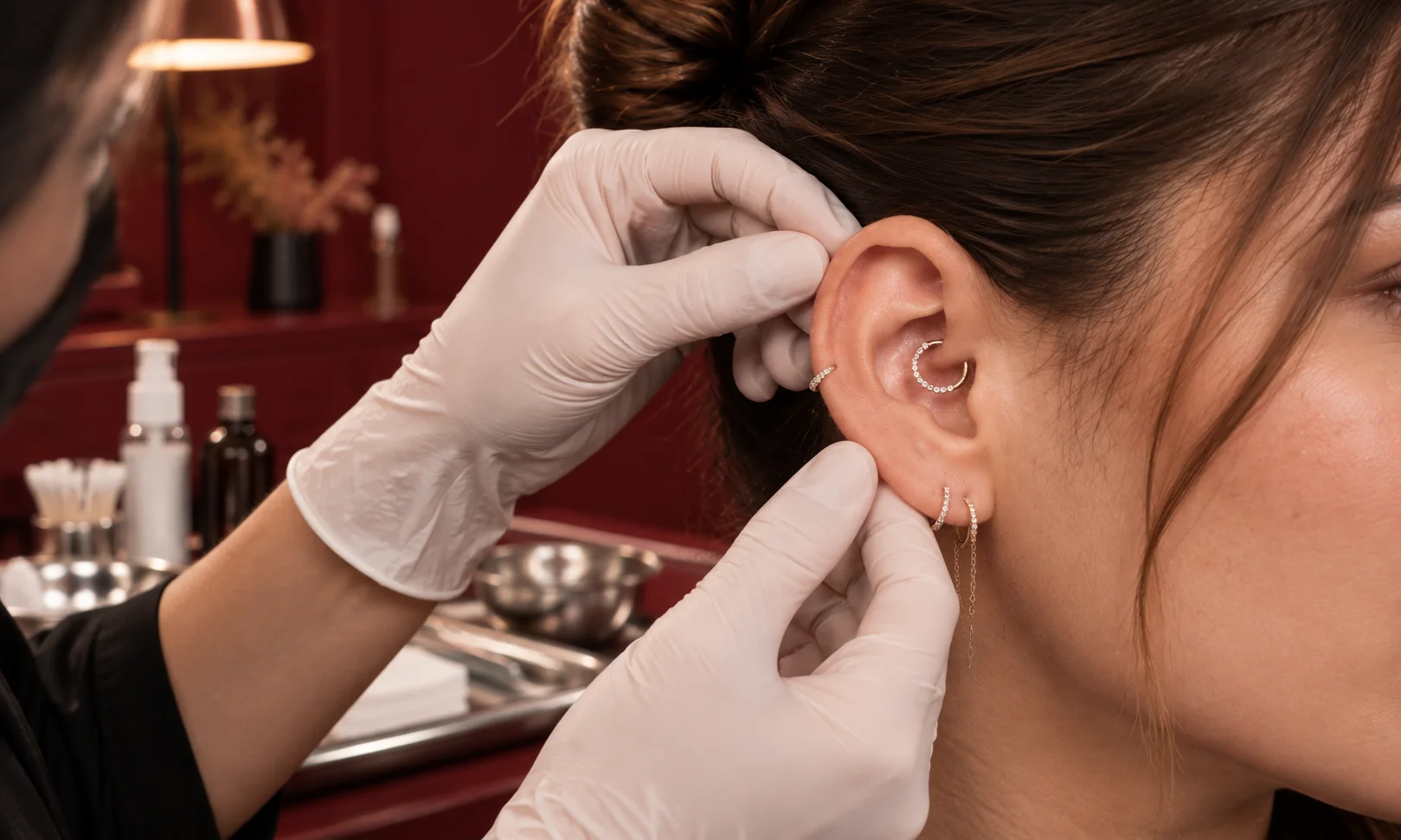
A daith piercing is still a cartilage piercing, so it comes with normal piercing risks. These can include pain, swelling, bleeding, irritation, allergic reactions and infection.
Cartilage piercings can take a long time to heal. Pressure from headphones, sleeping on the piercing, touching it frequently or changing jewelry too soon can irritate the area.
If the piercing becomes infected or badly irritated, you may face a new health problem without gaining any proven migraine benefit.
The Cleveland Clinic warns that infection risk outweighs its unproven benefit as a migraine treatment.
If you choose a daith piercing for style, use a reputable professional piercer, follow aftercare instructions and seek medical advice for worsening redness, swelling, pus, fever or increasing pain.
Can Tragus or Rook Piercings Help Migraine?
You may also see claims about tragus or rook piercings for migraine relief. These claims are based on a similar idea: stimulating a particular part of the ear might influence pain pathways.
However, there is no good clinical evidence showing that these piercings can reliably prevent or treat migraine either. A different piercing location does not automatically make the treatment medically effective.
If the goal is migraine relief, it is better to separate body-piercing choices from evidence-based migraine care.
What Are Better Options for Migraine Management?

Migraine treatment depends on the person, the frequency of attacks and the symptoms involved. A healthcare professional can help identify the most suitable approach. For some people, treatment focuses on stopping an attack when it begins. Acute treatment may include appropriate over-the-counter medicines or prescription options such as triptans, depending on medical history and individual needs.
People who experience frequent migraine attacks may also need preventive treatment. The American Headache Society notes that preventive treatment should be considered for patients with four or more headache days per month. Modern preventive options include several medication approaches, and treatment should be selected with a healthcare professional.
Lifestyle habits can also matter. Keeping a regular sleep schedule, eating consistently, staying hydrated, managing stress and identifying personal triggers may help reduce attacks for some people. A migraine diary can make patterns easier to spot and can give a healthcare professional useful information.
When Should You Talk to a Doctor?
If headaches become frequent, more severe, harder to control or different from your usual migraine pattern, speak with a healthcare professional.
Do not rely on a piercing instead of medical care, especially when migraines interfere with daily life.
A sudden, extremely severe headache or a headache accompanied by symptoms such as weakness, confusion, fainting, trouble speaking or major vision changes needs urgent medical assessment.
Evidence Note
This article is based on medical evidence from the American Headache Society, PubMed-indexed research and clinical information from Cleveland Clinic. The evidence does not support presenting daith or other ear piercing as a proven migraine treatment. Because migraine is a medical condition, treatment decisions should be discussed with a qualified healthcare professional. DaithPiercing provides educational information and does not replace individual medical advice.
FAQs
Is migraine piercing a real medical treatment?
No. Migraine piercing is not an established medical treatment. The term usually refers to daith piercing, which has been promoted online for migraine relief. Current research does not provide enough evidence to recommend it as a treatment.
Which piercing is best for migraines?
There is no scientifically proven “best” piercing for migraine. Daith, tragus and rook piercings have all been discussed online, but none has strong clinical evidence showing reliable migraine prevention or treatment.
How long does it take for a migraine piercing to work?
There is no medically established timeline because migraine piercing has not been proven to work. Reports from individuals cannot establish when or whether a piercing should produce a treatment effect.
Can a daith piercing make migraines worse?
The piercing itself can cause pain, swelling or irritation while healing. If an infection or significant inflammation develops, it can add discomfort. Anyone with signs of infection should seek appropriate medical advice rather than assuming the symptoms are part of migraine.
Should I get a daith piercing for migraine relief?
If you like the piercing for its appearance, that is a personal choice. But getting it specifically as a migraine treatment should be approached cautiously because the benefit is unproven and the procedure carries risks. Discuss frequent or severe migraines with a qualified healthcare professional instead.
Is migraine piercing better than migraine medicine?
There is no evidence that migraine piercing is an effective alternative to established migraine treatment. Proven treatments are supported by clinical research and should be chosen according to the person’s symptoms, medical history and treatment needs.