Key Takeaways
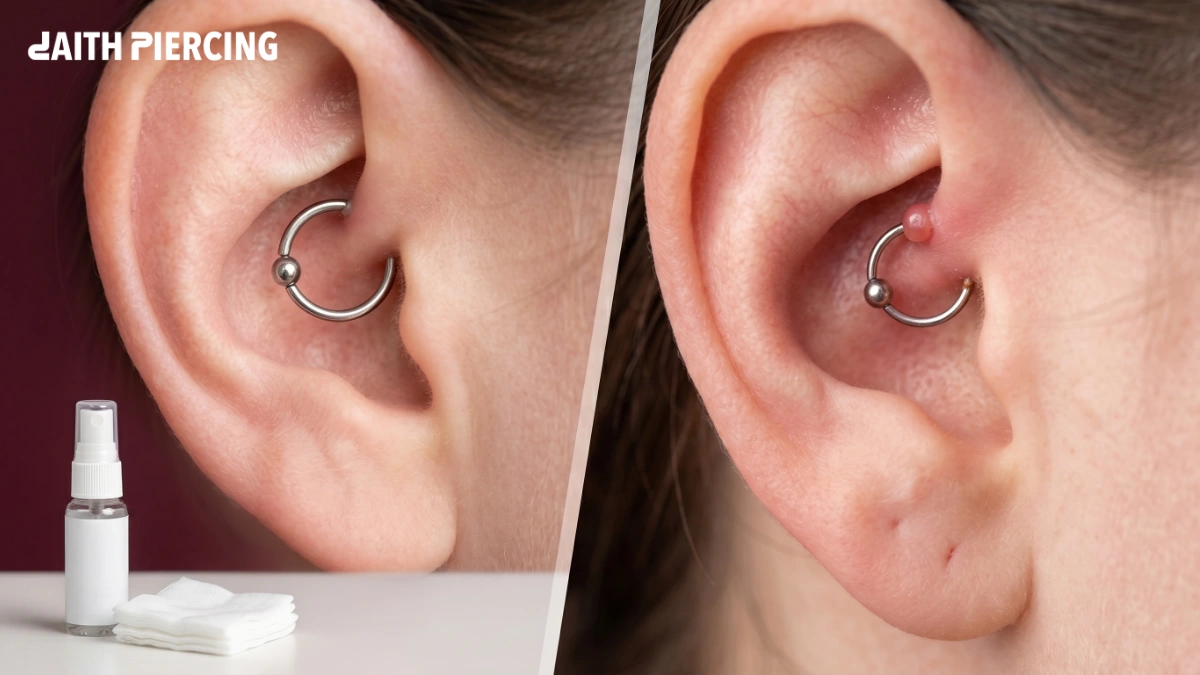
- Most daith piercing bumps are caused by irritation rather than infection. Learning how to get rid of daith piercing bump begins with proper aftercare and removing the cause of irritation.
- Sterile saline solution is one of the safest options for routine aftercare.
- Avoid touching, twisting, or changing the jewelry too early.
- Pressure from sleeping on the piercing is a common cause of persistent bumps.
- Implant-grade titanium and other high-quality materials are less likely to irritate.
- Seek medical attention if you develop severe pain, spreading redness, fever, or thick yellow or green discharge.
- Patience and consistent aftercare are the keys to successful healing.
Quick Answer
Most daith piercing bumps improve by removing irritation and following a gentle aftercare routine. Clean the piercing twice a day with sterile saline solution, avoid touching or twisting the jewelry, and sleep on the opposite side. If the bump becomes increasingly painful, leaks thick yellow or green pus, or is accompanied by fever, seek medical care because it could be an infection. Keloids and persistent bumps may require evaluation by a dermatologist.
What Is a Daith Piercing Bump?
A daith piercing bump is a small raised area that develops around the piercing hole during healing. It usually forms because the tissue has become irritated rather than because something has gone seriously wrong.
Since a daith piercing passes through thick cartilage inside the ear, it generally takes longer to heal than a standard earlobe piercing. During this time, the piercing is more sensitive to pressure, friction, and bacteria.
Many people notice a bump within the first few weeks after getting pierced. Others may develop one several months later if the jewelry is bumped, changed too early, or exposed to repeated irritation.
Fortunately, most piercing bumps are temporary and become smaller once the underlying cause is addressed.
Why Do Daith Piercing Bumps Happen?
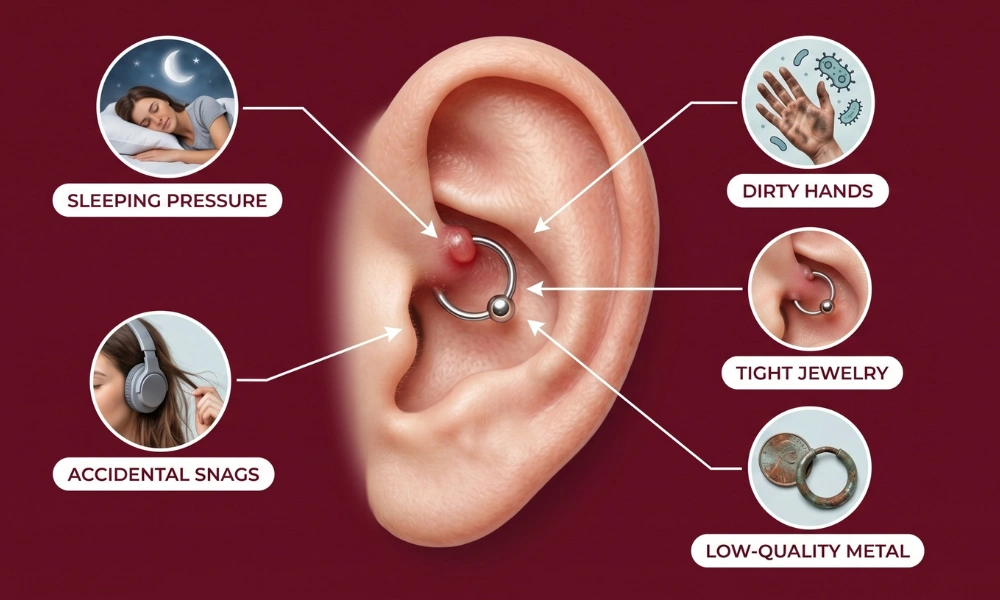
Understanding the cause is the first step toward choosing the right treatment. Several everyday habits can slow healing without you even realizing it.
Too Much Pressure
Sleeping on the pierced ear places constant pressure on the jewelry. This can irritate the cartilage and cause swelling that develops into a bump.
Touching the Piercing
Even clean hands carry bacteria. Frequently checking, twisting, or rotating the jewelry can delay healing and inflame the tissue.
Incorrect Jewelry
Jewelry that is too tight, too heavy, or made from low-quality materials may trigger irritation. Implant-grade titanium, solid gold, or high-quality surgical steel are generally better choices for healing piercings.
Poor Cleaning Habits
Cleaning too little allows bacteria and debris to build up. Cleaning too aggressively with harsh products can also damage healthy tissue.
Trauma
Headphones, helmets, towels, hairbrushes, and even clothing can accidentally snag the jewelry. Repeated trauma often causes irritation bumps.
Common Causes at a Glance
| Cause | How It Affects the Piercing | What You Should Do |
|---|---|---|
| Sleeping on the ear | Constant pressure | Sleep on the opposite side or use a travel pillow |
| Touching the jewelry | Introduces bacteria | Keep your hands away unless cleaning |
| Tight jewelry | Creates friction | Ask a professional piercer to check the fit |
| Low-quality jewelry | May irritate sensitive skin | Choose implant-grade materials |
| Harsh cleaning products | Delays healing | Use only sterile saline solution |
| Accidental bumps | Reopens healing tissue | Protect the piercing during daily activities |
The Most Common Types of Daith Piercing Bumps
Not every bump is the same. Knowing the difference can help you avoid unnecessary treatments.
Irritation Bump
This is the most common type. It often looks pink or slightly red and feels tender when touched.
An irritation bump usually develops because something is repeatedly disturbing the piercing. Once the irritation stops, the bump often begins to shrink.
Piercing Pustule
A pustule is a small bump filled with whitish or yellowish fluid. It may appear after minor irritation and is not always a sign of a serious infection.
Keeping the area clean and avoiding unnecessary pressure often helps it settle.
Hypertrophic Scar
A hypertrophic scar forms when the body produces extra scar tissue during healing. Unlike a keloid, it stays close to the piercing hole.
With proper care, many hypertrophic scars gradually flatten over time.
Keloid
A keloid is much less common than people think. It grows beyond the original piercing site and continues enlarging instead of staying around the hole.
Keloids usually require professional treatment rather than home remedies. They are also more likely in people with a personal or family history of keloids.
Irritation Bump vs Infection vs Keloid
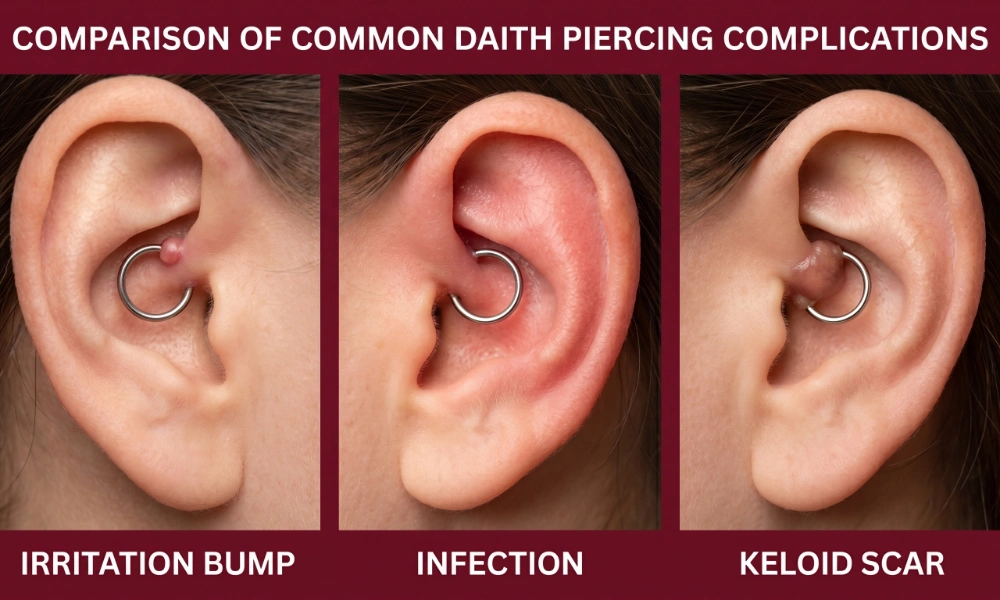
Before trying any treatment, it’s important to identify what kind of bump you have. Many people assume every bump is an infection or keloid, but that’s rarely the case. Treating the wrong problem can delay healing.
| Feature | Irritation Bump | Infection | Keloid |
|---|---|---|---|
| Appearance | Small, pink or red bump | Swollen, red, may drain thick yellow or green pus | Firm, smooth, raised scar extending beyond the piercing |
| Pain | Mild tenderness | Moderate to severe pain | Usually painless but may itch |
| Growth | May shrink with proper care | Can worsen without treatment | Continues growing over time |
| Cause | Friction, pressure, jewelry irritation | Bacteria entering the piercing | Excess scar tissue production |
| Best Action | Remove the source of irritation | Seek medical advice if symptoms are severe | Consult a dermatologist |
Signs It’s Probably an Irritation Bump
Most daith piercing bumps fall into this category. You may notice:
- A small pink or flesh-colored bump
- Mild soreness when the ear is touched
- No fever or flu-like symptoms
- Clear or slightly white fluid during healing
- The bump becomes smaller after reducing irritation
Signs It Could Be an Infection
Some redness and swelling are normal during the first few days after getting pierced. However, the following symptoms deserve closer attention:
- Increasing pain instead of gradual improvement
- Thick yellow or green discharge with an unpleasant smell
- Heat spreading around the ear
- Significant swelling
- Fever or feeling generally unwell
Do not remove the jewelry if you think the piercing is infected unless a healthcare professional tells you to. Removing it too soon can trap the infection inside the tissue.
Proven Treatments That Actually Work
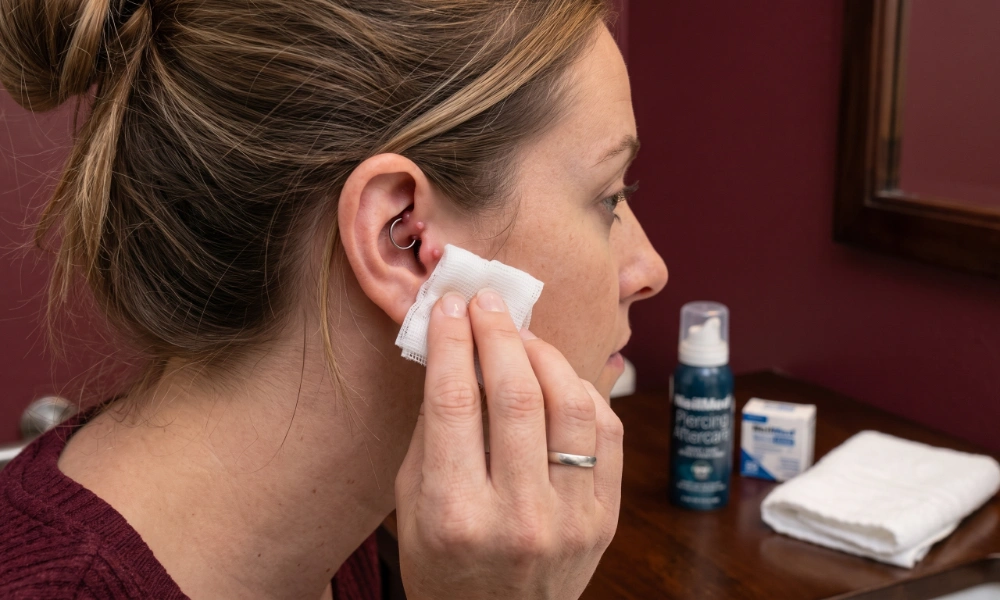
The right treatment depends on what’s causing the bump. In most cases, gentle care works better than harsh home remedies.
Clean With Sterile Saline Solution
Sterile saline is one of the safest ways to care for a healing daith piercing. It helps rinse away dried discharge without damaging healthy tissue.
Spray or rinse the area twice a day, then let it air dry or gently pat it dry with a clean paper towel. Avoid overcleaning because it can slow the healing process.
Best Practice
- Clean morning and evening.
- Wash your hands before touching the area.
- Avoid homemade saltwater mixtures unless advised by a professional.
Use a Warm Compress
A warm compress may help improve comfort and soften dried crust around the jewelry.
Soak a clean piece of gauze in warm water, gently place it against the ear for five to ten minutes, then allow the piercing to dry naturally.
The compress should feel comfortably warm, not hot.
Leave the Jewelry Alone
One of the biggest mistakes people make is constantly moving or twisting the jewelry.
Modern piercing aftercare recommends leaving the jewelry in place. Rotating it can damage the healing channel and create more irritation.
The less you disturb the piercing, the better your body can heal.
Reduce Pressure While Sleeping
Sleeping on the pierced ear can keep the bump irritated for weeks.
If possible:
- Sleep on the opposite side.
- Use a travel pillow so your ear rests in the center opening.
- Keep hair away from the piercing while sleeping.
Small changes like these often make a noticeable difference.
Check Your Jewelry
Sometimes the jewelry itself is the problem.
If it’s too tight, too heavy, or made from low-quality metal, your ear may stay irritated even with excellent aftercare.
A professional piercer can assess whether the jewelry size, shape, or material needs changing.
Materials commonly recommended for healing include:
- Implant-grade titanium
- Solid 14K or 18K gold (nickel-free)
- Niobium
- High-quality surgical steel when appropriate
Never change the jewelry yourself while the piercing is still healing unless instructed by an experienced piercer.
Treatments That Need Extra Caution
Not every popular remedy has strong evidence behind it. Some trends may actually make the bump worse.
| Treatment | Recommended? | Why |
|---|---|---|
| Sterile saline solution | Yes | Gentle and suitable for routine aftercare |
| Warm compress | Yes | Helps with comfort and loosens dried discharge |
| Touching or twisting jewelry | No | Can increase irritation |
| Alcohol or hydrogen peroxide | No | May damage healing tissue |
| Strong antiseptics | No | Often too harsh for cartilage piercings |
| Aspirin paste | No | Can irritate the skin and delay healing |
Is Tea Tree Oil Safe?
Tea tree oil is frequently recommended online, but it should be used with caution.
Undiluted tea tree oil can dry out or irritate the skin, especially around a fresh cartilage piercing. Because of this, many professional piercers prefer a simple saline routine instead of essential oils.
If you’re considering using tea tree oil, speak with a qualified piercer or healthcare professional first.
How Long Does a Daith Piercing Bump Take to Go Away?
Healing time varies from person to person.
If the bump is caused by irritation, you may notice improvement within a few weeks after removing the source of the problem. Complete healing, however, can take several months because cartilage piercings naturally heal more slowly than earlobe piercings.
Try not to compare your healing journey with someone else’s. Factors such as overall health, aftercare habits, and accidental trauma all affect recovery.
Expert Tips for Faster Healing
Be Patient
Cartilage piercings require time. Even if the bump looks better after a week, continue following your aftercare routine.
Protect Your Ear
Be careful when changing clothes, brushing your hair, or wearing headphones. Preventing repeated irritation is often just as important as cleaning the piercing.
Keep Personal Items Clean
Regularly wash pillowcases, earbuds, hats, and anything else that touches your ear. Clean surroundings reduce the chance of introducing bacteria to a healing piercing.
Eat a Balanced Diet
Your body heals more efficiently when it gets enough protein, vitamins, minerals, and water. While no food can remove a piercing bump, good nutrition supports the natural healing process.
Daily Aftercare Checklist
Following a simple routine every day can make a big difference during the healing process. Consistency matters more than trying multiple remedies.
Morning
- Wash your hands before touching your ear.
- Clean the piercing with sterile saline solution.
- Let the area air dry or gently pat it dry with a clean paper towel.
- Check that your jewelry isn’t caught in your hair or clothing.
Throughout the Day
- Avoid touching or twisting the jewelry.
- Keep headphones, helmets, and hats from pressing against the piercing.
- Be careful when brushing your hair or changing clothes.
- Stay hydrated and eat a balanced diet to support healing.
Before Bed
- Clean the piercing if needed.
- Sleep on the opposite side or use a travel pillow to reduce pressure.
- Tie back long hair if it rubs against the jewelry.
Common Mistakes That Keep the Bump From Healing
Even with good intentions, certain habits can slow recovery. Avoid these common mistakes.
Cleaning Too Often
More cleaning does not mean faster healing. Using saline twice a day is usually enough. Overcleaning can dry out the skin and increase irritation.
Using Harsh Products
Avoid rubbing alcohol, hydrogen peroxide, iodine, and strong antiseptics unless specifically instructed by a healthcare professional. These products can damage healthy tissue and delay healing.
Changing Jewelry Too Soon
A daith piercing heals slowly. Replacing the jewelry before the piercing has fully healed may reopen the wound and cause another bump.
If you think your jewelry is causing the problem, visit a professional piercer instead of changing it yourself.
Sleeping on the Pierced Ear
Pressure is one of the most common reasons irritation bumps persist. Try using a travel pillow or sleep on the opposite side whenever possible.
Picking Off Crust
Some crusting is a normal part of healing. Pulling it away can damage the tissue and increase the risk of irritation or infection.
When to See a Professional
Most irritation bumps improve with proper care, but some situations require expert advice.
Visit a professional piercer if:
- The jewelry feels too tight.
- The bump continues growing after several weeks.
- You are unsure whether the jewelry material is suitable.
- The piercing keeps getting irritated despite good aftercare.
See a healthcare provider if you notice:
- Thick yellow or green discharge with a foul odor.
- Severe swelling or intense pain.
- Redness spreading beyond the piercing.
- Fever or chills.
- Symptoms that continue getting worse instead of improving.
Getting help early can prevent minor issues from becoming more serious.
Myths vs Facts
| Myth | Fact |
|---|---|
| Every piercing bump is a keloid. | Most bumps are simple irritation bumps. |
| Twisting jewelry helps healing. | Twisting can damage healing tissue. |
| Tea tree oil is always safe. | It may irritate sensitive skin and should be used with caution. |
| Removing jewelry fixes an infection. | Removing jewelry too soon may trap the infection. |
| Healing always takes a few weeks. | Daith piercings commonly take several months to heal completely. |
Daith Piercing Bump Prevention Checklist
Use this checklist to reduce the chance of developing another bump.
| ✔ Do | ✘ Don’t |
|---|---|
| Clean with sterile saline twice daily | Use alcohol or hydrogen peroxide |
| Wash your hands before cleaning | Touch the jewelry unnecessarily |
| Sleep without pressure on the ear | Sleep directly on the piercing |
| Wear high-quality jewelry | Choose unknown or low-quality metals |
| Visit an experienced piercer if concerned | Change jewelry during healing without advice |
Conclusion
A daith piercing bump can be frustrating, but in most cases, it isn’t a sign that your piercing has failed. By identifying the cause, following a gentle aftercare routine, and avoiding common mistakes, you give your body the best chance to heal naturally.
Remember that cartilage piercings require patience. Small improvements often happen gradually, and rushing the process can make the bump last even longer. If your symptoms worsen or you suspect an infection, don’t hesitate to seek advice from a qualified piercer or healthcare professional.
At daithpiercing, we believe that trustworthy health and lifestyle content should be practical, easy to understand, and based on reliable guidance. With the right care and realistic expectations, your daith piercing can heal well and continue to look great for years to come.
Frequently Asked Questions
Will a daith piercing bump go away on its own?
Yes, many irritation bumps shrink once the source of irritation is removed and proper aftercare is followed. Healing may still take several weeks or months.
Can I pop a piercing bump?
No. Squeezing or popping the bump can damage the tissue, increase irritation, and raise the risk of infection.
Does sea salt help a daith piercing bump?
A sterile saline solution is generally recommended because it is prepared under controlled conditions. Homemade saltwater mixtures may not have the correct concentration.
Can I wear earbuds with a healing daith piercing?
It’s best to avoid earbuds if they press against the piercing. Pressure and friction can slow healing and make an irritation bump worse.
Is it normal for a daith piercing to itch?
Yes. Mild itching is common during healing. However, severe itching accompanied by swelling, rash, or irritation could indicate sensitivity to the jewelry material.
How long does a daith piercing take to heal?
Most daith piercings take around 6 to 12 months to heal completely. Healing time depends on your aftercare routine, overall health, and whether the piercing experiences repeated irritation.