Key Takeaways
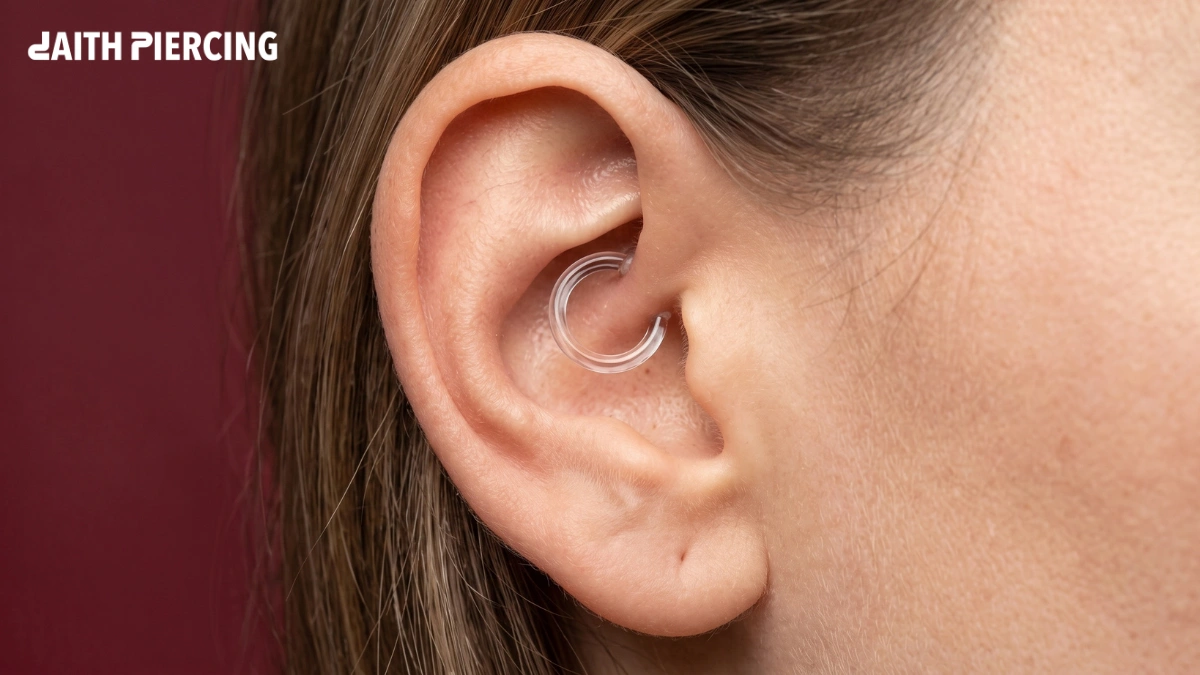
- A daith piercing retainer helps keep your piercing open while making it less visible.
- Clear glass retainers are among the most popular choices for healed piercings.
- Always match your current gauge and diameter when replacing jewelry.
- Avoid changing jewelry until the piercing has fully healed unless advised by a professional.
- Clean your retainer regularly to maintain hygiene and comfort.
- High-quality materials are more comfortable and tend to last longer.
- A professional piercer can help if you’re unsure about sizing or insertion.
- Choosing the right retainer protects both the appearance and health of your daith piercing.
Quick Answer
A daith piercing retainer is discreet jewelry designed to keep your piercing open while making it less visible. Most retainers are made from clear glass, transparent bioplast, or skin-toned materials. For a fully healed piercing, a properly sized retainer can be a comfortable choice for work, school, medical scans, or any situation where traditional jewelry is not ideal. However, new daith piercings should usually heal with quality implant-grade jewelry unless a professional piercer recommends otherwise.
What Is a Daith Piercing Retainer?
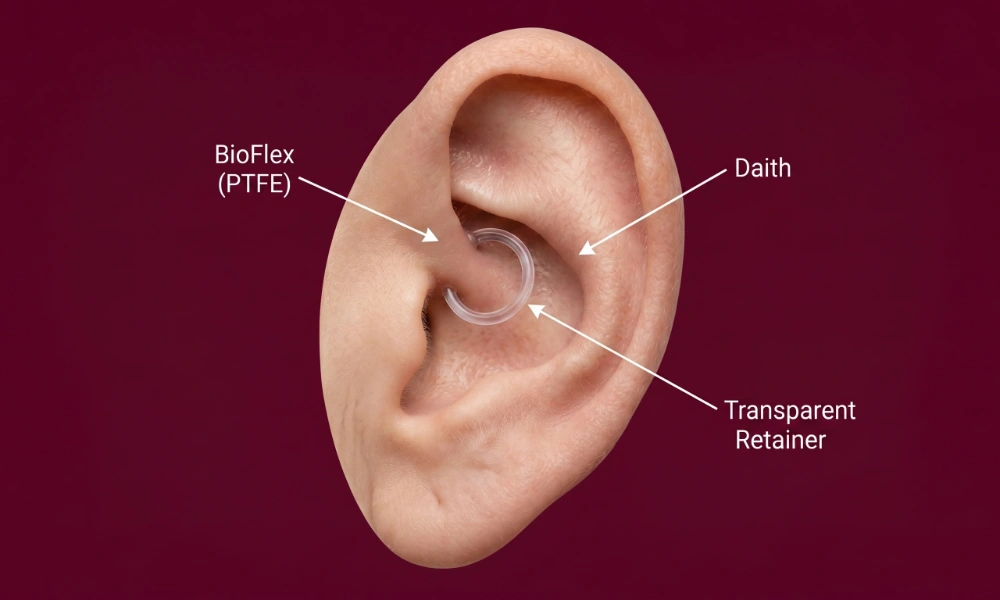
A daith piercing retainer is a low-profile piece of jewelry that keeps your piercing from closing while remaining as hidden as possible. Unlike decorative rings or clickers, retainers focus on function rather than style.
Most retainers are designed with smooth edges to reduce irritation. Some are completely clear, while others blend with your natural skin tone for an even more discreet appearance.
Although they may look simple, retainers come in different shapes to match the unique curve of the daith piercing.
How Does a Daith Retainer Work?
The retainer passes through the piercing channel just like regular jewelry. Instead of drawing attention, it sits close to the ear and is much harder to notice from normal viewing angles.
A properly fitted retainer should:
- Keep the piercing open
- Feel comfortable throughout the day
- Stay securely in place
- Avoid putting pressure on the piercing
Why People Wear Daith Piercing Retainers
There are many situations where a retainer becomes a practical choice.
Professional Workplaces
Some workplaces have strict appearance policies. A clear retainer allows you to keep your piercing without making it the center of attention.
School Dress Codes
Students may need to hide ear piercings during classes or examinations. A discreet retainer often provides a simple solution while preserving the piercing.
Medical Procedures
Hospitals sometimes ask patients to remove metal jewelry before certain scans or surgeries. Depending on your healthcare provider’s instructions, a nonmetallic retainer may be permitted in some situations.
Always follow the advice of your doctor or medical staff rather than assuming a retainer is acceptable.
Personal Preference
Not everyone wants their piercing to be visible every day. Some people simply enjoy having the option to switch between decorative jewelry and a more natural appearance.
Clear vs Hidden Daith Retainers
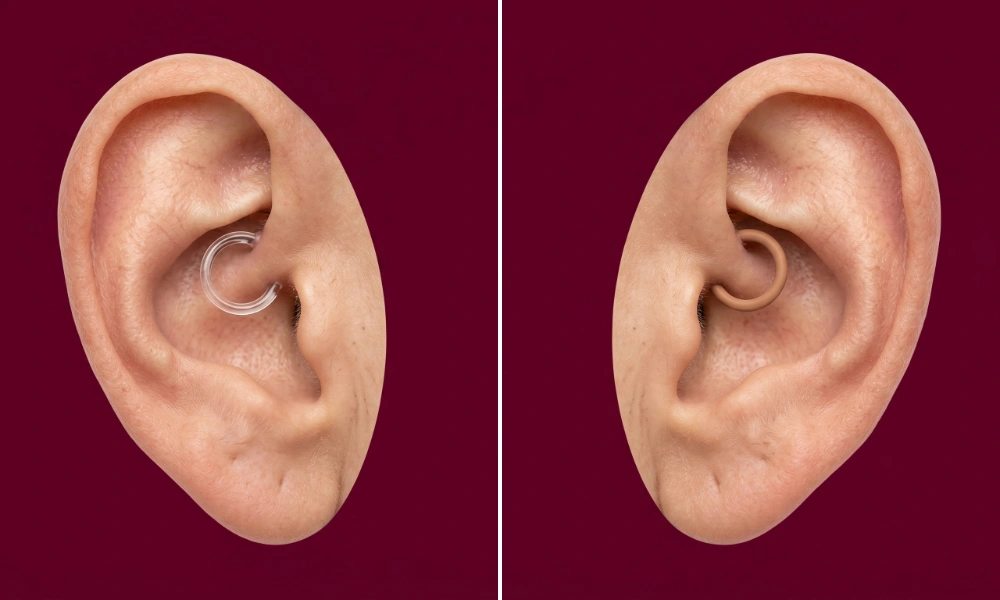
Both options are designed to reduce visibility, but they work in slightly different ways.
| Feature | Clear Retainer | Hidden Retainer |
|---|---|---|
| Visibility | Nearly transparent | Blends with skin tone |
| Best For | Everyday discreet wear | Maximum concealment |
| Appearance | Clean and subtle | Less noticeable from a distance |
| Style | Minimal | Natural looking |
| Common Materials | Glass, bioplast | Glass, bioplast, silicone depending on design |
Neither option is automatically better. The right choice depends on your skin tone, ear anatomy, and where you plan to wear it.
Types of Daith Piercing Retainers
Different retainer styles suit different needs. Understanding each design makes shopping much easier.
Curved Retainers
Curved retainers closely follow the natural shape of a daith piercing. Because of this, they are usually the most comfortable option.
They sit naturally inside the ear and reduce unnecessary movement throughout the day.
Circular Retainers
These resemble a horseshoe shape but are made to appear less noticeable.
They are popular because they are easy to insert and remove once the piercing has fully healed.
Glass Retainers
Glass retainers are often recommended by experienced piercers because they are smooth, nonporous, and easy to clean.
Many people also find them comfortable for extended wear.
Bioplast Retainers
Bioplast is lightweight and flexible, making it a popular option for people who want a softer feel.
Quality matters, though. Choosing reputable jewelry helps reduce the risk of irritation.
Best Materials for a Daith Piercing Retainer
Material plays a major role in comfort and long-term wear.
Glass
Glass is one of the safest choices for many healed piercings. It has a smooth surface that is easy to clean and does not contain nickel.
It also stays clear longer than many plastic alternatives.
Implant Grade Titanium
Titanium retainers are less common in fully hidden styles because the metal is still visible. However, titanium remains one of the safest jewelry materials for sensitive ears.
Bioplast
Bioplast offers flexibility and lightweight comfort.
It may work well for temporary use, although it generally requires more frequent replacement than glass.
Acrylic
Acrylic retainers are inexpensive, but they are not usually considered the best choice for long-term daily wear because they can scratch more easily over time.
Can You Wear a Retainer During Healing?
This is one of the most common questions about daith piercings.
In most cases, professional piercers recommend allowing a daith piercing to heal with high quality implant grade jewelry rather than changing it to a retainer too soon.
A healing daith can take several months, and changing jewelry early may increase irritation, swelling, or delay the healing process.
If you know you’ll need a hidden option soon after getting pierced, discuss it with your piercer before the appointment. They can recommend the safest solution based on your anatomy and circumstances.
Choosing the Right Size for a Daith Piercing Retainer
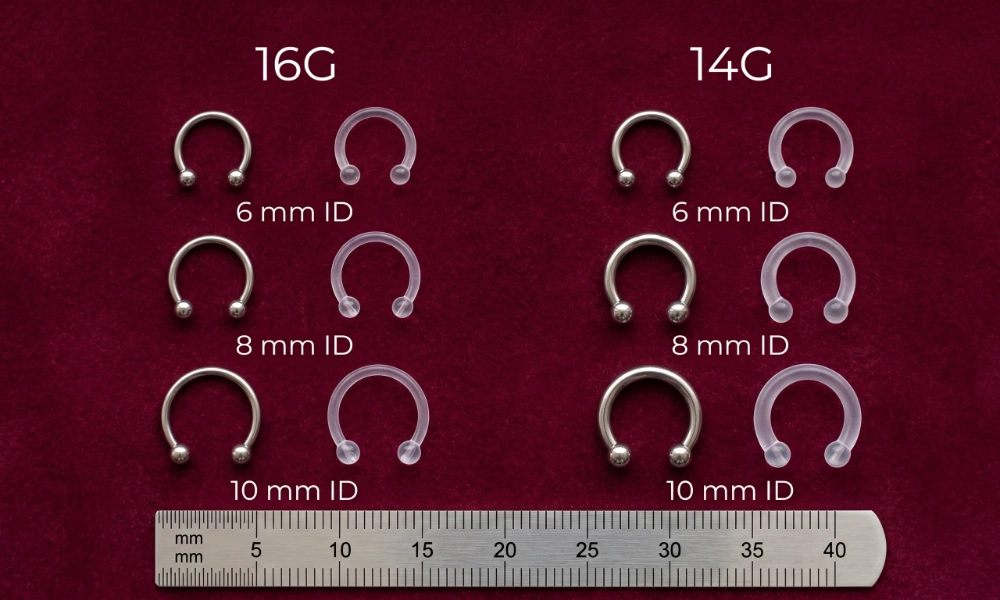
A retainer should match the size of your existing jewelry unless a professional piercer recommends otherwise. Even a small difference in size can affect comfort because the daith sits in a tight fold of cartilage.
The two measurements that matter most are the gauge (thickness) and the inner diameter (the inside width of the jewelry).
Common Daith Retainer Sizes
| Measurement | Common Size | Notes |
|---|---|---|
| Gauge | 16G (1.2 mm) | Most common for daith piercings |
| Alternative Gauge | 14G (1.6 mm) | Less common but used for some piercings |
| Inner Diameter | 8 mm | Fits many ears |
| Larger Diameter | 10 mm | Better for larger anatomy or extra room |
| Smaller Diameter | 6 mm | Only suitable for select ear shapes |
Every ear is different. If you’re unsure about your size, measure your current jewelry or ask your piercer before ordering a replacement.
How to Change a Daith Piercing Retainer Safely
Changing a daith piercing can be more challenging than changing an earlobe piercing because the jewelry sits inside the ear’s inner cartilage.
Wait Until It’s Fully Healed
Unless your piercer instructs otherwise, avoid changing jewelry while the piercing is still healing. A healed piercing is much easier to work with and less likely to become irritated.
Wash Your Hands
Always wash your hands thoroughly before touching your piercing. Clean hands reduce the chance of introducing bacteria.
Clean the Jewelry
Before inserting a new retainer, clean it according to the manufacturer’s instructions. This helps keep the piercing healthy.
Remove the Existing Jewelry Carefully
Take your time. Never force jewelry out if it feels stuck. If you’re struggling, visit a professional piercer instead of risking injury.
Insert the Retainer Gently
Guide the retainer through the piercing using slow, steady pressure. If you feel significant pain or resistance, stop and check the alignment.
Check the Fit
The retainer should sit comfortably without pinching the cartilage or moving excessively. It should stay secure while allowing enough room for normal comfort.
How to Care for a Daith Piercing Retainer
Proper care helps your retainer last longer and keeps your piercing comfortable.
Clean It Regularly
Remove buildup by cleaning the jewelry with warm water and a gentle cleanser recommended for body jewelry. Rinse well before wearing it again.
Inspect for Damage
Clear retainers can become scratched or worn over time. Replace them if you notice cracks, rough edges, or discoloration.
Avoid Unnecessary Changes
Frequent jewelry changes can irritate the piercing, even after it has healed. Switch only when necessary.
Store It Properly
Keep spare retainers in a clean container away from dust, moisture, and direct sunlight.
Benefits and Drawbacks
Every type of retainer has advantages and limitations. Knowing both helps you make a better choice.
| Benefits | Drawbacks |
|---|---|
| Keeps the piercing open | Not completely invisible |
| More discreet than decorative jewelry | Some materials wear out faster |
| Comfortable when properly fitted | Wrong size can cause discomfort |
| Useful for work or school | Not every retainer is suitable for healing |
| Available in different materials | Cheap options may irritate sensitive skin |
Clear Retainer vs Standard Daith Jewelry
| Feature | Clear Retainer | Standard Jewelry |
|---|---|---|
| Visibility | Very low | High |
| Decorative Style | Minimal | Wide variety |
| Workplace Friendly | Yes | Depends on workplace |
| Medical Situations | Sometimes, if approved | Metal jewelry may need removal |
| Everyday Comfort | High when correctly sized | Depends on jewelry style |
Expert Tips for Choosing the Best Daith Piercing Retainer
Buy Quality Instead of the Cheapest Option
Low-quality jewelry may have rough edges or poor finishing. Investing in well-made retainers often improves comfort and durability.
Match Your Current Size
Changing the gauge or diameter without professional advice can create unnecessary problems.
Think About Your Lifestyle
If you need to hide your piercing daily, a clear glass retainer may be a better long-term choice than a temporary plastic option.
Keep a Spare Retainer
Having an extra retainer can be helpful if your current one is lost or damaged.
Ask a Professional Piercer
If your piercing feels tight, swollen, or difficult to change, a professional can safely replace the jewelry without causing unnecessary irritation.
Common Mistakes to Avoid
Many problems happen because people rush the process.
Avoid these common mistakes:
- Changing jewelry before the piercing has healed.
- Buying the wrong gauge or diameter.
- Choosing poor-quality materials.
- Forcing jewelry through the piercing.
- Ignoring signs of irritation.
- Wearing damaged or scratched retainers.
- Skipping regular cleaning.
- Assuming every “clear” material is suitable for long-term wear.
Quick Checklist Before Buying
Use this checklist before purchasing a daith piercing retainer.
- ✔ Know your gauge size.
- ✔ Confirm the inner diameter.
- ✔ Choose a trusted material.
- ✔ Buy from a reputable seller.
- ✔ Check that the edges are smooth.
- ✔ Read customer reviews.
- ✔ Replace worn retainers when needed.
- ✔ Ask your piercer if you’re unsure.
Conclusion
A daith piercing retainer is a practical solution for anyone who wants to keep their piercing discreet without sacrificing comfort. Whether you choose a clear glass retainer or another suitable material, the right size and quality make a significant difference in how the jewelry feels and performs.
Remember that healing comes first. If your daith piercing is still new, avoid changing jewelry unless your professional piercer recommends it. Once fully healed, a properly fitted retainer can be an excellent option for work, school, travel, or medical appointments.
At DaithPiercing, we believe that understanding your jewelry is just as important as choosing it. Taking the time to select the right retainer and care for it properly will help you enjoy a healthy, comfortable piercing for years to come.
Frequently Asked Questions
Can you hide a daith piercing with a retainer?
Yes. A clear or skin-toned retainer can make a daith piercing much less noticeable while keeping the piercing open.
What is the best material for a daith piercing retainer?
Glass is widely preferred for healed piercings because it is smooth, durable, and easy to clean. Implant-grade titanium is another excellent material, although it is not transparent.
Can I wear a clear retainer every day?
Yes, provided the piercing is fully healed and the retainer is made from a high-quality material that fits properly.
Will my daith piercing close if I remove the jewelry?
It can. Even healed piercings may begin to shrink or close after jewelry is removed, especially if the piercing is still relatively new.
Can I wear a retainer for an MRI?
It depends on the type of retainer and the medical procedure. Always follow the instructions of your healthcare provider or imaging staff.
How often should I replace a clear retainer?
Replace it if it becomes scratched, cracked, discolored, or no longer fits securely. Quality glass retainers generally last longer than many plastic alternatives.