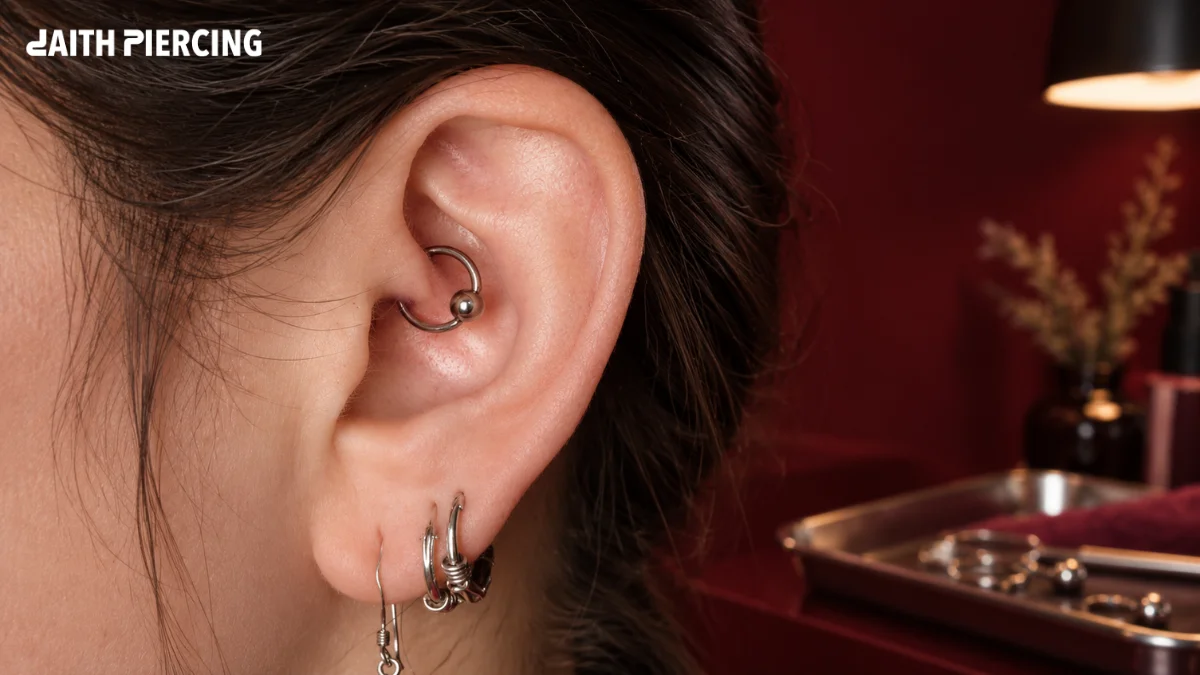
How soon can you change daith piercing? A new daith piercing can look surprisingly good after only a few weeks. The swelling may disappear, the tenderness may settle, and you may already be thinking about changing the jewelry to something more stylish. But this is where patience matters.
So, how soon can you change daith piercing jewelry? In most cases, you should wait until the piercing has fully healed. The Association of Professional Piercers lists the average healing time for a daith as 6 to 9 months or longer. Everyone heals differently, so some daith piercings can take longer.
At Daithpiercing, we believe the safest approach is simple: do not change your jewelry just because the outside looks fine. Give the cartilage enough time to heal from the inside as well.
Key Takeaways
- A daith usually needs 6 to 9 months or longer to heal.
- Do not change jewelry simply because the outside looks healed.
- Wait until the piercing is no longer tender, crusty, swollen, or producing discharge.
- Necessary changes during healing should be handled by a qualified piercer.
- Your first decorative jewelry change is safest when a professional confirms that the piercing is ready.
- Choose properly sized, high-quality jewelry rather than focusing only on appearance.
- Never force new jewelry into a tight or irritated piercing.
- Keep caring for your daith throughout the entire healing period.
When Can You Change Daith Piercing Jewelry?
For a fully healed daith, 6 to 9 months is a useful minimum healing range, but it should not be treated as an automatic deadline. The piercing should also be free from tenderness, ongoing discharge, crusting, swelling, and irritation before you consider a jewelry change. The APP specifically recommends waiting until the minimum healing period has passed and the piercing is no longer tender or producing secretions and crust.
Some people may need closer to 9 to 12 months before their daith is ready for a comfortable jewelry change. If your piercing still becomes sore after being bumped, develops crust, or feels irritated, waiting longer is usually the better choice. The important thing is not to rush the calendar. Your ear decides when it is ready.
Why Does a Daith Take So Long to Heal?
A daith is located in a thick fold of ear cartilage. Cartilage generally heals more slowly than softer tissue, which is why a daith needs more patience than a simple earlobe piercing.
Another reason is that a piercing can look healed before it is completely healed inside. The APP explains that piercings heal from the outside toward the inside. This means the surface may look calm while the inner piercing channel is still fragile.
That is why changing jewelry too early can cause a setback. Removing the original jewelry can irritate the healing channel, cause swelling, or make reinserting the new piece difficult.
Can You Change a Daith Piercing After 2 or 3 Months?
Usually, no. Two or three months may feel like a long time, especially when your daith looks normal. However, it is still within the healing period for most daith piercings.
At this stage, the inside of the piercing can remain sensitive even when there is little or no visible swelling. Changing jewelry yourself can disturb the healing tissue and turn a calm piercing into an irritated one.
There is one important exception. If the initial jewelry has a genuine problem with its size, style, or material, a professional piercer may need to change it during healing. The APP recommends having necessary jewelry changes during healing performed by a qualified piercer rather than doing them yourself.
What If Your Daith Jewelry Feels Too Big?
Do not automatically replace it with a smaller ring. Initial jewelry is often selected to allow room for swelling. Once the swelling decreases, the jewelry may appear larger than before. However, daith piercings are different from piercings that use straight posts, so the correct jewelry size depends on your anatomy and placement.
A professional piercer can check the diameter, position, movement, and pressure of the jewelry and decide whether a change is actually needed.
The APP also notes that downsizing should be performed by a piercer because a piercing is not necessarily healed enough for you to safely change jewelry yourself at that stage.
Signs Your Daith May Be Ready for New Jewelry
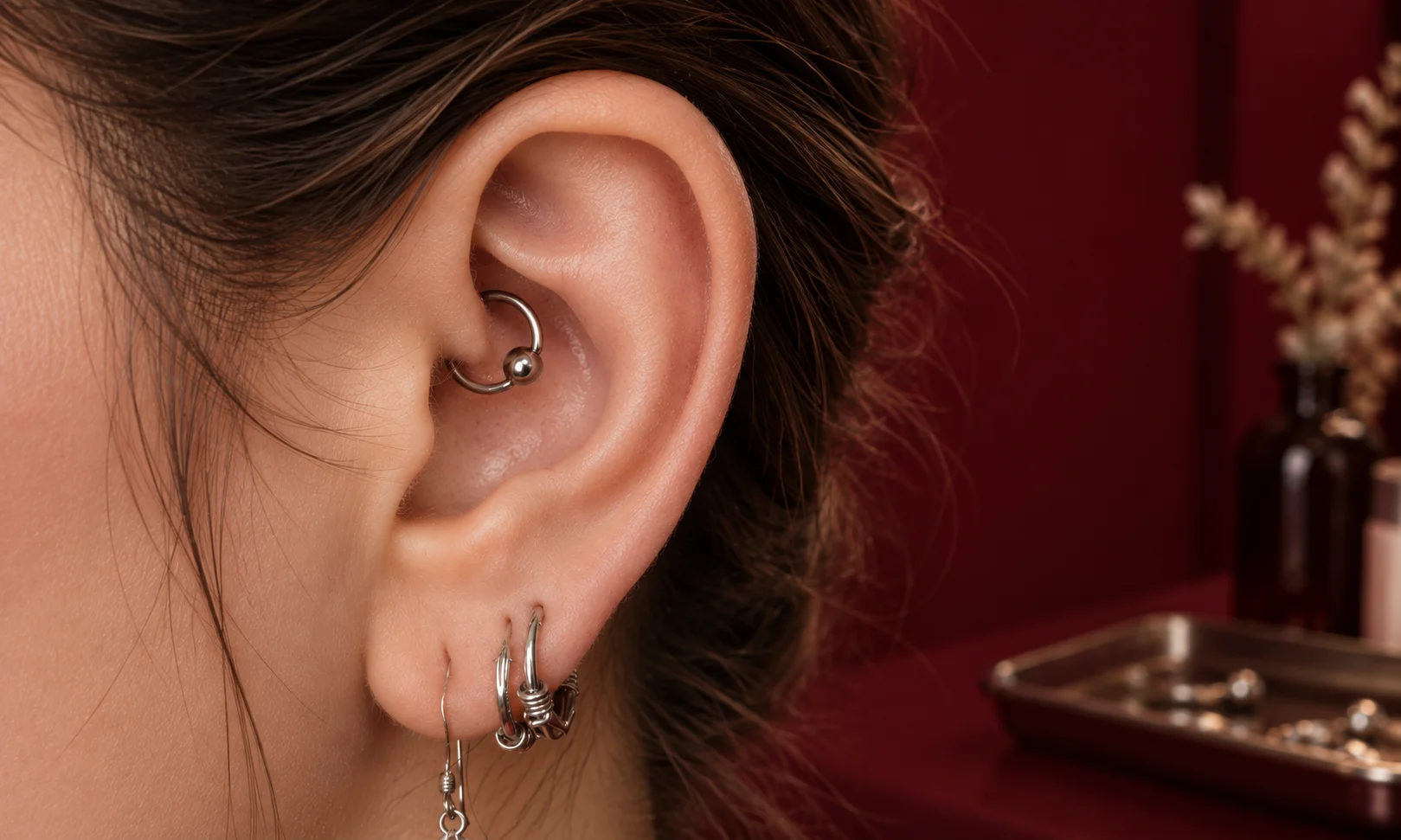
Instead of relying only on the calendar, look at how your piercing behaves.
A healed daith should generally have:
- No ongoing tenderness
- No persistent swelling
- No active redness or irritation
- No regular discharge
- No repeated crusting
- No pain when the area is gently cleaned
- A stable appearance over time
The APP gives similar signs for healed piercings: the minimum healing time should have passed, the piercing should not be tender, and it should no longer be producing secretion or crust.
Even if all these signs are present, having a professional piercer check the piercing before your first jewelry change is a smart choice.
What Happens If You Change It Too Early?
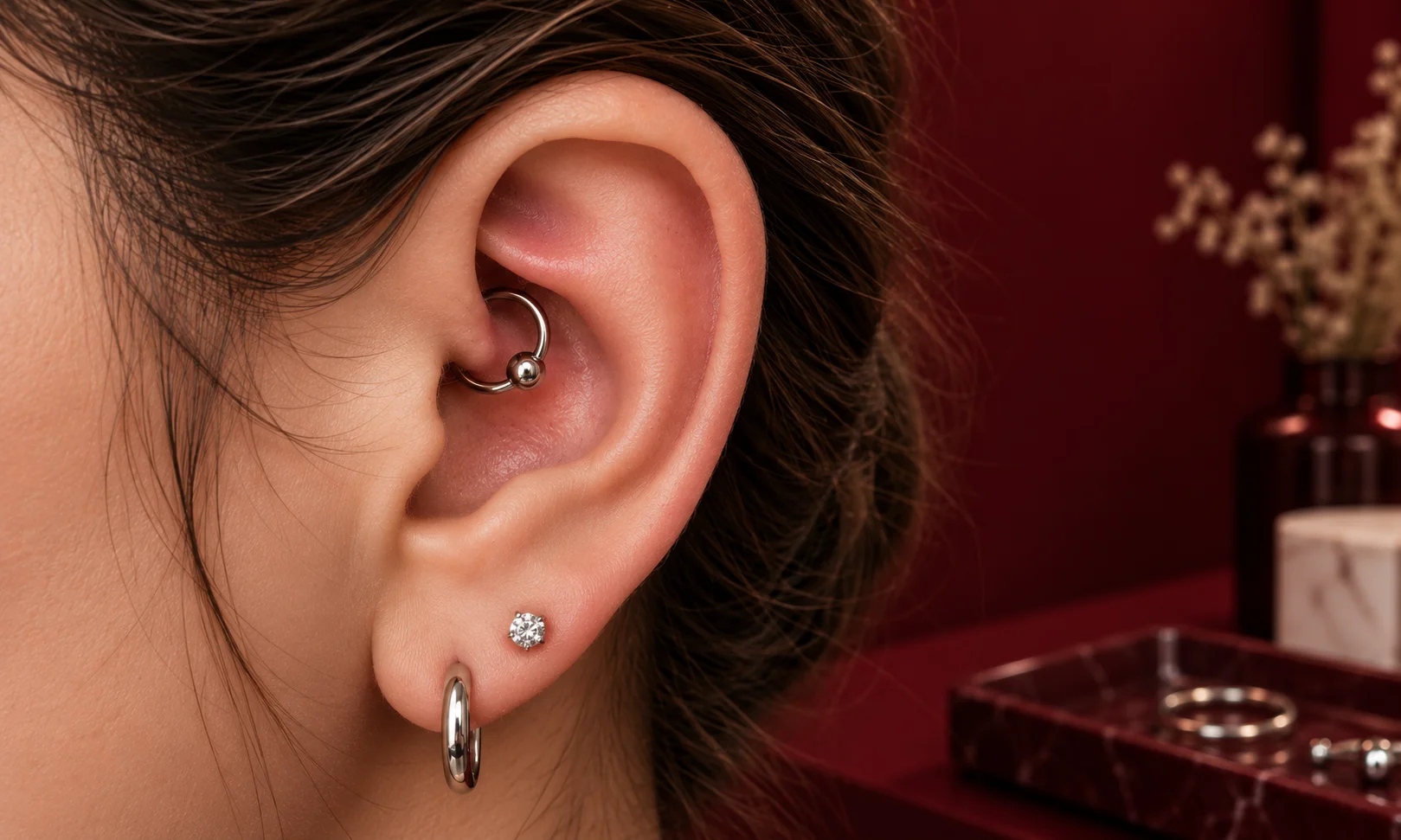
Changing daith jewelry too soon can restart irritation that seemed to have disappeared. The new jewelry has to pass through the piercing channel. If that channel is still fragile, the process can cause tiny injuries to the healing tissue. This may lead to swelling, tenderness, bleeding, irritation bumps, or prolonged healing.
Another problem is fit. A piece that looks beautiful online may not have the correct diameter or thickness for your ear. Daith jewelry needs to sit comfortably without putting unnecessary pressure on the cartilage.
Trying to force jewelry through a tight or partially healed channel is especially risky. The APP advises never forcing jewelry into a piercing because doing so can tear tissue.
What Jewelry Is Best for a First Change?
Once your daith is genuinely healed, you have much more freedom with jewelry styles. You can consider options such as:
Clicker Rings
Clickers are popular because they offer a clean look and are easy to open and close. They come in simple designs as well as decorative styles.
Circular Barbells
Circular barbells can give the daith a classic appearance while offering a different look from a standard ring.
Captive Bead Rings
These have a traditional piercing style and can be a good option when properly sized for your anatomy. Whatever style you choose, quality matters. The APP recommends appropriate body jewelry materials and emphasizes that jewelry size, style, material, and quality can all affect healing and comfort. Implant-grade titanium is one commonly used option for body jewelry.
Avoid choosing jewelry simply because it is cheap or looks attractive. A smooth, properly finished piece from a reputable source is much more important.
How Should You Change Daith Jewelry Safely?
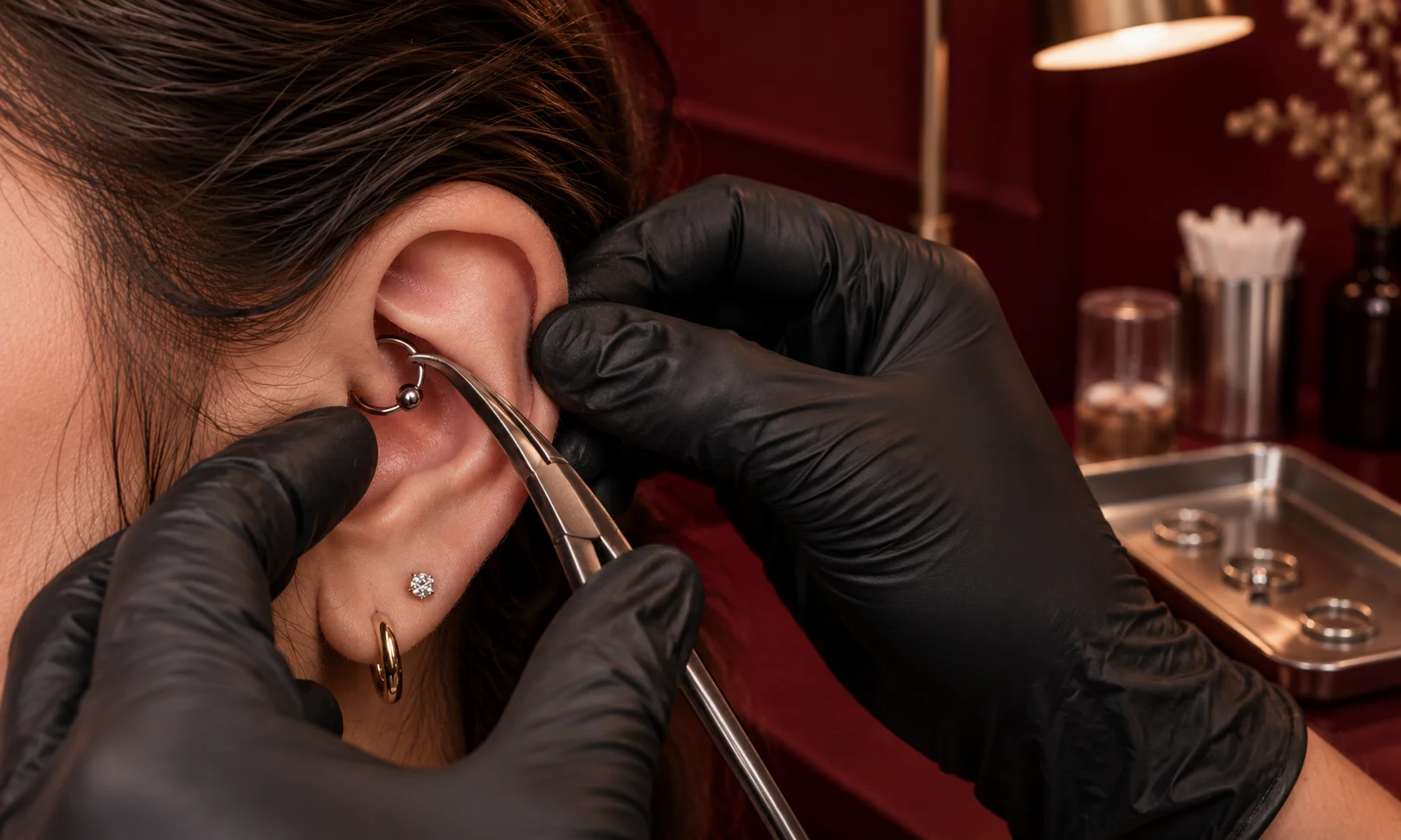
Your first jewelry change is best done by a professional piercer. A piercer can inspect the piercing, confirm that it is ready, select the correct size, and insert the jewelry without unnecessarily irritating the channel.
If you eventually change healed jewelry yourself, wash your hands first and make sure the new jewelry and surrounding area are clean. Never force jewelry through the piercing. If it does not slide in easily, stop and see a professional.
Also, have the replacement jewelry ready before removing the existing piece. Even healed piercings can shrink surprisingly quickly when left empty, and the APP warns that reinsertion may become difficult or impossible.
What Should You Do While Your Daith Is Healing?
Good aftercare can make the healing period easier. The APP recommends cleaning a healing piercing with sterile saline wound wash and avoiding unnecessary movement or rotation of the jewelry. It also advises avoiding harsh products such as alcohol and hydrogen peroxide because they can irritate healing tissue.
Try not to sleep directly on the piercing, repeatedly touch it, or put unnecessary pressure on the area. Keep headphones, phones, hair products, and other potential irritants away from the piercing as much as possible.
Most importantly, do not change the jewelry just because you are bored with the original piece. The starter jewelry has a job: helping the piercing heal.
When Should You See a Professional?
If your daith becomes increasingly painful, hot, swollen, very red, or produces unusual discharge, do not try to solve the problem by changing the jewelry yourself.
A professional piercer can check whether the issue is related to jewelry fit, irritation, or another problem. If an infection is suspected, medical advice may also be necessary. The APP recommends professional assessment for problematic piercings rather than repeatedly changing jewelry or using harsh products at home.
Final Thoughts
Knowing how soon you can change daith piercing jewelry comes down to one simple rule: wait for healing, not just a date. A daith may look perfect long before the inside is ready for a jewelry change. Giving it enough time can help you avoid unnecessary irritation and protect the piercing you took the time to get.
For Daithpiercing readers, the safest approach is to let the original jewelry stay in place unless there is a genuine problem, follow gentle aftercare, and let a qualified piercer decide when your ear is ready for something new.
FAQs
Can I change my daith piercing after 6 months?
Possibly, but six months is not an automatic green light. The APP gives 6 to 9 months or longer as the average daith healing time. Your piercing should also be free from tenderness, crusting, and discharge before changing jewelry.
Can I change my daith jewelry after 3 months?
It is generally too early for a routine jewelry change. Even when the piercing looks healthy, the inside may still be healing. If a jewelry problem requires an earlier change, have a qualified piercer handle it.
How do I know if my daith is fully healed?
Look for a stable piercing with no tenderness, ongoing swelling, irritation, discharge, or crusting. Because healing happens from the outside inward, appearance alone is not enough. A professional check is the safest way to confirm healing.
Can I change my daith jewelry myself?
Once the piercing is completely healed, you may be able to. However, having a professional perform the first change is recommended because daith jewelry can be difficult to access and properly position. Never force jewelry into the channel.
What happens if I remove my daith jewelry too early?
The piercing can become irritated, swell, or make reinsertion difficult. A healing piercing may also shrink when jewelry is removed. If you need an early change, contact your piercer instead of leaving the piercing empty.
Is 9 months enough to change a daith piercing?
For many people, nine months may be enough, but healing is individual. If the piercing is completely calm and meets the signs of healing, a professional can assess it. If there is still tenderness or crusting, give it more time.