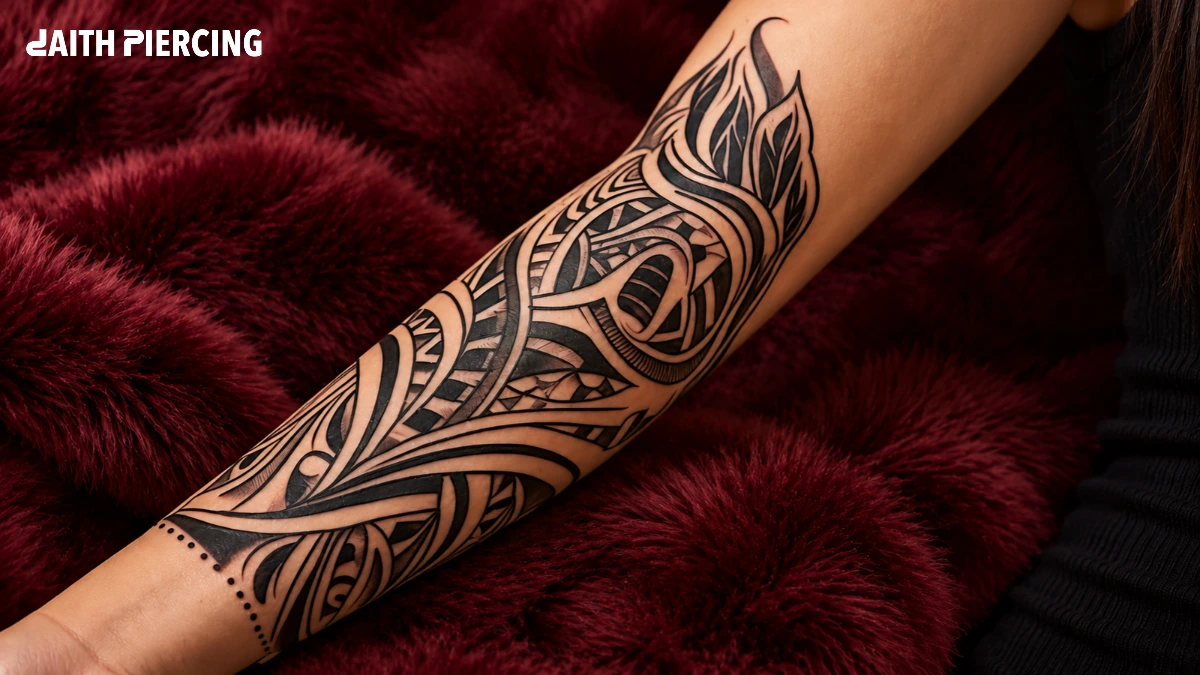
Tattoos and Their Types: A tattoo can be a small symbol tucked behind the ear, a detailed portrait across the arm, or a collection of meaningful designs that tell a personal story. Some people choose tattoos to remember someone important, while others simply love the art, creativity, and individuality they bring to the body.
But with so many tattoo styles available, choosing the right one can feel overwhelming. Traditional tattoos have bold outlines and recognizable imagery, minimalist tattoos focus on simplicity, and realism aims to make artwork look almost photographic. Other styles use geometric shapes, delicate lines, colorful brushstroke effects, or cultural patterns.
This guide explores the most popular types of tattoos, how they differ, what to consider before getting one, and how to care for a new tattoo.
Tattoos and Their Types: What Are the Different Types of Tattoos?
Tattoo styles describe the artistic approach used to create a design. They influence its lines, shading, colors, level of detail, and overall appearance.
Some of the most popular tattoo styles include:
- Traditional tattoos
- Neo-traditional tattoos
- Realism and portrait tattoos
- Blackwork tattoos
- Tribal tattoos
- Minimalist tattoos
- Fine-line tattoos
- Geometric tattoos
- Watercolor tattoos
- Japanese tattoos
- Chicano tattoos
- Dotwork tattoos
- Illustrative tattoos
- Lettering and script tattoos
- Biomechanical tattoos
- Ornamental tattoos
- Sketch-style tattoos
- Abstract tattoos
- New School tattoos
- Patchwork tattoos
Each style has its own visual character. The best choice depends on the design you want, the amount of detail it requires, your preferred colors, and the tattoo artist’s experience.
1. Traditional Tattoos
Traditional tattoos, often called American traditional tattoos, are known for bold black outlines, a limited color palette, and instantly recognizable imagery.
Common designs include roses, eagles, anchors, hearts, daggers, ships, and swallows. The style developed from historic tattoo traditions and became particularly associated with sailors and classic Western tattoo culture.
Traditional tattoos tend to have strong visual contrast, making them recognizable even from a distance. Their relatively bold shapes can also help the design remain legible as the tattoo ages.
Best for: People who like classic designs, strong outlines, and timeless visual themes.
2. Neo-Traditional Tattoos
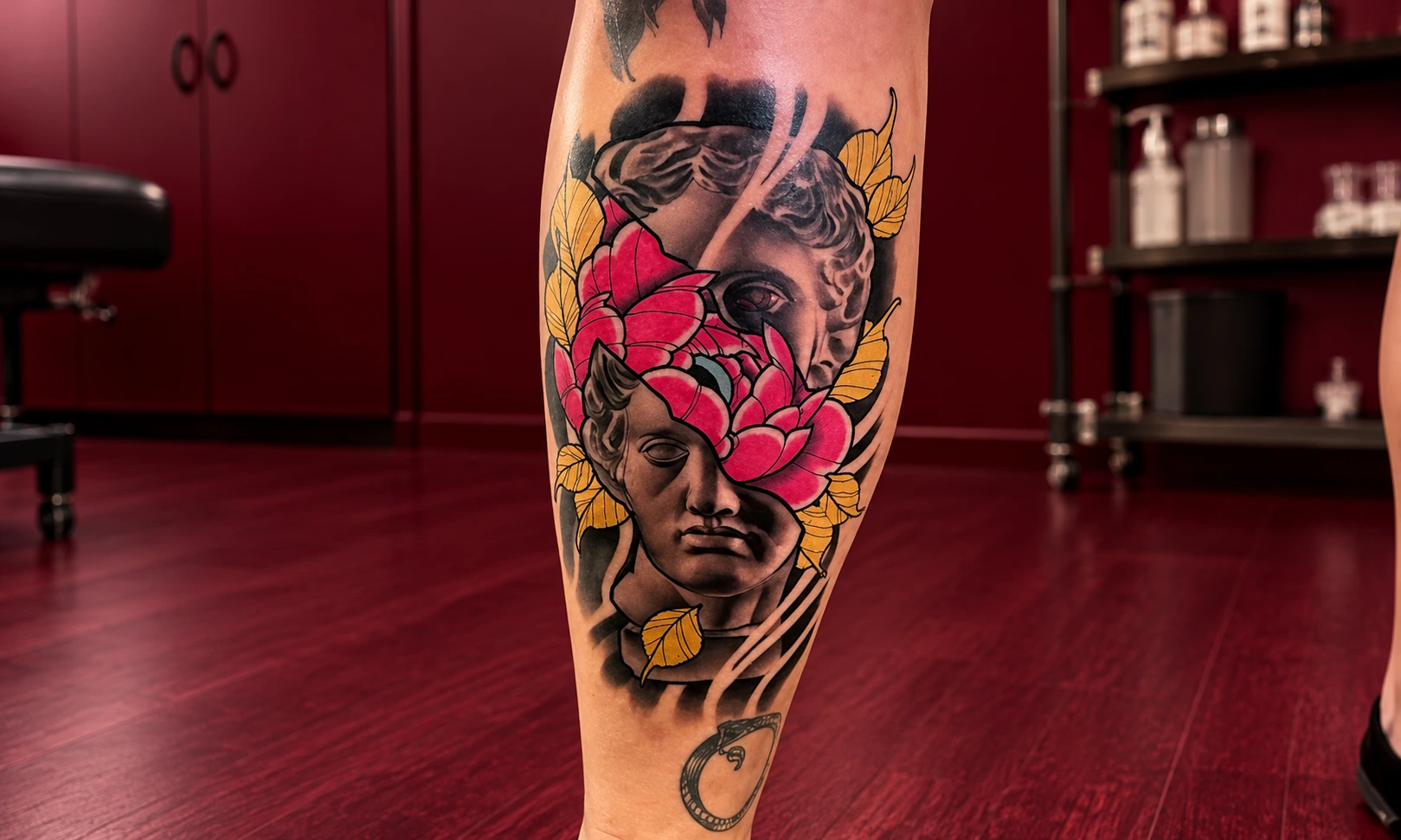
Neo-traditional tattoos build on the traditional style while allowing more detail, richer color palettes, and decorative elements.
You might see a portrait surrounded by flowers, an animal with intricate textures, or a dramatic design featuring jewel-like colors and elaborate framing. The outlines are often still prominent, but the overall appearance can feel more dimensional.
Best for: People who want the boldness of traditional tattoos with a more elaborate, modern finish.
3. Realism Tattoos
Realism tattoos aim to make an image look as lifelike as possible. Artists use detailed shading, tonal transitions, and careful proportions to recreate subjects such as people, animals, flowers, or landscapes.
Realism tattoos can be done in black and gray or in color. Portraits are particularly popular, but this style can also be used for wildlife, nature scenes, and objects with intricate textures.
Because small mistakes in proportions or shading can change the result significantly, choosing an artist with a strong realism portfolio is important.
Best for: People who want detailed portraits, lifelike animals, or photographic-looking artwork.
4. Blackwork Tattoos
Blackwork tattoos rely primarily on black ink. Designs may include solid black areas, intricate patterns, abstract shapes, ornamental details, or large sections of dark shading.
Some blackwork tattoos are small and delicate, while others cover substantial areas of the arm, leg, chest, or back. The term describes a broad family of approaches rather than one specific design.
Best for: People who prefer high contrast, bold shapes, and designs that do not depend on color.
5. Tribal Tattoos
Tribal tattoos use patterns associated with particular cultural traditions. Their appearance can include bold curves, repeated shapes, flowing lines, and intricate motifs.
However, tribal tattooing is not one universal style. Polynesian, Māori tā moko, Samoan, and other Indigenous tattoo traditions have distinct histories, meanings, and practices. Some designs carry cultural, family, spiritual, or community significance.
Before choosing a culturally specific design, learn about its origin and meaning rather than treating it as a generic decorative pattern. Māori tā moko, for example, has cultural significance beyond its visual appearance.
Best for: People interested in bold patterned artwork who are willing to understand and respect the tradition behind their chosen design.
6. Minimalist Tattoos
Minimalist tattoos use simple shapes, clean lines, and limited detail. A small heart, crescent moon, single flower, or simple outline can communicate an idea without filling a large area of skin.
Minimalist tattoos are often discreet, but small does not automatically mean easy to execute. Extremely tiny details can blur or merge over time, so a skilled artist should help adapt the design to an appropriate size.
Best for: First-time tattoo clients and anyone who prefers understated artwork.
7. Fine-Line Tattoos
Fine-line tattoos use thin lines to create delicate images. Common examples include flowers, botanical illustrations, small animals, handwriting, and detailed line drawings.
They can overlap with minimalist tattooing, but the terms are not identical: minimalist describes the simplicity of the design, while fine-line refers more directly to the linework technique.
Fine-line tattoos require careful execution. Very thin lines and tiny details may soften or become less distinct as the skin changes over time.
Best for: People who love delicate artwork, subtle outlines, and detailed designs with a light visual feel.
8. Geometric Tattoos
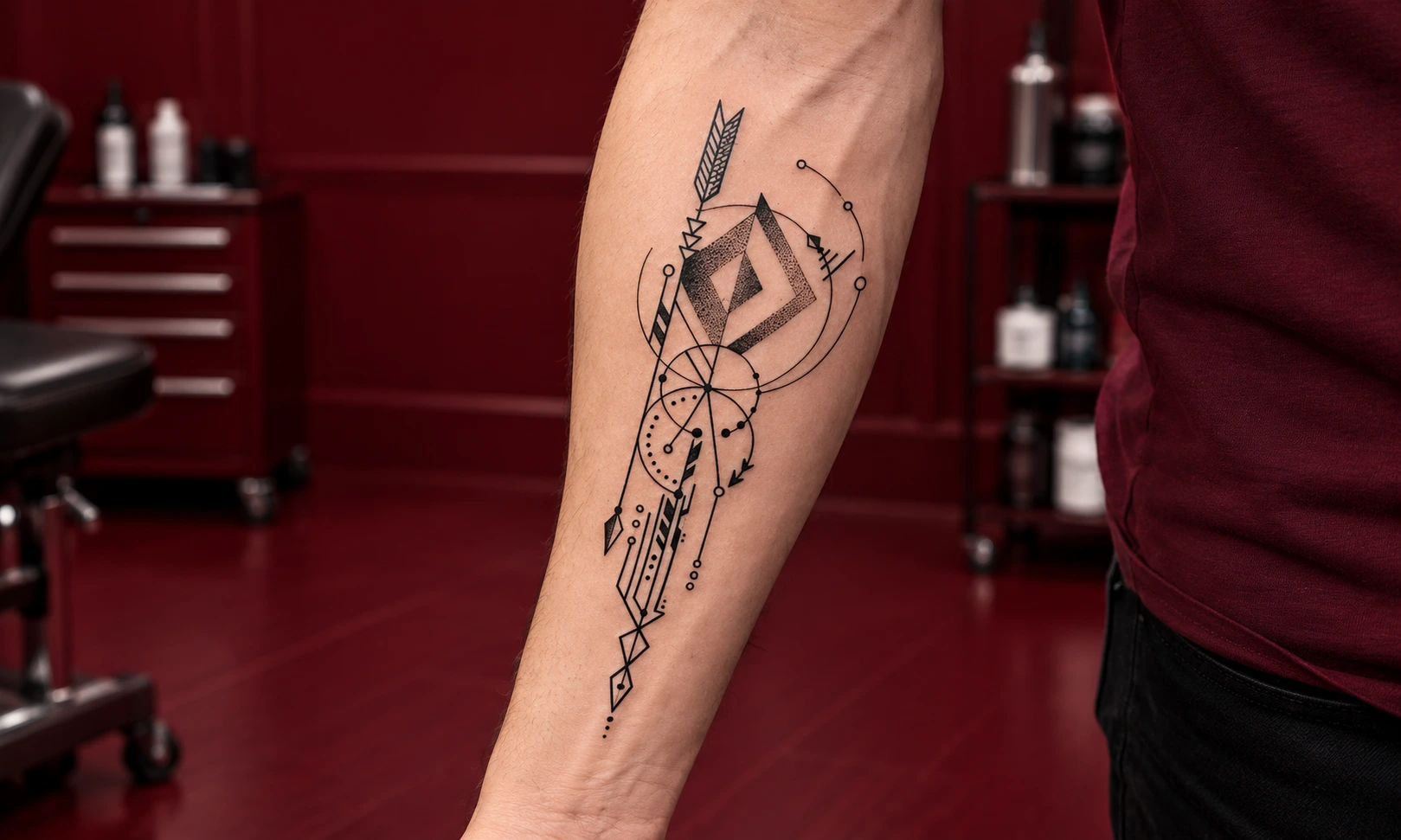
Geometric tattoos use shapes, symmetry, repeating patterns, and carefully arranged lines. Designs might feature circles, triangles, cubes, polygons, or complex compositions inspired by mathematical forms.
Some are entirely abstract, while others combine geometry with recognizable subjects, such as a wolf formed from angular shapes or a flower surrounded by symmetrical patterns.
Precise placement and consistent linework are particularly important in this style.
Best for: People drawn to symmetry, structure, abstract patterns, and clean visual compositions.
9. Watercolor Tattoos
Watercolor tattoos imitate the appearance of watercolor paintings. They often feature soft color transitions, splashes, loose brushstroke effects, and flowing edges.
Popular subjects include flowers, birds, butterflies, and abstract compositions. Some designs combine watercolor effects with black outlines to give the image more definition.
Because watercolor tattoos can rely heavily on subtle color changes, discuss how the design may look as it heals and ages. The artist’s experience with this specific style matters.
Best for: People who enjoy colorful, painterly designs rather than heavy outlines.
10. Japanese Tattoos
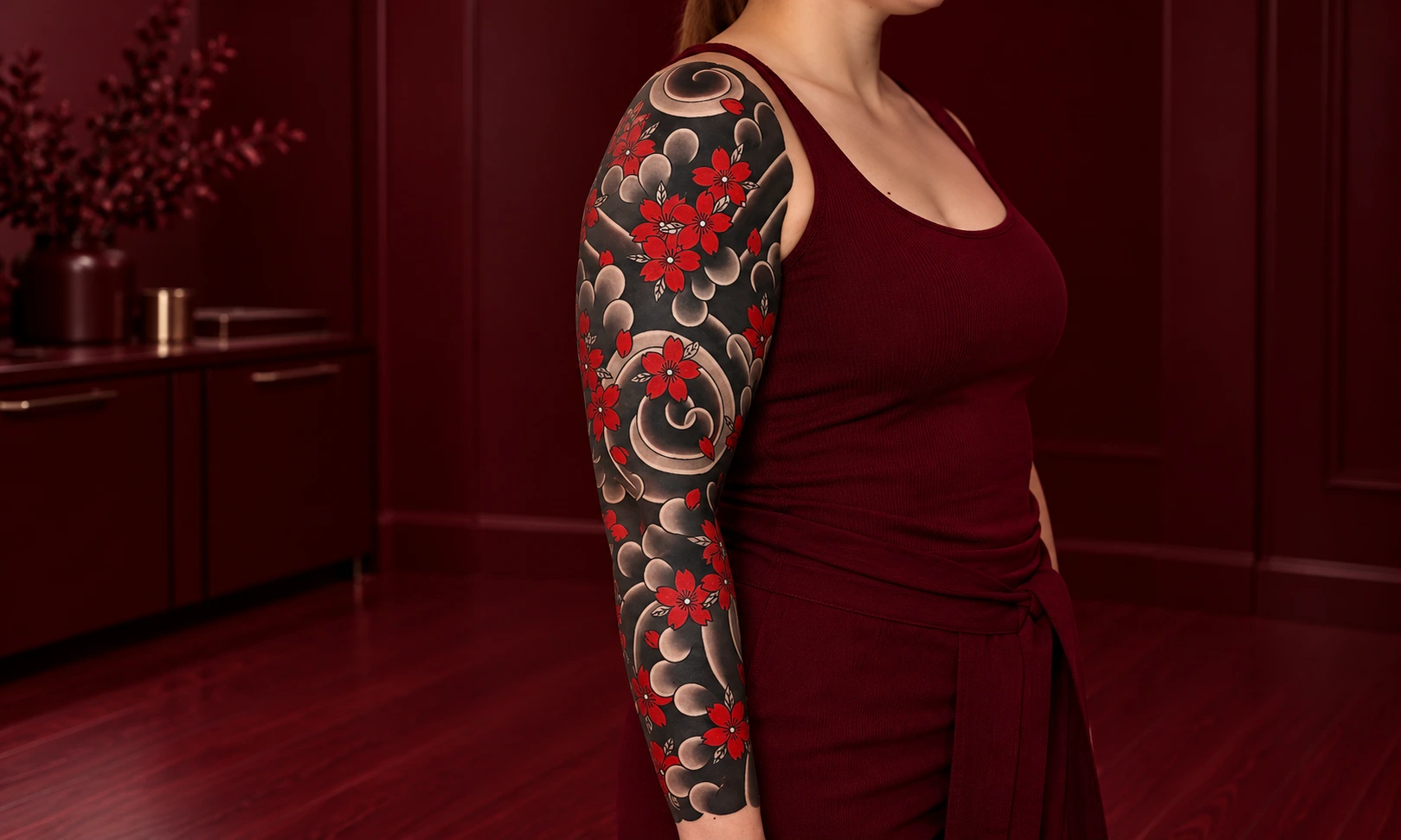
Japanese tattooing includes a rich artistic tradition often associated with large compositions, flowing movement, and carefully arranged imagery.
Common subjects include koi fish, dragons, tigers, peonies, chrysanthemums, waves, and mythological figures. Traditional Japanese tattooing, often called irezumi, has its own history, conventions, and visual language.
Large Japanese-inspired tattoos may cover an arm, leg, back, or torso. The arrangement of the main subject and background elements is often central to the overall design.
Best for: People who appreciate detailed compositions and want artwork inspired by Japanese tattoo traditions.
11. Chicano Tattoos
Chicano tattooing developed through Mexican American and broader Chicano cultural experiences. It is often associated with black-and-gray shading, fine details, lettering, portraits, religious imagery, and expressive visual storytelling.
Designs may include roses, clocks, script, symbolic figures, or personal and cultural references. The style has a distinctive history, so it is worth learning about that context before choosing imagery associated with it.
Best for: People interested in black-and-gray artwork with strong cultural, personal, or narrative elements.
12. Dotwork Tattoos
Dotwork tattoos use carefully placed dots to create shading, gradients, textures, and patterns. The technique can produce anything from geometric mandalas to animals, flowers, and abstract designs.
The density and spacing of the dots influence how light or dark an area appears. Dotwork is sometimes combined with blackwork or geometric tattooing.
Best for: People who like intricate patterns, textured shading, and detailed black-ink designs.
13. Illustrative Tattoos
Illustrative tattoos draw inspiration from drawing, printmaking, comics, and other forms of visual art. They may use expressive outlines, stylized shading, unusual proportions, or a hand-drawn appearance.
This is a broad category, not a rigid set of rules. One illustrative tattoo might resemble a children’s book drawing, while another may look like an elaborate ink illustration.
Best for: People who want artwork that feels hand-drawn, expressive, or artistically distinctive.
14. Lettering and Script Tattoos
Lettering tattoos use words, names, initials, dates, or phrases as the main design. Some use flowing cursive, while others feature bold block letters, typewriter-inspired fonts, or custom typography.
Popular choices include meaningful quotations, family names, memorial dates, and short personal reminders.
Before getting a lettering tattoo, check spelling, capitalization, punctuation, and the exact design at its intended size. If the words use a language or script you do not know, have a knowledgeable speaker verify them before the tattoo is made.
Best for: People who want words or written symbols to be the central focus of their tattoo.
15. Biomechanical Tattoos
Biomechanical tattoos combine human anatomy with mechanical or futuristic imagery. A design may appear to reveal gears, metal structures, cables, or machinery beneath the skin.
These tattoos often use detailed shading and perspective to create an illusion of depth. They can be small or cover larger areas of the body.
Best for: People who enjoy science fiction, mechanical imagery, and dramatic three-dimensional effects.
16. Ornamental Tattoos
Ornamental tattoos emphasize decorative patterns, symmetry, and intricate arrangements. Designs may feature mandalas, lace-like details, filigree, floral elements, or jewelry-inspired motifs.
They are sometimes placed on the hands, arms, sternum, back, or legs, depending on the design. Some ornamental tattoos draw inspiration from particular cultural traditions, so the origin of a pattern should be considered when relevant.
Best for: People who like decorative artwork, symmetrical shapes, and intricate patterns.
17. Sketch-Style Tattoos
Sketch-style tattoos imitate the look of a drawing in progress. They may include loose outlines, overlapping strokes, construction lines, or the appearance of pencil or pen marks.
Rather than aiming for perfect symmetry or photographic realism, the style often embraces movement and an unfinished artistic quality.
Best for: People who prefer expressive, unconventional designs that look like illustrations from a sketchbook.
18. Abstract Tattoos
Abstract tattoos use shapes, lines, textures, and color without necessarily depicting a recognizable object. A design might combine sweeping curves, irregular shapes, layered patterns, or bold blocks of color.
Some abstract tattoos are purely aesthetic, while others are created around a personal idea or feeling.
Best for: People who want original artwork that does not have to represent a specific person, animal, or object.
19. New School Tattoos
New School tattoos are known for exaggerated proportions, vivid colors, bold outlines, and cartoon-inspired imagery. Designs may feature oversized eyes, exaggerated expressions, playful characters, or energetic compositions.
The style is often more colorful and exaggerated than traditional tattooing, although individual artists interpret it differently.
Best for: People who want bright, playful, highly stylized artwork.
20. Patchwork Tattoos
Patchwork tattoos consist of separate designs placed across an area of skin, rather than one large image connecting everything together. A sleeve might combine stars, flowers, symbols, small illustrations, and lettering with visible spaces between them.
This approach gives people the freedom to build a collection gradually. Individual pieces can have different subjects while still working together visually.
Best for: People who want a personal collection of small tattoos that can grow over time.
Other Tattoo Styles Worth Knowing
Tattoo art continues to evolve, and many designs combine more than one approach.
- Single-needle tattoos: Use a single needle configuration to create delicate detail; they overlap with fine-line work.
- Trash polka: A distinctive style associated with black and red elements, layered imagery, text, and deliberately fragmented compositions.
- Surrealist tattoos: Combine recognizable subjects in dreamlike or unexpected arrangements.
- Floral tattoos: Focus on flowers, leaves, vines, and botanical forms; they can be realistic, minimalist, ornamental, or illustrative.
- Portrait tattoos: Depict a person or character and are often executed using realism or illustrative techniques.
- Sleeve tattoos: Cover much or all of an arm and can combine several designs into a coordinated composition. A sleeve is a placement or overall project, not a single tattoo style.
- Hand-poked tattoos: Are made manually without a powered tattoo machine. This describes a method of application rather than one particular visual style.
Tattoo Styles Compared
| Tattoo style | Main characteristics | Common subjects |
| Traditional | Bold outlines, limited colors | Roses, anchors, eagles |
| Realism | Detailed, lifelike shading | Portraits, animals |
| Minimalist | Simple shapes, restrained detail | Symbols, small outlines |
| Fine-line | Thin, delicate lines | Flowers, handwriting |
| Blackwork | Predominantly black ink | Patterns, abstract shapes |
| Geometric | Shapes, symmetry, repeated lines | Mandalas, angular animals |
| Watercolor | Painterly color and soft edges | Birds, flowers, abstract art |
| Japanese | Flowing compositions and traditional motifs | Koi, dragons, waves |
| Dotwork | Patterns and shading made from dots | Mandalas, animals |
| Lettering | Words and typography | Names, dates, phrases |
| Ornamental | Decorative, intricate patterns | Filigree, symmetrical motifs |
| New School | Bright colors and exaggerated forms | Characters, cartoon-inspired designs |
How to Choose the Right Tattoo Style
Choosing a tattoo is not just about finding a design that looks good on a screen. It is about finding artwork you will be comfortable wearing for years.
Start with the idea behind the tattoo
Think about what attracts you to the design. Is it a memory, a personal milestone, a cultural connection, or simply a visual style you love? You do not need a profound explanation for every tattoo, but understanding your preference helps narrow your options.
Match the design to the style
A realistic portrait needs a different approach from a simple geometric symbol. If you want a delicate flower, fine-line or illustrative work might suit you. If you want a bold eagle, traditional tattooing may be a better fit.
Consider the placement
The arm, shoulder, thigh, calf, back, and chest offer different amounts of space and different body contours. Hands, fingers, feet, and other frequently exposed or high-friction areas may need special consideration because wear, healing, and visibility differ.
Discuss the design’s size and placement with your tattoo artist before deciding.
Look at healed tattoos
Fresh tattoos often look sharper and more saturated than healed tattoos. Ask to see healed examples of the artist’s work in the style you want, not just freshly completed photos.
Think about long-term detail
Tiny lettering, extremely close lines, and very intricate details may become less distinct over time. A good artist can suggest adjustments to size, spacing, and contrast to help the design age more gracefully.
Take your time
You do not need to choose a tattoo simply because a design is trending. Save examples, compare styles, and give yourself time to decide. A design that still appeals to you after careful consideration is generally a better choice than one selected under pressure.
Do Tattoos Have Meanings?
Tattoos can have personal, cultural, artistic, spiritual, or symbolic meanings, but there is no universal meaning attached to every design.
A rose might represent love to one person and resilience to another. A bird could symbolize freedom, remembrance, or simply an appreciation for nature. Geometric tattoos may be chosen for their visual structure rather than any deeper symbolism.
Cultural symbols require more care. Some patterns, markings, or motifs have specific meanings within the communities that created them. Research their origins and avoid assuming that a symbol means the same thing everywhere.
Ultimately, the meaning of a tattoo depends on the person wearing it, the imagery involved, and the context in which it is used.
Do Tattoos Hurt?
Yes, getting a tattoo usually involves some discomfort because needles repeatedly penetrate the skin. However, the amount of pain varies from person to person.
Placement can make a difference. Areas with thinner skin, more nerve endings, or less padding over bone may feel more uncomfortable than fleshier areas. Tattoo size, session length, technique, and individual sensitivity also affect the experience.
If you are getting your first tattoo, consider a relatively small design and discuss the expected session length with your artist. Do not use numbing products without discussing them with a qualified professional, as some products can cause reactions or affect the skin.
How Long Does a Tattoo Take to Heal?
A tattoo’s surface may look much better within a few weeks, but deeper skin healing can take longer. Healing time varies according to the size and location of the tattoo, the technique used, your skin, and how well you follow aftercare instructions.
During healing, mild tenderness, redness, swelling, itching, and peeling can occur. These symptoms should generally improve rather than progressively worsen.
Follow the specific aftercare instructions provided by your professional tattoo artist. Seek medical advice if redness or swelling spreads, pain increases, the skin becomes increasingly hot, pus develops, or you experience fever or other signs of infection.
Tattoo Aftercare: How to Care for a New Tattoo
Good aftercare supports healing and helps protect the appearance of your tattoo.
- Wash your hands before touching it. Clean hands reduce the chance of introducing bacteria.
- Clean it gently. Follow your artist’s instructions for washing with mild, fragrance-free soap and clean water.
- Use only suitable aftercare products. Apply a recommended product in a thin layer when advised; avoid layering on excessive ointment.
- Avoid picking or scratching. Peeling and itching can occur during healing, but pulling at the skin can interfere with recovery.
- Avoid soaking the tattoo. Do not swim or submerge a healing tattoo in baths or hot tubs until it has healed.
- Reduce friction and sun exposure. Wear comfortable clothing and protect the healing area from direct sunlight.
- Watch for signs of infection. Worsening pain, spreading redness, pus, or fever warrants prompt medical advice.
Once the tattoo has healed, protecting the skin from excessive sun exposure can help preserve its appearance. Use broad-spectrum sunscreen on healed tattoos when exposed to sunlight.
Are Tattoos Safe?
Tattoos can be completed safely when appropriate hygiene, sterile equipment, suitable ink handling, and proper aftercare are used. However, tattooing is not risk-free.
Potential risks include infection, allergic reactions to tattoo pigments, scarring, and skin reactions. Contaminated equipment or ink can transmit infections. Some people may also experience persistent irritation or raised areas within tattooed skin.
Before booking, look for a professional studio that uses sterile, single-use needles where appropriate, follows strict hygiene practices, and can explain its procedures. Do not get tattooed over irritated, infected, or injured skin.
If you have a medical condition or take medication that affects healing or bleeding, discuss the procedure with a healthcare professional before proceeding.
Can Tattoos Be Removed?
Yes, getting a tattoo usually involves some discomfort because needles repeatedly penetrate the skin. However, the amount of pain varies from person to person.
Placement can make a difference. Areas with thinner skin, more nerve endings, or less padding over bone may feel more uncomfortable than fleshier areas. Tattoo size, session length, technique, and individual sensitivity also affect the experience. If you are comparing body art options, exploring styles such as a daith piercing vs. industrial can help you understand how placement influences the experience.
If you are getting your first tattoo, consider a relatively small design and discuss the expected session length with your artist. You can also explore delicate body jewelry styles, such as a heart-shaped daith piercing, if you prefer a different way to express your personal style. Do not use numbing products without discussing them with a qualified professional, as some products can cause reactions or affect the skin.
Frequently Asked Questions About Tattoos
What is the most popular tattoo style?
Traditional, fine-line, minimalist, realism, blackwork, and floral tattoos are among the styles many people explore. Popularity varies by location, artist, and trend, so the best choice is the style that fits your preferences and the design itself.
Which tattoo style is best for beginners?
A small, relatively simple design can be a manageable starting point. Minimalist, traditional, and fine-line designs are common choices, but the quality of the artist and the suitability of the design matter more than the label of the style.
Do fine-line tattoos last?
Fine-line tattoos can last, but very thin lines and tiny details may soften or become less distinct over time. Appropriate sizing, spacing, placement, and skilled application can help improve long-term readability.
Which tattoo style ages best?
There is no single style that ages perfectly for everyone. Bold outlines, clear shapes, sufficient spacing, and an appropriate design size can help maintain legibility. Sun exposure, skin changes, tattoo technique, and aftercare also influence how a tattoo looks over time.
What is the difference between fine-line and minimalist tattoos?
Fine-line describes the use of thin lines, while minimalist describes a simple, restrained design. A tattoo can be both fine-line and minimalist, but a fine-line tattoo may also include substantial detail.
What is the difference between traditional and neo-traditional tattoos?
Traditional tattoos usually emphasize bold outlines, a limited color palette, and classic imagery. Neo-traditional tattoos build on that foundation with more elaborate details, shading, and a broader range of colors.
Can different tattoo styles be combined?
Yes. Artists often combine styles, such as geometric patterns with realism, floral designs with fine-line work, or traditional imagery with modern illustrative elements. Choose an artist experienced in combining the approaches you like.
Is it possible to get a tattoo without color?
Yes. Black-and-gray tattoos use black ink and diluted shades to create contrast and shading. Blackwork, dotwork, lettering, and many minimalist designs can also be created without colored ink.
How much does a tattoo cost?
Tattoo prices depend on the studio, artist’s experience, design complexity, size, placement, and session time. Ask for a clear quote that explains the minimum charge, estimated sessions, and any additional costs before booking.
Final Thoughts
There is no single best type of tattoo. Traditional designs offer bold, classic imagery; realism brings portraits and animals to life; minimalist and fine-line styles keep things delicate; and geometric, Japanese, ornamental, and abstract tattoos offer very different ways to express an idea.
The right choice begins with a design you genuinely like, an artist whose work matches your vision, and a clear understanding of the practical considerations. Take your time, research the style, prioritize studio hygiene, and remember that a tattoo is both a piece of art and a long-term commitment.
Disclaimer:
This article is for informational and educational purposes only and is not a substitute for professional medical advice. Getting a tattoo involves potential risks, including infection, allergic reactions, scarring, and skin irritation. Healing and results vary from person to person.
Always choose a reputable tattoo artist who follows proper hygiene practices and follow their aftercare instructions. Seek medical advice if you notice worsening pain, spreading redness, pus, fever, or other signs of infection.