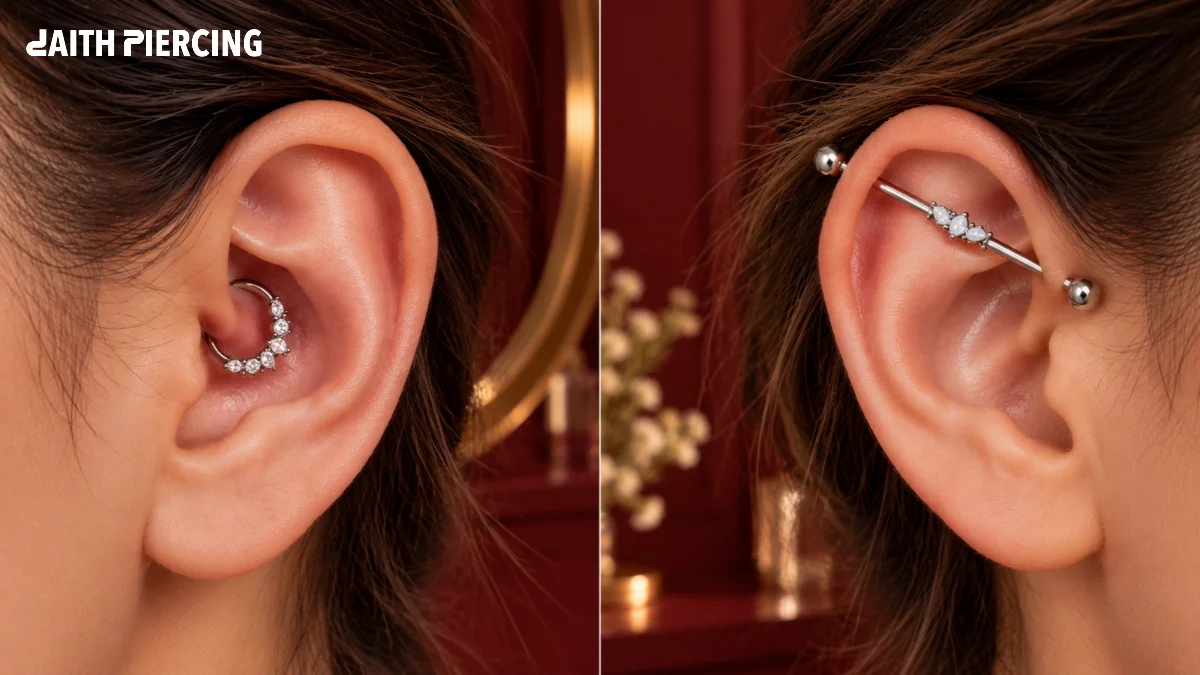
If you are comparing daith piercing vs industrial, the difference is bigger than simply choosing between two cool ear styles. Both are cartilage piercings, but they sit in completely different parts of the ear, use different jewelry, and can create a very different look.
A daith piercing sits through the inner cartilage fold near the ear canal and is commonly worn with a small hoop or curved piece of jewelry. An industrial piercing usually connects two cartilage piercings across the upper ear with one straight barbell.
That difference also changes the healing experience. Your ear anatomy, jewelry fit, sleeping habits, daily routine, and the skill of your piercer can all affect how comfortable the piercing becomes.
So, if you are thinking about getting one, let’s break down the daith piercing vs industrial comparison simply and realistically.
Key Takeaways
- Daith: Inner ear cartilage placement with a more tucked-away appearance.
- Industrial: Two upper-ear cartilage piercings connected by a straight barbell.
- Healing: Both require patience, with cartilage often taking months to fully heal.
- Jewelry: Proper size, material, finish and fit matter for both styles.
- Aftercare: Use gentle care, avoid unnecessary touching and do not rotate healing jewelry.
- Lifestyle: Sleeping habits, headphones and accidental pressure can affect healing.
- Safety: Choose a professional piercer who checks your anatomy and follows appropriate hygiene and sterilization practices.
Daith Piercing vs Industrial: The Main Difference
The easiest way to understand these piercings is to look at where the jewelry sits.
A daith piercing goes through the inner cartilage fold located just above the ear canal. Because the jewelry sits tucked inside the ear, the piercing has a more subtle appearance while still giving the ear a distinctive detail.
An industrial piercing is more noticeable. It normally uses two holes connected by a single straight barbell that crosses the upper ear.
This creates an important difference: a daith is one piercing channel, while a traditional industrial involves two piercing sites that need to work together.
Neither style automatically suits every ear. A professional piercer should examine your anatomy before deciding whether a particular placement is appropriate. The Association of Professional Piercers recommends discussing anatomy, jewelry selection, placement, risks and healing with a qualified piercer before the procedure.
Daith Piercing vs Industrial Placement
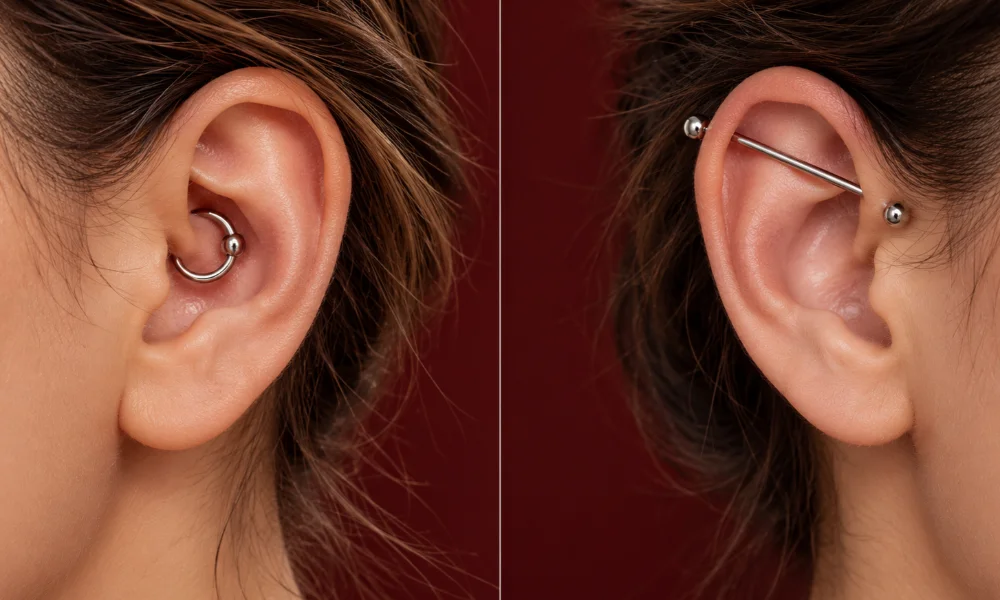
Where Is a Daith Piercing Placed?
A daith piercing is positioned through the inner cartilage ridge of the ear, close to the opening of the ear canal. Its tucked-away placement gives it a cleaner and less dramatic appearance compared with an industrial.
One reason people find the daith interesting is the jewelry. A small hoop can follow the natural curve of the ear, making the piercing look integrated rather than sitting prominently on the outer edge.
Where Is an Industrial Piercing Placed?
An industrial piercing generally involves two holes through the upper ear cartilage. A straight barbell then connects them.
Because the jewelry crosses a larger section of the ear, placement needs to be carefully planned. The angle of both piercing channels matters, as does whether the barbell sits naturally without putting unnecessary pressure on the cartilage.
This is one reason an industrial should not be treated like a simple DIY piercing. Incorrect placement or poorly sized jewelry can contribute to prolonged healing and other complications.
Which One Hurts More: Daith or Industrial?
Pain is one of the hardest things to compare because everyone experiences piercing pain differently. Both piercings pass through cartilage, and cartilage generally takes longer to heal than soft tissue. Cleveland Clinic notes that cartilage contains less blood supply than softer tissue, which contributes to slower healing.
A daith involves one piercing point, while an industrial involves two. That does not mean an industrial will definitely hurt more, but you are dealing with two fresh cartilage sites rather than one.
The sensation also depends on your anatomy, piercer, technique and personal pain tolerance.
Instead of asking which piercing universally hurts more, it is more useful to ask which healing process fits your lifestyle.
Daith vs Industrial Healing Time
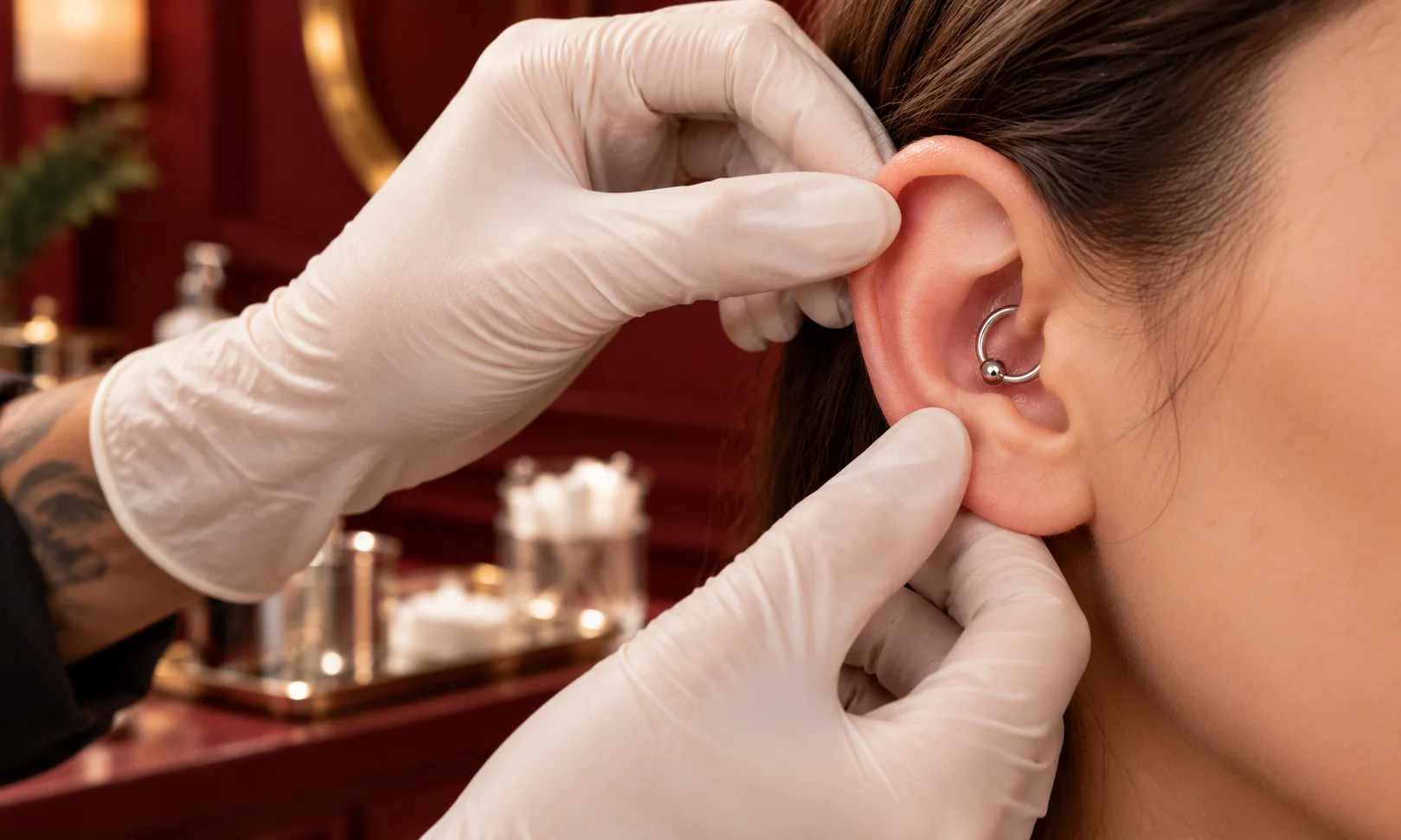
Healing is where this comparison becomes especially important. Cleveland Clinic lists daith among cartilage piercings that can take around six to 12 months to fully heal. The exact timeline can vary from person to person depending on factors such as health, jewelry, placement, and piercing method.
Industrial piercings can also require a long healing period because two cartilage sites are involved. The two holes need to heal properly while remaining compatible with the barbell’s position.
A piercing can also feel comfortable before it is completely healed. The Association of Professional Piercers explains that piercings heal from the outside toward the inside, so tissue can still be fragile even when the outside looks fine.
That means changing jewelry too early simply because the piercing “looks healed” is not a good idea.
Jewelry: Daith vs Industrial
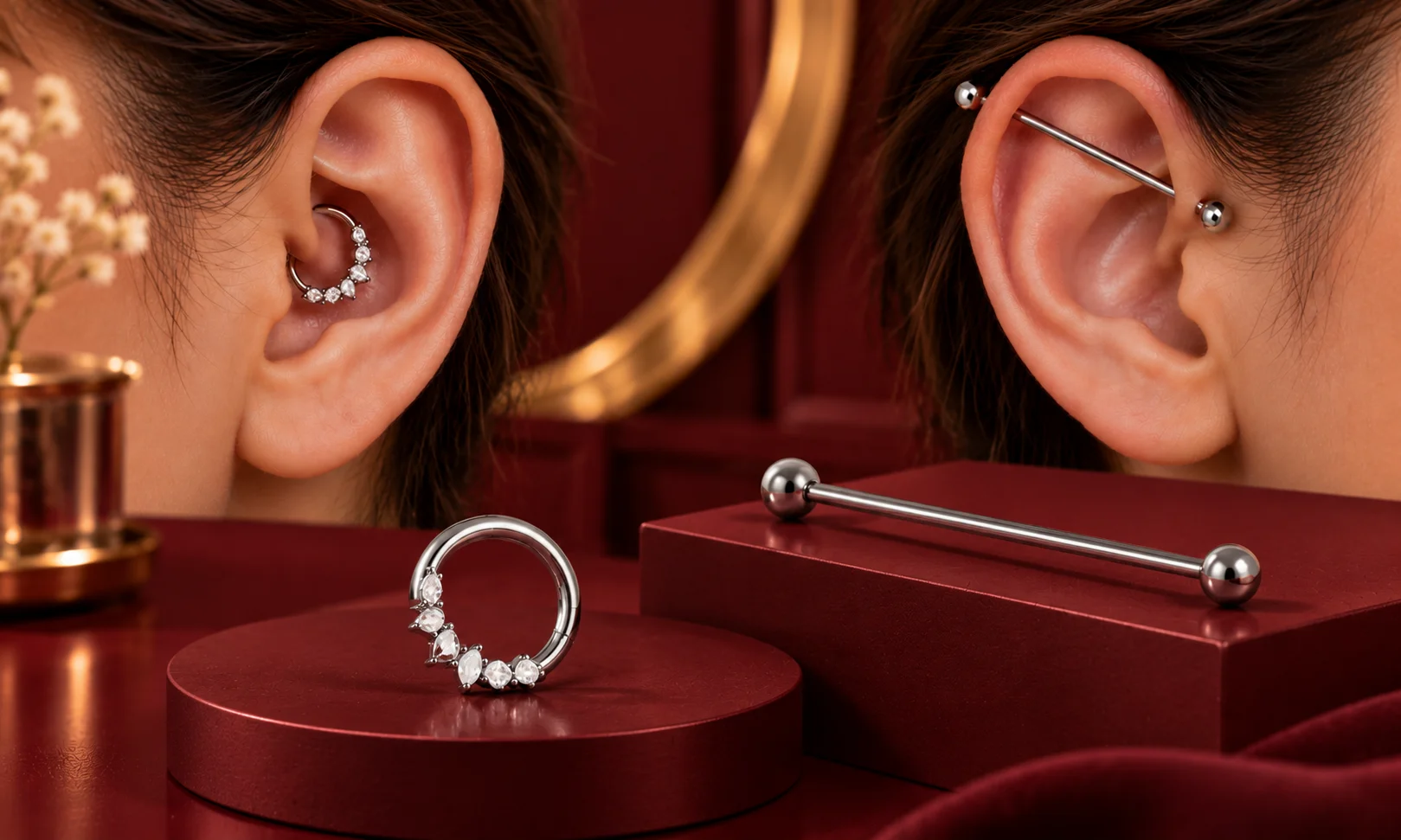
Daith Jewelry
Daith piercings are commonly styled with rings and other jewelry designed to suit the curved inner placement. The smaller scale can make the jewelry feel understated, while different finishes and decorative ends can completely change the appearance. Because the area is compact, jewelry needs to fit properly rather than simply looking attractive.
Industrial Jewelry
The classic industrial look comes from a straight barbell connecting the two piercing points. This makes the jewelry much more visually noticeable. You can find simple metal barbells as well as decorative designs, but the initial jewelry should be selected for safe fit and healing rather than appearance alone.
The Association of Professional Piercers notes that jewelry size, material, quality, style, weight and finish can all affect whether jewelry is appropriate for everyday wear.
Which Piercing Is Easier to Live With?
This depends heavily on your daily routine. A daith is tucked inside the ear, so it may feel less exposed to accidental knocks from hair, headphones or clothing. However, its location can make cleaning and jewelry access slightly awkward.
An industrial sits across the upper ear, making it more exposed. Hair, headphones, hats, pillows and accidental bumps can become annoying while it heals.
Sleeping is another consideration. The Association of Professional Piercers specifically warns that sleeping directly on a healing cartilage piercing can cause irritation and may even affect its angle.
If you normally sleep on the side where you want the piercing, think about this before booking the appointment.
Daith Piercing vs Industrial: Aftercare
Whichever style you choose, aftercare should be gentle rather than aggressive. The Association of Professional Piercers recommends washing your hands before touching a healing piercing and using sterile saline wound wash. It also advises against twisting or rotating the jewelry because unnecessary movement can irritate healing tissue.
Avoid repeatedly touching the jewelry, sleeping directly on it, and exposing the fresh piercing to unnecessary friction or pressure.
Pools, hot tubs, lakes and other bodies of water can also expose a healing piercing to bacteria, so avoiding submersion during healing is recommended.
One important point is that more cleaning is not always better. Over-cleaning or using harsh substances such as alcohol and hydrogen peroxide can irritate the tissue and interfere with healing.
Common Risks You Should Know
Like other cartilage piercings, both daith and industrial piercings can experience irritation, swelling, prolonged healing, allergic reactions or infection.
Cartilage infections deserve particular attention. Cleveland Clinic explains that upper-ear cartilage infections can sometimes become serious, including a condition called perichondritis.
Some redness, tenderness and swelling can be normal shortly after a piercing. However, increasing redness, warmth, significant swelling, worsening pain, pus or fever can indicate a problem that needs medical attention.
This is another reason professional placement and proper aftercare matter.
Which One Looks Better?
There is no universal answer because these piercings create completely different aesthetics. A daith usually gives a subtle, curved and tucked-in look. It works nicely when you want something noticeable up close without making the entire ear the center of attention.
An industrial creates a bold, structured and statement-making look. The straight bar across the upper ear naturally attracts attention and can become the main feature of an ear stack.
Think of the daith as a detail that works with the shape of your ear, while an industrial becomes more of a visual statement.
Which One Should You Get?
Instead of choosing purely from pictures, start with your anatomy and lifestyle. A daith may suit you if you like a smaller, more discreet cartilage piercing and prefer curved jewelry.
An industrial may appeal more if you want a stronger statement and like the distinctive straight-bar look.
Your sleeping position, headphone use, hair routine and willingness to follow a longer healing process should also be part of the decision.
Most importantly, do not assume that every ear can safely accommodate every piercing style. A professional piercer should assess your ear and explain whether the desired placement and jewelry are suitable.
Final Thoughts
The daith piercing vs industrial debate really comes down to the experience you want from your piercing. The daith offers a compact, curved and understated style, while the industrial gives the ear a stronger architectural look with its straight barbell.
Neither should be chosen only because it looks good in a photo. Your ear anatomy, jewelry fit, daily habits and ability to give the piercing time to heal are just as important.
If you are planning your next ear piercing, daithpiercing can be a useful place to explore different piercing styles, jewelry ideas and practical guides before making your choice.
FAQs
Is a daith or industrial piercing harder to heal?
Both can require a long healing period because they involve cartilage. An industrial can be particularly demanding because two piercing sites must heal properly while working with the same piece of jewelry.
Can I get a daith and industrial at the same time?
It may be possible for some people, but getting multiple cartilage piercings together can increase the amount of healing tissue that needs care. A professional piercer can assess your anatomy and discuss whether doing both at once makes sense.
Is an industrial piercing more noticeable than a daith?
Usually, yes. An industrial barbell crosses the upper ear and naturally creates a stronger visual statement. A daith sits deeper inside the ear and generally has a more subtle appearance.
Can I sleep on a new daith or industrial piercing?
It is better to avoid direct pressure on either healing cartilage piercing. Pressure and friction can irritate the area and may interfere with healing or placement.
Can a daith piercing help migraines?
A daith piercing should not be considered a proven migraine treatment. Cleveland Clinic notes that there is no scientific evidence showing that daith piercing prevents or treats migraines.
When can I change my piercing jewelry?
Wait until the piercing has properly healed before changing jewelry yourself. If a jewelry change or downsize is needed during healing, it is safer to have a qualified piercer handle it.