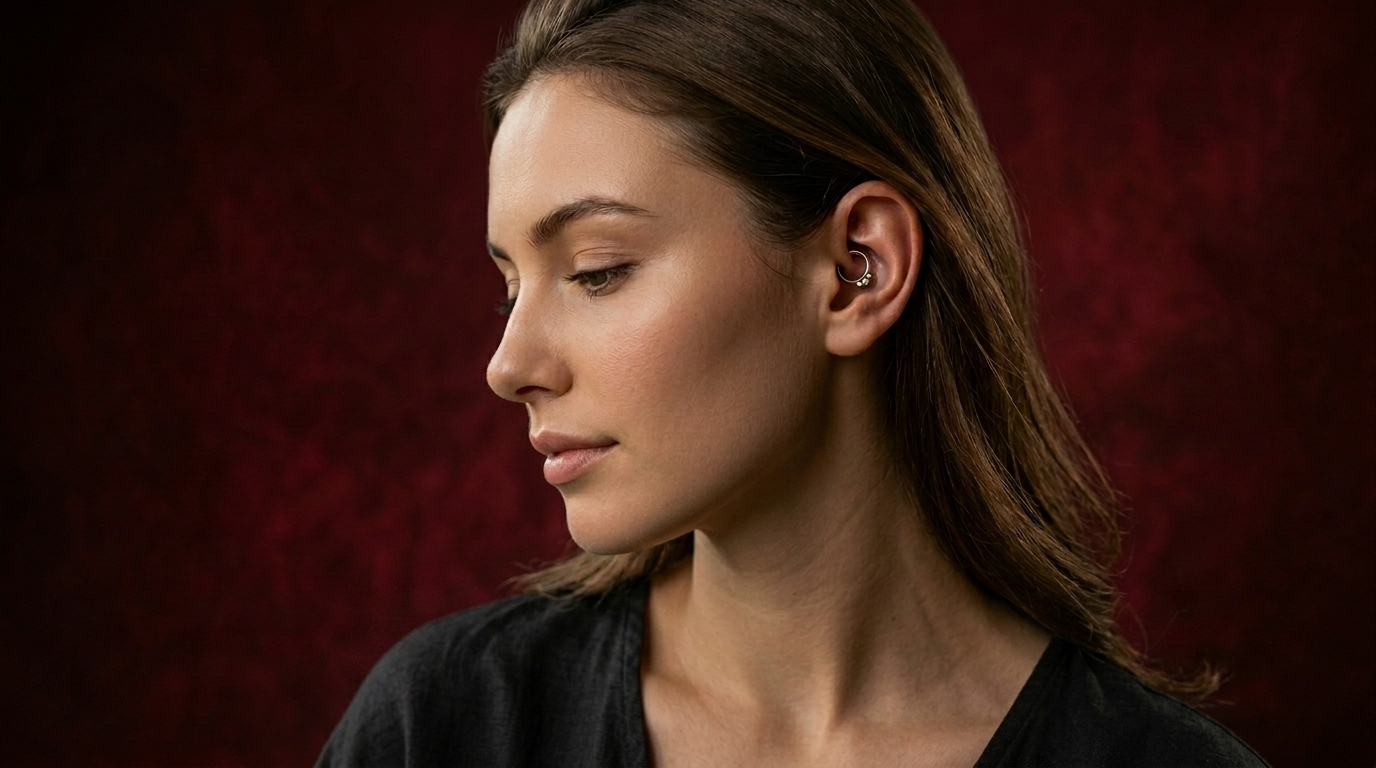
Most people who get daith piercings do not know that there is only one major mistake to avoid in order to prevent turning their healing process into a painful and excruciating infection over-cleaning. In the age of the daith piercing, a mesmerizing and innovative type of ear piercing, this stunning piercing has gone mainstream in the United States and taken its place among body art and alternative medicine.
Daith piercings are a particular kind of cartilage piercings, placed in the innermost ear fold of the inner ear, just above the ear canal. At daithpiercing, you will find everything you need to know about daith piercing, from recognizing infection at its early stage and daith piercings‘ connection to migraines to the cost breakdowns and anatomical contradictions.
After reading this article on daith piercing 2026, you will learn all the important facts related to daith piercing and know how to keep yourself safe.
What Is a Daith Piercing? Placement and Origin
The daith piercing is not just an eye-catching fad, but is instead an expert lesson in ear anatomy. While some piercings lie on the perimeter of the ear, the daith piercing takes you deeper inside and creates a unique relationship between the body mod and your inner ear structures.
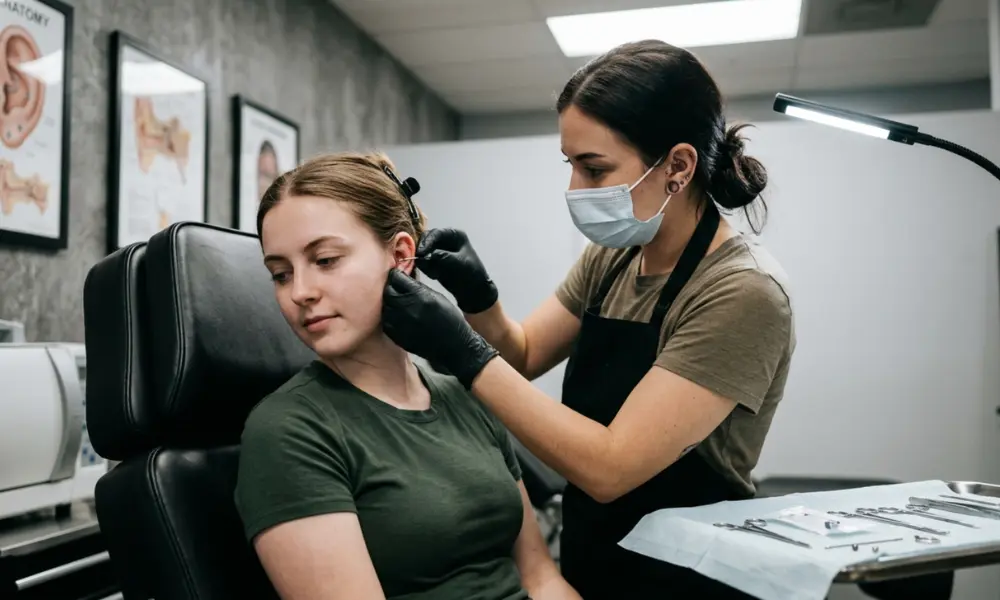
In the age of 2026 ear curation, the daith piercing creates a focal point in your ears, which makes it the ideal place to anchor high-quality pieces of jewelry.
Where Is a Daith Piercing Located?
For starters, the daith ear piercing goes through the crus of the helix. In simple terms, the daith piercing is situated within the small, firm cartilage fold right by your ear canal opening. This is the most inner ridge of the bowl shape created by your ear.
Due to its location in the middle of the ear, the daith creates a striking difference from the other types of piercings:
-
Daith Vs. Tragus Piercing: The tragus is the flap that protects the ear canal, the daith sits directly above and slightly deeper than that flap.
-
Daith Piercing Vs. Rook Piercing: A rook piercing is positioned on the vertical ridge of cartilage higher up, whereas the daith sits lower and more horizontally.
-
Daith Piercing Vs. Helix: While a helix wrap-around sits on the outer edge, the daith is protected inside the ear’s curve.
-
Daith Vs. Conch: The conch goes through the flat shell of the ear, while the daith utilizes the specific ridge where the ear begins to fold inward.
Because this spot is so tucked away, the daith is highly dependent on your unique shape. A professional will check to see if your ridge is prominent enough to safely support the jewelry without it shifting over time.
Daith Piercing Pain Level: What Does It Actually Feel Like?
If you are feeling a bit of needle-phobia, you are not alone. The daith piercing is often viewed as one of the more intimidating options in the world of body modification due to its deep, central location. However, understanding the physical sensation can help lower your anxiety before you sit in the chair.
Is a Daith Piercing More Painful Than Other Ear Piercings?
On a standard pain scale of 1 to 10, most people rate a daith ear piercing at a 5 or 6. While this is certainly higher than a standard lobe piercing (which usually sits at a 1 or 2), most veterans of cartilage piercing describe it as an intense dull pressure rather than a sharp, stinging pain.
There are three specific reasons why the daith piercing feels more significant than others:
Tissue Density: The inner ear fold consists of much denser cartilage than the outer rim (the helix), meaning it requires a bit more deliberate force to create the channel.
The Procedure Duration: Because it is tucked away in a tight corner of your ear anatomy, the piercer must work with extreme precision. The process usually takes about 6 to 10 seconds, compared to the 1-second pop of a lobe.
The Audible Crunch: This is the part that surprises people the most. Because the piercing is located so close to your ear canal, you will likely hear the sound of the needle passing through the cartilage. It is not painful, but it is a distinct sound that many find more jarring than the actual pinch.
Daith Piercing vs Other Ear Piercings
This daith piercing guide would not be complete without seeing how it stacks up against other popular piercing types.
| Piercing Type | Average Pain (1–10) | Healing Time | Difficulty to Pierce | Typical Initial Jewelry |
| Daith | 5–7 | 6–12 Months | High | Captive Bead / Horseshoe |
| Helix | 3–4 | 6–9 Months | Low | Flat-back Stud / Hoop |
| Tragus | 4–5 | 3–6 Months | Moderate | Flat-back Stud |
| Rook | 6–7 | 6–10 Months | High | Curved Barbell |
| Conch | 5–6 | 6–9 Months | Moderate | Flat-back Stud |
| Lobe | 1–2 | 6–8 Weeks | Very Low | Stud or Small Hoop |
What to Do Before Your Daith Piercing Appointment to Reduce Pain
A little preparation goes a long way in making your inner ear piercing experience smooth. Follow these professional tips to minimize discomfort:
- Eat a Solid Meal: Low blood sugar can make you feel lightheaded or more sensitive to pain. Eat a balanced meal 2–3 hours before your appointment.
- Skip the Alcohol: Avoid alcohol for at least 24 hours prior. Alcohol thins your blood, which can lead to excess bleeding and increased sensitivity.
- Check Your Anatomy: Before you go, read our guide on daith piercing placement to see if your ear shape is a good fit.
- Hydrate Well: Well-hydrated skin is more elastic and easier to pierce.
- Choose an Expert: Ensure you are visiting a studio that specializes in daith piercing 2026 standards ideally an APP-certified professional who understands the nuances of the inner ear.
For a look at what happens after the needle, check out our guide: Daith Piercing Pain Level: What Does It Actually Feel Like?.
Daith Piercing Healing Time: A Comprehensive Stage-by-Stage Breakdown
Patience is the best tool in your daith piercing guide. A regular lobe piercing may be done in a few weeks, but the inner ear requires a much longer commitment. This is because a daith piercing goes through thick cartilage, a tissue that doesn’t have the same abundance of blood vessels as your earlobe. Without that direct blood highway to deliver oxygen and nutrients, the biological repair process is much slower.
How Long Does a Daith Piercing Take to Heal?
For a professional daith piercing, you should expect a total recovery window of 6 to 12 months. A common mistake that leads to complications is confusing surface healing with deep tissue maturation. Around the 2 or 3-month mark, your cartilage piercing may look perfect, the redness has faded, and the swelling has vanished.
However, the internal tunnel of skin (known as the fistula) is still incredibly thin and fragile. At this stage, the piercing is like a frozen lake, it looks solid on top, but the ice is too thin to walk on. To ensure you are not fooled by this false heal, it is vital to follow a structured timeline like the one found in our guide, Daith Piercing Healing Time: 3 Expert Stages to a Perfect Heal.
The 3 Stages of Daith Piercing Healing
Instead of viewing it as one long wait, it helps to understand the three distinct biological phases your inner ear will navigate:
Phase 1: The Inflammatory Phase (Weeks 1–4)
Expect minor swelling, tenderness, and a bit of clear or white discharge. This is your body’s cleaning crew at work. The golden rule here is, Hands off. Any rotation or twisting of the jewelry during this phase acts like a cheese wire against new, delicate skin cells.
Phase 2: The Proliferative Phase (Months 1–6)
This is the crusty stage where dried lymph fluid accumulates around the ring. Do not pick at these, while the piercing might look healed from the outside, the internal tissue is still wet and fragile. Changing jewelry now is the first cause of irritation bumps in daith piercing 2026 trends.
Phase 3: The Maturation Phase (Months 6–12)
The skin channel finally toughens and stabilizes. Once the tenderness is 100% gone and the jewelry moves freely without any sticky feeling, the fistula is fully formed. You can now safely visit a professional to swap your initial horseshoe for a more decorative piece.
Factors That Speed Up or Slow Down Healing
Your lifestyle is essentially the control knob regulating the rate at which you recover from your injury. Due to the fact that the inner ear requires good health for healing purposes, variables such as proper nutrition (containing adequate amounts of Vitamin C and Zinc), and a good night’s rest become very important indeed.
Conversely, factors such as stress, smoking, and above all sleeping on your piercings, will significantly hinder the process. As long as you remain free from stress, do not smoke, and apply your daily saline solution spray without fail, you will definitely fall into the faster-healing category of individuals.
Daith Piercing Aftercare: What Professionals Actually Recommend
Proper aftercare is more than just a routine; it is the essential shield that prevents a stunning daith piercing from turning into a source of chronic irritation. Following the complete guide to daith piercing 2026 standards ensures your new jewelry stays healthy and vibrant.
The Correct Way to Clean a Daith Piercing
Cleaning a newly pierced cartilage ear requires getting rid of the debris without affecting the healing fistula. The best way to ensure that your ear fold stays safe is by following this two-step cleansing technique on a daily basis.
First, you should mist the ear piercing using sterile saline spray, ideally 0.9 percent sodium chloride. It will keep the inside of your ear pierce clean and well-hydrated while preventing any unnecessary chemicals from getting into it.
After allowing the saline spray to work for one minute, get rid of the crusties by patting it dry. It is very important to use a paper towel or sterile gauze when dealing with a daith ear piercing.
Traditional cloth towels are notorious for harboring dormant bacteria and having tiny loops that can snag your jewelry. Also, the modern consensus is to avoid soaps entirely as they disrupt the ear anatomy pH balance.
Critical Mistakes That Damage an Inner Ear Piercing
Avoiding these common pitfalls is essential for a smooth daith piercing 2026 experience:
- Rotating the jewelry: Thinking you need to keep it from sticking is a myth that destroys the new tissue channel.
- Using Harsh Chemicals: Hydrogen peroxide, rubbing alcohol, and Bactine are too aggressive; they kill the healthy cells trying to repair your ear.
- Dirty Hands: Touching your ear with unwashed hands is the primary cause of inner ear piercing infections.
- Sleeping on the Piercing: Constant pressure causes the piercing to migrate or develop permanent pressure bumps.
- In-Ear Headphones: Using AirPods or earbuds during the first few months introduces bacteria directly into the wound and puts physical pressure on the cartilage piercing.
- Early Jewelry Changes: Swapping your ring before the 6-month mark often leads to an immediate blowout or infection.
Pillow Hack and Sleep Positioning Tip for Daith Piercing
One of the major problems that come with the daith piercing guide is the side-sleepers problem. For people who can not help but sleep on their sides, the travel pillow technique will do just fine.
The trick here involves ditching the regular pillow for the donut-style travel pillow. The ear is positioned right in the center of the donut hole. In this way, the ear will be held by the pillow while at the same time hanging freely without any pressure.
Swimming, Gym, and Daily Life Adjustments During Healing
Your everyday routine will require some minor modifications during the recovery period:
Swimming: No pools, hot tubs, or lakes for the first month. Chlorine is irritating, and natural waters contain many harmful bacteria. In case of swimming, cover your piercing with a waterproof dressing or rinse with sterile saline.
Gym Workouts and Sweating: Perspiration doesn’t cause any harm, but bacteria present in it does. Clean your new body piercing right away after exercising.
Hair Products: Be very careful when applying hairspray or dry shampoo. They may accumulate in the ear fold and cause chemical burns and intense irritation.
Phone Use: Rotate your phone from the side of your inner ear piercing or use hands-free mode. Your phone screen is among the most polluted surfaces; avoid bringing it into contact with your freshly pierced inner ear tissue.
Daith Piercing Infection: Spotting Trouble Early
A daith piercing has a slightly higher risk of complications than a lobe because cartilage doesn’t have a strong blood supply. This means your body has to work harder to fight off bacteria in the inner ear.
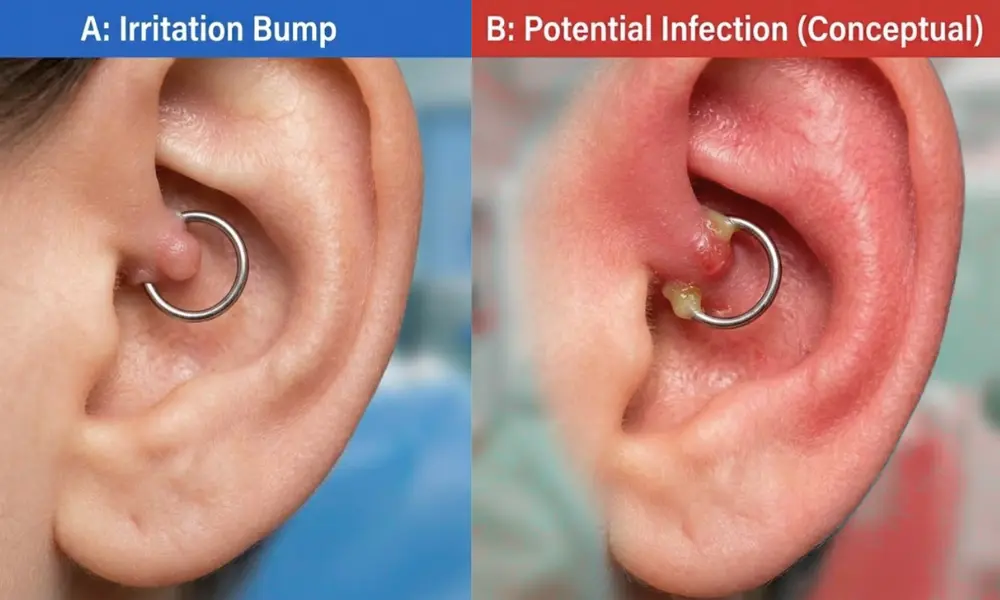
Understanding the difference between a cranky piercing and a serious infection is a vital part of any daith piercing guide. Catching signs early ensures your body modification stays healthy and looks great.
Irritation vs. Infection: The Big Difference
Most people panic at the first sign of redness, but irritation and infection are not the same thing. Irritation is just your body reacting to being bumped or touched. It usually goes away in a day or two with proper care.
An infection is a bacterial invasion. It would not get better on its own and usually gets worse every hour. Knowing this distinction is key to daith piercing 2026 safety standards and prevents unnecessary stress.
How to Identify Your Piercing Bump
Use this quick guide to check your ear anatomy and determine if you need to see a professional or just keep cleaning.
Irritation vs. Infection vs. Keloid
| Condition | Appearance | Feel | Action Required |
| Normal Healing | Slightly pink | Mildly tender | Keep cleaning |
| Irritation Bump | Small red mound | Itchy or sore | Daith Piercing Bump: Why It Happens and Proven Ways to Heal Fast |
| Early Infection | Dark red/Swollen | Throbbing pain | Warm saline soaks |
| Severe Infection | Spreading heat | Intense pain | See a Doctor |
| Keloid | Large, firm skin | Painless | See a specialist |
How to Manage Minor Issues at Home
If your inner ear piercing looks a bit angry, start twice-daily warm saline soaks. Use sterile gauze as a warm compress for five minutes to boost blood flow to the ear fold.
Crucial Warning: Never take the jewelry out if you suspect an infection. Doing so can trap the bacteria inside your ear, which may lead to a much more serious abscess.
When to Call the Doctor
If you don’t see improvement within 48 to 72 hours, it is time for professional help. If you have a fever or see red streaks moving away from the ear, go to urgent care immediately. Doctors often prescribe specific antibiotics to clear up cartilage piercing issues.
Daith Piercing for Migraines and Anxiety: What the Research Says
This piercing is a centerpiece of modern body modification, sitting at the unique intersection of aesthetic curation and holistic wellness. While it is a stunning addition to your ear anatomy, many seekers are motivated by its reputation for neurological relief.
The Vagus Nerve Theory Behind Migraine Relief
The leading theory is that the daith ear piercing targets a specific pressure point used in auricular acupuncture. By passing through the ear fold, the jewelry may provide continuous stimulation to the vagal afferent fibers.
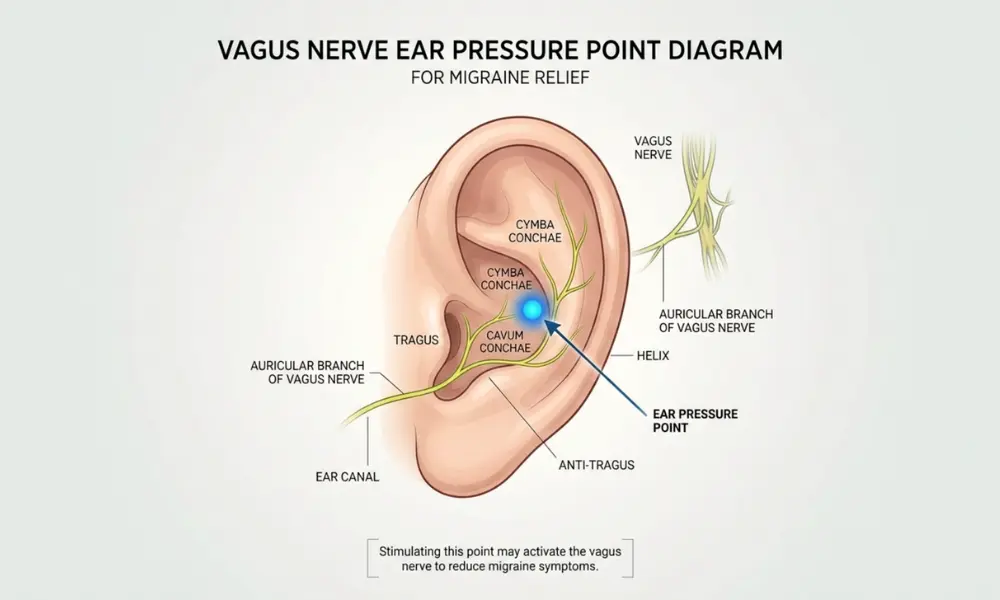
A 2017 case report in PMC highlighted this potential, and a London Migraine Clinic survey noted that 75% of patients reported symptomatic improvement. To separate the science from the hype, read our deep dive, Daith Piercing for Migraines: The Shocking Truth About Relief in 2026.
Does it Help with Anxiety?
The location of the daith ear piercing is called Point Zero in acupuncture. Stimulation of the vagus nerve is considered an efficient way of mood regulation and can help shift the state from fight or flight state.
Even though studies on vagus nerve stimulation in case of depression seem promising, there are still no trials supporting daith piercing as an effective therapy of anxiety disorders. The relief brought by the procedure can be attributed both to the physiological effect and self-expression.
Left Side or Right Side: Which Ear Should You Choose?
In case you are considering getting an inner ear piercing for help with pain relief, then professionals recommend you get pierced on the side which causes you the most trouble. In case your migraines happen bilaterally, first pierce the one which suffers from the most frequent dominant pains.
Should you be seeking just an aesthetic cartilage piercing, it is totally your choice which side to pierce. Most people prefer to pierce the side which matches their other piercings in terms of symmetry or the side which they do not talk on the phone with.
Pro Tip: You should never pierce both ears at the same time since healing will take 6-12 months.
Daith Piercing Cost: The Full Breakdown
Budgeting for a daith piercing is about more than the sticker price; it is an investment in a safe body modification that lasts. In the USA, the base fee typically ranges from $40 to $80, plus the cost of initial jewelry. High-quality implant-grade titanium usually adds $20 to $50, while solid 14k gold options start around $60. For professional advice on value, see our 2026 Daith Piercing Cost Guide: 5 Proven Secrets to Save Money Safely.
Estimated Investment for a Daith Ear Piercing
| Expense Category | Estimated Price Range |
| Studio Piercing Fee | $40 – $80 |
| Titanium Initial Jewelry | $20 – $50 |
| 14k Gold Initial Jewelry | $60 – $200+ |
| Aftercare Saline Spray | $10 – $15 |
| Professional Tip (20%) | $12 – $30 |
| Total Estimated Visit | $82 – $175+ |
Daith Piercing Jewelry: Selecting the Ideal Metal and Gauge
Choosing the right jewelry is a functional necessity for a successful cartilage piercing. Because the inner ear sits in a high-tension area of the ear fold, the material and size you select will directly impact your long-term comfort and healing speed.
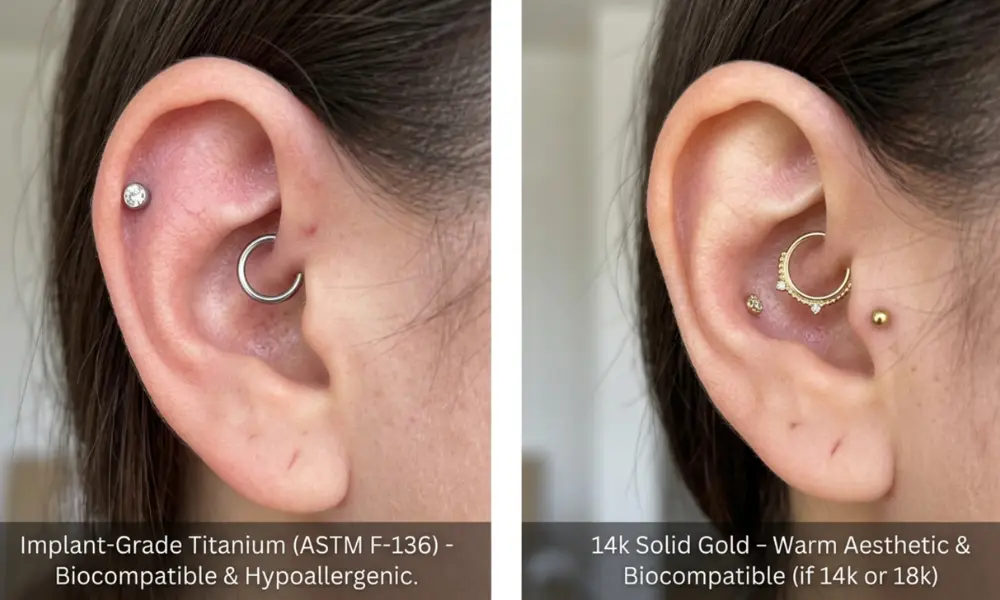
The standard size for an inner ear piercing is 16 gauge (1.2mm), though some piercers opt for 14 gauge (1.6mm) to ensure a more secure fit.
Top-Tier Metals for a Daith Piercing
The material of your jewelry acts as the foundation for your body modification journey. Experts recommend these specific metals:
| Jewelry Material | Why Experts Recommend It | Best For |
| Implant-Grade Titanium | Top choice; lightweight, nickel-free, and ASTM F136 certified. | Initial healing and sensitive skin. |
| Niobium | Hypoallergenic and softer than titanium; highly biocompatible. | Severe metal allergies or sensitivities. |
| Solid 14k/18k Gold | Premium, biocompatible metal that supports healthy tissue repair. | Long-term wear (avoid plated options). |
| Surgical Steel | Durable and cost-effective; must be implant-grade quality. | Budget-friendly sets (if no nickel allergy). |
| Avoid | Sterling silver and acrylic; these oxidize or harbor bacteria. | Never use in a fresh or healing wound. |
For a curated look at the top trends, browse our Best Daith Piercing Jewelry Styles in 2026: Expert Buying Guide to find a style that fits your aesthetic perfectly.
Who Should NOT Get a Daith Piercing: Critical Red Flags
While a daith piercing is a top-tier body modification, it is not a safe choice for everyone. Because cartilage piercing relies on a very specific healing environment, certain health conditions can lead to serious complications.
Health Factors That Increase Your Risk
-
Blood Thinners and Hemophilia: Medications like aspirin or clotting disorders create a high risk of persistent bleeding and slow down the initial healing at the ear fold.
-
Diabetes: High blood sugar impairs your body’s ability to repair tissue. Since the inner ear already has limited blood flow, healing can become stagnant and prone to infection.
-
Autoimmune Conditions: If your immune system is compromised, your body may overreact to the jewelry or fail to close the wound, leading to chronic inner ear piercing issues.
-
Active Infections: Piercing near a current ear infection can trap bacteria deep within the ear anatomy, potentially causing a much more serious medical situation.
-
Keloid-Prone Skin: If you have a history of thick, raised scarring, a daith ear piercing may trigger a keloid that requires surgical intervention to remove.
-
Pregnancy: It is best to wait, as pregnancy-related immune changes and diverted nutrients can significantly stall cartilage piercing recovery.
Understanding these contraindications is a vital part of any daith piercing guide. If you have any of these concerns, consult a doctor before visiting a studio.
Final Thoughts: Your Journey to a Perfect Daith Piercing
Getting a daith piercing is a big commitment to your personal style and wellness. Healing takes 6 to 12 months , daily patience and consistent aftercare . The end result is one of the most visually striking and meaningful forms of body modification available .
At daithpiercing we are proud to be the most complete resource available on the web, giving you all of the expert information and technical details that you won’t find anywhere else. From working out what’s causing that irritation bump to choosing your first solid gold hoop, we’re here to help you every step of the way.
Frequently Asked Questions
How painful is a daith piercing compared to others?
Most people rank the daith piercing as a 5 or 6 out of 10, describing it as a sharp, intense pressure rather than a quick sting. Because the cartilage in the ear fold is quite thick, the sensation lasts slightly longer than a standard lobe or helix piercing.
Can I wear earbuds or headphones with a new daith piercing?
You should avoid using earbuds or in-ear headphones for at least the first 2 to 4 months of the healing process. These devices can introduce harmful bacteria to the inner ear and put physical pressure on the jewelry, leading to painful irritation bumps.
How long does it take for a daith piercing to fully heal?
A daith ear piercing typically takes between 6 and 12 months to heal completely from the inside out. Even if it looks fine on the surface after a few weeks, the internal cartilage piercing tissue remains fragile and prone to damage for nearly a year.
Is it normal for my daith piercing to have a small bump?
Small bumps are very common and are usually caused by minor irritation, such as sleeping on the ear or using harsh cleaning products. If the bump is painless and fluid-filled, it is likely an irritation bump, but a hot, throbbing, or spreading red bump may indicate an inner ear piercing infection.
Does the daith piercing actually work for migraine relief?
While there is significant anecdotal evidence and some clinical surveys suggesting relief, there are currently no large-scale medical trials that prove it as a cure. Many experts believe the relief comes from stimulating the vagus nerve within the ear anatomy, similar to auricular acupuncture.