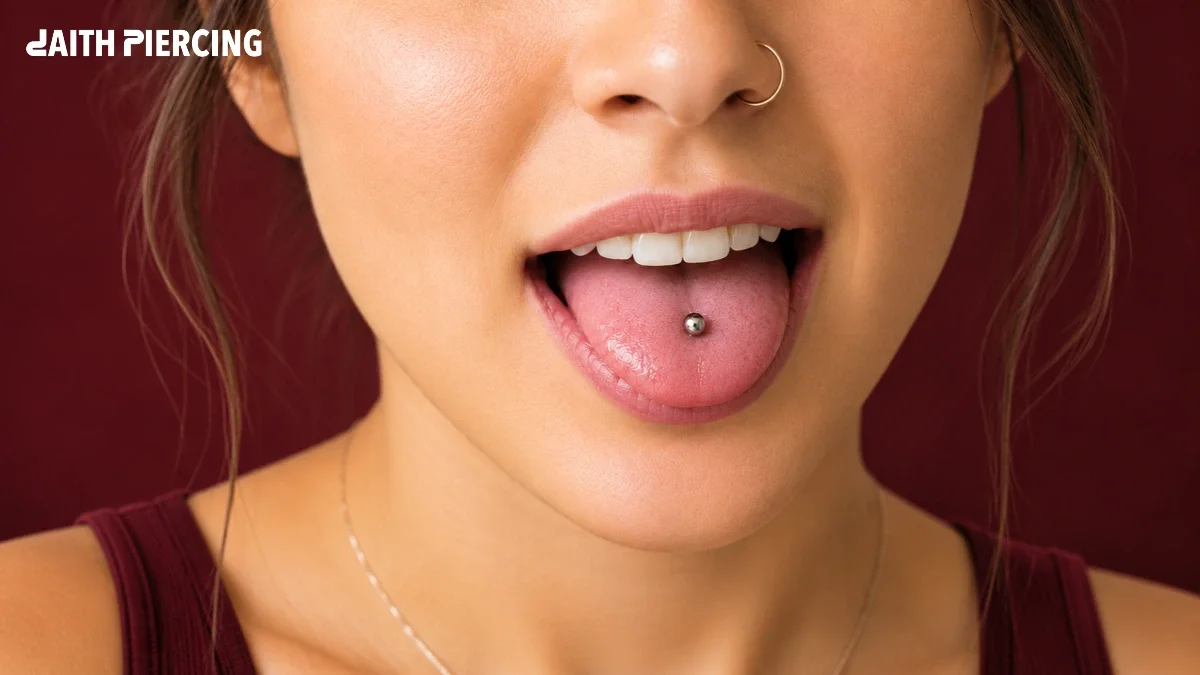
A tongue piercing can look simple from the outside. It’s usually a small piece of jewelry sitting through the middle of the tongue, but there’s more to it than choosing a barbell and booking an appointment.
Your tongue is sensitive, contains many blood vessels, and plays an important role in speaking, eating, and swallowing. That’s why placement, jewelry, hygiene, and healing deserve careful attention.
A tongue piercing is usually placed vertically through the middle of the tongue. The Association of Professional Piercers (APP) estimates that a standard tongue piercing takes around six to eight weeks to heal. However, healing varies, and complications can make the process longer.
At DaithPiercing, this guide covers what to expect before getting one, how to care for it, which jewelry is commonly used, and the risks worth understanding first.
Key Takeaways
- A standard tongue piercing usually uses a straight barbell.
- Typical healing takes around six to eight weeks, although individual results vary.
- Swelling and tenderness are common during early healing.
- Implant-quality jewelry and correct sizing matter.
- Poorly fitted or frequently moved jewelry can damage teeth and gums.
- The ADA advises against cosmetic oral piercings because of possible complications.
- Severe swelling, breathing problems, or suspected infection need medical attention.
What Is a Tongue Piercing?
A tongue piercing is an oral piercing where jewelry passes through the tongue, usually along its centre line. The most familiar style is the standard vertical tongue piercing, which uses a straight barbell with a decorative ball at each end.
Unlike an ear piercing, this placement is inside the mouth. That means saliva, food particles, oral bacteria, and everyday habits can all affect the healing process.
The tongue also moves constantly. You use it when talking, chewing, swallowing, and cleaning your teeth. So even a small piercing can take some getting used to.
What Are the Different Types of Tongue Piercings?
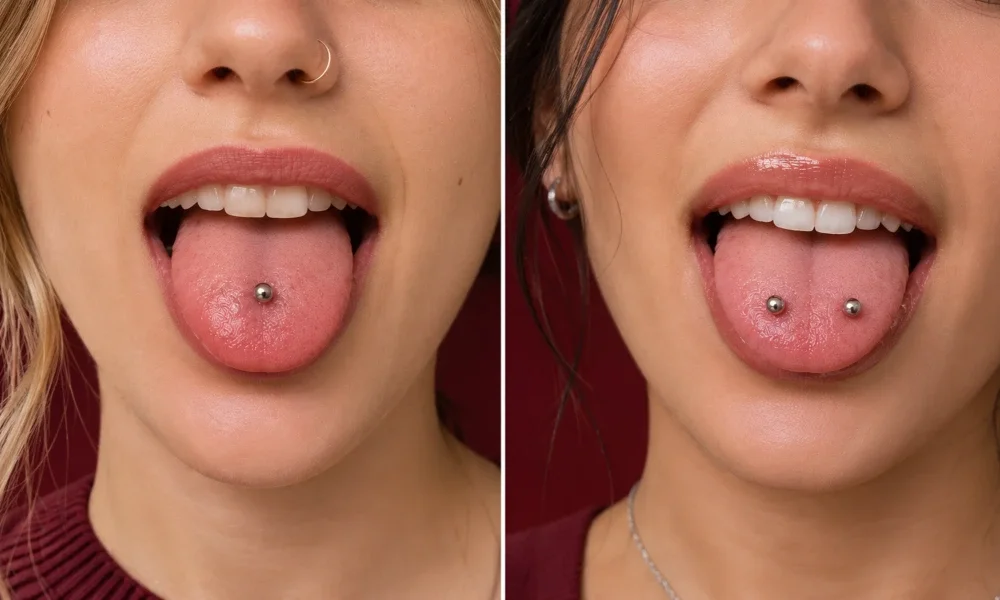
Not every tongue piercing follows the same placement. The most suitable option depends on tongue anatomy, the position of blood vessels, and professional assessment.
1. Standard Tongue Piercing
This is the classic style. It usually passes vertically through the centre of the tongue, with one ball visible on the upper surface and another underneath.
A straight barbell is commonly used. The exact position should be selected by an experienced professional after checking the tongue.
2. Venom Tongue Piercings
Venom piercings involve two separate vertical piercings placed side by side, creating a paired appearance.
They require more than one piercing channel and may involve additional swelling and aftercare. Not every tongue is suitable for this arrangement.
3. Horizontal Tongue Piercing
A horizontal tongue piercing passes across the tongue rather than vertically through it. This placement is sometimes promoted online, but it raises significant concerns about tissue damage, movement, and complications.
It should not be treated as a simple alternative to a standard tongue piercing. Discuss the risks with a qualified healthcare professional before considering unusual oral placements.
How Much Does a Tongue Piercing Hurt?
Pain is personal, so there isn’t one number that applies to everyone. Some people describe the piercing itself as a quick sharp sensation, while others find the pressure and swelling afterward more uncomfortable.
The tongue is a sensitive and highly supplied area. Bleeding, tenderness, and swelling can happen after the procedure.
Your experience may also depend on placement, individual sensitivity, technique, and how your body responds. Be cautious of anyone promising that a tongue piercing is completely painless.
How Long Does a Tongue Piercing Take to Heal?
A standard tongue piercing generally takes around six to eight weeks to heal, according to the Association of Professional Piercers.
That is an estimate rather than a guaranteed finish date. The tongue may feel more comfortable before the piercing channel has fully healed.
During the early days, swelling and tenderness are common. Eating and speaking may feel awkward, and the original jewelry is usually longer to leave room for swelling.
Don’t change the jewelry just because the swelling has gone down. A qualified piercer should check the piercing and advise when a shorter barbell is appropriate.
What Jewelry Is Best for a Tongue Piercing?
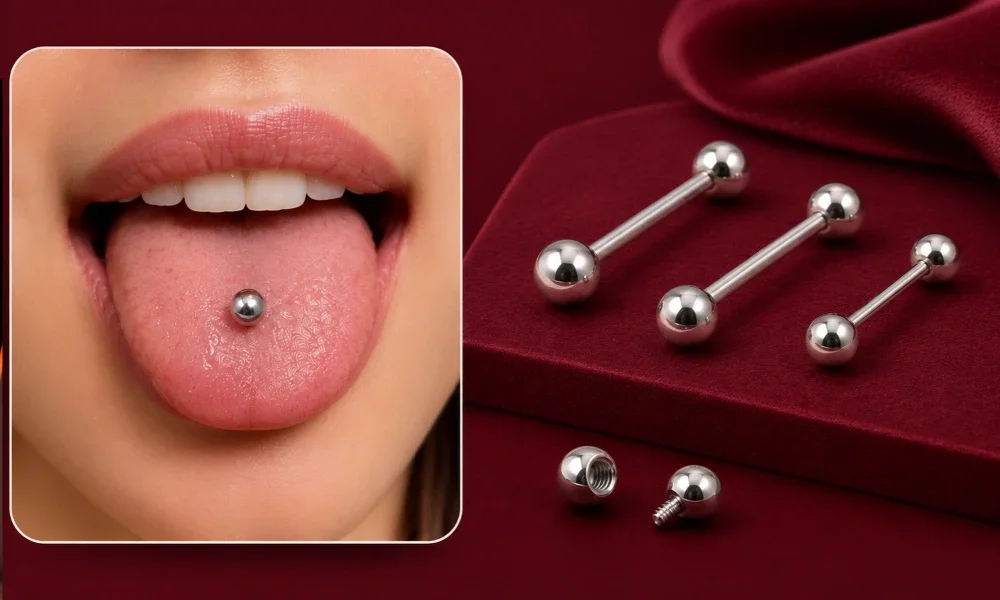
A standard tongue piercing commonly uses a straight barbell. It has a removable ball at each end, and the length needs to suit the tongue and allow for initial swelling.
Material matters because jewelry stays in contact with oral tissue.
Common Jewelry Materials
- Implant-grade titanium: Often chosen for its suitability in initial body jewelry when it meets recognized material standards.
- Suitable implant-grade steel: Can be appropriate when it meets relevant specifications and the wearer has no sensitivity to its components.
- Biocompatible alternatives: Some materials may be suitable for particular situations, but they should be assessed by a knowledgeable professional.
Avoid cheap, poorly finished, or unknown-quality jewelry. Rough surfaces and incorrect sizing can irritate tissue and increase the chance of damage.
Why Does Barbell Size Matter?
A barbell that is too short can press into swollen tissue. One that stays too long after swelling settles may hit your teeth and gums more often.
This is why professional jewelry checks matter. The goal is a suitable fit, not simply choosing the smallest or most decorative barbell.
How Should You Care for a New Tongue Piercing?

Aftercare needs consistency. The mouth naturally contains bacteria, so keeping your oral hygiene routine in good shape is especially important.
The American Dental Association recommends maintaining regular oral hygiene and using an alcohol-free mouthrinse around the healing period.
Here are practical habits to follow:
- Wash your hands before touching the jewelry.
- Brush your teeth gently with a soft toothbrush.
- Use an alcohol-free mouthrinse as advised by your piercer or dental professional.
- Drink enough water to keep your mouth comfortable.
- Avoid playing with, biting, or clicking the barbell against your teeth.
- Choose foods that are comfortable to eat during early healing.
- Follow professional advice about cleaning and jewelry checks.
Avoid using strong cleaning products, alcohol-based mouthwash, or home remedies without professional guidance. More cleaning doesn’t automatically mean better healing.
What Can You Eat After Getting a Tongue Piercing?
Eating can be uncomfortable while your tongue is swollen. Soft, cool foods may be easier to manage during the first few days.
Consider foods that don’t require much chewing, such as yogurt, soft eggs, mashed vegetables, and other comfortable options. Drink water regularly and avoid foods that irritate the area.
Very hot, spicy, hard, or crunchy foods may feel uncomfortable. Alcohol and smoking can also irritate healing tissue, so follow your piercer’s and healthcare professional’s advice about avoiding them. If you’re exploring other oral piercing styles, such as snake bite piercings, remember that each placement has its own healing and aftercare considerations. You can also explore our guide to different piercing types and placements to understand how they differ.
Don’t force yourself to eat normally if your tongue is too swollen or painful. If swelling interferes with swallowing or breathing, seek emergency medical help.
What Are the Risks of a Tongue Piercing?
This is the part worth reading carefully before making a decision. Oral piercings can cause problems beyond the initial healing period.
The American Dental Association identifies several complications associated with tongue and other oral piercings.
1. Tooth Damage
A metal barbell can repeatedly hit or rub against your teeth. Over time, this may contribute to chipped teeth, cracks, or enamel wear.
2. Gum Recession
Repeated contact between jewelry and the gums can damage gum tissue. Receding gums may expose more of a tooth and create sensitivity.
3. Infection
The mouth contains many bacteria, and a fresh piercing creates an opening in the tissue. Poor hygiene, unsterile equipment, and unnecessary handling can increase infection risk.
4. Swelling and Bleeding
Some swelling is expected after a tongue piercing. However, severe swelling can become dangerous if it affects swallowing or breathing. Bleeding that does not stop also needs medical attention.
5. Jewelry Becoming Embedded
If jewelry is too short or swelling is severe, part of the barbell may become trapped in the tongue tissue. This can require medical treatment.
The ADA advises against cosmetic oral piercings because of these potential health complications. Understanding the risks is essential before deciding whether the appearance is worth them.
How Can You Tell If a Tongue Piercing Is Infected?
Some tenderness and swelling can happen during normal healing. The important thing is to notice when symptoms become worse instead of gradually improving.
Possible signs of infection include:
- Increasing pain or swelling.
- Unusual discharge or pus.
- A bad smell around the piercing.
- Fever, chills, or feeling generally unwell.
- Increasing redness or tenderness around the area.
Seek prompt medical advice if you suspect an infection. Severe tongue swelling, difficulty swallowing, or difficulty breathing requires emergency care.
Don’t remove the jewelry yourself if you suspect infection unless a healthcare professional advises you to do so.
Is a Tongue Piercing Worth It?
That depends on what you want and how comfortable you are with the risks.
Some people like the appearance and personal expression that tongue jewelry offers. However, the piercing can affect everyday activities and may create long-term dental problems.
Before deciding, consider your oral health, existing dental work, lifestyle, and ability to follow aftercare instructions. If you’re comparing oral piercing options, learning about Medusa piercing placement can also help you understand how different placements affect appearance and jewelry choices. Speak with a dentist and an experienced professional piercer so you understand both the health concerns and the placement requirements.
Frequently Asked Questions
How long does a tongue piercing take to heal?
A standard tongue piercing generally takes around six to eight weeks. Healing can take longer if irritation or complications develop.
Can you eat normally after a tongue piercing?
Eating may feel uncomfortable during the first few days. Soft foods and careful chewing can help while swelling settles.
Does a tongue piercing damage your teeth?
It can. Repeated contact between the barbell and teeth may cause chips, cracks, or enamel wear.
Can you change your tongue piercing jewelry yourself?
It’s better to have a qualified piercer check the fit and advise when changing jewelry is appropriate. Changing it too early can irritate the healing channel.
What should you do if your tongue piercing becomes infected?
Contact a healthcare professional promptly. Seek emergency help if you have severe swelling or trouble swallowing or breathing.
Is a tongue piercing safe for everyone?
No. Oral anatomy, dental health, medical conditions, and individual risks differ. A dentist and qualified piercer can help explain whether the placement is suitable, although no oral piercing is completely risk-free.
Final Thoughts
A tongue piercing may look like a small change, but it involves a sensitive part of your body that you use throughout the day. Healing, jewelry fit, oral hygiene, and dental health all deserve attention.
If you’re considering one, take time to understand the possible complications rather than making the decision based on appearance alone. A conversation with your dentist is a sensible first step.
Disclaimer: This article is for general educational purposes and does not replace professional medical or dental advice. Tongue piercings carry risks, including infection, swelling, tooth damage, and gum injury. Speak with a qualified healthcare professional about personal health concerns and consult an experienced piercer about placement and jewelry.