Key Takeaways
- Choose ASTM F136 titanium for the safest healing experience.
- Titanium is often the preferred option over surgical steel for sensitive skin.
- Niobium piercing jewelry is another excellent hypoallergenic choice.
- Solid 14K or 18K gold is suitable when purchased from reputable manufacturers.
- Avoid plated jewellery and sterling silver during healing.
- Wear the correct gauge and diameter for your ear anatomy.
- Clean your piercing with sterile saline solution and avoid unnecessary movement.
- Always seek advice from a professional piercer before changing jewellery.
Quick Answer
The best daith piercing jewelry for most people is implant grade titanium piercing made from ASTM F136 titanium. It is lightweight, highly biocompatible, and suitable for sensitive skin.
Other excellent choices include high-quality niobium and solid 14K or 18K gold. Surgical steel can also work well, but people with a surgical steel allergy or nickel sensitivity should choose titanium instead.
What Is Daith Piercing Jewelry?
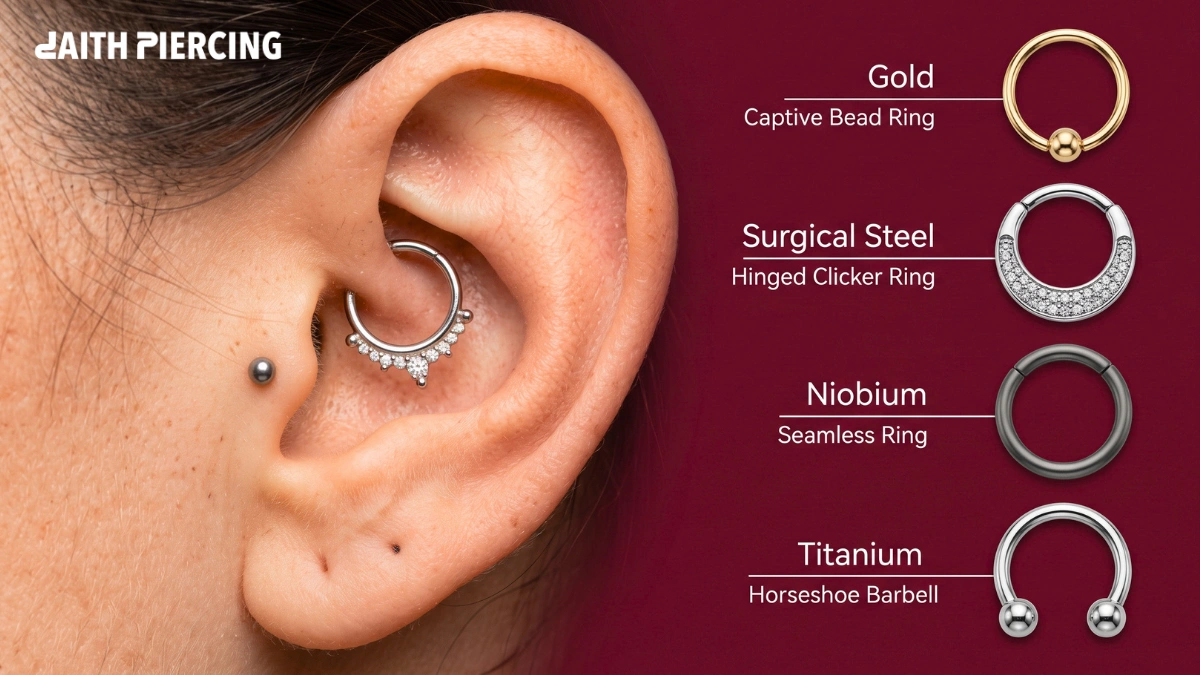
Daith piercing jewelry is specially designed for the fold of cartilage just above the ear canal. Because this area is curved and relatively small, not every type of ear jewellery fits comfortably.
The right piece should sit naturally inside the ear without creating pressure. It should also allow enough room for the initial swelling that commonly happens during the first few weeks after the piercing.
Unlike standard earrings, daith jewellery is made with specific gauges and diameters to fit the anatomy of the inner ear. A professional piercer will usually recommend the most suitable size based on your ear shape.
Why Choosing the Right Jewelry Matters
The jewellery you wear plays a major role in how your piercing heals. Even a perfectly placed piercing can become irritated if the metal is poor quality or the size is incorrect.
Choosing body-safe materials helps lower the risk of allergic reactions and irritation. It also makes cleaning easier because high-quality metals are less likely to corrode or develop rough surfaces.
Good jewellery offers several benefits:
| Benefit | Why It Matters |
|---|---|
| Faster healing | Less irritation means the body can recover more comfortably. |
| Better comfort | Proper sizing reduces pressure on the cartilage. |
| Lower allergy risk | High-quality metals contain little or no nickel. |
| Longer lifespan | Premium jewellery resists scratches and corrosion. |
| Better appearance | High-quality finishes stay shiny for years. |
Investing in quality jewellery may cost more initially, but it often saves money by reducing complications and the need for replacements.
Types of Daith Piercing Jewelry
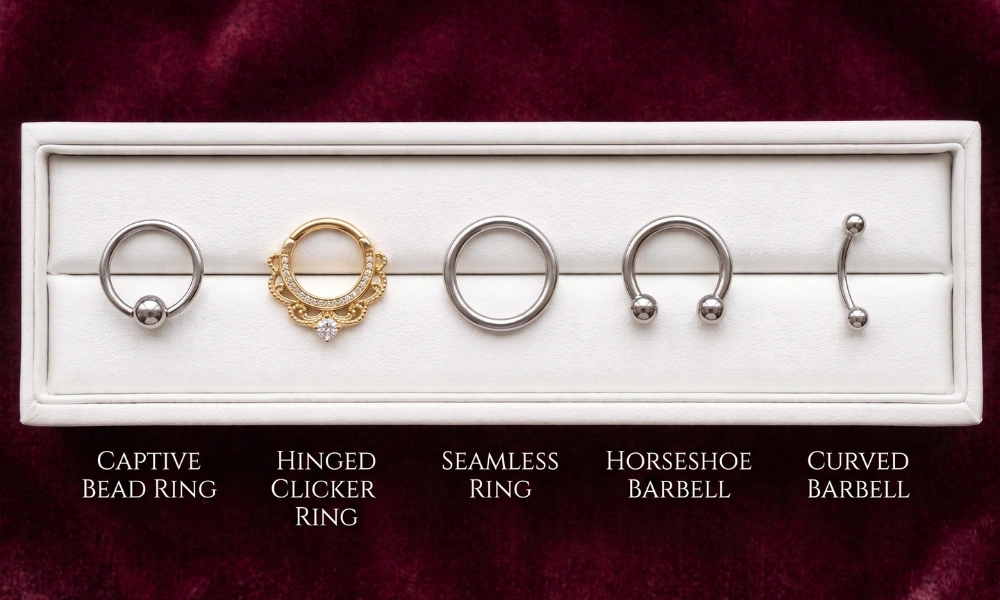
There are several styles available, and each has its own advantages. Some are better suited for healing, while others are chosen mainly for their appearance.
Captive Bead Ring (CBR)
A captive bead ring is one of the classic choices for daith piercings. It features a circular ring with a removable bead that holds the jewellery securely in place.
Many professional piercers recommend this style because it stays stable during healing and provides enough room for natural swelling.
Best For
- Fresh piercings
- Traditional look
- Everyday wear
Pros
- Secure fit
- Comfortable
- Easy to clean
- Widely available
Cons
- Can be difficult to remove without tools
- Replacing the bead requires practice
Hinged Clicker Ring
Clicker rings have become one of the most popular styles in recent years. Instead of using a separate bead, they include a hinged section that clicks open and closed.
This makes jewellery changes much easier after the piercing has completely healed.
Best For
- Healed piercings
- Decorative styles
- Easy jewellery changes
Pros
- Very convenient
- Secure closure
- Available in countless designs
- Comfortable for daily use
Cons
- Not every decorative design is suitable during early healing
- Low-quality hinges may loosen over time
Seamless Ring
A seamless ring creates the appearance of a continuous circle without a visible clasp. This gives the piercing a clean and elegant look.
Although visually appealing, opening and closing this style correctly often requires experience.
Best For
- Minimalist jewellery
- Fully healed piercings
Pros
- Elegant appearance
- Smooth finish
- Lightweight
Cons
- Harder to insert
- May require professional assistance
Horseshoe Barbell
Also known as a circular barbell, this style has two removable balls at each end.
It offers a distinctive appearance and allows for different decorative ends, including spikes, gems, and simple metal balls.
Best For
- Unique styling
- Healed piercings
Pros
- Easy to personalise
- Comfortable
- Secure fastening
Cons
- The visible ends may catch on hair or clothing
- Less discreet than a ring
Curved Barbell
Although not as common as rings, some piercers use curved barbells depending on the client’s ear anatomy.
This style follows the natural curve of the cartilage and can be useful in specific situations.
Best For
- Certain ear shapes
- Professional recommendations
Pros
- Comfortable when properly fitted
- Less movement during healing
Cons
- Doesn’t suit every anatomy
- Fewer decorative options
Best Materials for Daith Piercing Jewelry
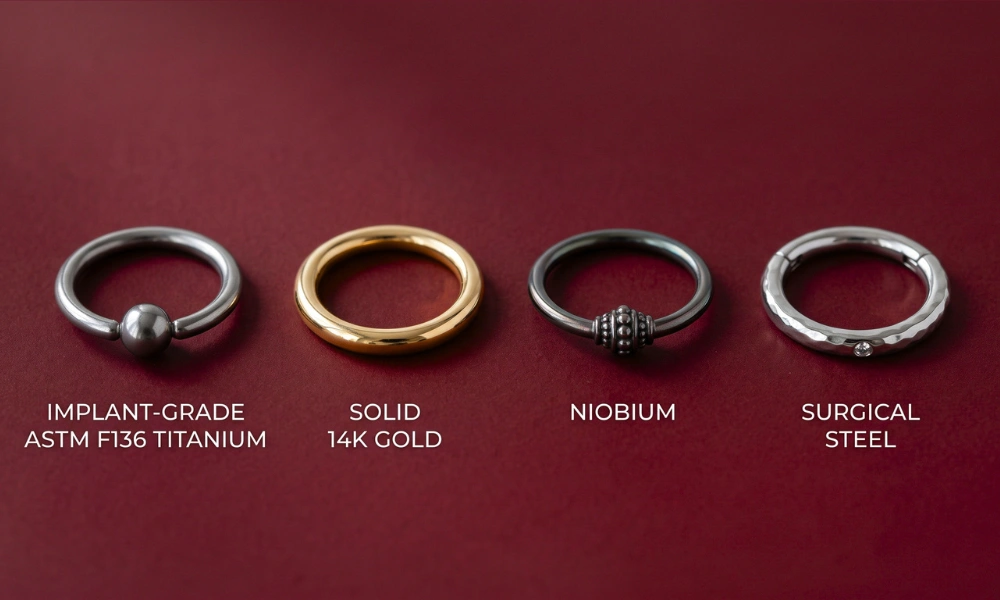
The metal you choose can have a bigger impact than the jewellery style itself. High-quality materials are smoother, safer, and more resistant to corrosion.
Implant Grade Titanium Piercing
Most professional piercers consider implant grade titanium piercing to be the safest option for new daith piercings.
Medical-grade titanium contains little to no nickel, making it an excellent choice for sensitive skin. It is also incredibly lightweight, so it places less pressure on healing cartilage.
When shopping, look specifically for ASTM F136 titanium. This certification confirms that the material meets strict medical standards for implant use.
Advantages
- Hypoallergenic
- Extremely lightweight
- Rust resistant
- Highly durable
- Excellent for healing
Best For
- New piercings
- Sensitive ears
- People with metal allergies
Surgical Steel
Surgical steel remains one of the most common materials in body jewellery because it is durable and affordable.
However, not every type of surgical steel is completely nickel free. People with a surgical steel allergy or known nickel sensitivity may experience irritation.
If you have never reacted to stainless steel before, it can be a suitable option. Otherwise, titanium is usually the safer choice.
Advantages
- Affordable
- Strong
- Easy to polish
- Long-lasting
Drawbacks
- May contain nickel
- Not ideal for everyone with sensitive skin
Niobium Piercing Jewelry
Another excellent choice is niobium piercing jewelry. Like titanium, niobium is highly biocompatible and works well for many people with sensitive skin.
One advantage of niobium is that it can be heat-treated to produce beautiful colours without using paint or coatings.
Many people choose coloured niobium rings for a unique yet safe look.
Gold vs Titanium Piercing: Which One Is Better?
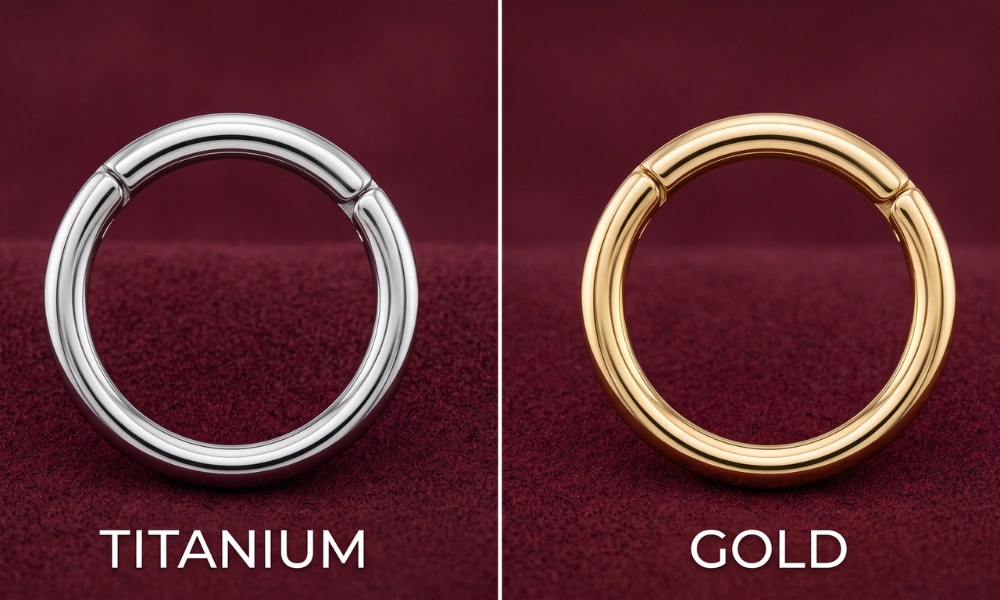
Both gold and titanium are excellent materials, but they serve different purposes. Your choice depends on whether your piercing is still healing or has fully healed.
Titanium is usually the first recommendation for fresh piercings because it is lightweight, durable, and highly biocompatible. Gold offers a more luxurious appearance but should only be high-quality solid gold, not gold-plated jewellery.
Gold vs Titanium Comparison
| Feature | ASTM F136 Titanium | 14K or 18K Solid Gold |
|---|---|---|
| Best for healing | ⭐⭐⭐⭐⭐ | ⭐⭐⭐⭐ |
| Hypoallergenic | Excellent | Very Good (nickel-free alloys preferred) |
| Weight | Very light | Heavier |
| Durability | Excellent | Very Good |
| Corrosion resistance | Excellent | Excellent |
| Price | Moderate | Higher |
| Everyday wear | Excellent | Excellent |
If you’re unsure which to choose, ASTM F136 titanium remains the safest option for most people, especially during the healing period.
What Is the Safest Metal for Ear Piercing?
When professionals discuss the safest metal for ear piercing, four materials consistently stand out.
Implant Grade Titanium
This is widely considered the safest choice because it is designed for medical implants. It rarely causes allergic reactions and performs exceptionally well during healing.
Niobium
Niobium is another excellent option. It is naturally hypoallergenic and does not require protective coatings.
Solid Gold
Choose only solid 14K or 18K gold from a trusted manufacturer. Avoid gold-plated jewellery, as the coating can wear away and expose lower-quality metals underneath.
High-Quality Surgical Steel
This can work well for many people, but anyone with nickel sensitivity should proceed with caution because some surgical steel alloys contain small amounts of nickel.
Material Comparison at a Glance
| Material | Safe for Healing | Allergy Risk | Durability | Recommended |
|---|---|---|---|---|
| ASTM F136 Titanium | Excellent | Very Low | Excellent | ⭐⭐⭐⭐⭐ |
| Niobium | Excellent | Very Low | Excellent | ⭐⭐⭐⭐⭐ |
| 14K Gold | Very Good | Low | Excellent | ⭐⭐⭐⭐ |
| 18K Gold | Good | Low | Softer Metal | ⭐⭐⭐⭐ |
| Surgical Steel | Good | Moderate | Excellent | ⭐⭐⭐ |
| Sterling Silver | Not Recommended | Higher | Moderate | ⭐ |