Key Takeaways
- New daith piercings are more sensitive to sun and heat.
- Avoid applying sunscreen directly onto a healing piercing.
- Wear a hat or stay in the shade for better protection.
- Tanning beds expose healing skin to intense UV radiation and are best avoided.
- Swimming in oceans, pools, lakes, or hot tubs should wait until healing is complete.
- Clean the piercing only as recommended by your piercer.
- Watch for persistent redness, swelling, or unusual discharge and seek professional advice if symptoms worsen.
- With consistent aftercare and sensible sun protection, most daith piercings heal successfully without complications.
Quick Answer
Yes, daith piercing sun exposure can affect healing if the piercing is new. Direct sunlight, excessive heat, and UV rays may irritate the skin, increase swelling, and make the healing process take longer. During the first few months, it is better to keep the piercing shaded and avoid applying sunscreen directly to the healing wound.
If you spend time outdoors, wear a wide-brimmed hat, stay in the shade whenever possible, and follow your piercer’s aftercare instructions. Once the piercing has completely healed, normal sun exposure becomes much less of a concern.
Does Sun Exposure Affect a New Daith Piercing?
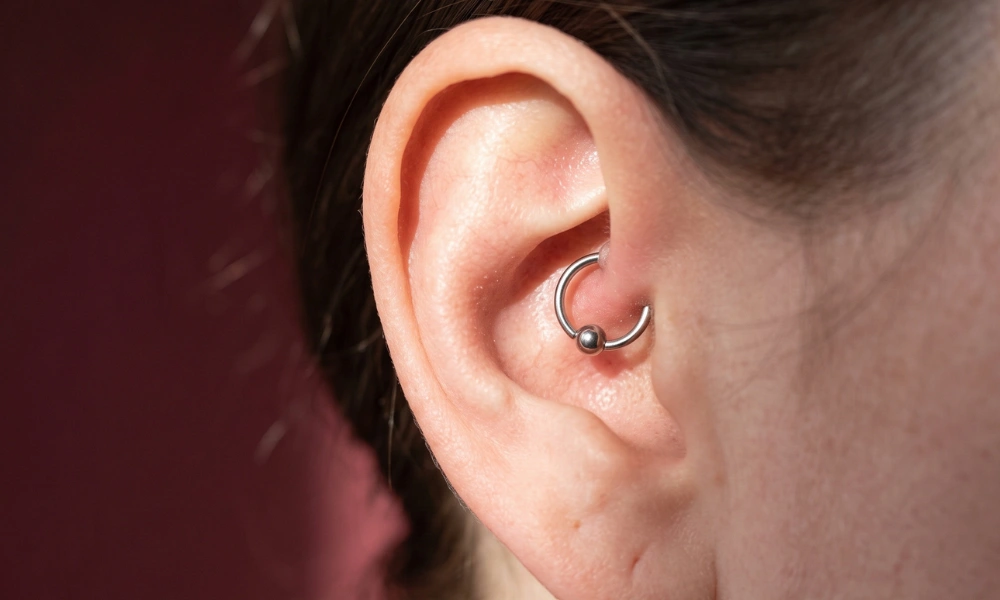
The short answer is yes. A fresh daith piercing is an open wound that needs time to rebuild healthy skin. During this period, the tissue is more delicate than normal skin and reacts more easily to environmental factors.
Sunlight produces ultraviolet (UV) rays that can dry out the skin and increase inflammation. While a few minutes outside is usually not harmful, long periods in direct sunlight may leave the area feeling hot, swollen, or sore.
Heat is another factor people often overlook. High temperatures can increase blood flow around the piercing, which sometimes causes additional swelling. Sweat may also collect around the jewelry, creating an environment where bacteria can grow if the area is not cleaned properly.
Everyone heals at a different pace. Some people notice little change after being outdoors, while others develop irritation after only a short time in strong sunlight. Therefore, protecting your piercing is always the safer choice.
Why Fresh Piercings Are More Vulnerable
Unlike healed skin, a new piercing is still repairing damaged tissue. Your immune system is constantly working to close the tiny wound around the jewelry.
During this stage, the piercing is more likely to react to:
- Strong sunlight
- High temperatures
- Sweat buildup
- Dirt and dust
- Friction from hats or headphones
Because the daith sits inside the ear, it receives some natural shade. However, sunlight can still reach it depending on the angle of the sun and your hairstyle.
Why Fresh Piercings Are Sensitive to UV Rays
Ultraviolet rays affect the skin in several ways. Healthy skin can usually recover from moderate sun exposure, but healing tissue is much more fragile.
Excessive UV exposure may:
| UV Effect | Impact on a Healing Daith Piercing |
|---|---|
| Skin dryness | Makes healing tissue feel tight and irritated |
| Increased inflammation | Can cause redness and swelling |
| Heat buildup | May increase discomfort around the jewelry |
| Delayed healing | Healing may take longer if irritation continues |
| Higher sensitivity | The piercing can become sore more easily |
Although sunlight alone rarely causes an infection, irritated skin becomes easier to damage. Small cracks or dryness may also make aftercare less comfortable.
For that reason, professional piercers usually recommend limiting direct sun exposure during the early stages of healing.
Heat Can Be Just as Problematic
Many people focus only on UV rays. However, hot weather itself can affect healing.
Warm temperatures encourage sweating, especially during exercise, outdoor events, or long walks. Sweat contains salt, which can irritate fresh tissue if it stays around the piercing for long periods.
After sweating, gently rinse the area with sterile saline solution if recommended by your piercer. Avoid excessive cleaning because overwashing may also slow healing.
Can a Daith Piercing Get Sunburned?
Yes. The skin surrounding a healing piercing can become sunburned just like any other part of your body.
A sunburned piercing often feels more uncomfortable than normal because the tissue is already healing. The combination of inflammation from the piercing and inflammation from the burn can make the area noticeably more sensitive.
Common signs include:
- Redness around the ear
- Warm skin
- Tenderness
- Mild swelling
- Dry or peeling skin after several days
If your ear develops blistering, severe swelling, or significant pain, it is best to contact a healthcare professional because these symptoms may indicate a more serious problem.
Does Sunburn Slow Healing?
In many cases, yes.
When your skin is repairing both a piercing and a sunburn at the same time, your body has more healing work to do. As a result, the piercing may remain tender for longer than expected.
This is one reason experts advise protecting a healing piercing whenever you expect prolonged outdoor exposure.
Signs That Sun Exposure Is Causing Problems
Not every sore piercing is infected. Sometimes, the issue is simply irritation caused by too much sunlight or heat.
Watch for these warning signs after spending time outdoors:
| Symptom | Possible Cause |
|---|---|
| Increased redness | UV irritation |
| Mild swelling | Heat exposure |
| Dry skin | Sun damage |
| Burning sensation | Sunburn |
| Itching | Healing skin becoming dry |
These symptoms often improve after keeping the area cool, avoiding additional sun exposure, and continuing normal aftercare.
However, symptoms such as thick yellow or green discharge, worsening pain, fever, or a bad smell should not be ignored because they may indicate an infection rather than simple irritation.