If your hair looks dry, feels rough, or gets puffy the moment you step outside, hair oil can make a noticeable difference. The trick isn’t finding the heaviest oil. It is finding one that matches your hair and using just enough to smooth the lengths without leaving them overly greasy.
The best hair oils can add shine, reduce friction, soften dry ends, and make frizz easier to manage. Coconut oil has also been studied for its ability to interact with the hair shaft, while lighter oils and silicone-based formulas can give the surface a smoother feel. Hair oil cannot permanently repair split ends, but it can help damaged-looking hair feel and look better.
Key Takeaways
- The best hair oils depend on your hair type and your main concern.
- Coconut oil has evidence for interacting with the hair shaft and may suit dry or damaged lengths.
- Argan and other lightweight oils can be useful for shine and frizz control.
- Start with a small amount and focus on the mid-lengths and ends.
- Oil can improve softness, lubrication, and appearance, but it cannot permanently repair split ends.
- Your washing, brushing, heat-styling, and conditioning habits still matter.
What Makes the Best Hair Oils Work?
Some oils coat the hair surface and reduce friction. Others can move into the hair shaft to a greater degree. This matters because damaged or porous hair can lose moisture more easily and become rough, tangled, and harder to style.
Coconut oil is one of the better-studied options. Research has found that it can penetrate hair more effectively than some other oils and can affect how hair interacts with water. That does not mean coconut oil is perfect for everyone. Fine hair may look flat or oily after too much is applied.
Which Hair Oils Are Worth Trying?
There is no single oil that works best for every hair type. Think of oils as tools. The right one depends on whether your main problem is dryness, frizz, damage, or weight.
| Oil | Best suited for | What it can do | Watch out for |
|---|---|---|---|
| Coconut oil | Dry or damaged hair | Helps reduce moisture-related stress and adds softness | Can feel heavy on fine hair |
| Argan oil | Frizz and shine | Smooths the feel of hair and adds a glossy finish | Too much can look greasy |
| Jojoba oil | Fine to normal hair | Gives lightweight softness and shine | Benefits vary by formula |
| Avocado oil | Coarse, dry hair | Adds slip and softness | May weigh down fine hair |
| Grapeseed oil | Fine or oily-prone hair | Lightweight conditioning | Less substantial for very dry hair |
| Camellia oil | Dry, dull lengths | Smooth finish and shine | Product quality and formula matter |
Best Hair Oil for Dry Hair
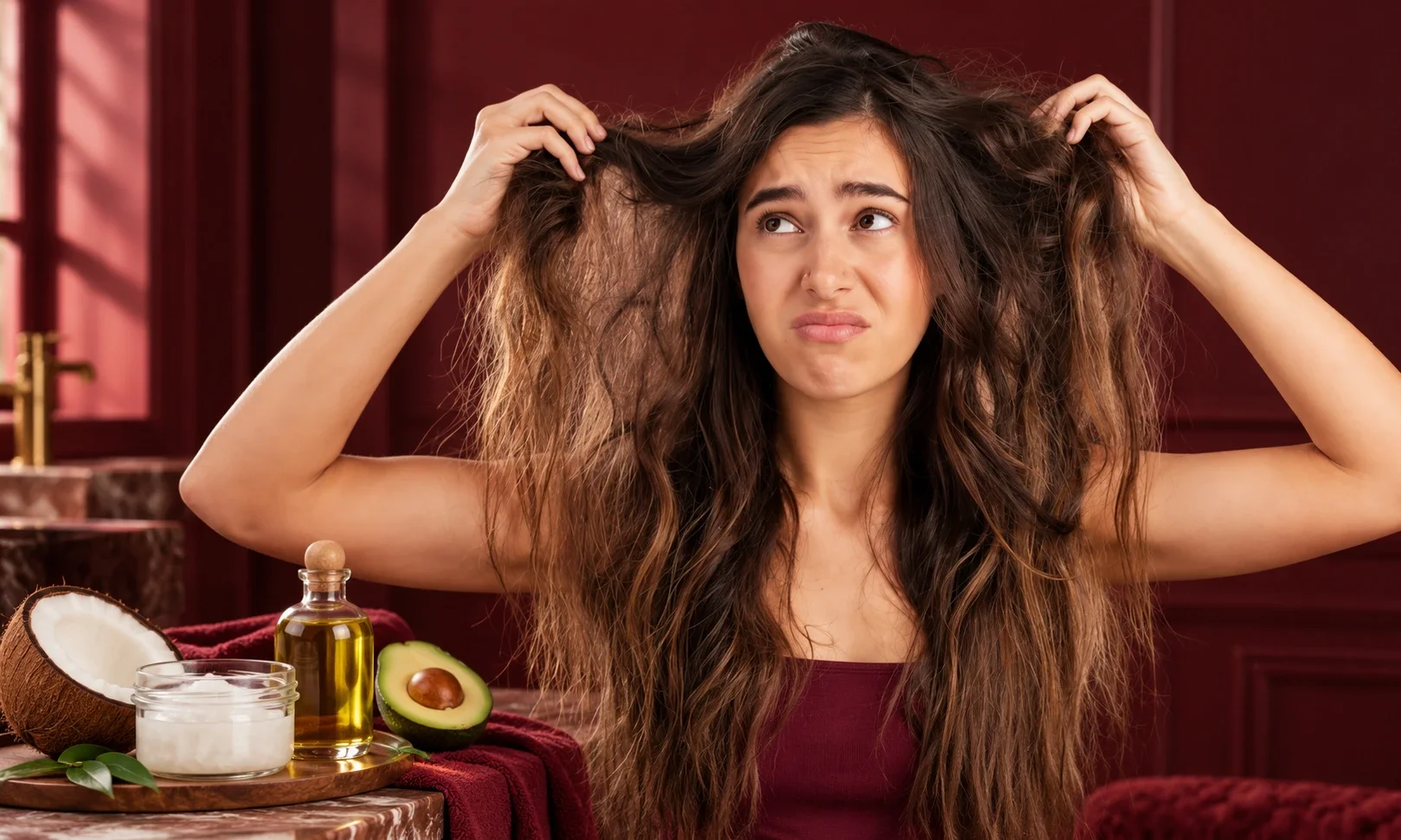
If your hair feels rough from root to tip, a richer oil can make sense. Coconut, avocado, and argan oils are common choices because they provide a more noticeable conditioning feel.
Oil does not automatically mean more moisture. It mainly helps reduce friction and can slow moisture loss. Your conditioner or leave-in product is usually doing more of the hydration work.
Best Hair Oil for Frizz
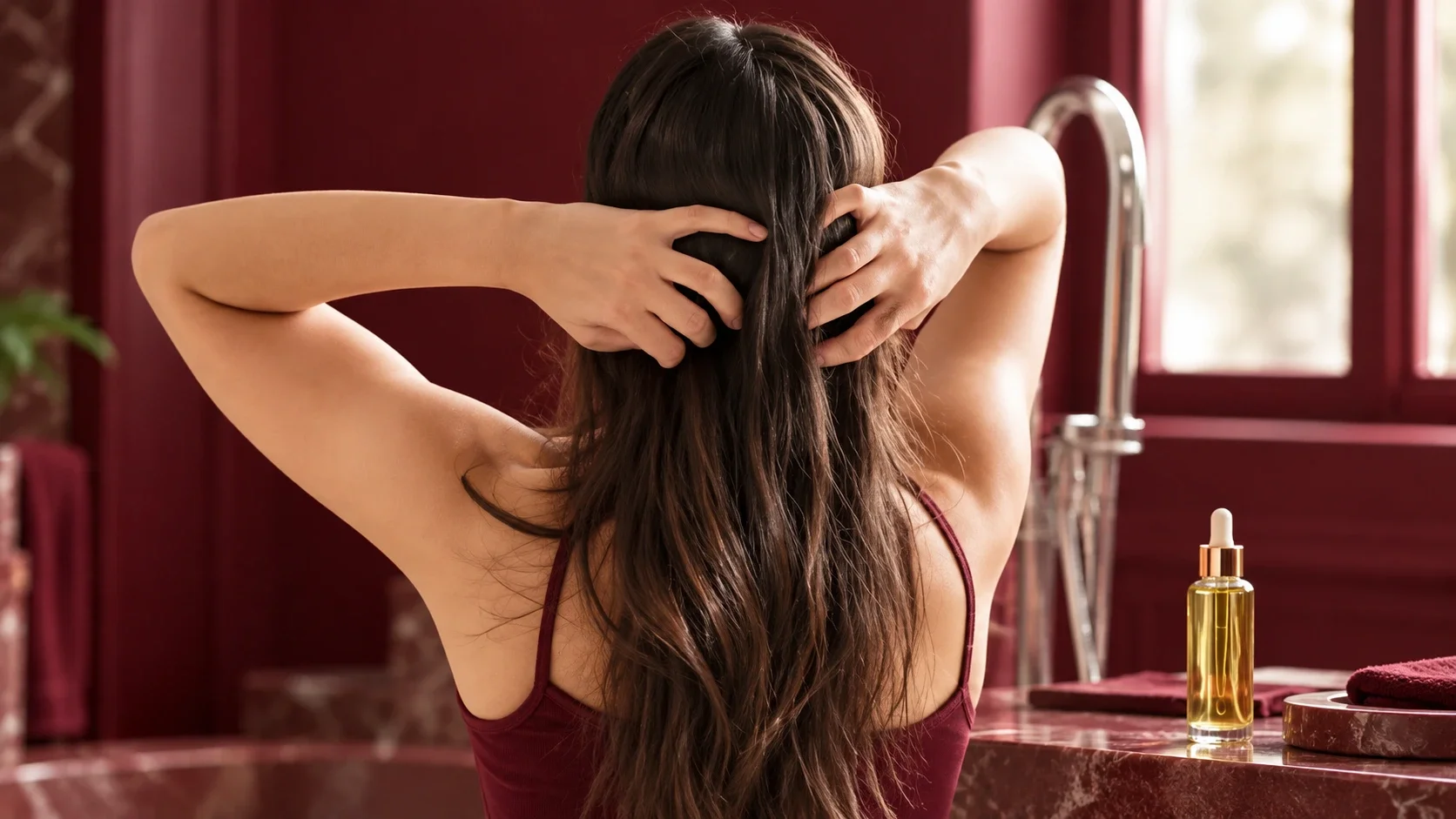
Frizz often becomes worse when the hair surface is uneven, dry, or exposed to humidity. A small amount of oil can smooth the surface and make flyaways easier to control.
If your frizz comes with obvious breakage, heat damage, or split ends, oil alone will not solve the underlying problem. Gentler styling and regular trimming may matter more.
Best Hair Oil for Shine
Want that soft, glossy finish without looking like you poured oil over your head? Use less than you think you need.
A lightweight hair oil spread between your palms can add a thin layer over the lengths. Start with a tiny amount, smooth it over the ends, then use whatever remains on the middle sections.
Can Hair Oil Actually Strengthen Damaged Hair?
This is where hair-oil claims need a little context.
Hair that has already grown out of the scalp is not living tissue, so an oil cannot rebuild a broken strand from the inside or permanently reverse split ends. What an oil can do is improve lubrication, reduce friction, and sometimes reduce the stress caused by repeated washing and styling.
Coconut oil is especially interesting because research suggests it can penetrate the hair more deeply than some other oils. That makes it a reasonable option for people dealing with dry or damaged lengths, although individual results still vary.
If your hair is regularly exposed to bleach, straighteners, curling irons, or high heat, your routine matters just as much as the oil. Dermatologists recommend reducing damaging styling habits and handling wet hair carefully because wet hair is more prone to breakage.
How Should You Use Hair Oil?
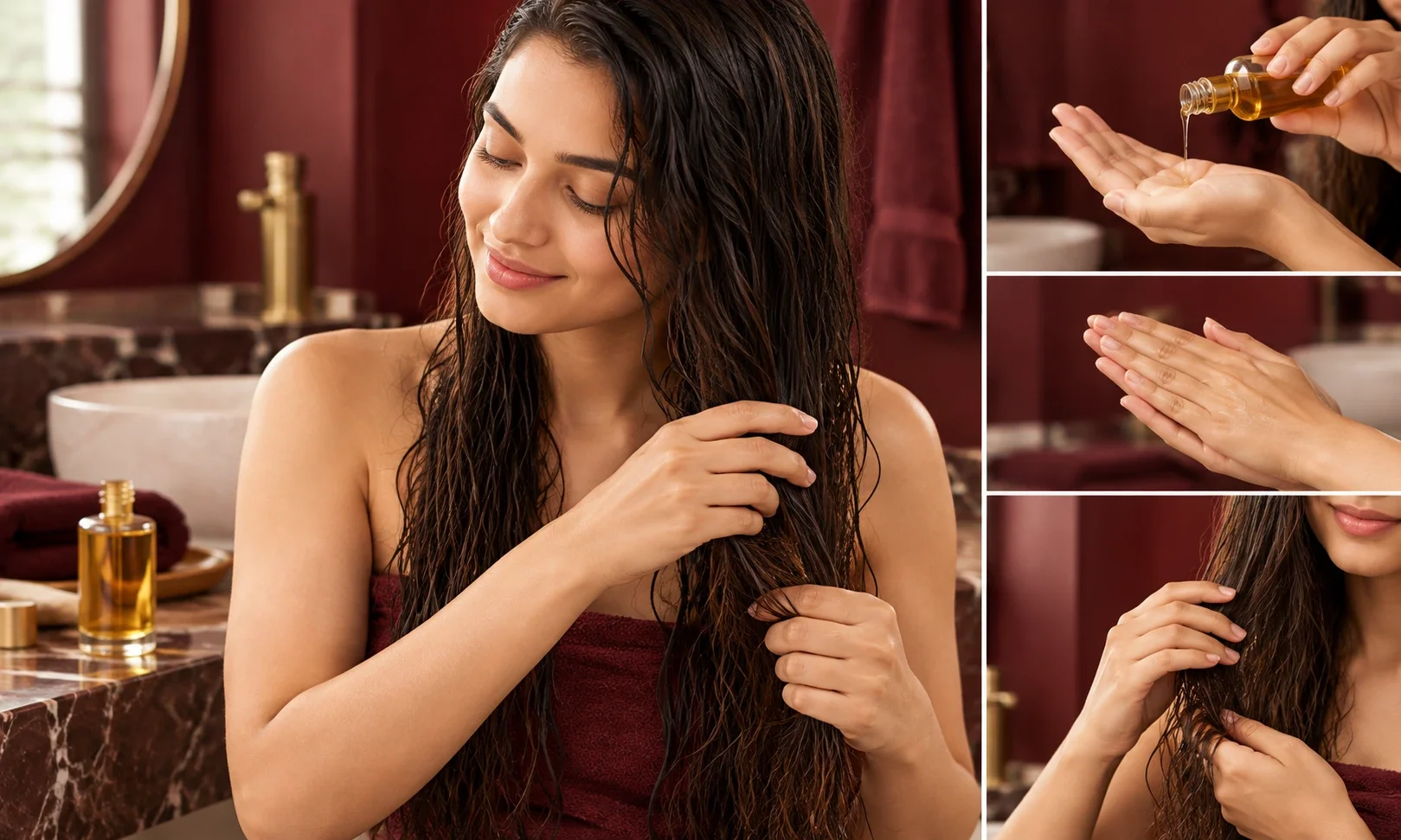
There is no need to turn oiling into a complicated ritual.
For a finishing routine, put one or two drops in your palms, rub your hands together, and gently smooth the product through the mid-lengths and ends. If your hair is thick or very long, you may need a little more, but build up slowly.
For pre-wash oiling, apply a modest amount to the lengths before shampooing. Leave it for the time recommended by the product, then wash thoroughly. You do not need to soak the hair until it is dripping.
If you have a sensitive or easily irritated scalp, be more careful about applying oils directly to the skin. Hair products can sometimes contribute to clogged pores or bumps around the hairline, especially when residue reaches the skin.
When Should You Apply Hair Oil?
For shine and frizz control, applying a small amount after washing is usually the easiest option. It works well on damp hair before styling or on dry hair as a finishing touch.
For very dry or damaged hair, a pre-shampoo treatment can also be useful. The best approach is the one your hair responds to without leaving buildup.
How Do You Choose a Lightweight Hair Oil?
Look beyond the word “oil” on the front of the bottle. A product may contain several oils, silicones, conditioning agents, fragrances, or botanical extracts, and the full formula determines how it behaves.
If your hair is fine, start with a lightweight formula and use a small amount. If your hair is coarse, curly, or highly dry, you may prefer a richer blend.
Also check whether your scalp actually needs oil. If your scalp gets greasy quickly, keep the product mainly on the lengths and ends.
At daithpiercing, the same simple idea applies to choosing products: focus on what the formula is designed to do instead of assuming a more expensive or more natural ingredient is automatically better.
Common Hair-Oiling Mistakes to Avoid
Using too much is probably the biggest one. Hair can go from smooth to greasy very quickly, especially when oil is applied close to the roots.
Another mistake is expecting oil to repair everything. It can improve the feel and appearance of damaged hair, but it cannot replace a haircut for split ends or protect hair from every styling mistake. For more effective care, learn about bond repair treatments for damaged hair.
Do not assume natural means risk-free, either. Fragrance and botanical ingredients can irritate some people, and heavy product buildup can be difficult to remove. Following a suitable dry skin routine can also help if your scalp or surrounding skin feels dry.
Finally, do not ignore heat. If you regularly use a dryer, straightener, or curling tool, use sensible heat settings and a suitable heat-protective product. Oil and heat protection are not automatically the same thing. If you notice unusual bleeding around a piercing, read this guide on piercing bleeding to understand possible causes and when to seek professional advice.
Sources Note
This guide uses dermatology guidance and published hair research rather than product advertising. Evidence is strongest for some specific hair-care effects, such as coconut oil’s interaction with the hair shaft. Individual results still vary with hair type, formula, styling habits, and scalp condition.
FAQs
Which oil is best for frizzy hair?
Argan oil and lightweight blended hair oils are common choices for frizz because they can smooth the hair surface without needing a large amount. The right choice still depends on your hair thickness and texture.
Is coconut oil good for damaged hair?
It can be. Coconut oil has been studied for its ability to penetrate hair and influence water-related changes in the hair shaft. It may be useful for dry or damaged lengths, but it can feel heavy on fine hair.
Can hair oil make hair shiny?
Yes. A small amount can smooth the hair surface and improve the way it reflects light. Use too much, though, and the result can look greasy rather than glossy.
Should I put hair oil on my scalp?
Not necessarily. If your goal is shine, softness, or frizz control, the lengths and ends are usually the more useful areas. People with oily or sensitive scalps may prefer keeping oil away from the skin.
How often should I use hair oil?
There is no universal schedule. Fine hair may need it only occasionally, while coarse or dry hair may tolerate more frequent use. Start with a small amount and adjust based on buildup and how your hair feels.
Can hair oil repair split ends?
No. It can temporarily smooth the look and feel of split ends, but it cannot fuse a permanently split strand back together. Trimming is the reliable way to remove split ends.
Disclaimer
This article is for general educational information only. If you have persistent scalp irritation, unusual hair loss, or a significant scalp condition, speak with a qualified dermatologist.