
Some piercings are easy to miss, while others immediately catch your attention. A bridge piercing definitely belongs in the second category. It sits between the eyes, across the upper part of the nose, and gives your face a distinctive look without needing a large piece of jewelry.
If you’ve seen someone wearing a small barbell between their eyes, that’s most likely a bridge piercing. It looks simple, but getting the placement right takes skill. Your anatomy, jewelry choice, and aftercare all play a part in how well it heals.
Before booking an appointment, it’s worth understanding what this piercing involves, how painful it can be, how long healing takes, and what problems you should watch for.
Key Takeaways
- A bridge piercing sits horizontally across the upper nose between the eyes.
- It passes through soft tissue rather than the nasal bone.
- A straight barbell is the traditional jewelry choice.
- Healing generally takes three to four months or longer.
- Migration and rejection are possible because it’s a surface piercing.
- Sterile saline and gentle cleaning are important parts of aftercare.
- Avoid pressure, makeup, and unnecessary jewelry movement during healing.
- A professional anatomy assessment should happen before getting pierced.
What Is a Bridge Piercing?
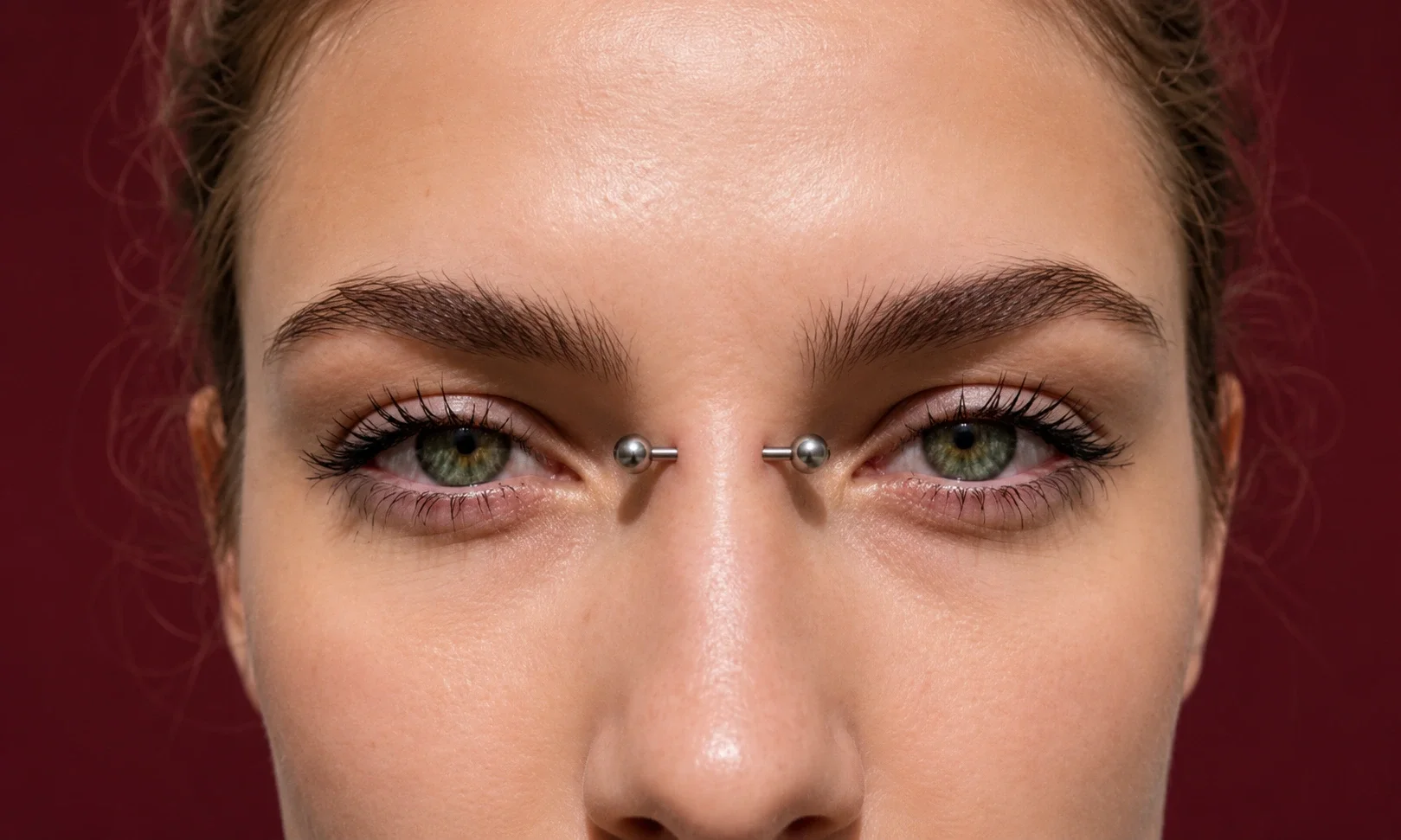
A bridge piercing is a horizontal surface piercing that passes through the skin across the upper bridge of the nose, usually between the eyes. It doesn’t go through the nasal bone or into the nose itself. Instead, the jewelry sits in the soft tissue over the bridge.
Most people wear a straight barbell with two visible ends. These can be simple metal balls, small decorative tops, or other designs that match their personal style.
Unlike a nostril or septum piercing, a bridge piercing is quite noticeable from the front. That’s one reason people choose it when they want something different from more traditional facial piercings.
It’s also worth knowing that a bridge piercing is a surface piercing. This means the jewelry passes through a relatively shallow area of skin, so migration and rejection are possible even when the procedure is performed correctly.
Where Is a Bridge Piercing Placed?
A traditional bridge piercing sits horizontally between the eyes, over the upper part of the nose. The exact position depends on how much suitable tissue you have in that area.
A professional piercer will check your anatomy before deciding whether the piercing is suitable. They may gently assess the skin and discuss where the jewelry would sit most comfortably.
The placement should look balanced with your facial features, but appearance isn’t the only thing that matters. There must also be enough suitable tissue to support the jewelry without putting unnecessary pressure on the skin.
Don’t ask a piercer to copy another person’s exact placement. Everyone’s nose and facial structure are different, so a position that works well for one person may not work for someone else.
What Does a Bridge Piercing Look Like?
A bridge piercing usually looks like a small horizontal bar across the upper nose. The two ends of the jewelry sit on either side of the bridge, making the piercing visible from the front.
Some people prefer a minimal appearance with plain silver or titanium ends. Others choose decorative balls or gemstone details to make the jewelry stand out.
The overall look can be subtle or bold depending on the size, finish, and style of the jewelry.
If you’re planning your overall piercing style, you can also explore our guide to Maria Tash curated ear jewelry for ideas on combining different jewelry designs.
How Much Does a Bridge Piercing Hurt?
A bridge piercing does involve a needle passing through the skin, so you should expect a short moment of discomfort. Most people describe the sensation as a quick pinch or pressure rather than prolonged pain.
However, there isn’t one pain level that applies to everyone. Your sensitivity, stress, anatomy, and the piercer’s technique can all affect the experience.
You may notice some tenderness, redness, or swelling around the area afterward. Mild discomfort during the early healing period is common, but pain that gets worse instead of gradually improving deserves attention.
If you’re worried about pain, speak with your piercer before the appointment. They should explain the procedure and give you a chance to ask questions.
How Is a Bridge Piercing Done?
A bridge piercing should be performed by an experienced professional using sterile, single-use needles and properly sterilized equipment.
Here’s what usually happens during the appointment:
- Consultation: Your piercer checks your anatomy and discusses whether the placement is suitable.
- Cleaning: The skin around the upper nose is cleaned before marking.
- Marking: The entry and exit points are marked and checked for alignment.
- Piercing: The piercer creates the channel using a sterile needle.
- Jewelry insertion: Suitable jewelry is carefully inserted into the new piercing.
- Aftercare instructions: You’ll receive guidance on cleaning, avoiding irritation, and monitoring healing.
The actual procedure is usually quick, but choosing the right piercer should take more time than rushing into an appointment.
How Long Does a Bridge Piercing Take to Heal?
A bridge piercing generally takes around three to four months or longer to heal, according to the Association of Professional Piercers’ published healing-time guidance. Your actual healing period may be shorter or longer depending on your body, placement, jewelry, and aftercare.
One thing people sometimes misunderstand is that a piercing can look healed before the inside tissue has fully recovered. Less redness doesn’t automatically mean it’s ready for a jewelry change.
Here’s a general idea of what you might experience:
| Healing stage | What you may notice |
|---|---|
| First few days | Tenderness, mild swelling, and redness |
| First few weeks | Gradual improvement, with occasional irritation |
| Following months | Tissue continues to settle and strengthen |
| Around three to four months or longer | Healing may be complete, depending on your body |
Avoid changing your jewelry just because the outside looks normal. Ask your piercer to check the piercing before making any changes.
How to Take Care of a Bridge Piercing

Aftercare isn’t complicated, but consistency matters. The skin around your bridge piercing needs time to recover, so avoid anything that creates unnecessary pressure or irritation.
1. Clean It With Sterile Saline
Use a sterile saline wound wash suitable for piercings. Gently clean the area according to your piercer’s instructions and allow it to dry without rubbing.
Avoid alcohol, hydrogen peroxide, and harsh cleaning products because they can irritate healing skin.
2. Keep Your Hands Away
It’s tempting to touch new jewelry, especially when you’re getting used to how it looks. Try not to do this.
Always wash your hands before any necessary contact, and don’t twist, rotate, or move the barbell unnecessarily.
3. Be Careful With Makeup and Skincare
Foundation, concealer, moisturizers, and facial products can irritate a fresh piercing if they get into the openings.
Keep makeup and skincare products away from the healing area until your piercer confirms that it’s safe.
4. Avoid Pressure on Your Nose
Be careful when putting on glasses, sunglasses, or anything that touches the bridge of your nose. Accidental pressure can irritate the piercing and interfere with healing.
You should also avoid sleeping with your face pressed against the jewelry.
5. Don’t Remove or Change Jewelry Too Early
Even if the piercing feels comfortable, the tissue may still be healing underneath.
Leave the original jewelry in place unless a qualified piercer or healthcare professional advises otherwise. If the barbell needs adjusting, have a professional handle the change.
What Jewelry Is Best for a Bridge Piercing?
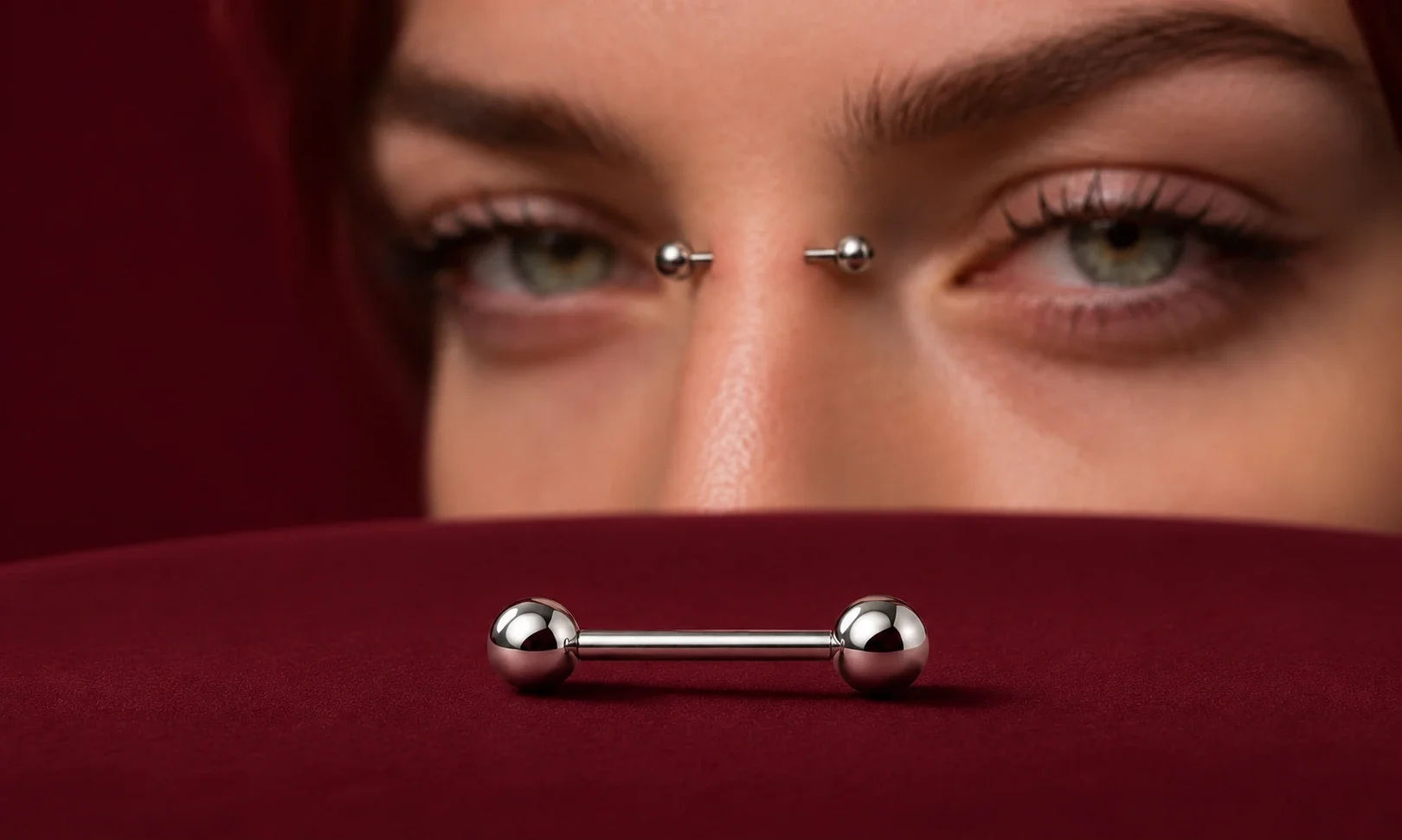
Jewelry choice matters because the wrong size, shape, or material can create unnecessary pressure on the piercing.
A straight barbell is the traditional choice for a bridge piercing. Implant-grade titanium is a commonly recommended option because it is lightweight and suitable for many people with metal sensitivities.
Other materials may also be appropriate if they meet recognized body-jewelry quality standards.
When choosing jewelry, consider:
- Material: Look for verified implant-grade materials.
- Length: The barbell should suit your anatomy and allow room for initial swelling.
- Thickness: Your piercer should select an appropriate gauge.
- Finish: Smooth, polished jewelry helps avoid unnecessary irritation.
- Design: Simple ends are often easier to manage during healing.
If you enjoy researching premium piercing jewelry, our Daith heart rings premium buyers guide explains what to consider when comparing jewelry materials, designs, and quality.
You can also read about what makes Daith heart rings expensive to understand how craftsmanship and material choices can affect jewelry prices.
These guides focus on ear jewelry rather than bridge-specific barbells, but the material and quality considerations can still help when learning about body jewelry.
What Are the Risks of a Bridge Piercing?
Bridge piercings can look great, but they come with a few risks that you should understand before getting one.
Migration and Rejection
This is one of the main concerns with surface piercings.
Migration happens when the jewelry gradually moves from its original position. Rejection happens when the body pushes the jewelry towards the surface until it eventually comes out.
Watch for signs such as thinning skin between the entry and exit points, increasing visibility of the barbell underneath the skin, or a noticeable change in placement.
If you notice these changes, contact an experienced piercer promptly.
Infection
A new piercing creates an opening in the skin, which means bacteria can enter during healing.
Increasing redness, warmth, swelling, worsening pain, or unusual discharge may indicate a problem. Seek medical advice if you suspect an infection.
Scarring
A bridge piercing can leave small marks even after the jewelry is removed. Migration or rejection may increase the chance of visible scarring.
Your skin type and personal healing response can also affect the final appearance.
Irritation and Swelling
Glasses, makeup, accidental knocks, and poorly fitted jewelry can irritate the area.
Some mild swelling is expected initially, but severe or rapidly increasing swelling needs medical attention.
How Much Does a Bridge Piercing Cost?
The cost depends on your location, studio, piercer’s experience, and the jewelry included in the appointment.
Some studios include basic jewelry in their quoted price, while others charge separately for higher-quality materials or decorative ends.
Before booking, ask whether the price includes the consultation, piercing procedure, initial jewelry, and follow-up care.
Don’t choose a studio simply because it offers the lowest price. Proper hygiene, professional experience, and suitable jewelry are more important than saving a little money. Before booking, review the Association of Professional Piercers’ guide to choosing a piercer to understand the safety standards and questions worth checking before your appointment.
Is a Bridge Piercing Right for You?
A bridge piercing can be a good choice if you enjoy noticeable facial jewelry and want something different from a nostril or eyebrow piercing.
However, your anatomy needs to support it. Not everyone has enough suitable tissue in the right area, and a professional piercer may advise against the procedure if the placement is likely to cause problems.
Think about your everyday routine too. Glasses, sports, work requirements, and frequent facial skincare can all affect how comfortable the piercing will be.
If you’re interested but unsure, book a consultation first. A professional can assess your anatomy, explain the risks, and help you decide whether a bridge piercing is a sensible choice.
Frequently Asked Questions
1. Does a bridge piercing hurt?
Yes, you can expect a quick pinch or pressure when the needle passes through the skin. The discomfort is usually brief, although individual pain tolerance varies.
2. How long does a bridge piercing take to heal?
A bridge piercing generally takes three to four months or longer to heal. Healing depends on your anatomy, jewelry, aftercare, and how your body responds.
3. Do bridge piercings reject easily?
Bridge piercings have a risk of migration and rejection because they are surface piercings. Proper placement and suitable jewelry can help, but they cannot completely remove this risk.
4. Can everyone get a bridge piercing?
No. You need suitable tissue in the upper nose area to support the jewelry. An experienced piercer should assess your anatomy before agreeing to perform the piercing.
5. What jewelry is used for a bridge piercing?
A straight barbell is the most common choice. Implant-grade titanium is a popular material, although other suitable materials may be used depending on their quality and your individual needs.
6. Will a bridge piercing leave a scar?
It can leave a small mark after removal. Scarring may be more noticeable if the piercing experiences migration, rejection, or repeated irritation.
7. Can I wear glasses with a bridge piercing?
It depends on your glasses and the exact placement. Frames that press against the jewelry can cause irritation, so discuss your daily eyewear with your piercer before getting the piercing.
Disclaimer
This article is for general educational purposes and isn’t a replacement for professional piercing advice or medical care. Healing times and individual experiences can vary. If you notice worsening pain, unusual discharge, spreading redness, or other signs of infection, consult a qualified healthcare professional. Always speak with an experienced piercer about placement, jewelry, and aftercare before getting a bridge piercing.
About This Guide: DaithPiercing publishes educational content about body piercings, jewelry styles, placement, and aftercare. This guide uses published guidance from the Association of Professional Piercers and other established health information sources. The content should be reviewed by an experienced piercing professional before publication.