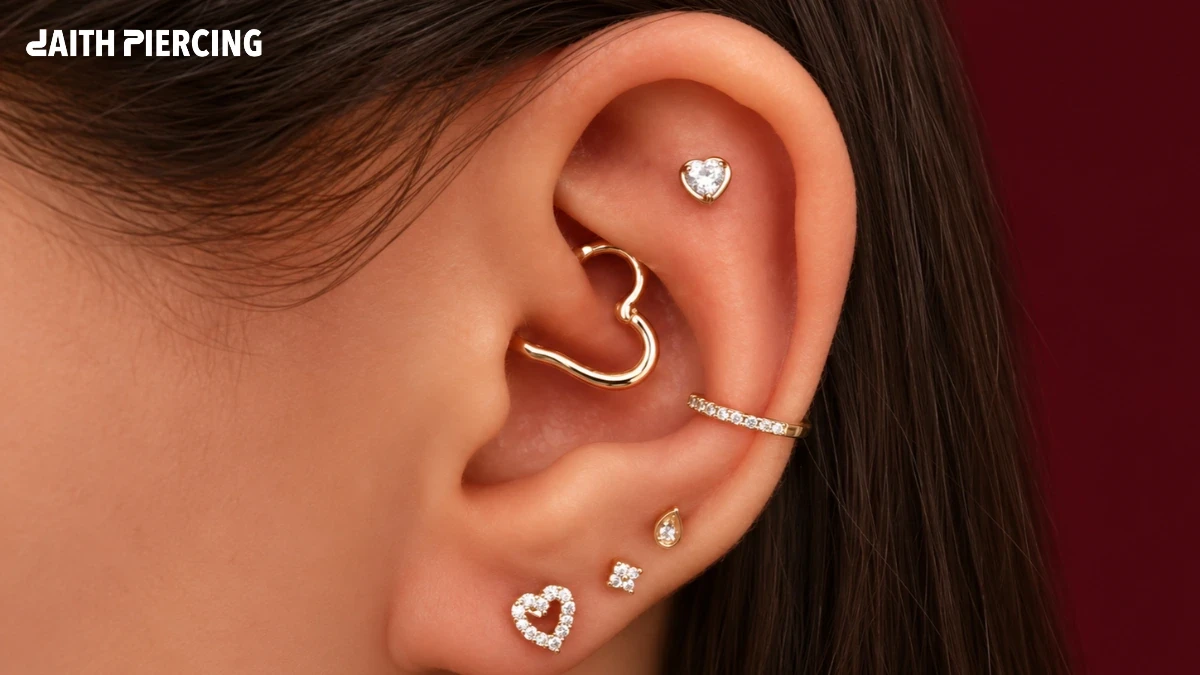
What makes daith heart rings expensive is a cost that plain rings never carry: symmetry is labor, and labor is the most expensive ingredient in fine jewelry.
Picture two rings on a jeweler’s bench, identical in gold weight, identical in diameter, one a plain circle and one a heart. The plain ring is finished the moment its seam closes cleanly, because a circle has no wrong half. The heart is only halfway done. Someone must now hold it up and ask the question that takes time: do these two lobes mirror each other honestly?
If the answer is no, hours of work go back into the fire. That question, repeated at every stage of shaping and finishing, is what you are actually paying for when a heart ring costs more than a plain ring of identical metal. It is called the shape premium, and once you understand it, heart ring pricing stops being mysterious.
The shape premium: three costs a circle never pays
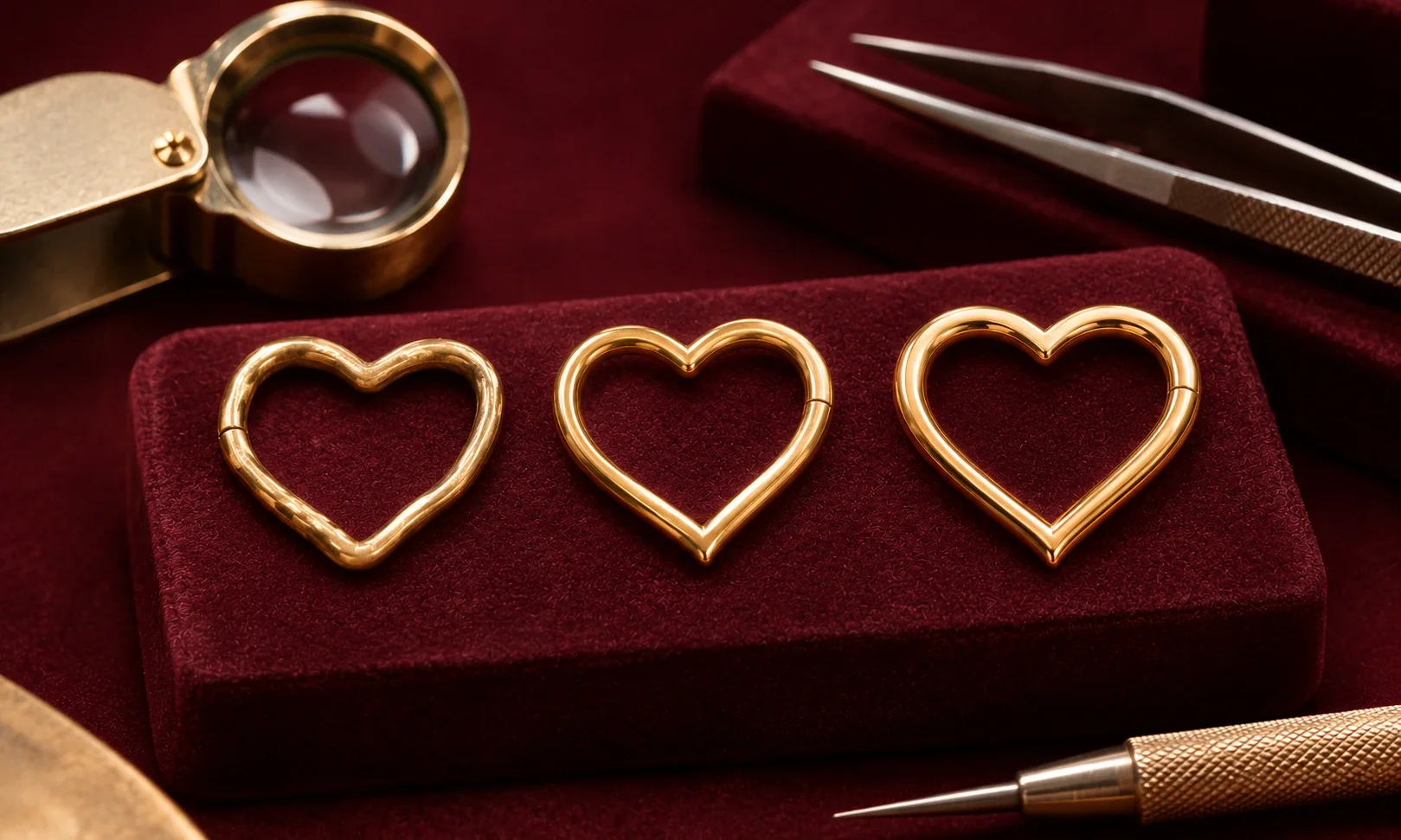
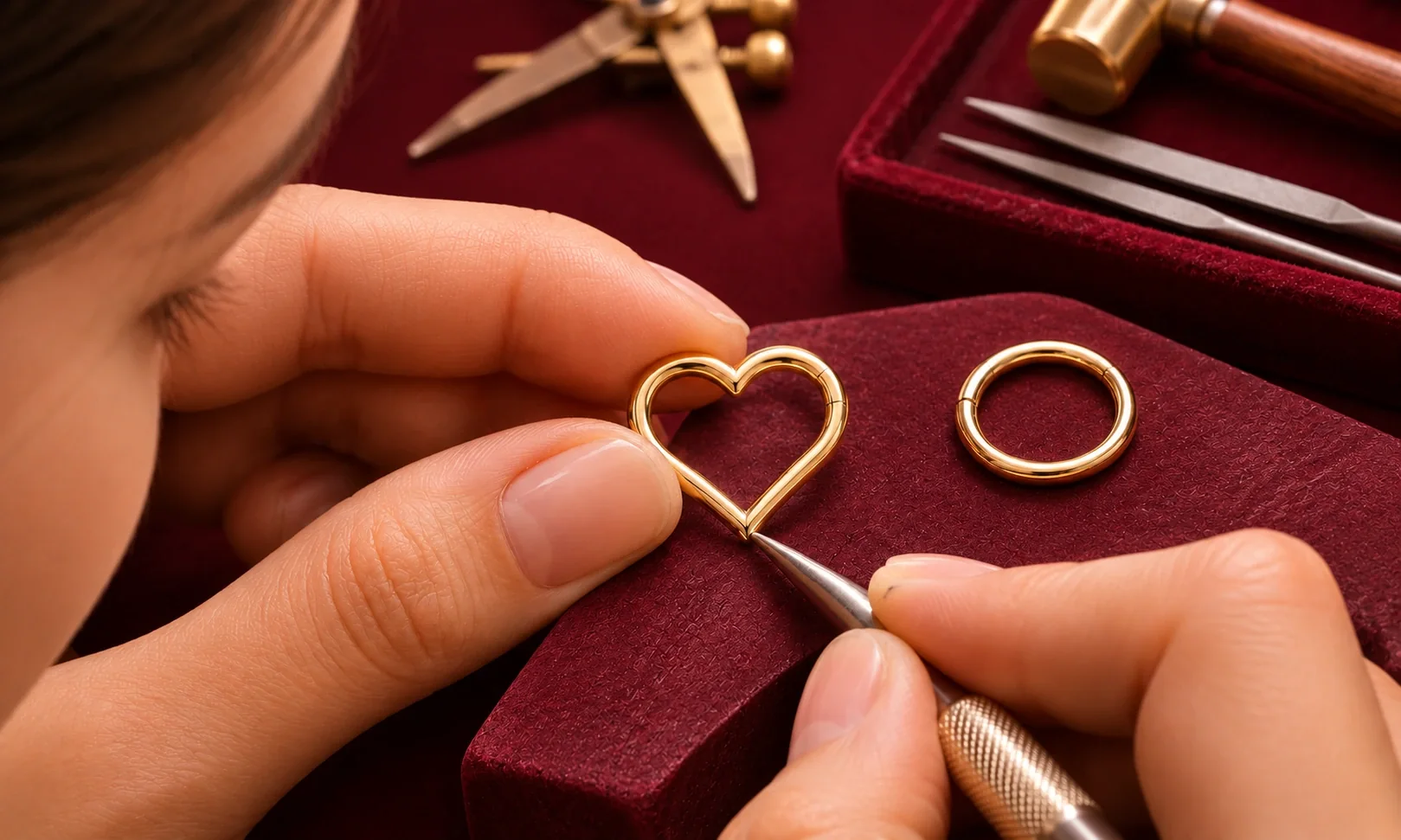
Variable profile work. A plain ring is uniform metal bent into a circle, and machines do uniform beautifully. A heart ring is a variable profile, thick through the lobes, sweeping down to a fine point, notched precisely at the cleft. That variation has to be shaped, checked, and reshaped by hand, because there is no setting on any machine that says make this part braver and this part finer.
The symmetry hour. Here is the most quietly expensive hour in the entire workshop. Two lobes must match not just in size but in curve, in fullness, in attitude. Achieving that mirror takes a trained eye and unhurried hands, and it cannot be rushed at any wage. Our heart ring comparison guide teaches you to see this labor for yourself with the silhouette standard, which is fitting, because the labor exists to serve exactly that view.
Shaped piece failure rates. Remember the failure economics from our article on what makes fine clickers expensive: makers scrap the pieces that fail, and build that loss into price. Shaped pieces fail more often than plain ones, because every symmetry flaw that a circle forgives, a heart exposes. A lopsided blank is not a discounted heart. It is scrap gold and lost hours, and the price of the surviving hearts carries those fallen soldiers.
What the price iceberg looks like for hearts
Everything below the waterline in the clickers pricing article applies here, with the shape premium added as a sixth current. So when you compare a $120 heart ring to a $420 heart ring, you are rarely comparing metal. You are comparing how many symmetry checks the piece survived, how much of its making was hand guided, and how honest its silhouette is. The point test and fingertip pass from our heart ring buyer’s guide let you verify that difference in fifteen seconds, which is the entire reason those tests exist.
When the premium is worth it: the stricter thousand day rule
The thousand day rule from our clickers pricing guide asks whether you will wear a piece a thousand days in three years. Heart rings pass that rule less often than plain rings, because hearts are bolder statements, and bold statements rotate out of daily service sooner.
That does not make them worse purchases. It makes the stricter version of the rule: a heart ring justifies its premium only when it will be a genuine daily or near daily piece, or when it carries meaning that outlasts trends, an anniversary, a recovery, a promise.
This is also why the silhouette standard matters so much at the moment of purchase. A heart that reads clearly in silhouette is a heart you will still love in year four. A vague one is a heart you will quietly stop wearing in year one, whatever it cost.
When the premium is not worth it
Do not pay shape premium prices for a heart ring bought on a seasonal whim. Trend hearts, the ones chosen because they are everywhere this month, have the shortest wear lives in the entire category, and the shape premium math collapses on them first.
Do not pay it when sizing is a guess. A perfectly made heart in the wrong diameter reads as a blob in your fold, and no amount of symmetry saves a shape nobody can see. Get your numbers first, using our guide to the questions to ask your piercer.
And never pay it for a flawed shape. The meaning tax from our comparison guide applies at every price: a lopsided premium heart is worse than a lopsided cheap one, because it charged you full price for a confession.
The middle market trap
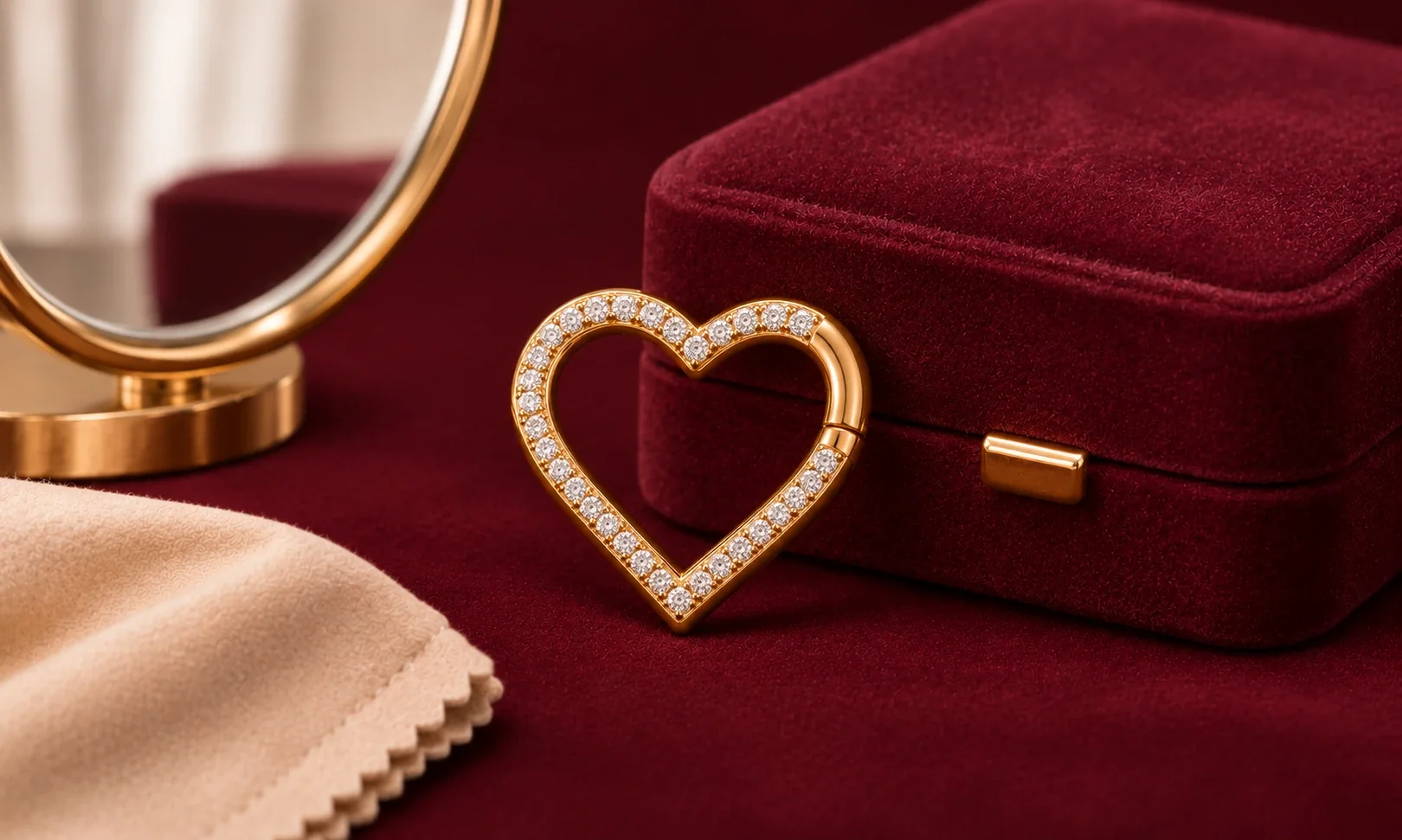
Here is the observation that will save you the most money in this category. The worst value in heart rings is rarely the cheap ring or the fine one. It is the nearly right ring in the middle: decent gold, decent weight, passing hinge, and a silhouette that is 80% honest. It costs perhaps 60% of the fine ring’s price, it looks acceptable in the box, and it reads slightly wrong in your ear every single day for as long as you own it.
The middle market heart is where shape premium goes to die, because the maker did enough work to charge real money but not enough to earn it. If you are choosing between a nearly right heart and a beautifully honest plain ring at the same price, buy the plain ring every time, and come back for the heart when the budget reaches the real thing.
This is the shape premium’s harshest lesson: in symbolic jewelry, almost is the most expensive word there is.
The last thing I will tell you
A heart ring’s price is a receipt for patience: the maker’s patience at the bench, and the patience you show by not settling for almost. When the silhouette is honest, the lobes mirror, and the point is solid metal, the premium stopped being a price and became a story you get to wear. Pay that premium gladly, once, for the heart that deserves it.
Then wear it so often the story becomes yours. Every pricing, comparison, and quality method on this site gathers in one place, our daith jewelry pillar guide, when you are ready for the next piece.
Frequently asked questions
Why do heart rings cost more than plain clickers of the same size?
Shaped rings carry a shape premium: variable profile hand work, the symmetry hour where two lobes are matched against each other, and higher failure rates that makers build into pricing. Plain circles skip all three costs.
Is an expensive heart ring worth it as a gift?
When the symbolism is real, often yes, but solve the sizing first. Many gift givers choose the studio certificate or commission route instead, which carries the same meaning without the fit risk, as our fine jewelry holiday gift guide explains.
What is the worst value in heart rings?
The middle market nearly right ring: decent metal and a silhouette that is 80% honest. It charges real money for a shape that reads slightly wrong every day. Either buy the honest heart or buy a beautiful plain ring instead.
How can I tell if a heart ring’s price is justified?
Run the silhouette standard and the point test. A price is justified when the shape reads clearly as a silhouette, the point is solid seamless metal, and the hinge hides away from the design. A premium price on a vague shape is paying for almost.
Do heart rings hold their value better than plain rings?
Only the finest examples, and even then, sentimental value outperforms resale value in body jewelry. Buy the heart for the wearing, not the resale, and choose honest craftsmanship so the wearing lasts.