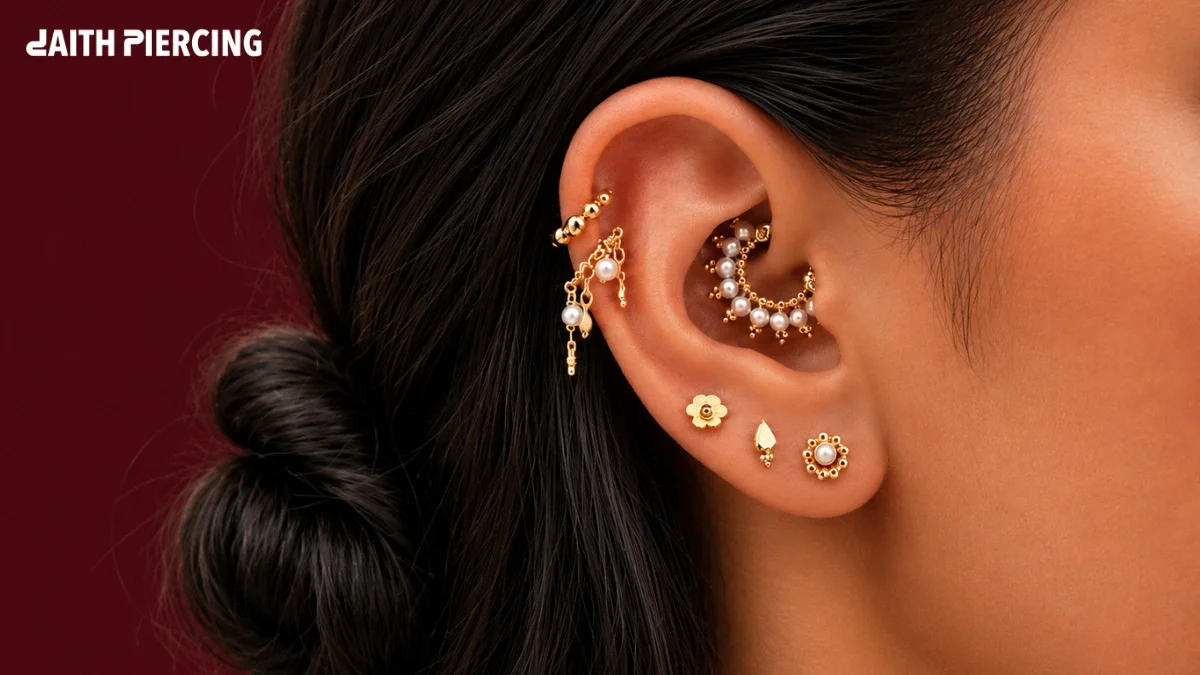
Choosing Daith Clickers for a Healed Piercing is a different conversation than the one you had when you got pierced, and most people walk into the studio asking the wrong questions for the moment they are in.
The upgrade visit is a quietly emotional appointment, even if nobody says so out loud. You waited six months, maybe twelve. You did the saline sprays and the pillow gymnastics. You survived the healing boredom, which any collector will tell you is the hardest part of this whole hobby. And now you are sitting in the studio chair again, holding a ring you love, waiting for a professional to tell you that your ear is ready for it. It feels like graduation day. Because it is.
Most upgrade visits go wrong in one of two ways. Either you arrive with a ring you already bought online and ask them to install it, or you arrive with no ring and no plan and stare at the display case hoping inspiration strikes. This guide fixes both. Here is the script, in the order that makes the appointment work.
First, make sure healed is a fact and not a feeling
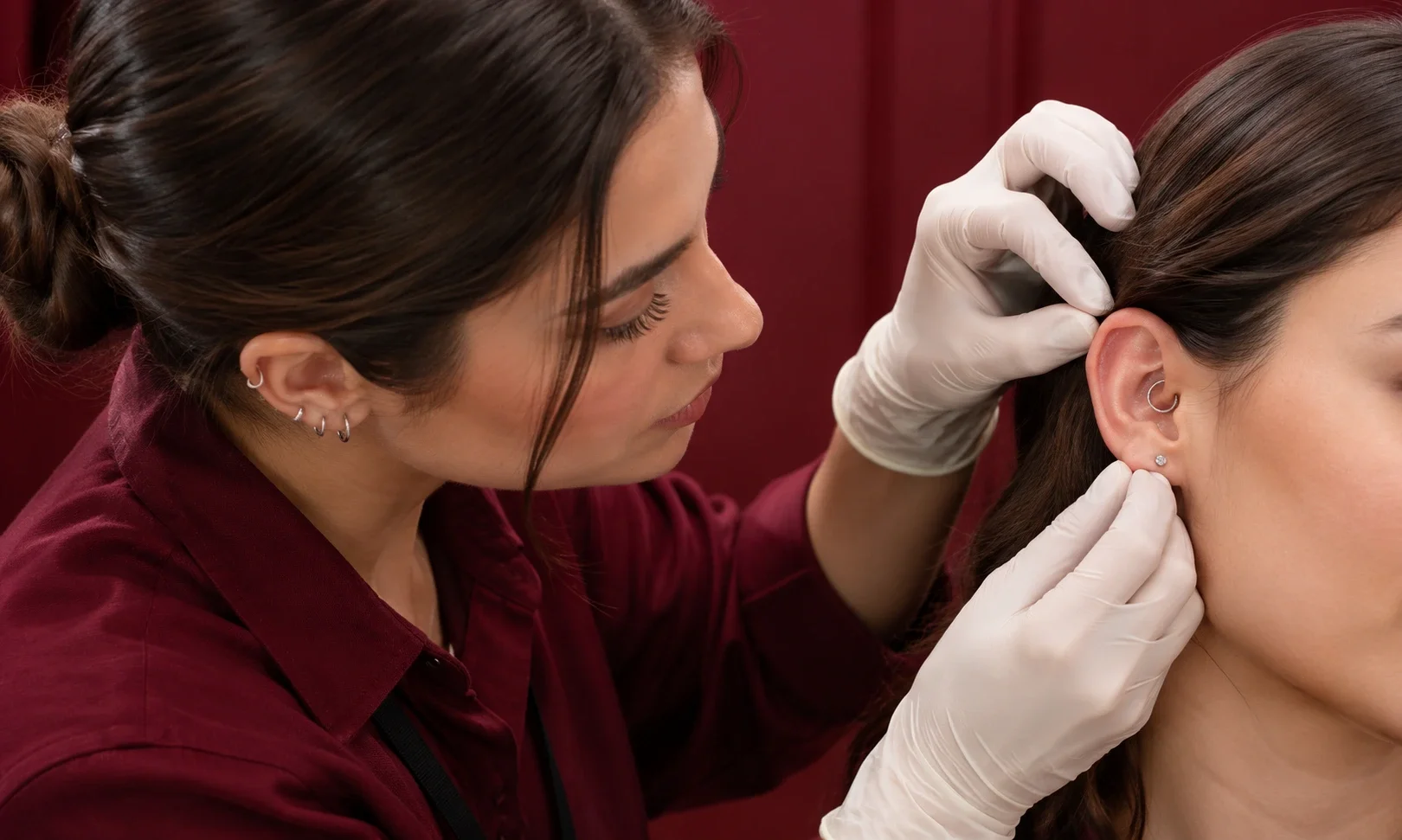
Healed is a status, not a feeling. Your piercing can feel fine for months while the channel inside is still soft, still remodeling, still easy to tear. A channel that is ready for a fine clicker has a few reliable signs: it has been at least six months since piercing, closer to twelve for many people, there has been no discharge, no crusting, no tenderness, and no recurring bump for at least a month, and the jewelry moves freely without any pulling sensation.
Choosing Daith Clickers for a Healed Piercing: If any of those are missing, say so at the start of the appointment. A good piercer will not be disappointed. They will be glad you gave them real information, because installing a clicker into a half healed channel is how beautiful rings end up in a drawer next to a story nobody wants to tell.
Your first question, then, is not about the ring at all. It is this: does my channel look fully healed to you, and what do you see that tells you that? You are asking them to show their work, and professionals love being asked to show their work.
The seven question script for your upgrade visit
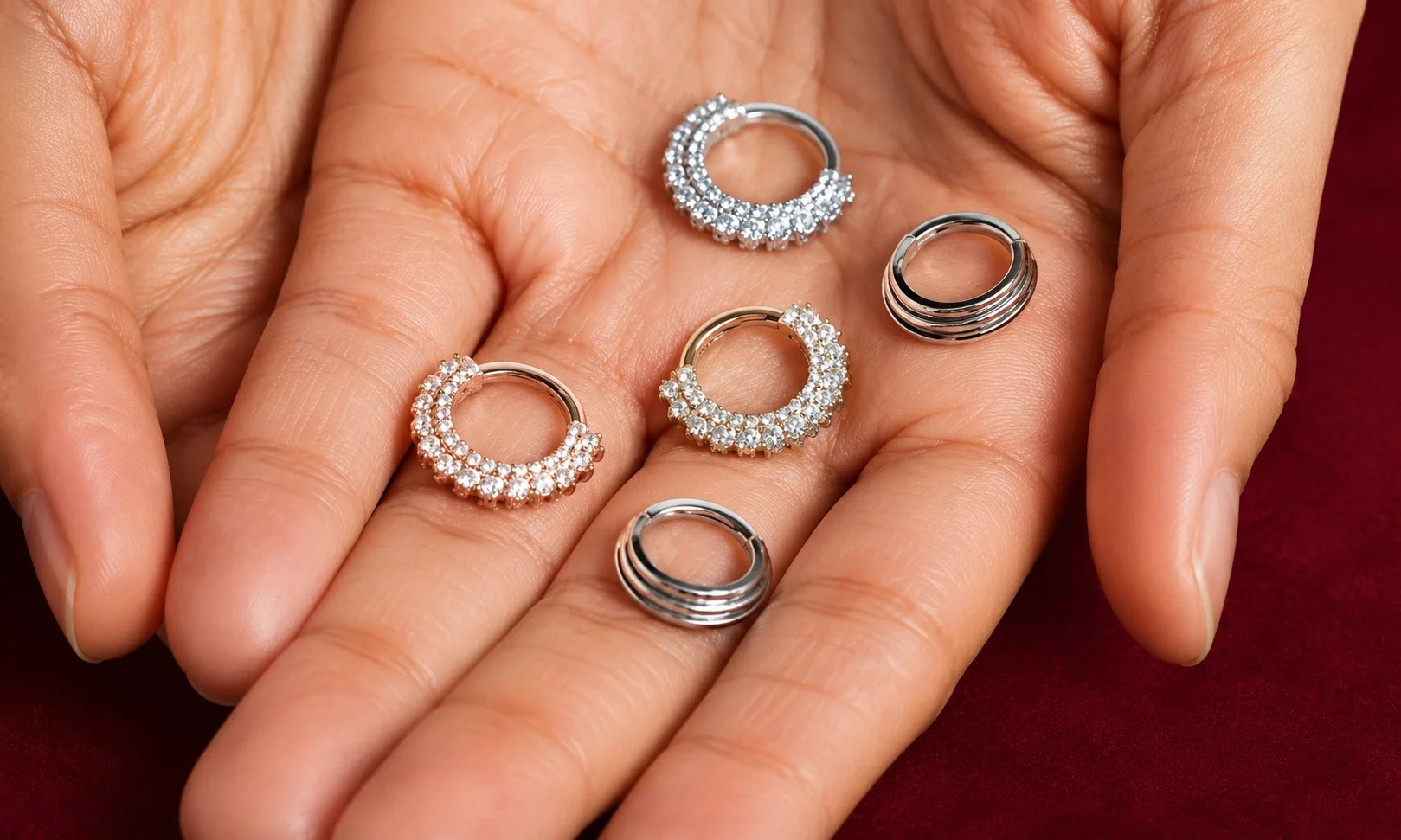
Everything below fits into one appointment. Do not rush it. You are not bothering your piercer with these questions. You are giving them the conversation they trained for.
One: what are my exact numbers, and can I write them down?
You need your gauge and your ideal inner diameter, measured for your anatomy, not guessed from a product page. Say the numbers out loud as you write them. This two minute exchange is the most valuable moment of the entire visit, and it is the foundation of every ring you will ever buy for this piercing. Our guide on how to compare daith clickers before you buy shows you exactly what those numbers let you do later, at home, with confidence.
Two: how deep is my daith fold, and does it suit a clicker or a different ring style?
Some folds are shallow and wide, some deep and narrow, and the shape changes which ring profile sits beautifully versus awkwardly. Your piercer sees a hundred ears a month. Their eye is worth more than any photo review you will ever read.
Three: if I show you two rings, can you tell me which engineering is better?
Bring your candidates, or pull them up on your phone. Ask them to check the hinge and the seam. A piercer who handles fine jewelry daily can feel a lazy seam in two seconds, and their verdict on the ten second quality test from our premium buyer’s guide is worth more than a hundred anonymous reviews. If you need strong candidates to bring, start from our editors’ roundup of the best daith clickers of 2027.
Four: is this material right for my history?
If you have ever reacted to metal, say so now, not after. Tell them about that one pair of earrings that made your lobes itch in high school. Your sensitivity history decides whether solid 14k or 18k gold or implant grade titanium is your safe field, and this one honest sentence can save you months of healing all over again.
Five: will you install it for me, and what does installation involve?
Ask whether they use a taper or guide the ring by hand, whether there is a fee, and whether they would rather install a ring you bought from them. Some studios install outside jewelry, some do not, and knowing before you arrive saves everyone the awkward moment at the counter.
Six: what should I expect in the first two weeks after switching?
Even into a fully healed channel, a new ring causes a small settling period. Ask what is normal, a little warmth, slight awareness of the new weight, and what is not normal, sharp pain, swelling, discharge. Get their preferred aftercare answer in their own words.
Seven: anything you would do differently if this were your ear?
This is the question nobody asks and everybody should. Piercers have opinions about their own ears, their favorite diameters, the styles they have watched age best over a decade of clients. You are not asking for a sales pitch. You are asking for taste, and taste is the one thing that cannot be looked up.
Start your piercing passport today
Here is the habit that separates people who collect happily from people who collect expensively. Open the notes app on your phone and create a note called your piercing passport. After this appointment, write down your gauge, your diameter, the date you were pierced, the date you were cleared for the upgrade, and the name of the ring you chose.
Every future appointment, every future purchase, every late night browsing session starts from those numbers instead of from guesswork. The piercing passport is the reason you will never buy the wrong ring twice. If you want to know what separates a fine ring from an expensive mistake, those two numbers are half the answer.
The three things not to do at your upgrade visit

Do not bring a mystery metal ring you bought on impulse and ask them to make it work. If the material is unverified, a responsible piercer will refuse it, and the refusal will sting more than it should because the ring will already feel like yours. Our walkthrough on ordering daith clickers online without red flags exists so the ring in your hand is a ring your piercer approves of.
Do not round up your healing timeline to seem ready. Piercers have heard every version of this, and your honesty is what lets them protect your ear properly.
And do not skip the settling period questions because you feel fine. Even a perfect install into a healed channel deserves two weeks of gentle treatment before the gym, the pool, and the aggressive pillow.
The last thing I will tell you
There is a moment, near the end of the appointment, when your piercer holds the mirror up and you see fine gold sitting in the fold you waited a year to fill. Strangers will not notice it. Coworkers will not mention it. But you will catch it in every shop window and every car mirror for the next month, and you will smile every time, because you know what it took to get there. That moment is not really about the ring. It is about keeping a promise you made to yourself when the healing was boring and you stuck with it anyway.
Ask the seven questions. Write down the numbers. And enjoy the click.
Frequently asked questions
How long before I can put a clicker in my daith piercing?
Most daith piercings need six to twelve months before they are truly healed enough for a fine clicker, and the deciding factor is the channel, not the calendar. Your piercer confirms readiness at a checkup, and their word outranks any timeline you find online.
Should I buy my clicker before or after the appointment with my piercer?
Browse before, buy after, unless your piercer tells you otherwise. Knowing what you love helps the conversation, but committing money before you know your numbers is how beautiful rings end up unworn.
Can my piercer tell me if a clicker I bought online is good quality?
Usually, yes. Ask them to check the hinge action, the seam finish, and the interior polish. If the ring fails those checks, it is far better to learn it at the studio counter than from your ear three weeks later.
Will my piercer install jewelry I bought somewhere else?
It depends on the studio. Many will install verified quality pieces for a fee, and some only install pieces they stock or can verify. Ask before you buy, not at the counter.
Where does the upgrade visit fit in the bigger picture of building a curated ear?
It is usually the first permanent piece in a longer plan. Once your daith is settled with a fine ring, the next conversations are about shape balance across the ear, which our daith jewelry pillar guide lays out from the beginning.
What if my healed piercing feels different with a clicker than it did with the healing barbell?
A short settling period is normal. Mild warmth and awareness of the new weight for a week or two is expected. Sharp pain, swelling, or discharge is not, and that is your signal to return to your piercer rather than to wait it out.