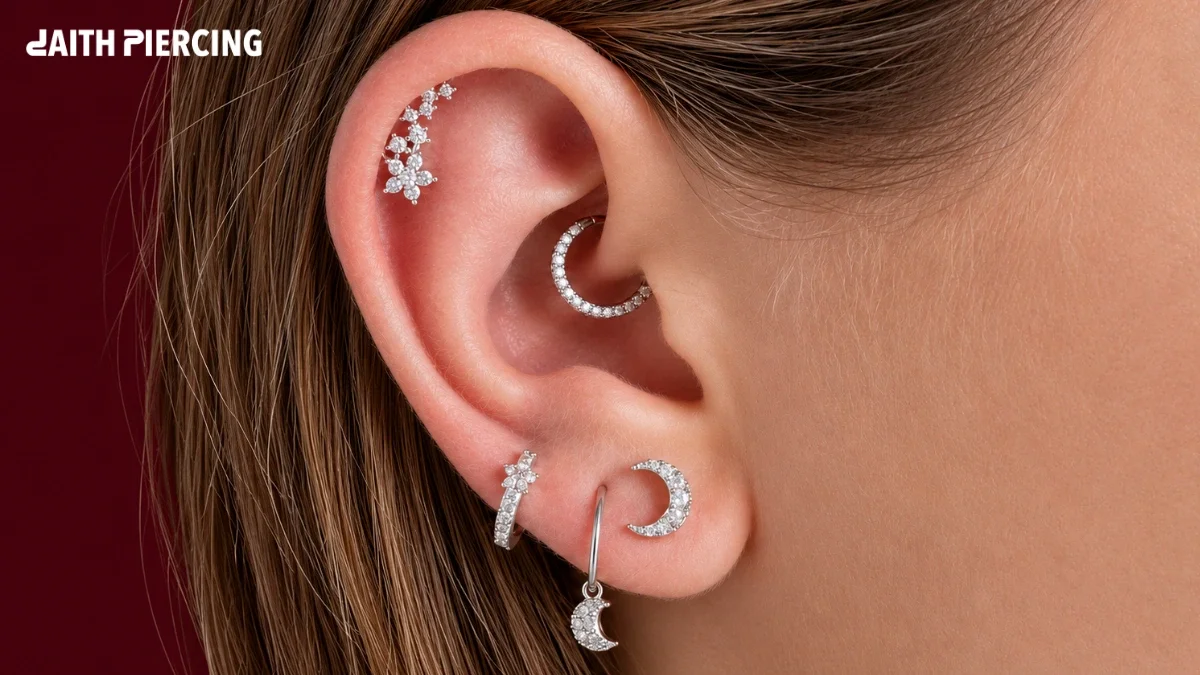
Daith Clickers: A daith clicker is the smallest piece of fine jewelry you will ever own, and the one people will ask about most. That gap between its size and its presence is exactly why buying one well matters so much.
I remember the first premium clicker I ever held. It was solid gold, thin as a whisper, and when it snapped shut between my fingers it made a sound so small and so certain that I understood, in that moment, why collectors talk about these rings the way people talk about movements.
A clicker is not decoration. It is a tiny machine that lives inside your ear, moves with you, sleeps with you, catches the light when you turn your head. Buying one is not a transaction. It is adopting something that will become part of you.
This guide is about how to buy that piece well.
What a daith clicker actually is
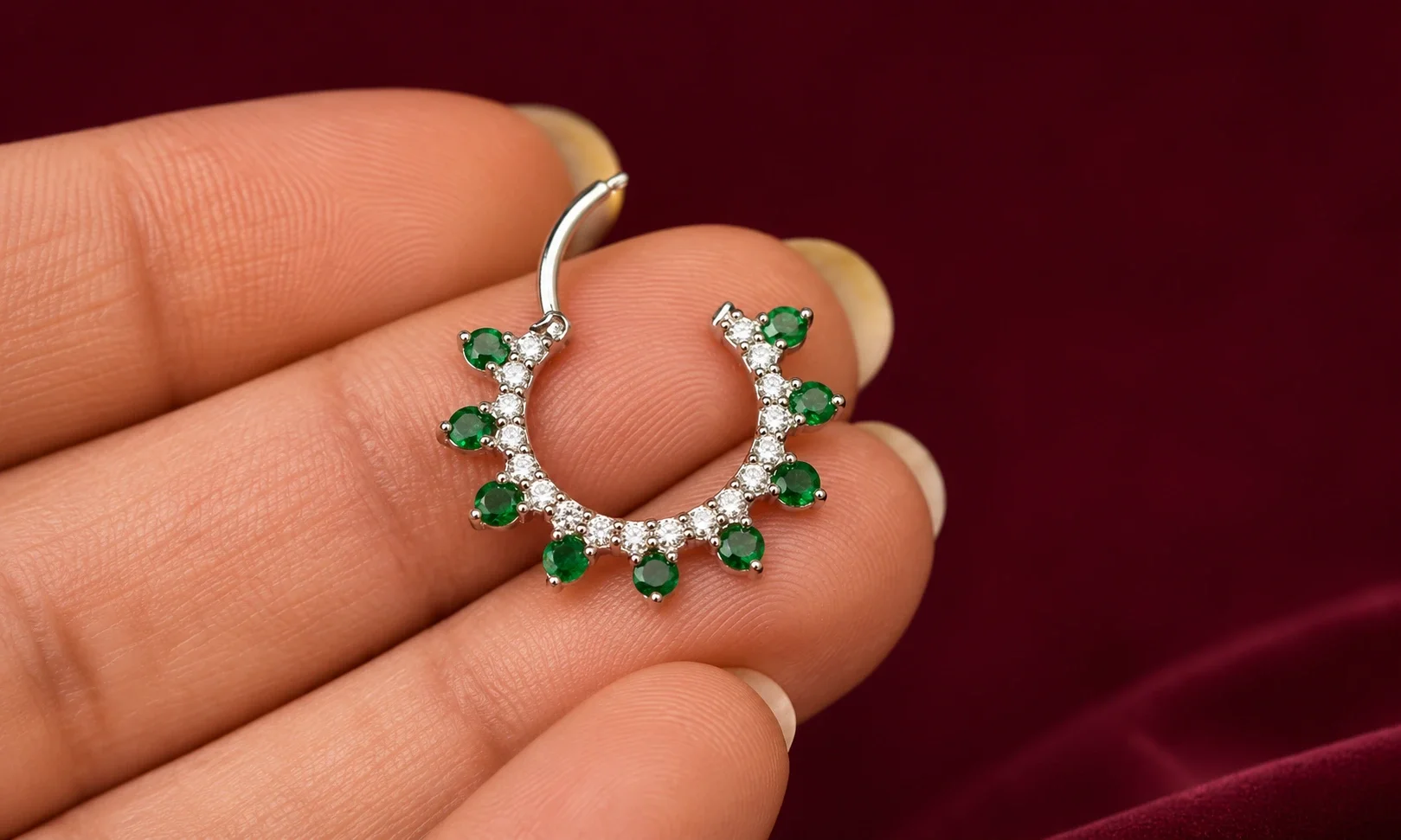
A clicker is a hinged ring. One end of the metal circle has a tiny hinge, the other end has a clasp. You open it, insert it into your daith piercing, and the clasp snaps into place with the click that gives the ring its name.
That sounds simple until you hold a cheap one and a fine one side by side. The cheap one opens with a wobble and closes with a crunch. The fine one opens with a smooth, silent swing and closes with a sound like a small door in a well built house. The difference between those two experiences is not the gold. It is engineering, and engineering is where your money either goes to work or goes to waste.
The three places where your money actually hides
Every buying guide on the internet will tell you to check the metal and the gauge. That advice is fine, and it is incomplete. Metal and gauge are the table stakes. The real difference between a $60 clicker and a $600 clicker lives in three places almost nobody talks about: the hinge, the seam, and what I call the ring memory.
The hinge is a tiny barrel of interlocking parts. In a well made clicker, the hinge swings open smoothly with gentle finger pressure and holds its position while you insert the ring. In a cheap one, the hinge is stiff, springy, or worse, loose. A loose hinge means the ring can drift open on its own, which is how clickers end up lost in gym bags and pillowcases.
The seam is the joint where the clasp meets the ring. In a fine clicker, the seam is nearly invisible. You can run a fingernail across it and barely feel a change in the surface. In a cheap one, the seam is a small step in the metal, and that step does two ugly things: it catches on hair and clothing, and it collects everything the day throws at your ear.
Ring memory is the one nobody mentions at all, and it is the truest test of quality. Solid gold and high quality titanium are worked in a way that makes the metal want to return to a perfect circle. A well made clicker, worn for months, taken out, and placed on a table, still sits as a true ring. A cheap one develops a flat spot where the hinge sits, or it slowly pulls out of shape from the pressure of the daith channel. The metal forgot what it was supposed to be.
Here is the sentence worth remembering: a clicker earns its price when the seam vanishes, the hinge stays silent, and the metal remembers its shape. Hold any clicker against those three standards and you will never overpay again.
The ten second quality test you can do before you buy
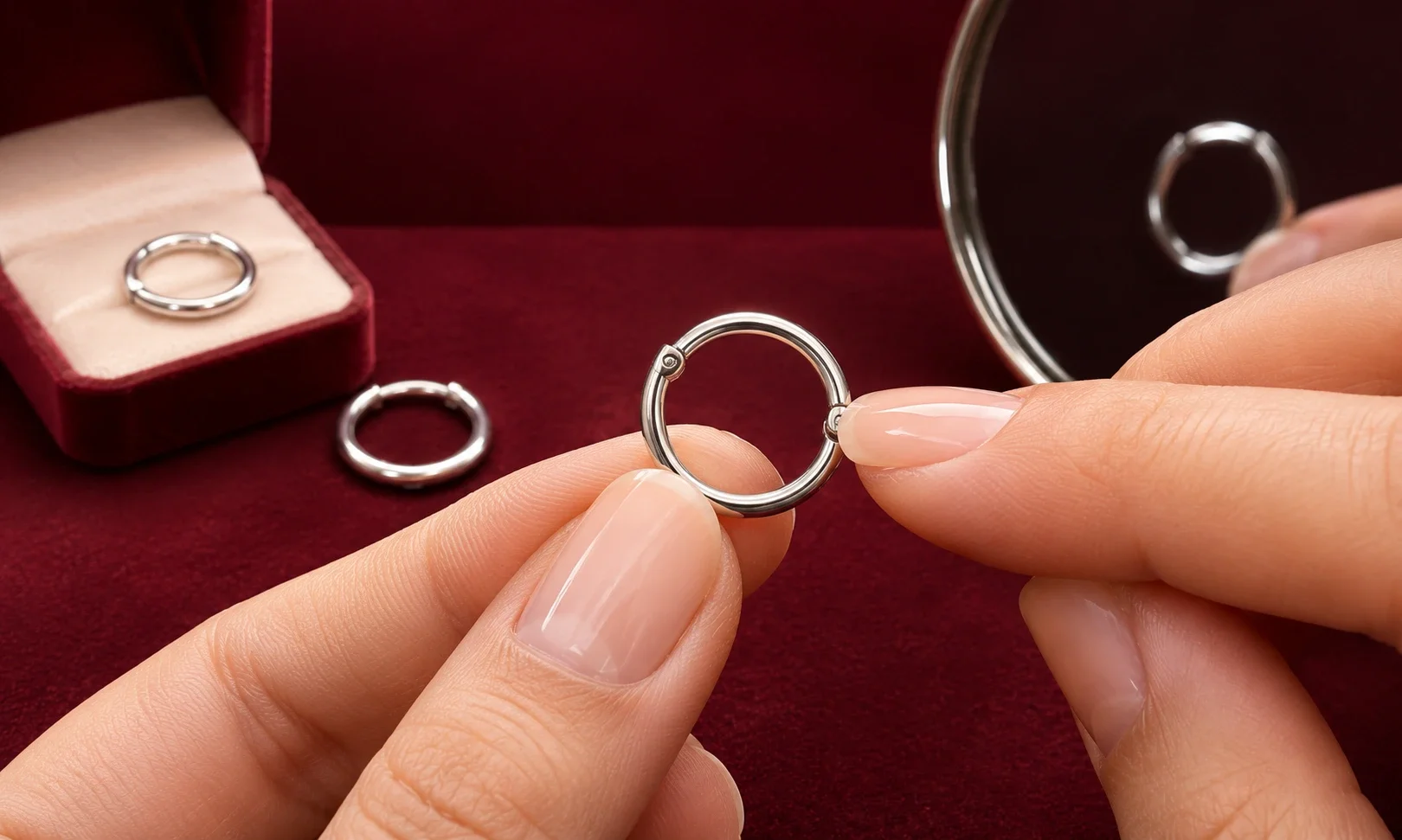
This is the part you will not find anywhere else, and it is the reason I wrote this guide. Before a clicker ever touches your ear, you can judge almost everything about it with three small checks. Do them the moment the box opens, or in the store, before the return window becomes a problem.
Check one, the thumb test. Open the clicker with one thumb. A quality hinge moves with light, even pressure and stays open while you position it. If you need two hands, or the hinge snaps back violently, the engineering is telling on itself.
Check two, the fingernail test. Close the ring and drag the pad of your finger, then the edge of a fingernail, across the seam. A fine seam feels like a whisper of texture. A bad seam feels like a speed bump. Your hair will find that speed bump every single day, and so will your pillow.
Check three, the mirror test. Hold the closed ring up against a mirror, or any flat dark surface, and look at the circle from the side. Does it sit as a true ring, or do you see a subtle flat near the hinge? The flatter the profile, the less the metal remembers its shape.
Three checks, ten seconds, no tools. By the time you finish the third one, you already know more about that clicker than most reviewers who wrote about it online.
Fit: the measurement that matters more than the metal
A daith clicker sits inside the fold of cartilage above the ear canal, which means fit is anatomy, not fashion. The most common mistake I see is buying by look instead of by measurement. A clicker that is too small pinches the fold and creates pressure bumps that feel like a piercing problem but are actually a jewelry problem. One that is too large flops around, catches on everything, and slowly irritates the channel.
The two numbers that decide fit are the inner diameter of the ring and the gauge of the post. Diameter is chosen to match the depth of your daith fold, and gauge must match what your piercing was healed with. Neither number is guessable from a photograph.
If you do not know yours, that is not a failure. That is a five minute question for your piercer, and it is the single highest value appointment you will ever make for your ear. Our guide on the questions worth asking before you buy walks through exactly what to ask, in the order to ask it.
One more fit detail that premium guides skip: the seam placement trick. When you insert a clicker, most people close it wherever the hinge lands. Do not do that. Rotate the ring after closing so the seam rests at the lowest, deepest point of the daith fold, the part hidden inside the channel.
From the outside, the ring looks seamless, because the only visible part of the circle is unbroken metal. The seam spends its life where nobody, including you, will ever feel it. It is a two second adjustment that makes a visible ring look twice its price.
Finish: the part of the ring you never see
Inside every clicker is a surface your skin touches all day, every day, for as long as you wear it. That inner surface is where craftsmanship shows up in your actual life. A high polish interior slides through the piercing channel with almost no friction. A rough interior, the kind you find on rings that were polished only on the outside, creates micro friction you will never see but will absolutely feel by hour eight of a long day.
Run a cotton swab along the inside of any clicker. A well finished ring lets the swab glide. A rough one grabs at the fibers. You just tested the interior polish with a ten cent tool.
Value: how to think about the price of something this small
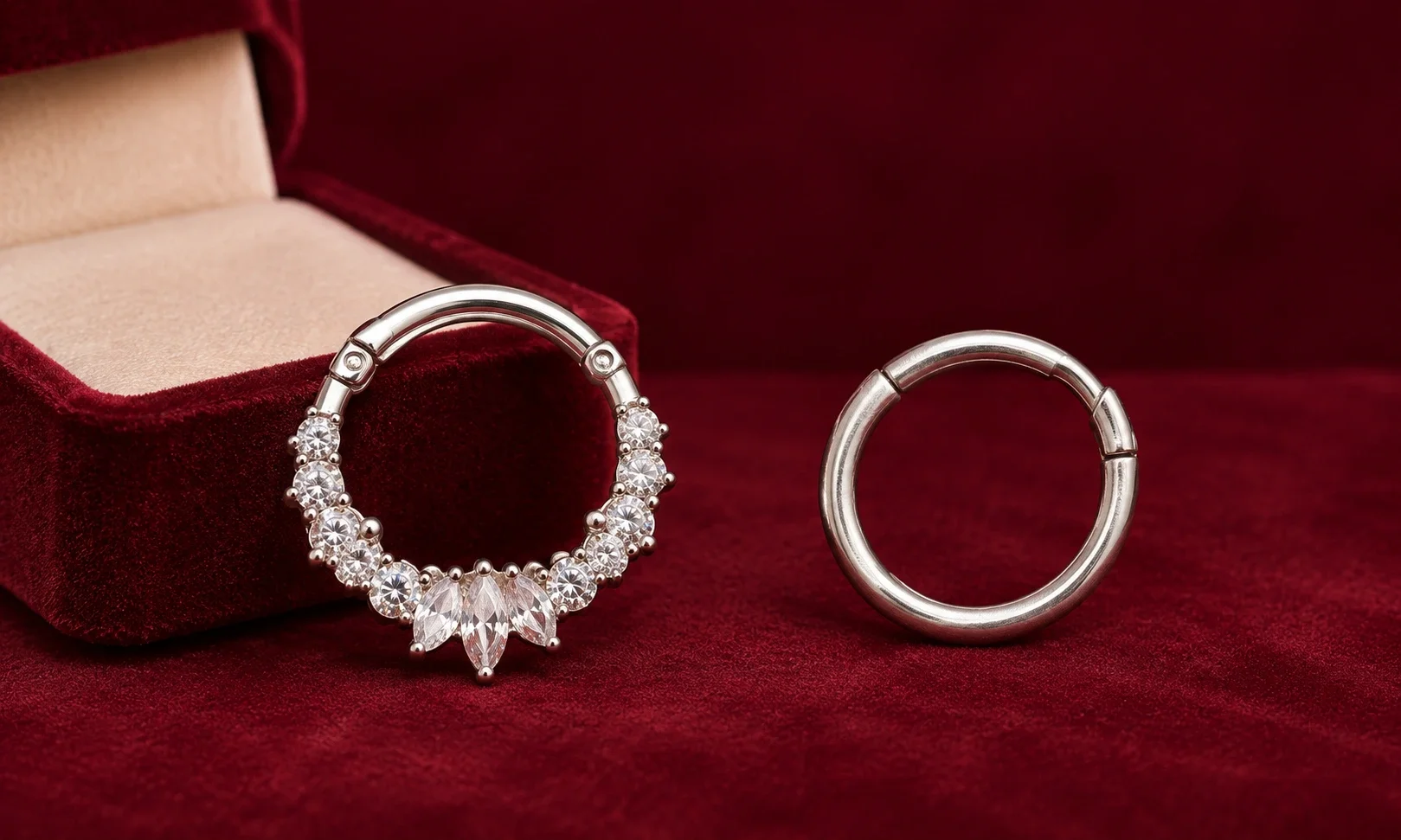
Let me give you a way of thinking about value that has never steered me wrong. Divide the price of the clicker by the number of days you expect to wear it. A $500 clicker worn every day for three years costs about 45 cents a day. A $60 clicker that irritates your ear, loses its shape in four months, and gets replaced twice a year costs more, delivers less, and never once gives you the small private pleasure of wearing something made properly.
Value in fine body jewelry is not the sticker. It is the ratio between what you paid and how many quiet, ordinary mornings the piece makes feel a little more like yours. If you want the deeper breakdown of where premium pricing comes from and when it is justified, our article on what makes daith clickers expensive takes the value question apart piece by piece.
If you are still comparing options, our roundup of the best daith clickers of 2027 applies this exact standard to the current market, and our walkthrough of how to compare daith clickers before you buy turns everything above into a printable checklist.
Piercing care and jewelry choices also matter beyond daith piercings. If you’re exploring other placements, our tongue piercing guide and ear piercing guide explain important considerations. You can also browse our general piercing advice for more information.
The last thing I will tell you
A daith clicker is one of the few pieces of fine jewelry that is almost never seen straight on. It lives at the edge of vision, catching light when you laugh, when you tuck your hair back, when you turn toward someone you love. Nobody buys one because they need it. They buy it because of how it makes an ordinary Tuesday feel.
So buy the one that passes the ten second test. Buy the one whose hinge feels like a small promise. The click you hear when it closes should sound like something becoming yours, because it is.
Frequently asked questions
How much should a good daith clicker cost?
A good solid gold daith clicker typically costs around $150 to $600 or more, depending on its design and materials. Diamond-set pieces can cost even more. Cheaper options under $100 are often made from plated metals or thin materials that may lose their shape over time. Look for a strong hinge, a secure clasp, and a smooth interior finish when choosing one.
Can I put a clicker in a healing daith piercing?
No, clickers should only be used in fully healed daith piercings, which generally take six to twelve months to heal. A healing piercing needs enough room for swelling and proper drainage, so a longer barbell or suitable ring recommended by a professional piercer is a better option. Changing jewelry too early can cause irritation and bumps.
How do I know my daith clicker size?
You need two measurements to find the correct daith clicker size: the inner diameter of the ring and the gauge or thickness of the post. Ask your professional piercer to measure your current jewelry or recommend the correct size. Avoid guessing based on photographs because an incorrect fit can cause discomfort.
Why does my clicker keep opening on its own?
A daith clicker that opens on its own usually has a loose hinge, worn clasp, or poorly fitted closure. Check whether the seam closes securely and sits flush. If the clasp does not stay closed, stop wearing the jewelry and have it checked or replaced by a professional piercer to avoid losing it.
Is titanium or solid gold better for a daith clicker?
Solid 14k or 18k gold is an excellent choice for a fully healed daith piercing because of its durability and polished finish. Implant-grade titanium is another excellent option, especially for people with metal sensitivities or a smaller budget. Both materials can work well, but proper jewelry design, smooth finishing, and a secure closure are equally important.