An Ear Piercing Guide can be a small style change or the start of a whole collection. You might want a simple lobe stud, a neat row of earrings, or a cartilage piercing that gives your ear a different look. The choice is personal, but the basics matter just as much as the jewellery.
Ear Piercing Guide means making a small opening in the earlobe or ear cartilage so jewellery can sit in it. The lobe usually heals faster because it has a better blood supply. Cartilage piercings take longer and need more patience. Before booking an appointment, learn where each piercing sits, what it may feel like, and how to care for it while it heals.
Key Takeaways
- Lobe piercings usually heal faster than cartilage piercings.
- Helix, tragus, daith, conch, rook, and industrial placements all need patience and careful aftercare.
- Healing times vary, and cartilage may take six to twelve months.
- Choose suitable jewellery and a clean, professional studio.
- Avoid twisting jewellery and using harsh cleaning products.
- Get medical help if pain, swelling, heat, or discharge worsens.
What Are the Different Types of Ear Piercing?
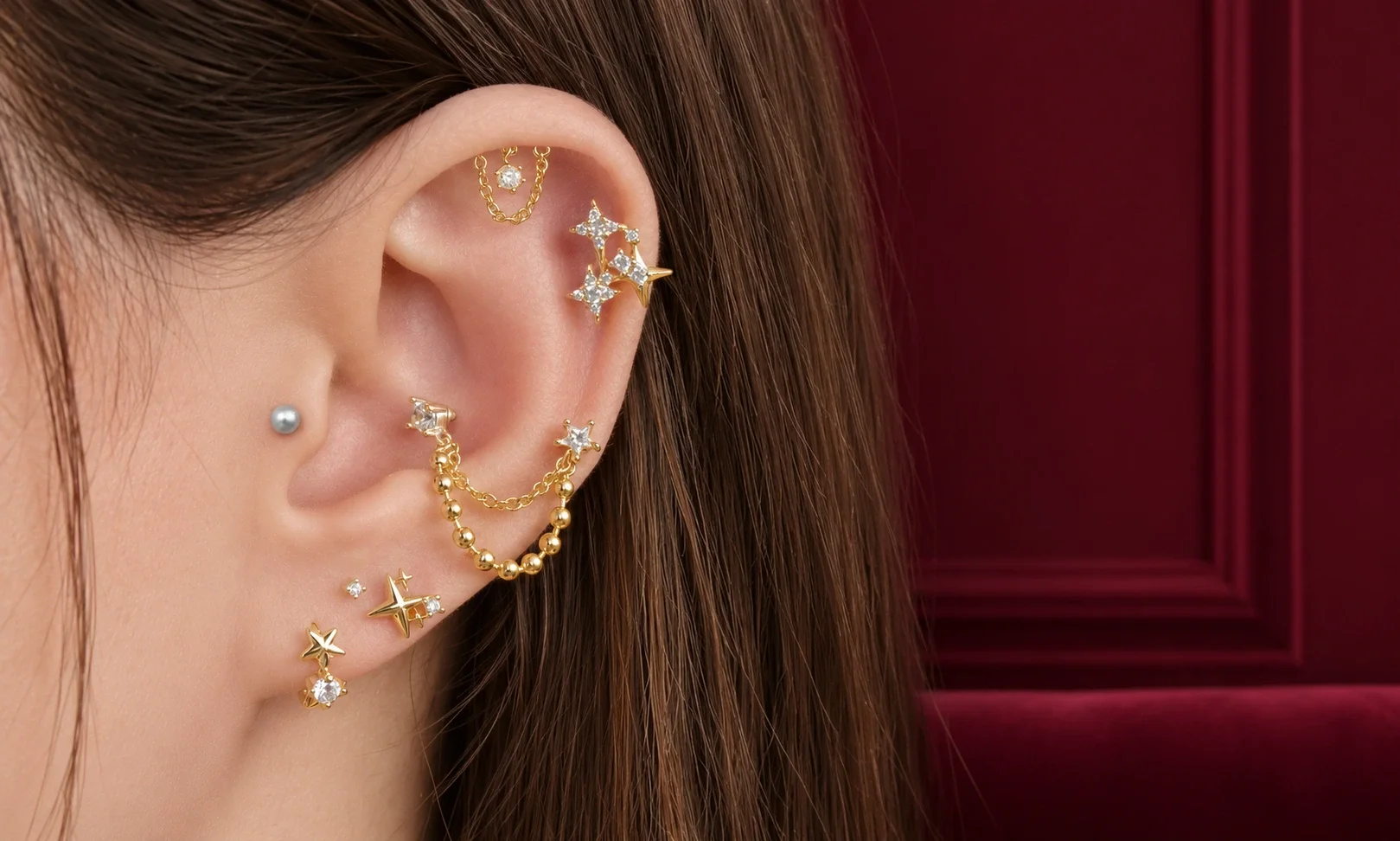
The main difference between Ear Piercing Guide types is their placement. Some go through the soft lower part of the ear, while others pass through the firmer cartilage around the outer ear or inner folds.
1. Lobe Piercing
A lobe piercing passes through the soft, fleshy part at the bottom of your ear. It is a common first piercing because the area is easier to access and generally heals faster than cartilage. You can wear a small stud, hoop, or simple drop earring once the piercing has healed enough for a jewellery change.
Some people choose a second or third lobe piercing to create a stacked look. Make sure there is enough space between holes so earrings do not press against each other.
2. Helix Piercing
A helix piercing sits through the upper outer rim of the ear. It is a cartilage piercing and is often worn with a small stud or hoop. A single helix looks subtle, while multiple helix piercings can create a more layered style.
Because it passes through cartilage, healing usually takes much longer than a lobe piercing. Sleeping on that side or catching the jewellery on hair and clothing can irritate it.
3. Tragus Piercing
The tragus is the small piece of cartilage in front of the ear canal. A tragus piercing places jewellery through this area. Its compact position makes it a popular choice for people who prefer a small detail rather than a large hoop.
Earbuds and headphones may press against a fresh tragus piercing. Ask your piercer how to avoid pressure while it heals, and do not force an earbud into a sore area.
4. Daith Piercing
A daith piercing passes through the innermost fold of cartilage just above the ear canal. It is often decorated with a small ring that follows the curve of the ear. The placement can look striking, but the fold is not the easiest area to clean or protect from pressure.
You may see claims that a daith piercing helps migraines. There is not enough reliable scientific evidence to recommend it as a migraine treatment. Choose it for the look, not as a substitute for medical care.
5. Conch Piercing
A conch piercing sits in the bowl-shaped central part of the ear. Depending on the exact placement, it may be an inner or outer conch. A flat-back stud is common at first, while a hoop may be an option after the piercing has healed and the anatomy allows it.
The jewellery can sit close to the ear, so fit matters. A post that is too short can press into swelling, while an oversized piece may catch on things.
6. Rook and Industrial Piercings
A rook piercing goes through the small fold of cartilage above the daith area. An industrial piercing usually connects two cartilage openings with one long barbell. Both depend on your ear shape, so not everyone has suitable anatomy.
An experienced piercer should assess your ear before recommending either option. Never choose a placement just because it looks good in a photograph.
How Much Does an Ear Piercing Hurt?
Pain varies from person to person. A lobe piercing is often described as a quick pinch followed by mild soreness. Cartilage can feel sharper or more pressured because the tissue is firmer, but there is no reliable way to predict exactly how it will feel for you.
Your comfort can also depend on the piercer’s technique, your stress level, the placement, and whether the area becomes irritated afterward. A professional should explain the process before starting and give you time to ask questions.
If you are nervous, eat beforehand, stay hydrated, and avoid alcohol before your appointment. Do not take medication just to get through the procedure without checking whether it is suitable for you.
How Long Does an Ear Piercing Guide Take to Heal?
Healing time depends mainly on where the piercing is placed. Earlobe piercings often take around six to eight weeks to heal. Cartilage piercings can take several months and may need six to twelve months for full healing.
These are general ranges, not deadlines. A piercing can look calm on the outside while the inside is still healing. Changing jewellery too early may irritate the channel or cause it to close.
| Piercing area | General healing range |
|---|---|
| Earlobe | Around 6–8 weeks |
| Cartilage, including helix and tragus | Several months; often 6–12 months |
Your piercer should explain the expected healing period for your exact placement. If pain, swelling, or discharge is getting worse rather than settling, seek medical advice instead of assuming it is normal healing.
What Jewellery Is Best for a New Ear Piercing?
The right jewellery should be suitable for a fresh piercing and fit your ear without squeezing it. Implant-grade titanium is often recommended for people who want to reduce the risk of a metal reaction. Nickel can trigger allergic contact dermatitis in some people, so ask what the jewellery is made from rather than relying on a label such as “hypoallergenic.”
Solid 14-karat or 18-karat nickel-free gold may be suitable in some cases, but gold-plated jewellery is not the same thing. Avoid cheap, unknown alloys for a fresh piercing. The shape also matters: a flat-back labret may suit some placements, while a ring may move more and cause irritation.
Do not change the starter jewellery on your own just because the swelling has gone down. Ask a qualified piercer when a jewellery change is appropriate.
How Should You Care for a New Ear Piercing?

Good aftercare is simple. The goal is to keep the area clean, avoid unnecessary movement, and give the tissue time to heal. More cleaning does not mean faster healing.
A Simple Daily Aftercare Routine
- Wash your hands before touching the piercing.
- Clean it gently as advised by your piercer. Sterile saline wound wash is commonly used for routine care.
- Rinse away any cleanser residue if you use a mild, fragrance-free cleanser.
- Pat the area dry with clean disposable paper rather than a shared towel.
- Leave the jewellery in place and avoid twisting or turning it.
Try not to sleep directly on a fresh cartilage piercing. Keep hair products, makeup, and dirty hands away from the area. Clean your phone and headphones, and be careful when changing clothes so the jewellery does not snag.
Avoid using rubbing alcohol, hydrogen peroxide, or harsh antiseptics unless a healthcare professional specifically tells you to. These products can irritate healing skin. Do not pick crusts or keep touching the jewellery to check whether it moves.
For more piercing basics and placement ideas, explore the ear piercing guide. If you are comparing facial styles too, you can read about Medusa piercing placement and the smiley piercing.
How Can You Tell If an Ear Piercing Is Infected?

Some tenderness, mild swelling, itching, and a small amount of pale crust can happen during early healing. The key is whether symptoms gradually improve. Increasing pain, heat, swelling, spreading redness or darkening, and thick yellow, green, or foul-smelling discharge can point to infection.
Cartilage infections deserve particular care because they can become serious and may damage the ear if treatment is delayed. Get medical advice promptly if you suspect an infection, especially if you have fever, feel unwell, or the upper ear is very painful or swollen.
Do not remove the jewellery yourself if you think the piercing is infected unless a healthcare professional tells you to. The opening may close and trap infection. A clinician can assess the area and decide whether treatment such as antibiotics is needed.
Where Should You Get Your Ear Pierced?
Choose a professional studio that follows local health and safety rules. The piercer should explain the placement, jewellery material, healing process, and possible risks without rushing you. Look for clean work areas, hand hygiene, sterile single-use needles, and properly sterilised reusable equipment.
Ask how tools are sterilised and whether jewellery is opened from sealed packaging in front of you. A reputable piercer will be comfortable answering these questions. Avoid home piercing kits and piercing guns for cartilage. A gun can cause blunt-force trauma, and some devices cannot be sterilised in the same way as professional equipment.
Price should not be the only deciding factor. A low-cost appointment is not a bargain if hygiene, placement, or jewellery quality is poor.
What Should You Know Before Booking?
Think about your daily routine as well as the look you want. If you sleep on one side, wear over-ear headphones, play contact sports, or use a helmet regularly, some placements may be harder to manage while healing.
Check your work or school rules if visible jewellery is restricted. Consider whether you can follow aftercare for several months, particularly with cartilage. If you have a history of keloid scars, metal allergies, skin conditions, or healing problems, speak with a healthcare professional before booking.
A good piercer will assess your anatomy and may advise against a placement that is unlikely to heal well. That is a sign of responsible practice, not a missed sale.
Frequently Asked Questions
Which ear piercing heals the fastest?
A standard earlobe piercing usually heals faster than cartilage placements. Many lobe piercings take around six to eight weeks, although healing varies. Do not change the jewellery until the piercing is ready.
Is a cartilage piercing more painful than a lobe piercing?
Cartilage can feel sharper or more pressured because the tissue is firmer. Pain is personal, though, and the exact sensation depends on the placement and your own sensitivity.
Can I sleep on a new ear piercing?
It is better to avoid putting direct pressure on a fresh piercing. Sleeping on it can cause soreness and irritation. A travel pillow may help keep your ear free from pressure.
When can I change my ear piercing jewellery?
Wait until the piercing has healed enough for a change. Cartilage often needs many months. Ask your piercer to check it first, especially if you still have tenderness, swelling, or crusting.
Is a daith piercing good for migraines?
There is no strong clinical evidence that a daith piercing prevents or treats migraines. It should not replace diagnosis or treatment from a healthcare professional.
What should I do if my ear piercing looks infected?
Seek medical advice if the area becomes increasingly hot, swollen, painful, or starts producing pus. Do not remove the jewellery unless a clinician advises you to.
Final Thoughts
The best ear piercing is one that suits your style and your everyday life. A lobe stud may be easy to manage, while a daith, rook, or helix can take more time and care. There is no need to rush into a placement because it is popular.
Choose an experienced piercer, use appropriate jewellery, and follow a steady aftercare routine. If something feels increasingly painful or looks infected, get it checked rather than trying random home treatments. At DaithPiercing, the aim is to help readers understand piercing choices and make informed decisions before booking.
Disclaimer: This article is for general information only and is not a substitute for medical advice, diagnosis, or treatment. Healing times and risks vary between people. Contact a qualified healthcare professional if you have signs of infection, an allergic reaction, or concerns about healing.