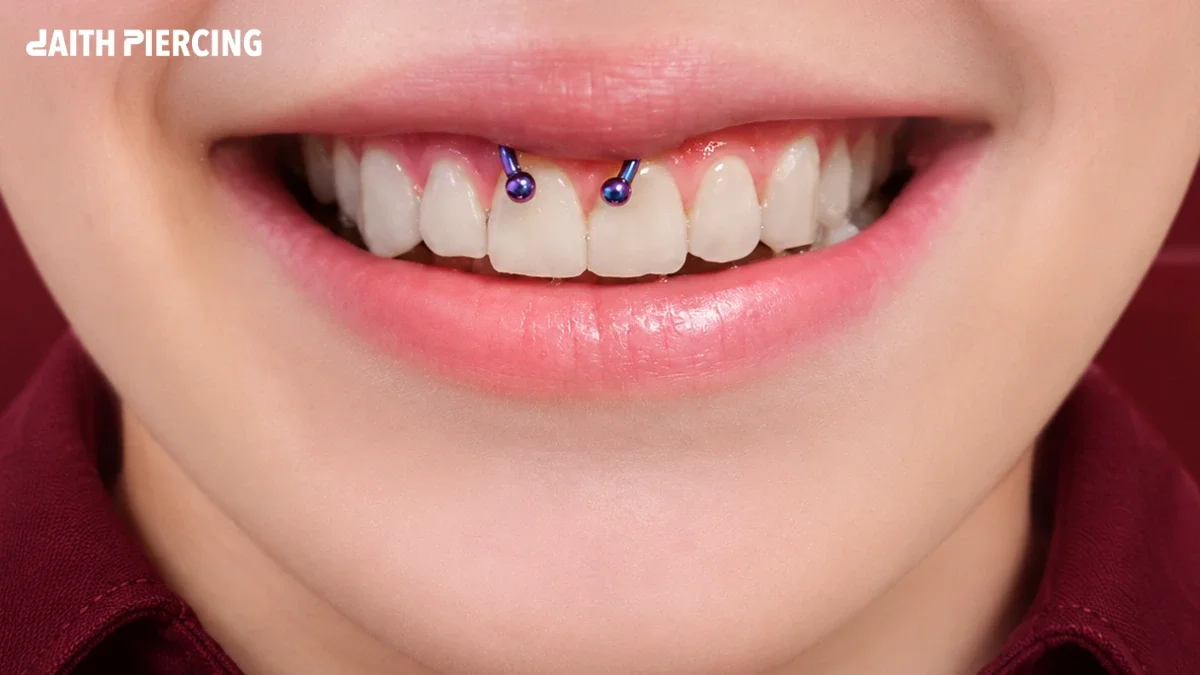
A smiley piercing is a small oral piercing that sits in the thin strip of tissue connecting your upper lip to your upper gum. You usually see the jewelry when someone smiles, which is exactly where its name comes from. It looks subtle when your mouth is relaxed, but the small ring or curved bar becomes visible when you grin.
The look is simple, but there’s more to consider than choosing a cute piece of jewelry. The tissue is delicate, the mouth naturally contains bacteria, and jewelry can rub against your teeth or gums. A smiley piercing also isn’t suitable for every person because the size and position of the upper lip frenulum vary.
If you’re thinking about getting one, here’s what to understand about placement, pain, healing, jewelry, aftercare, and possible dental problems before making a decision.
Key Takeaways
-
A smiley piercing passes through the upper lip frenulum, the small tissue fold above the upper front teeth.
-
It becomes visible mainly when you smile.
-
Pain and healing experiences vary from person to person.
-
Jewelry may rub against teeth or gums and cause damage over time.
-
Good oral hygiene and professional placement matter, but they cannot remove every risk.
-
The American Dental Association advises against cosmetic oral piercings because of possible health complications.
What Is a Smiley Piercing?
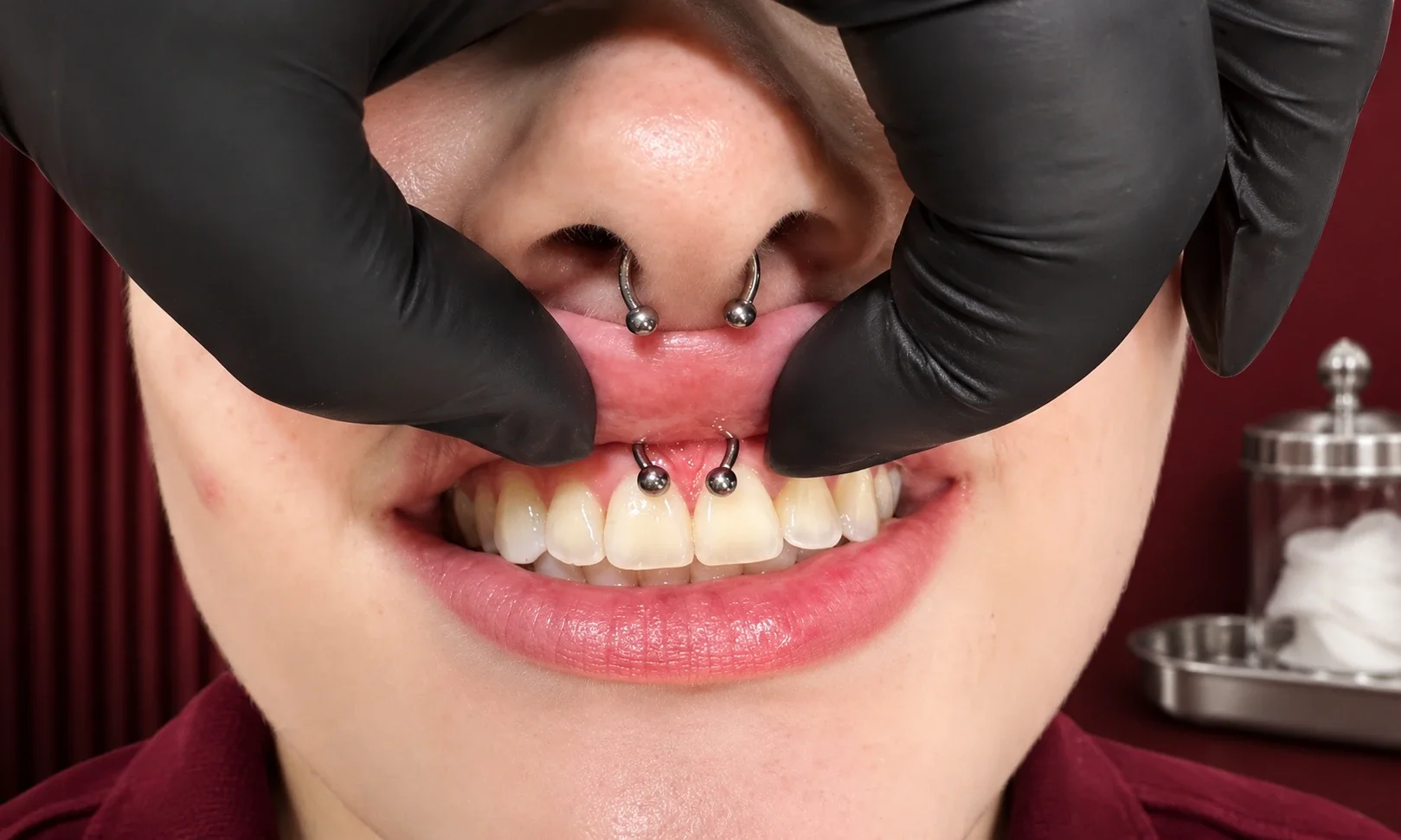
A smiley piercing, also called an upper lip frenulum piercing, goes through the thin tissue connecting the inside of your upper lip to your gum. This small fold is called the labial frenulum. It helps connect and support the lip tissue, and its size and shape differ between people.
Unlike a standard lip piercing, the jewelry doesn’t pass through the outer skin of your lip. It sits inside your mouth, which is why it can be hidden when your lips are closed. When you smile and lift your upper lip, the jewelry becomes visible.
Why Is It Called a Smiley Piercing?
The name comes from how the jewelry appears when you smile. A small ring can sit just above the upper front teeth and create a curved detail beneath the lip.
It’s often chosen by people who want a piercing that isn’t always on display. However, visibility depends on your natural smile, lip movement, and frenulum anatomy. Some people may barely show the jewelry, while others have a more noticeable look.
Is Everyone Suitable for a Smiley Piercing?
No. A smiley piercing depends heavily on your anatomy. The upper lip frenulum needs enough healthy tissue to support jewelry without placing too much pressure on it. If the tissue is too thin, small, damaged, or positioned in a way that makes the jewelry rub against your teeth and gums, a responsible piercer may advise against it.
A professional should examine the area before agreeing to the procedure. Don’t try to judge suitability using a mirror or by pulling your lip hard. A piercer should also explain when the placement is not appropriate rather than forcing a piercing to work.
If you have gum problems, loose teeth, dental appliances, or a history of oral health issues, speak with a dentist before considering an oral piercing.
How Much Does a Smiley Piercing Hurt?
Pain is personal, so there’s no honest number that applies to everyone. The frenulum is thin tissue, and the piercing itself is usually quick. Some people describe a sharp pinch or brief pressure, while others find the experience more uncomfortable than expected.
Your pain response can depend on your sensitivity, stress, anatomy, and the piercer’s technique. A skilled professional should explain each step, use sterile single-use equipment, and stop if something isn’t right. If you’re comparing different piercing experiences, our guides to tragus piercing and rook piercing cover other cartilage piercing placements and what to expect.
Don’t use someone else’s pain rating as a promise. More importantly, don’t let a low pain expectation make you overlook the risks of an oral piercing.
How Much Does a Smiley Piercing Cost?
There isn’t one fixed smiley piercing price. The amount depends on the studio, the piercer’s experience, the location, and the quality of the initial jewelry. A reputable studio may charge more because the fee includes professional assessment, sterile equipment, suitable jewelry, and clear aftercare guidance.
Before booking, ask what the quoted price covers. Check whether jewelry is included, what material it is made from, and whether a follow-up appointment is available. A very cheap offer isn’t automatically a bargain if the studio cannot explain its hygiene practices or jewelry quality. You can also explore our guide to eyebrow piercing to learn about another facial piercing and the factors that can affect its placement and cost.
What Jewelry Is Best for a Smiley Piercing?

The right jewelry depends on your anatomy and the amount of space available. A professional piercer should select the size and style rather than choosing a ring based only on appearance. The Association of Professional Piercers’ jewelry selection guide explains why proper sizing, material, and fit matter for a healing piercing.
Captive Bead Rings
A captive bead ring is a circular piece of jewelry held closed by a small bead. It creates the familiar curved look many people associate with smiley piercings. The fit needs to be correct so the ring doesn’t press against the gum or teeth.
Circular Barbells
A circular barbell has a curved horseshoe shape with a removable end on each side. Some people like its simple appearance, but it still needs enough room to sit comfortably without repeated contact with the teeth.
What Material Should You Choose?
Ask your piercer about verified, body-safe jewelry materials and appropriate sizing. Implant-grade titanium is commonly considered for fresh piercings because it can be suitable for people with metal sensitivities. The exact material and finish should be confirmed by a qualified professional.
Avoid buying oversized, rough, plated, or low-quality jewelry just because it looks attractive. A decorative design is not worth ongoing irritation.
How Long Does a Smiley Piercing Take to Heal?
Healing time varies with anatomy, jewelry fit, oral hygiene, and irritation. There isn’t one guaranteed timeline for every smiley piercing, and it can feel comfortable before the tissue has fully recovered.
The Association of Professional Piercers explains that piercings can heal from the outside in. This means the surface may look settled while the inner tissue is still fragile. Don’t use the absence of pain as proof that healing is complete.
During recovery, mild tenderness, swelling, or light bleeding may occur. Symptoms should gradually improve rather than become worse. If pain, swelling, or discharge increases, contact a healthcare professional.
How Should You Care for a Smiley Piercing?

Oral aftercare needs attention because the mouth contains bacteria and the jewelry sits close to the teeth and gums. Follow the written instructions from your piercer and keep your routine gentle.
Keep Your Mouth Clean
Brush twice daily with a soft-bristled toothbrush and fluoride toothpaste, and floss regularly. The Association of Professional Piercers recommends an alcohol-free, hydrogen peroxide-free mouth rinse for oral piercing care. You can also rinse with clean water after meals.
Avoid using strong mouthwash repeatedly. Alcohol and harsh ingredients may irritate healing tissue rather than help it.
Don’t Play With the Jewelry
It’s tempting to move the ring with your tongue or pull it down to see how it looks. Don’t. Repeated movement can irritate the tissue, delay healing, and increase contact with teeth and gums.
Be Careful With Food and Drinks
Take your time when eating, especially during the early healing period. The Association of Professional Piercers advises avoiding very hot, spicy, salty, and acidic foods or drinks during the first two weeks of oral piercing healing. Rinse with clean water after eating.
Avoid Oral Contact During Healing
Avoid wet kissing and oral sexual contact while the piercing is healing. These activities can introduce bacteria and cause unnecessary movement or trauma around the wound.
What Are the Risks of a Smiley Piercing?
This is the part worth thinking about carefully. A smiley piercing may look small, but it is still an oral piercing with potential complications.
Tooth and Gum Damage
Jewelry can repeatedly touch the upper front teeth or rub against the gum line. Over time, this may contribute to enamel damage, chipped teeth, gum irritation, or gum recession. The American Dental Association warns about these risks and advises against cosmetic oral piercings.
Infection and Swelling
The mouth contains many bacteria, so infection is a concern. Signs that need medical attention include worsening pain, increasing swelling, unusual discharge, fever, or a foul smell. Severe swelling that affects breathing or swallowing needs emergency medical care.
Migration or Rejection
The jewelry may move from its original position or the tissue may become thinner around it. This can happen when the placement is unsuitable or the jewelry causes repeated pressure. If the tissue looks increasingly thin or the jewelry seems to be moving, have it assessed promptly.
Choking or Swallowing Risk
Small jewelry parts can loosen or come off. If a bead or end becomes detached, it may be swallowed or accidentally inhaled. Check jewelry security as advised by your piercer, and don’t ignore loose components.
When Should You Avoid or Remove a Smiley Piercing?
A smiley piercing may not be a good choice if your frenulum is too small, your jewelry repeatedly touches your teeth, or you already have gum or dental problems. A dentist can help you understand your oral health risks before you make a decision.
If you already have one and notice gum recession, tooth sensitivity, chipped enamel, persistent irritation, or movement of the jewelry, arrange an assessment with a dentist and an experienced piercer. Don’t keep wearing jewelry that is causing damage simply because you like its appearance.
If you suspect an infection, get medical advice before removing the jewelry yourself. A healthcare professional can guide you based on the symptoms and situation.
How to Choose a Professional Piercer
The person doing the piercing matters. Look for a clean studio with clear hygiene practices, sterile single-use needles, and a piercer who checks your anatomy before accepting the appointment.
Ask these questions before booking:
-
Do you assess the frenulum before piercing?
-
What jewelry material and size will you use?
-
How are needles and equipment sterilized?
-
What written oral aftercare instructions do you provide?
-
Can I return for a follow-up or jewelry assessment?
A good piercer should be comfortable explaining the risks, including reasons they might refuse the placement. If someone promises a completely safe piercing or dismisses concerns about teeth and gums, consider another studio.
Frequently Asked Questions
Does a smiley piercing hurt more than a regular lip piercing?
There is no reliable universal comparison. The frenulum is thin, and some people experience only a quick pinch, but pain depends on individual sensitivity and placement.
Can you hide a smiley piercing?
Usually, yes. The jewelry is inside the upper lip and is generally more visible when you smile. How easily it stays hidden depends on your lip and frenulum anatomy.
Can a smiley piercing damage your teeth?
Yes. Jewelry can rub against enamel or irritate the gums. Repeated contact may contribute to chipped teeth, enamel wear, or gum recession.
Can you eat normally after getting one?
You may need to eat carefully at first. Choose foods that are comfortable, avoid irritating foods during early healing, and rinse with clean water after meals.
Can a smiley piercing close after removal?
The opening may shrink or close after jewelry removal, but timing varies. Don’t assume it will close immediately or leave no mark.
Is a smiley piercing safe?
No oral piercing is risk-free. Professional placement and good aftercare can reduce some problems, but they cannot remove the risk of infection or dental and gum damage. The American Dental Association advises against cosmetic oral piercings.
Final Thoughts
A smiley piercing has a discreet look that becomes noticeable when you smile, but its position makes it different from many other facial piercings. The jewelry sits close to your teeth and gums, and the thin frenulum isn’t suitable for everyone.
Before booking, get your anatomy checked by an experienced piercer and discuss the dental risks with your dentist. If you decide to go ahead, use suitable jewelry, follow oral aftercare instructions, and pay attention to any changes in your gums or teeth. At DaithPiercing, the goal is to help readers understand both the style and the responsibility that comes with a piercing.
Disclaimer: This article provides general educational information and isn’t a substitute for medical or dental advice. Speak with a qualified dentist or healthcare professional about personal health concerns, and consult an experienced professional piercer for placement and jewelry advice.