A tragus piercing is a small detail, but it can change the look of your ear quite a bit. It sits on the little piece of cartilage just in front of your ear canal. Some people choose a tiny stud for a clean, simple look, while others prefer a small hoop once the piercing has healed.
Looks are only one part of the decision, though. Because the tragus is made of cartilage, healing takes patience and the right care. You may also need to adjust how you use earbuds, sleep, and handle your hair while the piercing settles.
So, what should you know before getting one? This guide from DaithPiercing explains the placement, pain, healing time, jewelry, cost, aftercare, and possible problems in plain language.
Key Takeaways
-
A tragus piercing passes through the small cartilage flap in front of the ear canal.
-
The piercing usually takes around six to twelve months to heal fully.
-
Pain varies, but expect a quick pinch and pressure rather than a completely painless experience.
-
A flat-back stud made from suitable implant-grade material is a common initial jewelry choice.
-
Avoid pressure from earbuds, headphones, fingers, and sleeping positions.
-
Increasing pain, heat, swelling, or pus can indicate an infection and needs medical attention.
What Is a Tragus Piercing?
The tragus is the small, firm flap of cartilage that partly covers the entrance to your ear canal. A tragus piercing goes through this cartilage, allowing you to wear a small stud or, in some cases, a ring after healing.
Unlike an earlobe piercing, it does not pass through soft tissue. Cartilage has a more limited blood supply, which is one reason it can take longer to recover. The exact placement also depends on the shape and thickness of your tragus.
Not every ear is suitable for this piercing. If your tragus is very small, flat, or shaped in a way that leaves little room for jewelry, a professional piercer may recommend another option. An in-person anatomy check is the best way to find out.
Does a Tragus Piercing Hurt?
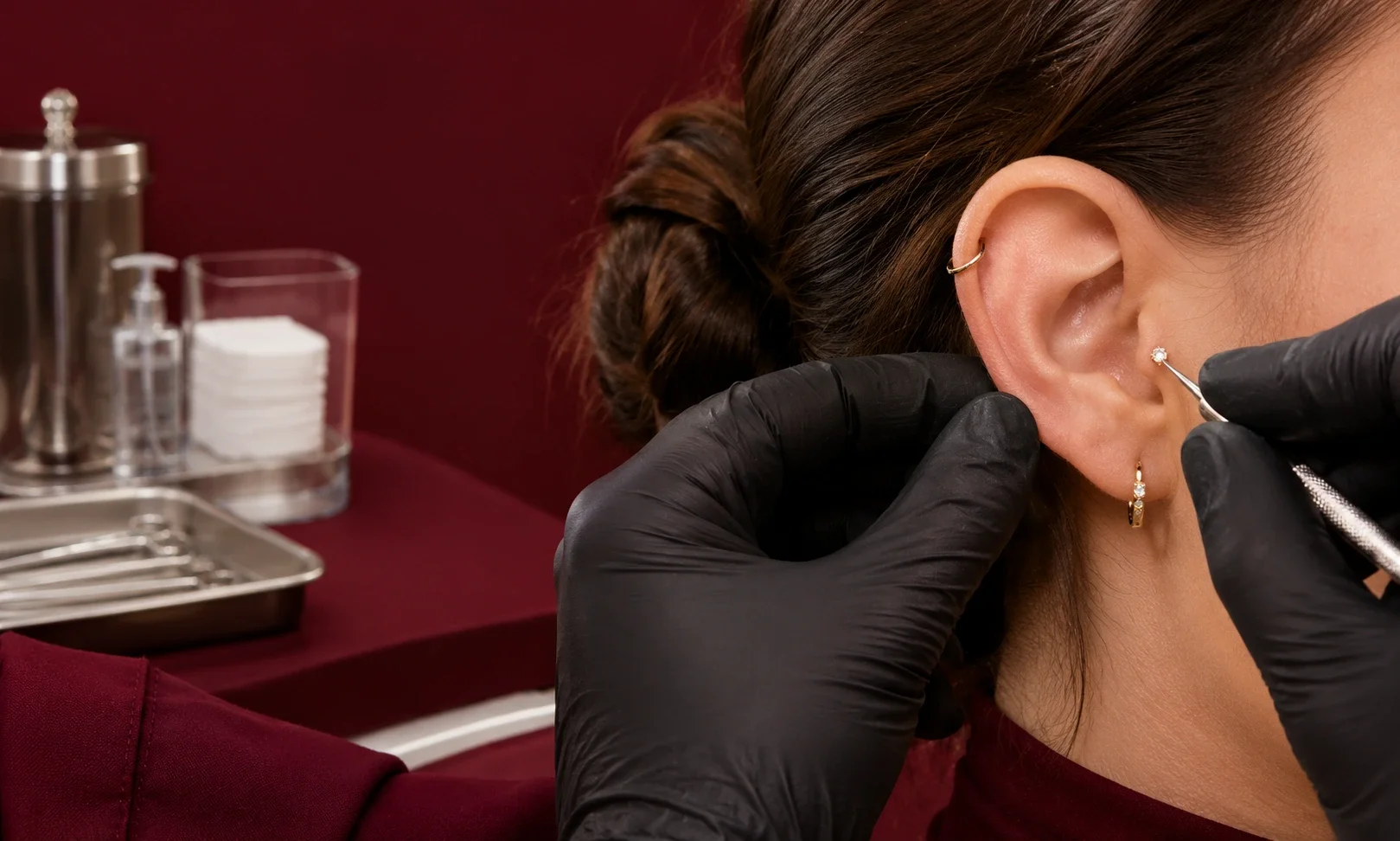
Yes, you will probably feel it, but the level of pain depends on your sensitivity and the way the piercing is performed. The needle passes through firm cartilage, so the sensation can feel sharper or more pressurized than a standard lobe piercing.
Most people should expect a brief pinch, pressure, and some tenderness afterward. The actual piercing is quick, but the area may stay sore for several days. It can feel more uncomfortable if you accidentally touch it, catch it while changing clothes, or press on it with headphones.
There is no reliable pain score that applies to everyone. If you are nervous, tell your piercer before the procedure. They can explain each step and give you time to feel comfortable.
How Much Does a Tragus Piercing Cost?
There is no single price for a tragus piercing. The total depends on your country, city, studio, piercer’s experience, and the jewelry you select.
Some studios include basic jewelry in the service fee. Others charge separately for the piercing and the initial stud. Higher-quality materials, such as implant-certified titanium or suitable solid gold, can increase the total.
Before booking, ask for a clear breakdown. Check whether the price includes the jewelry, sterile procedure, and any follow-up fitting or downsizing appointment. A very cheap offer should not be your main reason for choosing a studio. Hygiene, training, safe equipment, and proper jewelry matter more.
What Jewelry Is Best for a Tragus Piercing?

For a fresh tragus piercing, the jewelry must fit your anatomy without putting pressure on the surrounding skin. A flat-back labret stud is commonly used because its smooth back can sit comfortably behind the tragus.
Which Materials Should You Choose?
The Association of Professional Piercers recommends suitable, documented materials for initial body jewelry. Options can include implant-certified titanium, certain compliant steel grades, and appropriate solid gold. Ask the piercer to confirm the exact material rather than relying on a vague label such as “surgical metal.”
Titanium is often considered by people concerned about nickel sensitivity. Suitable solid gold can also be an option, provided it is nickel-free and made for body piercing. Avoid plated jewelry and unknown metal mixtures for a fresh piercing.
Can You Wear a Hoop in a New Tragus Piercing?
A hoop may look appealing, but it moves more easily and can catch on hair, clothing, or other objects. Your piercer will decide which jewelry style and size suit your anatomy. A small hoop may be an option after the piercing has healed, but don’t change the jewelry early just for appearance.
How Long Does a Tragus Piercing Take to Heal?
A tragus piercing generally takes around six to twelve months to heal fully. This is an estimate, not a deadline. Some people need more time, especially if the piercing is repeatedly irritated or pressed.
Cartilage heals more slowly than the earlobe because it receives less blood flow. The outside may look settled before the inside has finished healing, so a piercing that no longer feels sore is not automatically ready for a jewelry change.
What Happens During the Healing Process?
During the first few days, mild swelling, tenderness, redness, or a little bleeding can occur. Over the following weeks, you may notice light itching or pale crust around the jewelry. These signs can be part of normal healing, but symptoms should gradually improve rather than become more painful.
Over the next several months, the piercing continues to strengthen internally. Avoid judging it only by how it looks. Ask a qualified piercer to check it before changing jewelry or deciding that it has healed.
How Should You Clean a Tragus Piercing?
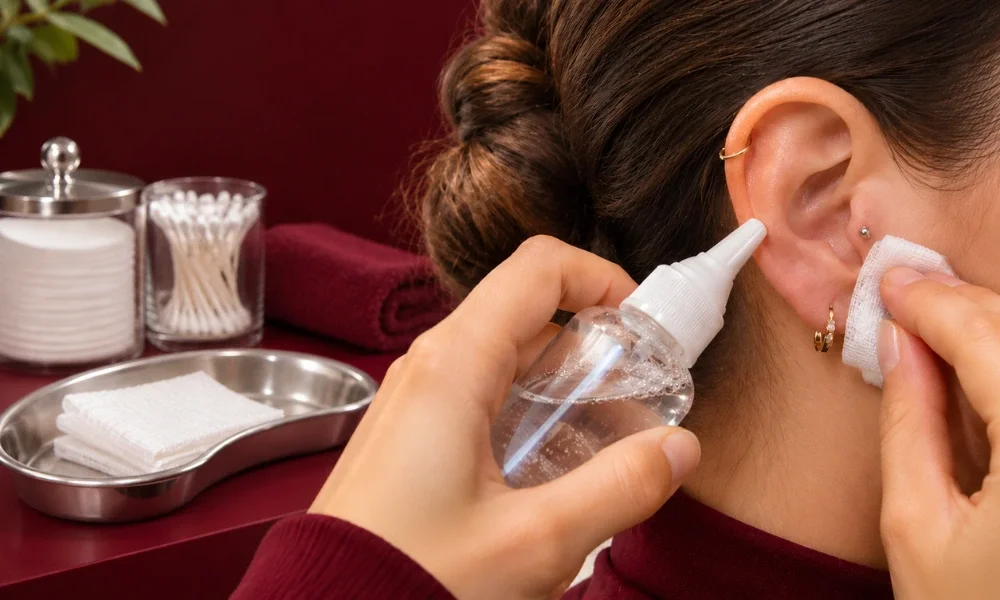
Good aftercare does not need to be complicated. The aim is to keep the area clean while avoiding unnecessary movement, pressure, and harsh products.
1. Use Sterile Saline
Choose a packaged sterile saline wound wash with 0.9% sodium chloride as its only active ingredient. Gently rinse the piercing according to the product instructions. The Association of Professional Piercers does not recommend homemade salt mixtures because they can be too strong and irritate healing skin.
2. Wash Your Hands First
Always wash your hands before touching or cleaning the piercing. This simple habit helps reduce the chance of transferring bacteria to the healing area. Avoid touching the jewelry throughout the day just to check whether it moves.
3. Leave the Jewelry Alone
Do not twist, spin, or move the stud while cleaning. This can irritate the healing channel and make recovery harder. Leave the jewelry in place unless a qualified piercer or healthcare professional advises a change.
4. Dry the Area Gently
After rinsing or showering, carefully pat the area dry with clean disposable gauze or paper products. Avoid rough towels that may catch on the jewelry. Keep hair products, makeup, and skincare products away from the piercing.
5. Avoid Harsh Cleaning Products
Do not apply rubbing alcohol, hydrogen peroxide, strong antiseptics, or random creams. These can irritate the skin and interfere with healing. Cleaning more often than needed will not make the piercing heal faster.
Can You Wear Earbuds With a Tragus Piercing?
You may need to avoid earbuds during the early healing period, especially if they press against the jewelry. Even a small amount of repeated friction can cause tenderness and irritation.
Over-ear headphones may also be uncomfortable if their padding presses on the tragus. There is no fixed date when every person can safely return to their usual headphones. Wait until the area is comfortable, check that nothing touches or pushes the jewelry, and ask your piercer if you are unsure.
What Are the Risks of a Tragus Piercing?
Like other cartilage piercings, a tragus piercing can develop problems. Knowing what to look for makes it easier to respond early.
Infection
Increasing pain, heat, swelling, redness or darkening, and pus-like discharge can be signs of infection. Fever, chills, or feeling unwell are additional reasons to seek urgent medical advice. Cartilage infections can become serious and should not be ignored.
Irritation Bumps
A small bump near the piercing is not automatically an infection or a keloid. Pressure, friction, unsuitable jewelry, or repeated touching may irritate. Do not squeeze the bump or apply unverified home treatments. Ask a reputable piercer to assess the jewelry, and seek medical advice if symptoms worsen.
Metal Allergy
Some people react to metals such as nickel. Itching, a rash, or ongoing irritation around the jewelry may suggest an allergic reaction. If you notice similar symptoms, you can learn more about piercing rashes and what may cause them. Choosing documented, suitable jewelry can lower the risk, but no material is guaranteed to suit everyone.
Migration or Rejection
If the jewelry changes position, the piercing hole appears to move, or more of the bar becomes visible through the skin, ask a professional to assess it. Do not try to reposition or adjust the jewelry yourself.
When Should You See a Doctor?
Mild tenderness and some swelling can happen after a new piercing. However, symptoms that become worse instead of gradually settling need attention.
Contact a healthcare professional promptly if you notice:
-
Increasing or severe pain.
-
Significant swelling or skin that feels hot.
-
Yellow, green, or foul-smelling discharge.
-
Redness or darkening that spreads around the area.
-
Fever, chills, or feeling generally unwell.
If you suspect an infection, do not remove the jewelry unless a doctor tells you to. The NHS advises leaving it in place while seeking medical advice.
Is a Tragus Piercing Worth Getting?
If you like small, understated ear jewelry, a tragus piercing can be a good choice. It adds detail without needing a large piece of jewelry, and there are simple studs and decorative options to consider after healing.
The trade-off is the healing period. You may need to change your earbud habits, avoid sleeping on that side, and be careful when washing your hair or changing clothes. If you’re exploring other piercing styles, an eyebrow piercing is another option to consider, but each piercing has its own healing needs. If those adjustments sound manageable, a tragus piercing may suit your routine.
Think about your everyday habits before booking. The best piercing is not just one you like in a photo; it is one you can look after comfortably.
Frequently Asked Questions
1. How painful is a tragus piercing compared with a helix?
Both pass through cartilage, but the sensation can vary with anatomy, technique, and personal pain tolerance. A tragus piercing may feel like a sharp pinch followed by pressure. There is no universal pain ranking.
2. How long before I can change my tragus jewelry?
Do not change it simply because the outside looks healed. A tragus piercing can take six to twelve months to heal fully. Ask a qualified piercer to check it before changing the jewelry.
3. Can I sleep on my tragus piercing?
Avoid sleeping directly on a healing tragus piercing. Pressure can irritate the area and may affect the angle of the jewelry. Sleeping on the other side can help.
4. Can a tragus piercing affect hearing?
A correctly placed tragus piercing does not normally pass through the ear canal or hearing structures. However, swelling, infection, or poorly fitted jewelry may cause discomfort near the canal. Seek medical advice if you notice hearing changes or unusual symptoms.
5. Why is my tragus piercing still swollen?
Some swelling can occur early in healing, but it should gradually improve. Ongoing or increasing swelling may be linked to pressure, irritation, unsuitable jewelry, or infection. Have it assessed, especially if it feels hot or painful.
6. Can I get a tragus piercing if I have a small tragus?
It depends on your ear anatomy. A professional piercer should examine the area and decide whether there is enough suitable tissue for safe placement. If not, they may suggest another piercing.
Disclaimer
This article is for general educational purposes and is not a substitute for medical advice, diagnosis, or treatment. Healing time, piercing suitability, and reactions to jewelry vary between individuals. Consult a qualified professional piercer about placement and jewelry, and contact a healthcare professional if you suspect an infection or experience worsening symptoms.