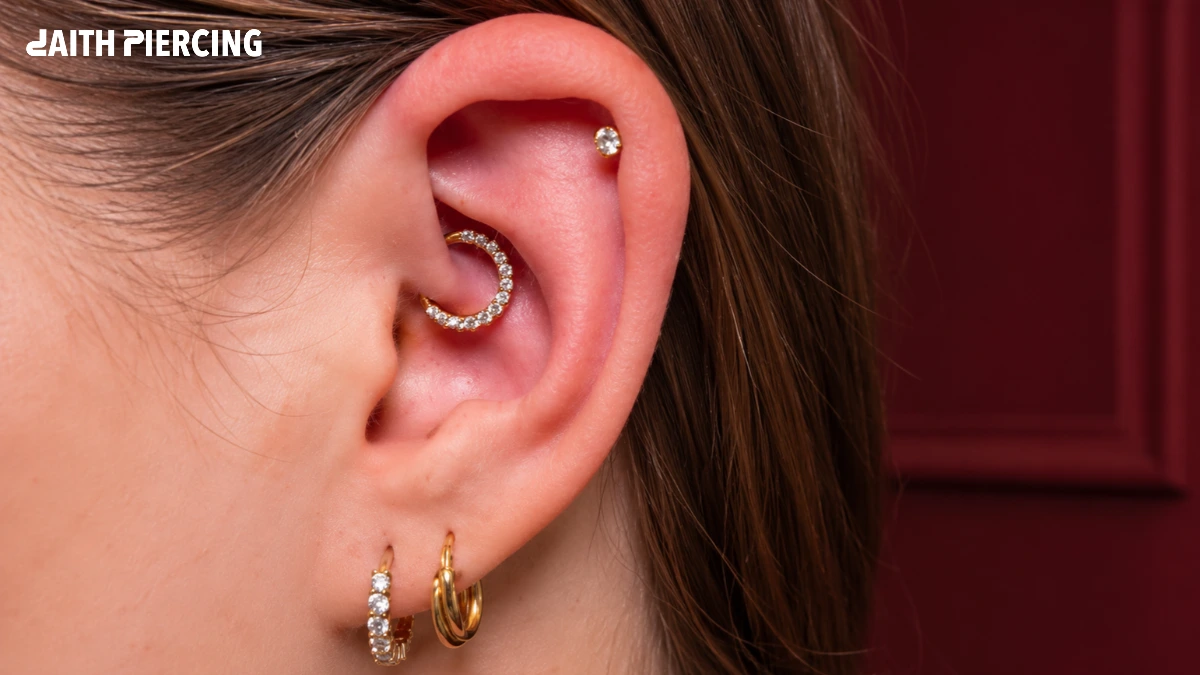
Daith Piercing Rash: A rash around a daith piercing usually results from irritation, friction, jewelry sensitivity, or contact dermatitis. An infection is another possibility, particularly when the area becomes increasingly painful, hot, swollen, or produces pus.
For mild irritation, keep the piercing clean with sterile saline, avoid touching or rotating the jewelry, and reduce pressure or friction. The Association of Professional Piercers recommends sterile saline wound wash containing 0.9% sodium chloride rather than homemade salt mixtures.
However, if redness or swelling is spreading, pain is increasing, the ear feels hot, or you notice pus or fever, seek medical care. Cartilage infections can require prompt treatment.
Key Takeaways
- A daith piercing rash does not always mean infection.
- Irritation, friction, metal allergy, contact dermatitis, and infection can look similar.
- Nickel and other jewelry metals can trigger allergic reactions.
- Use sterile saline rather than strong homemade salt solutions.
- Avoid touching, twisting, squeezing, or unnecessarily moving the jewelry.
- Reduce pressure from sleeping, earbuds, headphones, hair, and other objects.
- Increasing pain, heat, swelling, pus, fever, or spreading redness requires medical attention.
- Cartilage infections can become serious if treatment is delayed.
- Implant-certified titanium may be a useful jewelry choice for people concerned about metal sensitivity.
What Does a Rash Around a Daith Piercing Mean?
A rash means that the skin around the piercing is reacting to something. The reaction can be mild and temporary, but sometimes it indicates a problem that needs professional treatment.
For instance, a new piercing may naturally be tender, itchy, or slightly red during early healing. A small amount of pale fluid that dries into a crust can also occur during normal healing.
On the other hand, persistent or worsening symptoms deserve more attention. If the rash is spreading instead of settling, the piercing may be experiencing significant irritation, an allergic reaction, or an infection.
Common Causes of a Daith Piercing Rash
1. Normal Healing
Fresh piercings are wounds, so some tenderness and mild irritation can occur while the body repairs the area.
Additionally, dried lymph fluid can create light crusting. This alone does not prove that bacteria have caused an infection.
2. Irritation and Friction
Irritation is one of the most common reasons a piercing becomes angry.
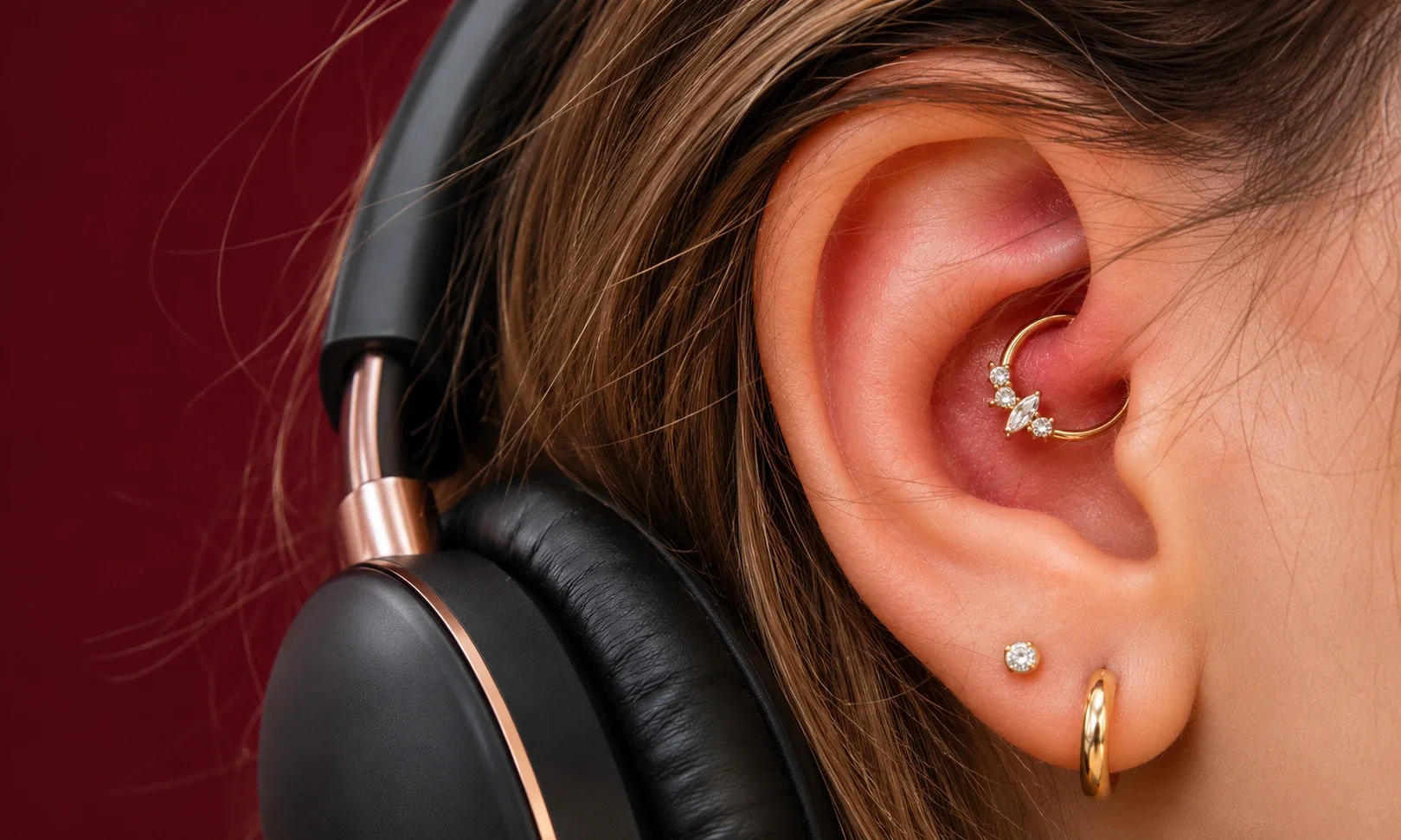
Sleeping on the piercing, catching the jewelry with hair, repeatedly touching the ear, using earbuds, or moving the jewelry unnecessarily can disturb the healing tissue.
Furthermore, jewelry that is poorly fitted can create repeated pressure. The result may be redness, tenderness, swelling, or an irritation bump.
3. Metal Allergy
A metal allergy can produce an itchy rash around jewelry. Nickel is a particularly common cause of allergic contact dermatitis.
Unlike an infection, an allergic rash may be especially itchy and can look dry, flaky, or irritated. In some cases, the reaction can continue until the triggering material is removed.
Therefore, if symptoms repeatedly appear after wearing certain jewelry, the metal itself may be contributing to the problem.
4. Contact Dermatitis
The jewelry is not always the only possible trigger.
Shampoo, conditioner, hair products, fragrance, skincare products, cleaning products, or other substances can reach the ear and irritate sensitive skin. The American Academy of Dermatology notes that contact dermatitis can occur when the skin reacts to an irritating substance or allergen.
Consequently, think about what has recently changed in your haircare or skincare routine.
5. Infection
An infection becomes more concerning when symptoms become progressively worse.
Possible signs include increasing pain, warmth, swelling, marked redness or darkening, pus, or feeling feverish or unwell.
Because a daith is a cartilage piercing, suspected infection should be taken seriously.
6. Excessive Cleaning
Cleaning sounds helpful, but more is not always better.
Harsh products or repeated cleaning can irritate healing tissue. Similarly, homemade salt solutions can easily become too concentrated. The Association of Professional Piercers recommends packaged sterile saline wound wash instead of homemade sea-salt mixtures.
Irritation vs Allergy vs Infection
| Sign | Irritation | Allergy | Possible Infection |
|---|---|---|---|
| Itching | Common | Often strong | Possible |
| Mild redness | Common | Common | Common |
| Dry or flaky rash | Possible | Common | Less typical |
| Increasing pain | Less typical | Possible | Concerning |
| Heat | Usually mild | Usually limited | More concerning |
| Pus | No | Usually no | Possible |
| Spreading redness | No | Possible but less typical | Concerning |
| Fever or chills | No | No | Red flag |
| Trigger | Pressure, friction, touching | Jewelry or product | Bacteria |
This table is only a guide. Symptoms can overlap, so it cannot replace an examination by a healthcare professional.
How to Treat a Mild Daith Piercing Rash
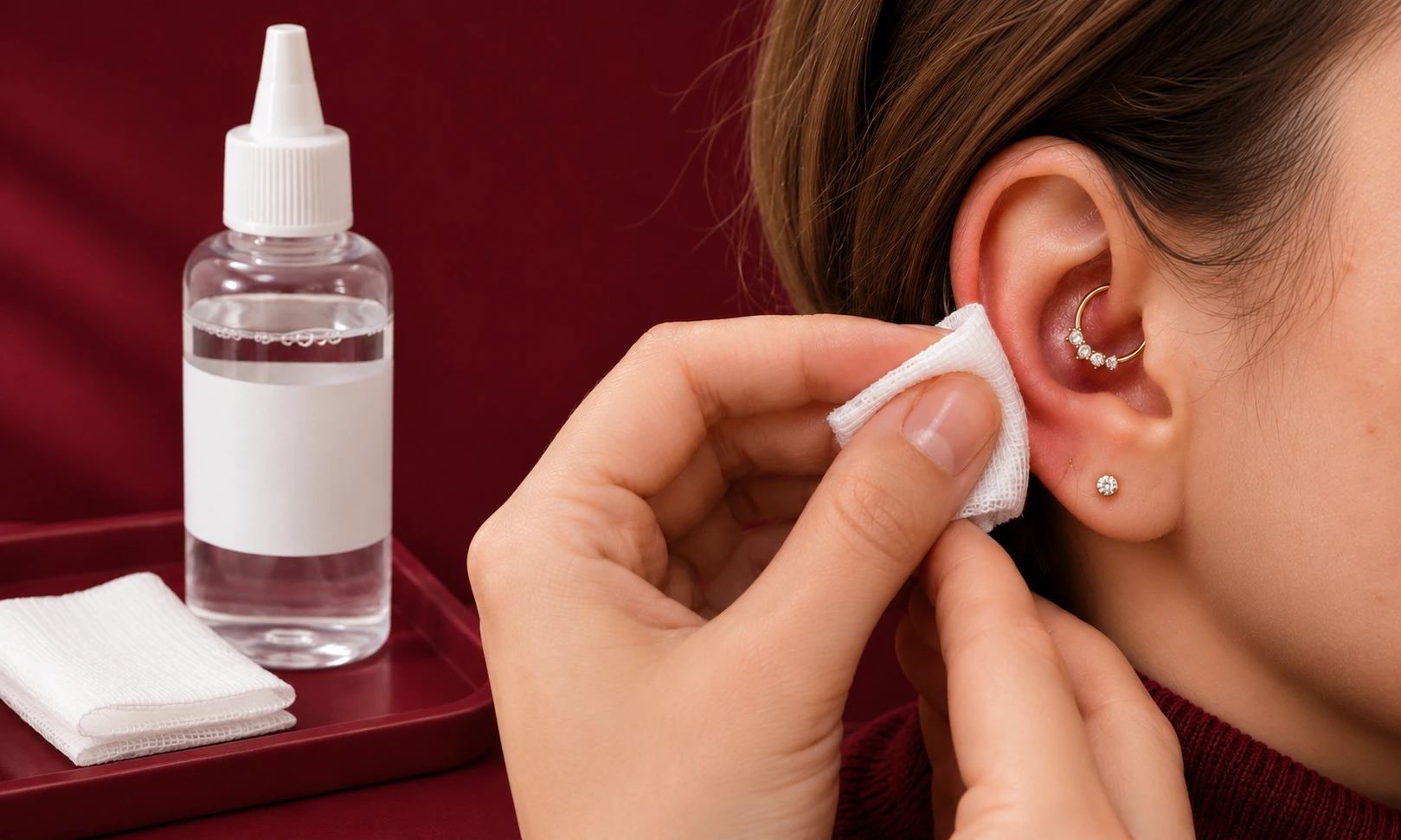
Clean With Sterile Saline
First, wash your hands before touching the piercing.
Then use a sterile saline wound wash designed for wound care. The APP recommends a product containing 0.9% sodium chloride as the main ingredient.
Afterward, allow the area to dry naturally or gently pat around it with clean disposable material. Avoid aggressive rubbing.
Leave the Jewelry Alone
Do not repeatedly rotate, twist, pull, or move the jewelry. Although older aftercare advice sometimes recommended rotating jewelry, the Association of Professional Piercers says unnecessary movement can irritate a healing piercing.
This is especially worth remembering if you’re experiencing daith piercing numbness or trying to understand how a daith compares with helix piercing and other cartilage piercings. Each piercing has its own placement and healing considerations.
Therefore, the safest approach for a healing piercing is generally to clean it gently and leave it alone.
Reduce Pressure
Try to avoid sleeping directly on the affected ear.
Also, keep headphones, earbuds, hair, hats, helmets, and other objects from repeatedly pressing against the area. Reducing friction gives irritated tissue a better chance to settle.
Stop Potential Irritants
If a new hair product, perfume, cream, or other cosmetic product recently came into contact with the ear, stop using it around the piercing.
Similarly, avoid applying unnecessary products directly to the piercing until you know what is causing the reaction.
What Not to Put on a Daith Piercing
Avoid experimenting with strong household products.
Do not routinely use rubbing alcohol, hydrogen peroxide, essential oils, undiluted antiseptics, or homemade salt mixtures unless a healthcare professional specifically tells you to do so.
The APP specifically warns that overly strong homemade salt solutions can dry the piercing and interfere with healing.
Moreover, do not squeeze, pop, or pick at an irritation bump. Scratching an irritated rash can further damage the skin and can increase the risk of infection.
When to See a Doctor
A daith piercing should be medically assessed if you suspect infection.
Seek prompt medical attention if you develop:
- Increasing or severe pain
- Significant swelling
- An ear that feels hot
- Spreading redness or darkening
- Yellow, green, or foul-smelling pus
- Bleeding that does not settle
- Fever or chills
- Feeling generally unwell
- Symptoms that are rapidly getting worse
Mayo Clinic specifically advises medical care for painful, itchy, swollen, very red or dark cartilage piercings because cartilage infections can require treatment.
Additionally, perichondritis is an infection affecting the tissue around ear cartilage. If untreated, it can damage cartilage and potentially cause permanent ear deformity.
Should You Remove the Jewelry?
Do not automatically remove an infected piercing yourself.
Removing jewelry can allow the channel to close and may complicate drainage. More importantly, the correct decision depends on the condition of the piercing and should be made with medical guidance when infection is suspected.
If the problem appears to be an allergic reaction, a healthcare professional or experienced piercer can help determine whether the jewelry material needs to be changed.
Choosing Better Jewelry
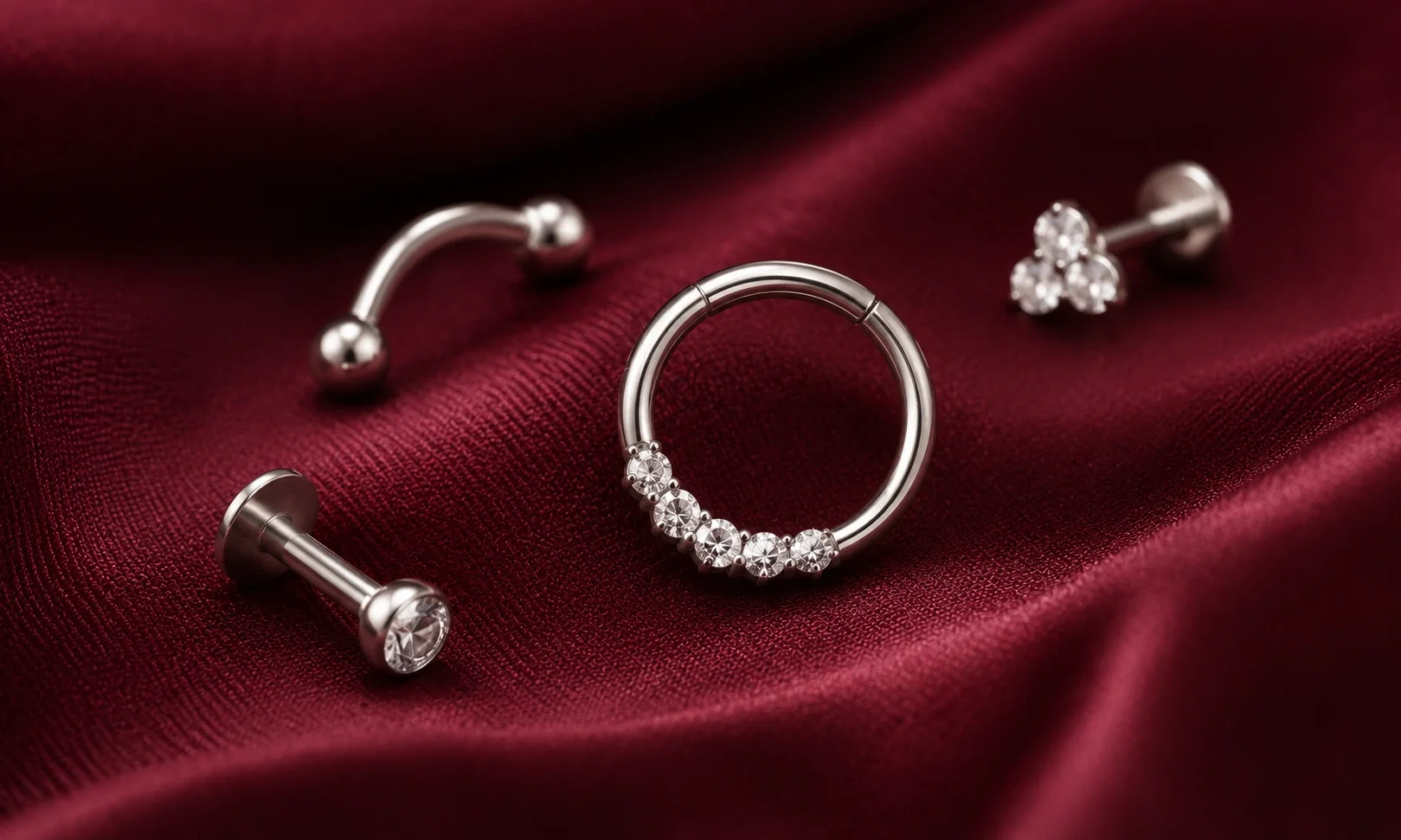
Jewelry material can make a major difference for people with metal sensitivity.
Implant-grade titanium is commonly recommended for people concerned about nickel sensitivity. The Association of Professional Piercers lists specific implant-certified titanium standards, including ASTM F-136 and ASTM F-67.
| Jewelry Material | General Consideration |
| Implant-grade titanium | Good option for many people with metal sensitivity |
| Implant-grade steel | Some certified grades are suitable |
| Niobium | Commonly used and well tolerated |
| Unknown metal | Better avoided during healing |
| Cheap plated jewelry | May cause problems if the coating wears or the underlying metal irritates the skin |
If you suspect a metal allergy, changing jewelry should be approached carefully. A professional piercer can assess the fit and material, while a dermatologist can investigate persistent allergic reactions.
The American Academy of Dermatology also notes that nickel-containing jewelry can trigger allergic contact dermatitis.
How to Prevent a Rash Around a Daith Piercing
Prevention starts before and immediately after getting pierced.
Choose an experienced professional who uses appropriate sterile equipment and quality jewelry. Afterward, wash your hands before touching the area and follow a simple aftercare routine.
Furthermore, avoid unnecessary touching and pressure. Keep hair products away from the piercing, change pillowcases regularly, and avoid swimming or submerging a fresh piercing in potentially contaminated water while it heals.
Most importantly, do not keep changing products every few days. A simple routine is usually easier for irritated skin than a long list of treatments.
Frequently Asked Questions
Is a rash around a daith piercing normal?
A small amount of redness, tenderness, itching, or crusting can happen during normal healing. However, a worsening rash, increasing pain, heat, significant swelling, or pus can indicate a complication and should be assessed.
How do I know if my daith piercing is infected?
Look for increasing pain, warmth, swelling, significant redness or darkening, pus, fever, chills, or feeling unwell. Because daith piercings pass through cartilage, suspected infection should be taken seriously.
Can a daith piercing cause an allergic reaction?
Yes. Jewelry can trigger allergic contact dermatitis, particularly when it contains nickel or another metal that your skin reacts to.
Can I use salt water on a daith piercing?
Packaged sterile saline is preferred. The Association of Professional Piercers no longer recommends homemade sea-salt solutions because they can easily become too strong and irritate the piercing.
Should I pop a daith piercing bump?
No. Squeezing or picking the bump can further irritate the tissue and potentially introduce bacteria. Instead, use gentle aftercare and seek professional advice if the bump persists or worsens.
Is titanium better for a sensitive piercing?
Implant-certified titanium is a useful option for people concerned about metal sensitivity. However, jewelry quality, fit, finish, and proper aftercare all matter.
Can overcleaning cause a rash?
Yes. Excessive cleaning or harsh products can irritate healing tissue. Consequently, gentle cleaning with an appropriate sterile saline product is generally preferable to repeatedly applying strong substances.
How long should I wait before worrying about a rash?
There is no single number of days that applies to everyone. A mild irritation that improves with gentle care is less concerning than symptoms that steadily worsen. If you have increasing pain, swelling, heat, pus, or systemic symptoms, seek medical advice promptly.
Conclusion
A rash around a daith piercing can have several causes, and the appearance alone is not enough to diagnose the problem. In many cases, irritation from pressure, touching, jewelry, or harsh aftercare is responsible. However, an allergic reaction or infection can produce similar symptoms.
Therefore, start with simple care: wash your hands, use sterile saline, avoid unnecessary movement, and protect the piercing from friction. At the same time, pay close attention to changes in pain, swelling, warmth, discharge, and redness.
Most importantly, do not ignore signs of infection simply because the problem looks like a normal piercing bump. Since a daith passes through cartilage, worsening symptoms deserve professional medical attention.
For more daith-specific jewelry, aftercare, and piercing guidance, PK Daith Piercing can provide readers with a focused resource for continuing their research. Always remember that online information cannot replace an examination by a qualified healthcare professional when infection or a significant allergic reaction is suspected.