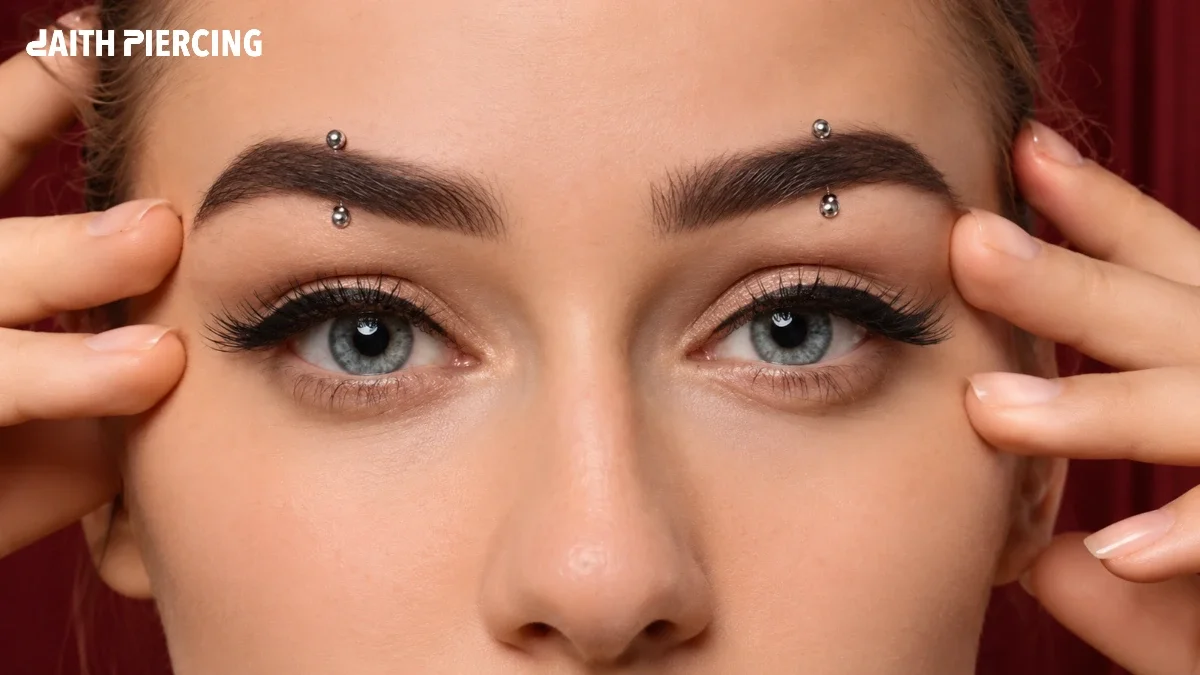
An Eyebrow Piercing Guide can change the look of your face without needing a dramatic style change. A small silver bar, a simple gold piece, or a tiny gemstone can add just enough detail to make your look feel different. The best part is that you can keep it minimal or choose jewelry that stands out.
But before booking an appointment, there are a few things worth knowing. Eyebrow piercings need proper placement, suitable jewelry, and regular aftercare. They can also migrate or be rejected by the body, even when you take good care of them.
This guide from daithpiercing covers eyebrow piercing styles, pain, healing time, jewelry choices, aftercare, and possible complications so you can make an informed decision.
Key Takeaways
- An eyebrow piercing can be subtle or bold, depending on its placement and jewelry.
- Healing may take six to eight weeks or longer, depending on individual circumstances.
- Curved barbells are commonly used for vertical eyebrow piercings.
- Implant-grade titanium is a widely recommended starter jewelry option.
- Gentle saline cleaning and avoiding unnecessary contact help protect healing tissue.
- Migration, rejection, infection, and scarring are possible, even with good aftercare.
- Choose a qualified piercer who follows appropriate hygiene practices and explains the risks.
What Is an Eyebrow Piercing?
An eyebrow piercing is a body piercing that passes through the soft tissue around the eyebrow, usually along its outer section. It is commonly worn with a curved barbell that has a small decorative end on each side.
Unlike a traditional ear piercing, an eyebrow piercing usually passes through soft tissue rather than the earlobe or cartilage. Its position can change the overall appearance, so placement matters just as much as the jewelry itself.
Some people prefer a piercing near the outer edge of the eyebrow, while others choose a position closer to the middle. However, not every eyebrow has enough suitable tissue for every placement. An experienced piercer should check your anatomy before deciding where to make the piercing.
What Are the Most Popular Eyebrow Piercing Styles?
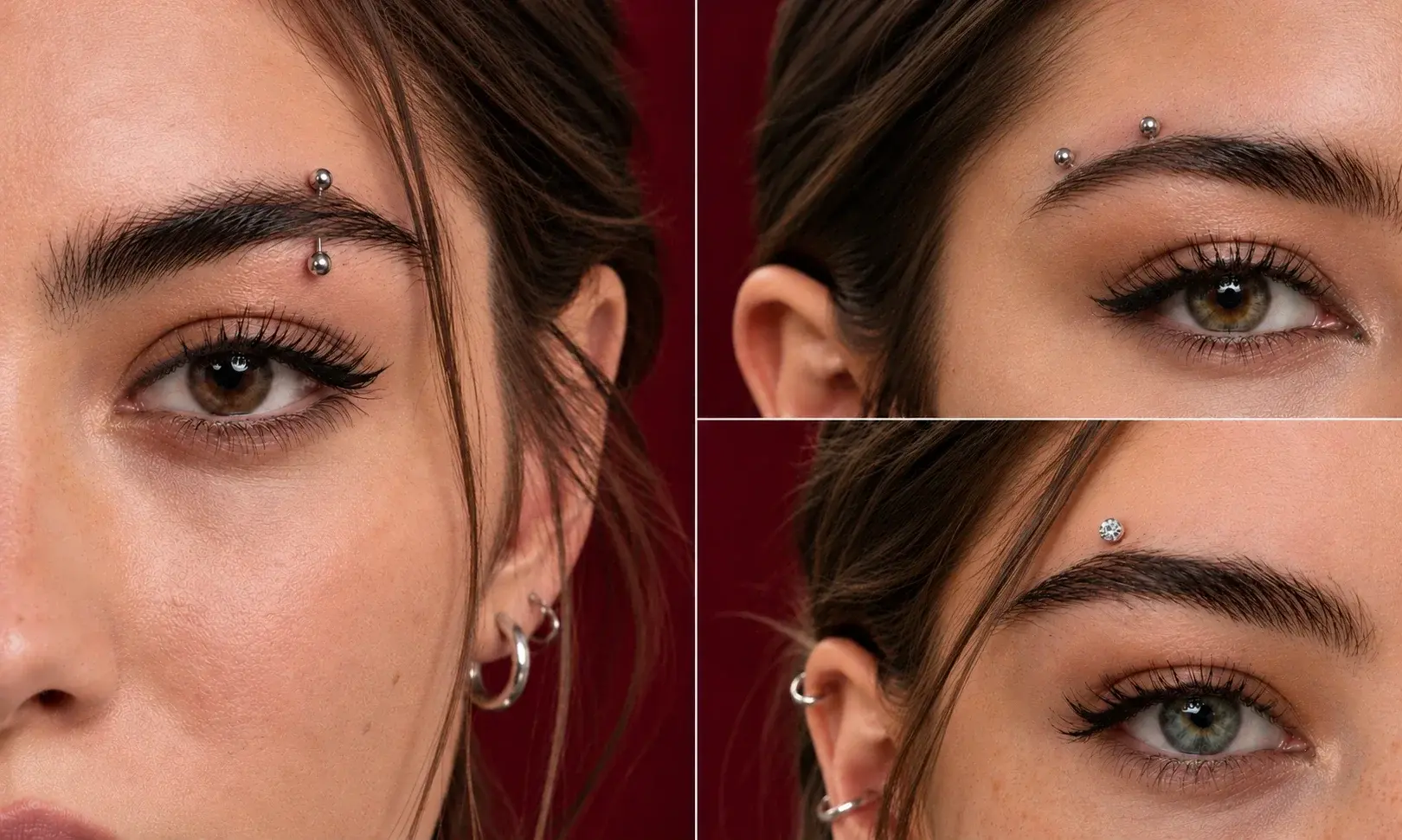
There is no single style that suits everyone. Your choice depends on your facial features, personal taste, and how noticeable you want the jewelry to be.
1. Vertical Eyebrow Piercing
This is the classic eyebrow piercing. The jewelry passes through the tissue around the eyebrow, with both ends of a curved barbell visible on the surface.
It works well if you want a recognizable piercing without adding too much jewelry. Small silver balls, gold ends, and simple gemstones are common choices.
2. Horizontal Eyebrow Piercing
A horizontal eyebrow piercing sits across the skin, usually along the upper or lower edge of the eyebrow. It is a surface piercing, so its placement and suitability need careful assessment.
This style can create a distinctive look, but surface piercings may have a higher chance of migration or rejection. Ask your piercer whether your anatomy is suitable before choosing it.
3. Double Eyebrow Piercing
A double eyebrow piercing uses two piercings near the same eyebrow or in a coordinated arrangement across both eyebrows. The jewelry can match for a balanced appearance or differ slightly for a more individual style.
Keep in mind that two piercings mean two healing sites to care for. You should also consider whether the additional jewelry might catch on clothing, towels, or other objects.
4. Minimalist Eyebrow Piercing
If you prefer a subtle look, choose simple jewelry with small, smooth ends. Silver-toned metal, gold-toned jewelry, or a tiny gemstone can provide detail without making the piercing the main feature of your appearance.
A minimalist style is also easy to coordinate with other jewelry. If you already wear pieces such as a helix piercing or daith piercing, you can choose finishes that complement your existing collection.
Does an Eyebrow Piercing Hurt?
Yes, an eyebrow piercing can hurt, although the level of discomfort varies from person to person. The procedure is usually quick, and many people describe the sensation as a sharp pinch followed by brief tenderness.
Your experience depends on factors such as your pain sensitivity, the placement, and the piercer’s technique. There is no reliable way to predict exactly how painful it will feel for you.
You may notice mild swelling, bruising, or tenderness during the first few days. These symptoms should gradually improve rather than become increasingly painful. While your piercing heals, keep your skincare and beauty routine gentle. If you wear makeup regularly, learning about makeup pilling prevention can help you understand how to avoid product buildup in your routine.
If you are nervous, speak with your piercer before the procedure. A professional should explain each step, answer your questions, and make sure you feel comfortable before starting. Once you’re ready to explore other beauty routines, you can also read about builder gel nails and the best hair oils on daithpiercing.
How Long Does an Eyebrow Piercing Take to Heal?
Eyebrow piercing healing time varies, but public health guidance commonly estimates around six to eight weeks for an eyebrow piercing. Some piercings take longer, particularly if they experience irritation, infection, or repeated pressure.
A piercing can look healed on the outside while the tissue inside is still recovering. For that reason, do not assume you can change your jewelry as soon as the redness disappears.
Healing can be affected by several everyday habits:
- Touching or moving the jewelry unnecessarily.
- Sleeping with pressure on the piercing.
- Catching the jewelry on towels or clothing.
- Applying makeup or skincare products around the openings.
- Using harsh cleaning products that irritate the skin.
Follow the aftercare instructions provided by your piercer, and arrange a check if healing does not seem to be progressing.
Which Jewelry Is Best for an Eyebrow Piercing?
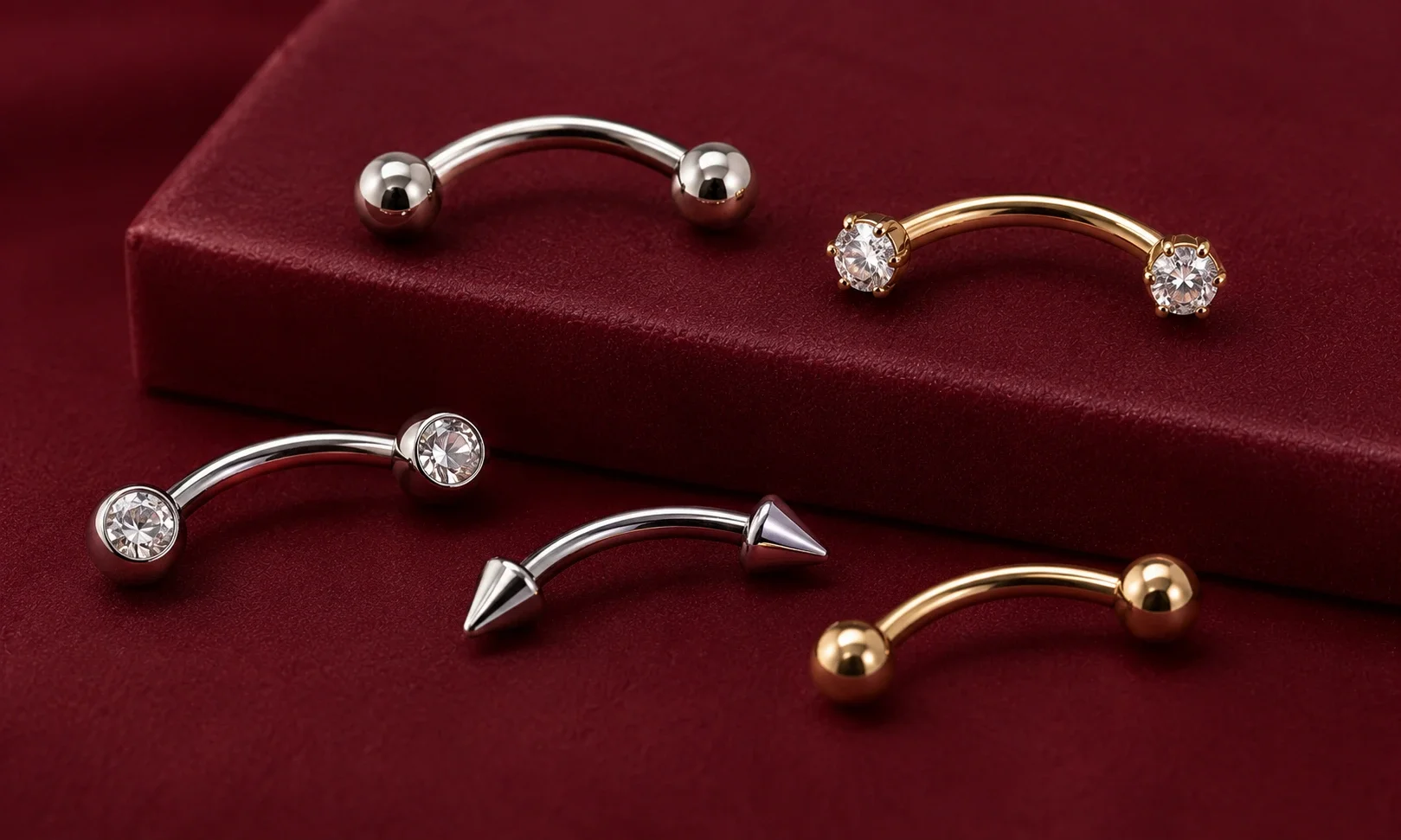
The right jewelry should fit your anatomy, allow room for initial swelling, and use a suitable material. Appearance matters, but comfort and safety should come first.
Curved Barbells
Curved barbells are a common choice for vertical eyebrow piercings. Their shape follows the curve of the tissue and allows decorative ends to sit on the skin.
The bar should not press tightly against the tissue or hang so loosely that it catches easily. A qualified piercer can select an appropriate size for your anatomy.
Titanium and Other Suitable Materials
Implant-grade titanium is a commonly recommended option for fresh piercings. Certain verified implant-grade steel and other materials may also be suitable, depending on their specifications and your needs.
Ask for the exact material rather than relying on labels such as hypoallergenic or premium. Material quality, surface finish, and jewelry design all matter.
The Association of Professional Piercers provides guidance on jewelry for initial piercings.
Gold and Gemstone Jewelry
Gold jewelry can look elegant, especially when paired with small decorative ends. However, not every gold piece is suitable for a fresh piercing. Its composition, construction, and finish need to meet appropriate standards.
Gemstones can also add personality, but rough edges or poorly secured settings may irritate the surrounding skin. Save decorative changes for after healing and have a professional check the fit before switching jewelry.
How Should You Care for an Eyebrow Piercing?
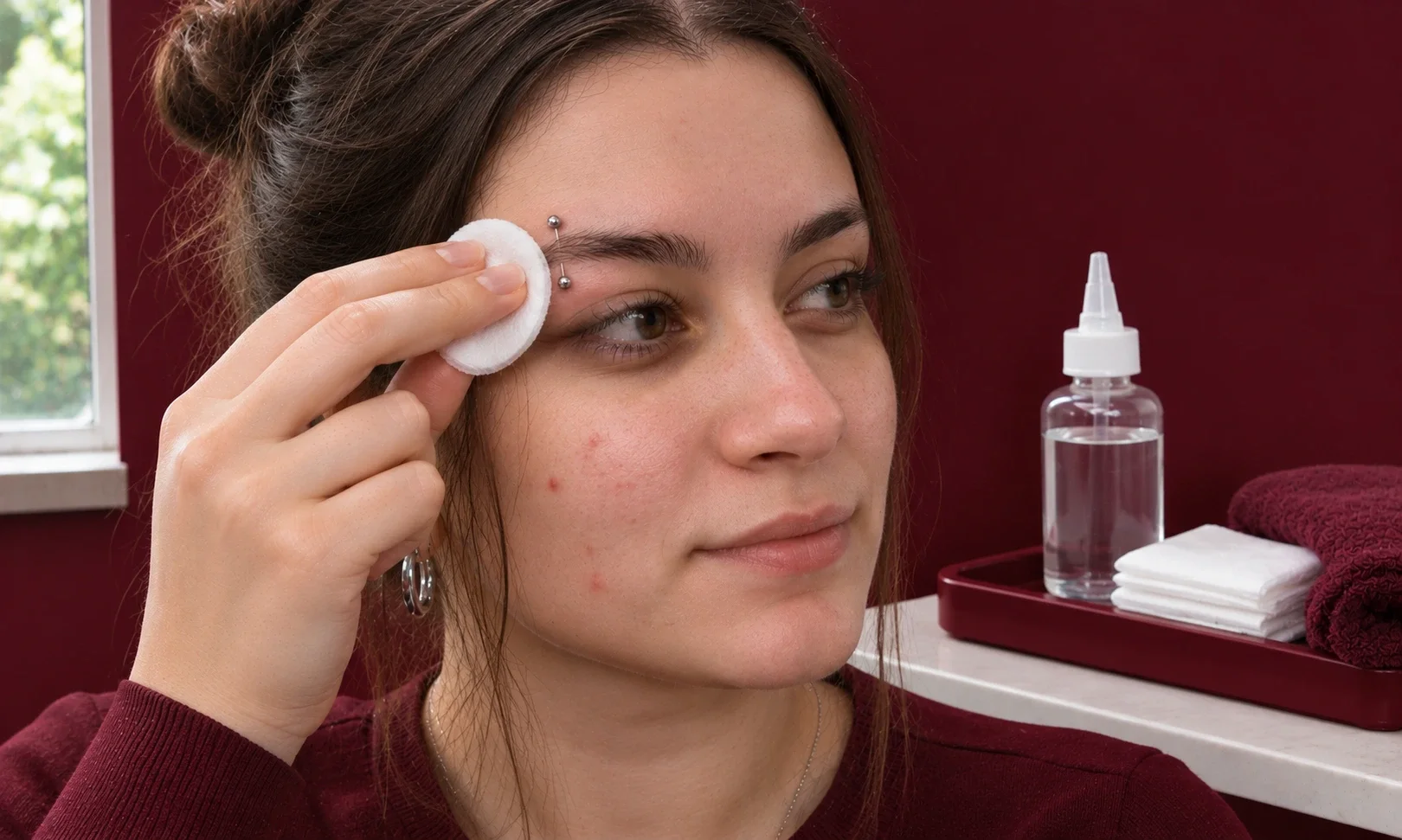
Good aftercare helps reduce irritation and lowers the risk of infection. You do not need an elaborate routine, but you do need clean hands, gentle cleaning, and patience.
Clean It Gently
Wash your hands before touching the area. Use sterile saline wound wash containing 0.9% sodium chloride, with no unnecessary additives, following the product instructions and your piercer’s guidance.
Let the saline loosen any buildup, then gently dry the area with clean disposable gauze. Do not pull off crusts that are firmly attached, and avoid rubbing the jewelry back and forth.
Avoid Harsh Products
Do not use rubbing alcohol, hydrogen peroxide, or strong antiseptics unless a healthcare professional specifically directs you to use a particular treatment. These products can irritate healing tissue.
Keep makeup, moisturizers, facial oils, and other skincare products away from the piercing openings while the area heals. This is especially useful if your normal routine includes brow gel, foundation, or eyebrow pencils.
Leave the Jewelry Alone
Twisting, spinning, or repeatedly adjusting the jewelry can cause irritation. Touch it only when necessary for cleaning, and avoid changing it before the piercing has healed.
If the bar feels too tight, catches repeatedly, or appears to be moving, contact your piercer rather than trying to fix it yourself.
Protect It During Everyday Activities
Be careful when washing your face, brushing your hair, changing clothes, or drying yourself with a towel. Small accidental pulls can irritate the piercing and delay healing.
Keep pillowcases and towels clean, and avoid direct pressure on the area while sleeping. The Association of Professional Piercers offers more detailed advice in its body piercing aftercare guide.
What Are the Risks of an Eyebrow Piercing?
Like other body piercings, eyebrow piercings carry some risks. Knowing what to look for can help you respond early if something does not seem right.
Infection
A new piercing may be mildly tender, swollen, or slightly red at first. A small amount of pale fluid that dries into a crust can also occur during normal healing.
However, worsening pain, increasing heat, spreading redness, thick or unusual discharge, or feeling feverish can indicate an infection. Seek prompt medical advice if you notice these symptoms.
Do not remove the jewelry yourself if you suspect an infection unless a healthcare professional tells you to. Removing it without proper advice can complicate the situation.
Migration and Rejection
Migration happens when the jewelry gradually shifts from its original position. Rejection occurs when the body pushes the jewelry towards the surface and eventually out.
Watch for thinning skin between the openings, increasing visibility of the bar beneath the skin, or jewelry that appears to be moving closer to the surface. These changes deserve assessment by an experienced piercer.
Migration and rejection can happen even with careful aftercare. Poor placement, unsuitable jewelry, friction, and individual healing responses may contribute to the problem.
Scarring
A piercing can leave a small mark after the jewelry is removed. If migration or rejection occurs, the resulting scar may be more noticeable.
People who develop raised scars or keloids may have a higher risk of unwanted scarring. If you have a history of these problems, discuss your concerns with a qualified healthcare professional before getting pierced.
How Much Does an Eyebrow Piercing Cost?
The cost depends on the studio, the piercer’s experience, your location, and the jewelry you choose. A basic piercing with suitable starter jewelry will generally cost less than a decorative piece made from precious metal or set with gemstones.
When comparing prices, ask what the quoted amount includes. Some studios charge separately for jewelry, follow-up checks, or later jewelry changes.
Avoid choosing a studio simply because it offers the lowest price. Proper hygiene, sterile equipment, suitable jewelry, and an experienced piercer are more important than saving a small amount upfront.
How Do You Choose a Safe Piercing Studio?
A good studio should make you feel informed rather than rushed. Before booking, look for clear hygiene practices, transparent pricing, and a piercer who is willing to discuss your questions.
Check that the piercer uses sterile, single-use needles and opens sterile equipment appropriately. Ask how instruments are sterilized, what material the starter jewelry uses, and how the studio handles complications.
The piercer should assess your anatomy instead of promising that every style will work for everyone. They should also explain the likely healing process, possible scarring, and the risk of migration or rejection.
Do not attempt an eyebrow piercing at home. Professional placement reduces avoidable risks and gives you access to proper advice if problems arise.
Frequently Asked Questions
Can you wear makeup after an eyebrow piercing?
Avoid applying makeup directly around the piercing openings while the tissue heals. Foundation, brow pencils, and other products can irritate the area or introduce contaminants. Return to your usual routine only when the piercing has healed and the area tolerates products comfortably.
Can an eyebrow piercing leave a scar?
Yes. A small mark may remain after you remove the jewelry, and migration or rejection can leave a more visible scar. Your healing response and history of raised scars can influence the final appearance.
Can you change eyebrow piercing jewelry yourself?
It is best to wait until the piercing is fully healed and have a qualified piercer assess it before changing the jewelry. Changing it too early can damage the healing channel and irritate.
What should you do if your eyebrow piercing starts moving?
Contact an experienced piercer if the jewelry appears to shift or the skin between the openings becomes thinner. These can be signs of migration or rejection. Seek medical care if you also notice signs of infection.
Is an eyebrow piercing permanent?
The jewelry can be removed, but the piercing may leave a lasting mark. The hole may close after removal, although closure varies from person to person and depends on the piercing and how long it has been present.
Is an eyebrow piercing safe for everyone?
No piercing is entirely risk-free, and not every placement suits every person. Your anatomy, healing history, and tendency to develop raised scars are worth discussing before booking. A professional assessment can help you understand whether the piercing is a reasonable choice for you.
Disclaimer
This article is for general educational purposes and does not replace medical advice, diagnosis, or treatment. Healing times and individual experiences vary. If you suspect an infection or notice unusual changes around your piercing, consult a qualified healthcare professional promptly.