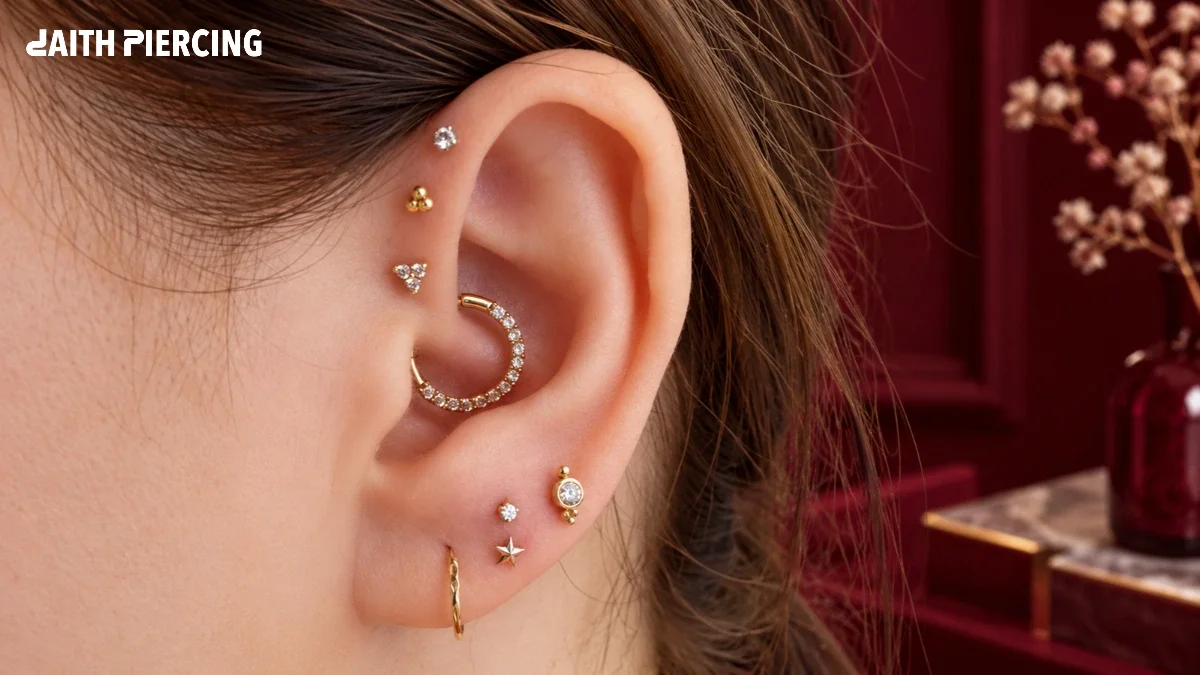
If you are choosing between Daith Piercing vs. Helix, the biggest questions are usually simple: Which one hurts more? Which one heals faster? And which one is easier to live with while it heals?
Both are cartilage piercings, so neither should be treated like a basic lobe piercing. The difference is where the jewelry sits, how much pressure the area receives, and how easily you can avoid bumping it. That is why a careful comparison is more useful than a simple pain ranking. A daith sits in the inner cartilage fold above the ear canal, while a helix is placed along the outer upper rim of the ear.
This guide from daithpiercing compares the two without turning pain into a competition. Individual pain tolerance, anatomy, jewelry, piercing technique, aftercare, sleep habits, and daily routines can all change the experience.
Key Takeaways
- Daith and helix piercings both pass through cartilage and can take around six to 12 months to fully heal.
- Pain varies from person to person, so online pain scores are not a reliable prediction.
- A daith is more tucked away, while a helix is more exposed to hair, pillows, and other contact.
- Sterile saline, clean hands, and minimal handling are central to professional aftercare.
- Do not twist the jewelry or use harsh cleaning products during healing.
- A piercing that feels healed may still be healing internally.
Daith Piercing vs. Helix: At a Glance
The daith and helix are both cartilage piercings, but they feel different because they use different parts of the ear.
A daith is tucked inside the ear, which can make the piercing process feel more intense or unusual. A helix is on the outer rim, making it easier to see and generally easier for a piercer to access.
For healing, both can take several months. Cleveland Clinic notes that cartilage piercings, including daith and helix piercings, can take around six to 12 months to fully heal.
Where Are Daith and Helix Piercings Placed?
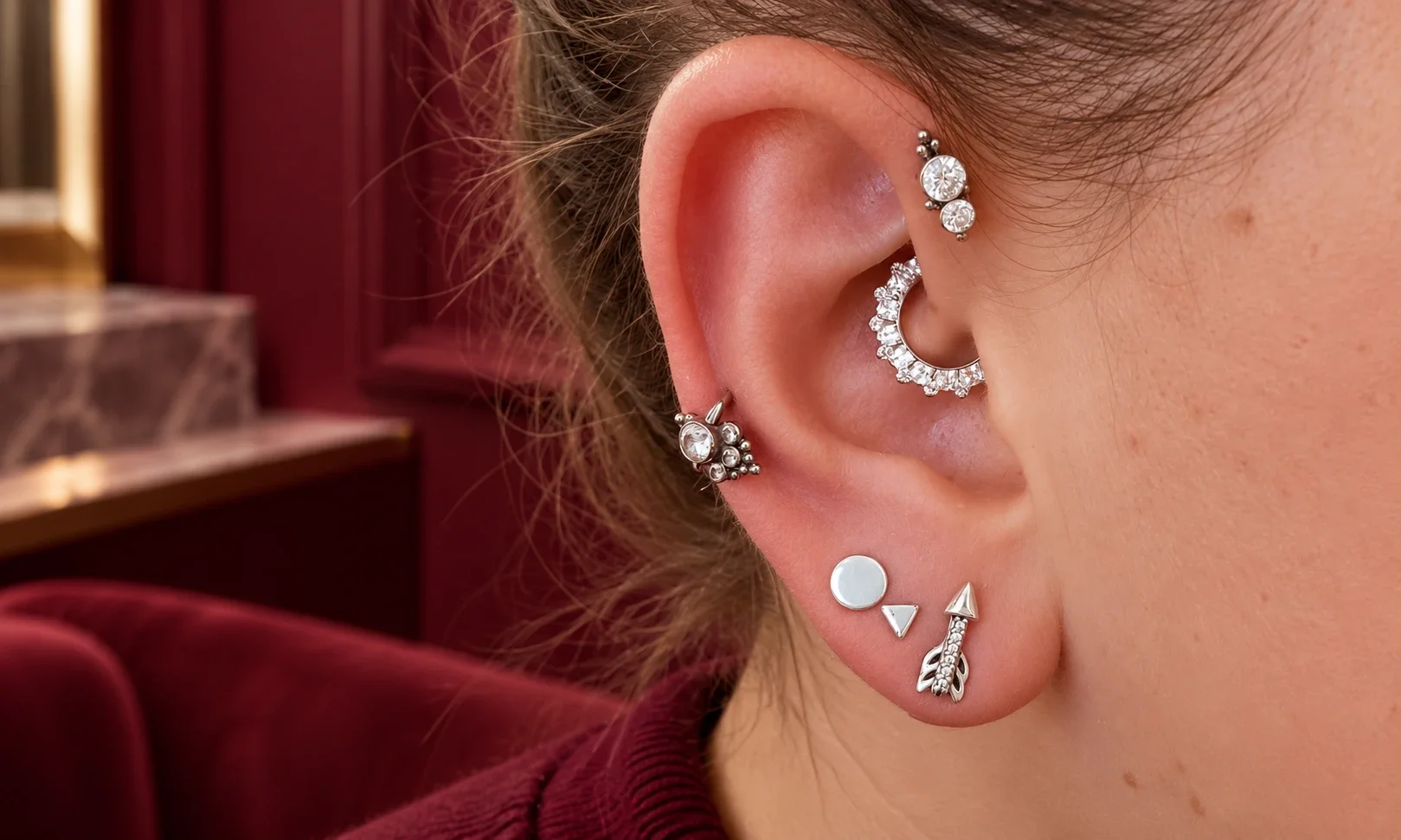
Daith Piercing Placement
A daith piercing goes through the small cartilage fold inside the ear, close to the opening of the ear canal. Its tucked-away position gives it a subtle appearance, especially when worn with a small hoop.
Because the tissue is compact and the area is difficult to access, the piercing appointment can feel different from an outer-ear piercing. Your ear anatomy also matters because not every ear has the same amount or shape of daith cartilage.
Helix Piercing Placement
A helix piercing sits through the outer upper cartilage of the ear. It is one of the most recognizable cartilage piercings and can be placed at different points along the rim.
Its position makes it highly visible, which is useful if you want to show off a stud or hoop. At the same time, the outer rim can catch on hair, headphones, clothing, or pillows more easily.
Which Hurts More: Daith or Helix?
There is no reliable universal pain score for either piercing because pain is personal. Still, many people describe both as a quick sharp pinch followed by pressure, warmth, or soreness.
A daith can feel more intense because the cartilage is thicker and the area is confined. A helix can also produce a noticeable pinch, but the experience is often described as more straightforward because the outer rim is easier to access.
Online pain ratings should be treated as personal experiences rather than medical measurements. Even professional guidance cannot predict exactly how much a specific person will feel.
Pain After the Piercing
With either piercing, mild swelling, tenderness, bruising, or a little bleeding can occur initially. The Association of Professional Piercers says these reactions can be normal during early healing.
A helix may become annoying if you sleep on that side or accidentally catch it while brushing your hair. A daith may be less exposed to outside knocks, but cleaning and handling can feel less convenient because of its inner position.
So, for everyday comfort, your sleeping habits and headphone use may matter more than the pain of the needle itself.
Daith vs. Helix Healing Time
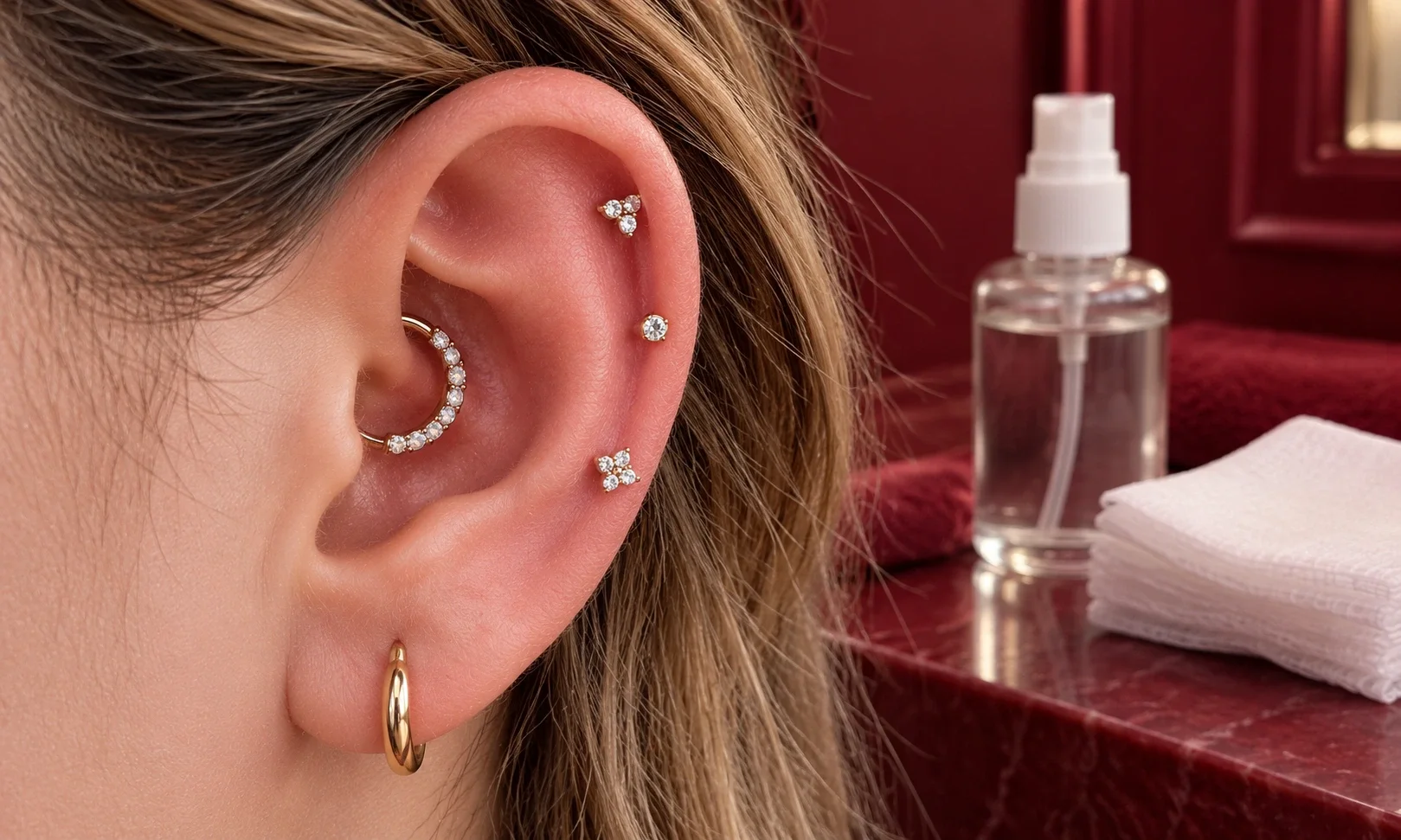
Both piercings require patience. Cleveland Clinic lists daith and helix among cartilage piercings that may take six to 12 months to fully heal. The Association of Professional Piercers explains that piercings heal from the outside inward, so feeling fine does not always mean the channel is completely healed. That is why changing jewelry too early can create unnecessary irritation.
Which One Is Easier to Heal?
There is no guaranteed winner. A helix can be easier to monitor because you can see it clearly. However, its exposed location makes it vulnerable to accidental knocks and pressure.
A daith is more protected by the shape of the ear, but its position can make cleaning and jewelry changes less convenient.
What Does Aftercare Look Like?
The Association of Professional Piercers recommends washing your hands before touching a healing piercing and using sterile saline wound wash. It also advises against twisting or rotating the jewelry because unnecessary movement can irritate healing tissue.
Avoid alcohol, hydrogen peroxide, harsh products, and excessive cleaning. These can irritate the area instead of helping it heal. For both daith and helix piercings, keep hair products, cosmetics, and other irritants away from the piercing. Clean bedding also matters, especially if your ear touches your pillow at night.
Daith vs. Helix: Everyday Irritation
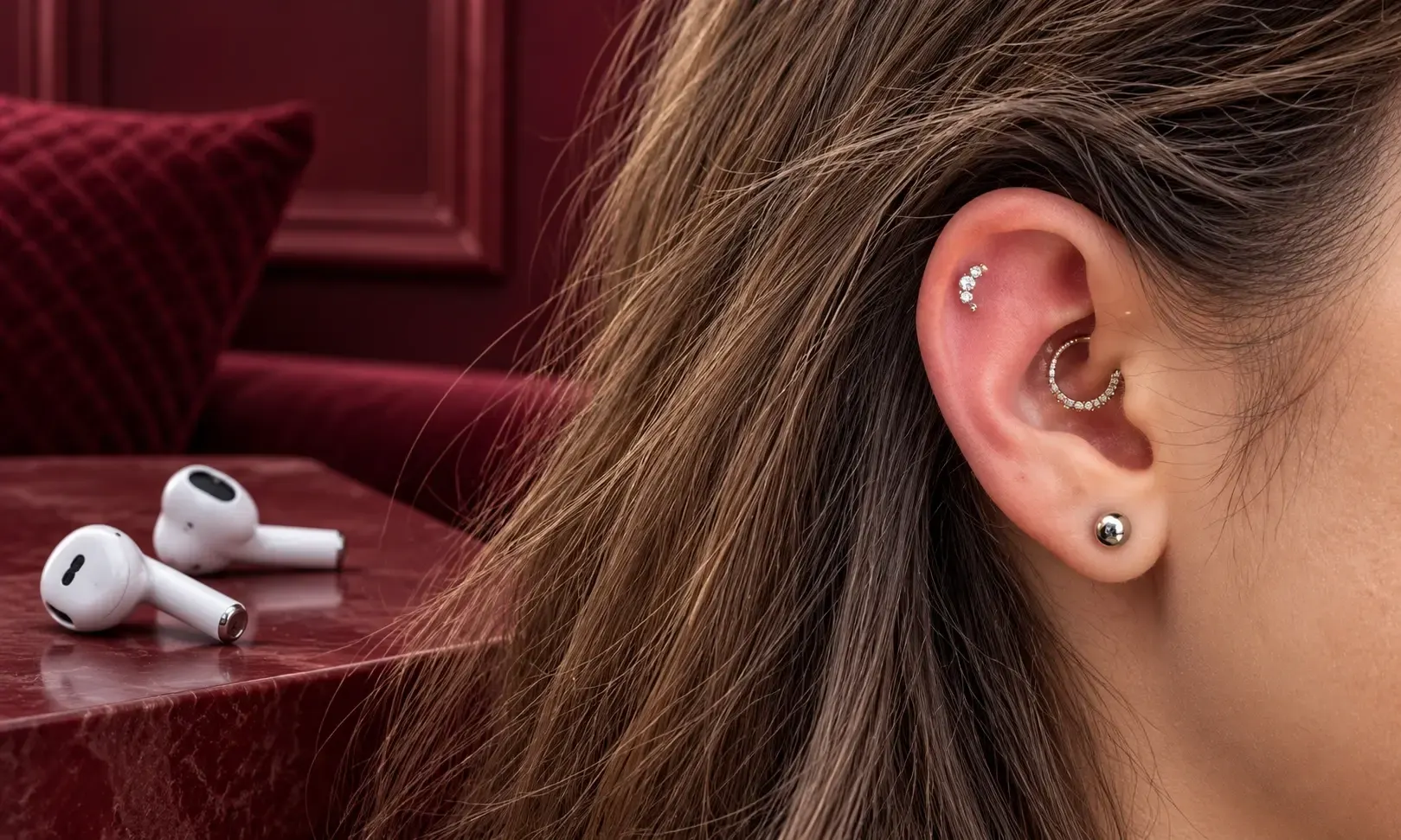
A helix is exposed. Hair can wrap around the jewelry, headphones can press against it, and a pillow can hit the outer rim. If you wear glasses, hats, or helmets, you may also need to pay attention to pressure around the area.
A daith is tucked inside the ear, so it may avoid some of these everyday knocks. However, in-ear earbuds can interfere with the area depending on your ear shape and jewelry.
Jewelry Choices for Daith and Helix
The initial jewelry needs to be appropriate for the placement, comfortable, and made from a suitable material. Cleveland Clinic lists options such as 14K gold, medical-grade steel, and titanium among commonly used choices for healed piercings.
Daith piercings are commonly styled with curved pieces or rings, while helix piercings can use studs, flat-back pieces, and rings once appropriate for the stage of healing.
Do not rush into a jewelry change simply because the piercing feels comfortable. A professional piercer can assess whether it is ready and whether a downsize is needed.
Which One Is Better for You?
Choose a daith if you prefer a more discreet placement and like the look of jewelry tucked inside the ear. It may also suit you if your routine exposes the outer ear to frequent bumps. If you’re comparing different ear placements, our guide to daith vs. cartilage can help you understand the differences.
Choose a helix if you want a visible cartilage piercing that gives you more obvious styling options. It can be especially appealing if you like building an ear stack with multiple pieces.
What Should You Trust?
Trustworthy piercing information should be grounded in professional guidance rather than personal pain stories. This comparison uses guidance from the Association of Professional Piercers and Cleveland Clinic.
A qualified professional piercer should check your individual ear anatomy before deciding whether a daith or helix placement is suitable. If you develop worsening pain, significant redness or swelling, fever, or concerning discharge, seek medical advice rather than trying to manage a possible infection yourself.
Cartilage infections can become serious when treatment is delayed. You should also consider how lifestyle habits affect your skin and overall care, including whether vaping causes acne.
FAQs
Is a daith more painful than a helix?
Not necessarily. Pain is highly individual, and both involve cartilage. Some people find the daith more intense, while others find the helix easier or more uncomfortable depending on anatomy and sensitivity.
Does a helix heal faster than a daith?
Not automatically. Both are cartilage piercings, and full healing can take six to 12 months. Your aftercare, jewelry, anatomy, pressure, and accidental irritation can all affect the timeline.
Can I sleep on a helix piercing?
It is better to avoid direct pressure while it is healing. Sleeping on it can irritate and may affect its angle. A travel pillow can help keep pressure off the ear.
Can I wear earbuds with a daith piercing?
It depends on the jewelry and your ear anatomy. If an earbud presses against the fresh piercing, causes pain, or repeatedly rubs the area, avoid using it until the piercing is sufficiently healed.
When can I change my daith or helix jewelry?
Wait until the piercing is properly healed unless a professional piercer needs to change or downsize the jewelry during healing. Changing it too early can irritate and delay healing.
Which is easier to maintain: daith or helix?
Neither is automatically easier. A daith is more protected but harder to access, while a helix is easier to see but more exposed to everyday bumps. Your lifestyle should guide the decision.
Disclaimer:
This article is for general informational purposes only and should not replace professional piercing or medical advice. Piercing pain, healing time, and aftercare needs vary from person to person. Consult a qualified professional piercer before getting a daith or helix piercing, and seek medical advice if you notice signs of infection or unusual complications.