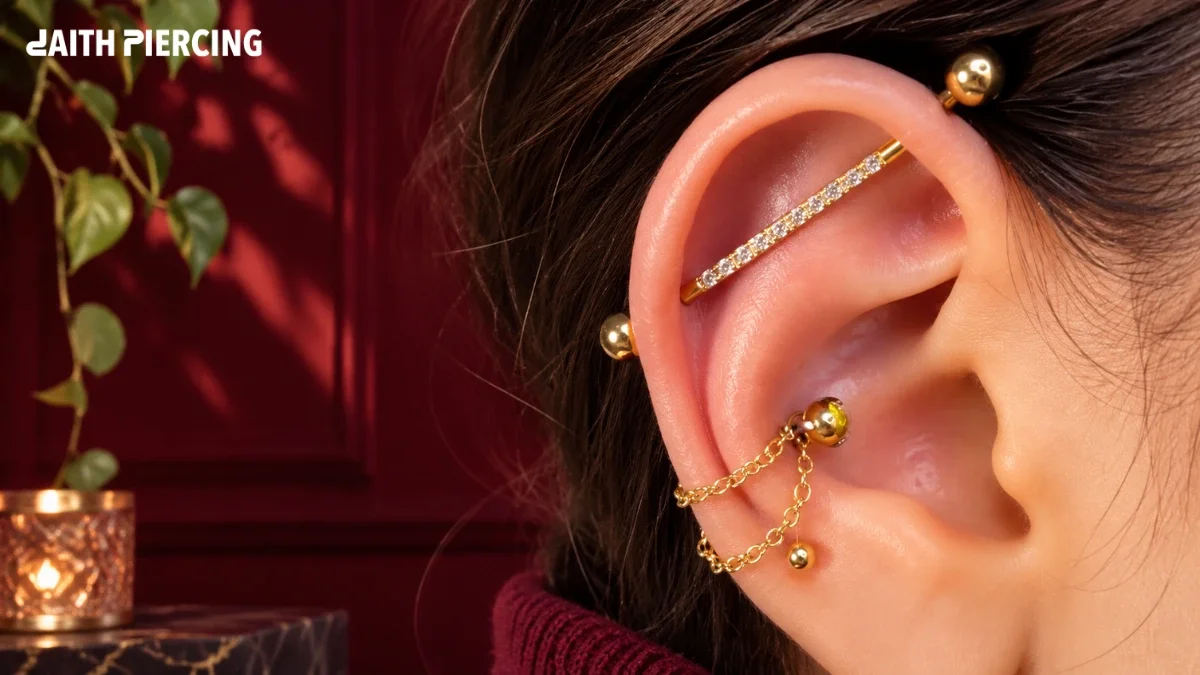
An industrial piercing is one of those ear styles that’s hard to miss. It usually has two holes in the upper ear cartilage connected by one long straight barbell. The bar runs diagonally across the ear and gives the piercing its bold look.
Unlike a regular lobe piercing this one goes through cartilage. It also involves two piercing points that need to line up correctly. That’s why choosing an experienced piercer matters so much.
The classic style is popular but it isn’t suitable for every ear. Your ear shape and cartilage folds will help determine whether the traditional bar can sit comfortably.
Key Takeaways
- An industrial piercing connects two upper ear cartilage holes with one straight barbell.
- Not every ear has the right shape for a traditional industrial.
- Healing often takes around 6 to 12 months or longer.
- Implant grade titanium is a common choice for initial jewelry.
- Sterile saline and gentle cleaning are important during healing.
- Persistent pain or worsening swelling needs medical attention.
1. How Is an Industrial Piercing Done?
A traditional industrial piercing usually connects two points on the upper ear. One hole is near the front upper cartilage while the other sits farther back along the outer ear.
A professional piercer checks your ear before doing anything. They look at its shape and the space between the two points. They also make sure a straight barbell can sit comfortably without putting pressure on the skin. Poor placement can lead to irritation and may cause problems during healing. You can also learn about piercing-related skin irritation and what to watch for.
Why Does Ear Anatomy Matter?
Some ears have a natural shape that works well with a traditional industrial bar. Others don’t have enough space or have cartilage folds that get in the way.
A good piercer won’t try to force the placement just because you like the look. They may suggest another style or a custom option that gives a similar appearance without putting pressure on unsuitable areas.
2. Does an Industrial Piercing Hurt?

Pain is different for everyone. An industrial piercing involves two cartilage holes so you may feel two sharp pinches during the procedure. Some people find the pressure more uncomfortable than the actual piercing.
Cartilage is firmer than the soft earlobe. So it can feel more intense than a simple lobe piercing. Still there isn’t one pain score that applies to everyone.
Your experience can depend on your personal pain tolerance and the piercer’s technique. Try to stay relaxed and eat something before your appointment. Avoid alcohol before getting pierced.
3. How Long Does an Industrial Piercing Take to Heal?
Industrial piercings are slow healers. A general guide is around 6 to 12 months but some take longer. Both piercing channels need to heal and the connecting bar can make it easier to irritate the area.
You may notice tenderness and mild swelling at first. Some pale fluid can also dry around the jewelry and form a light crust. These can be normal parts of early healing.
Don’t assume the piercing is healed just because it looks fine from the outside. Piercing channels heal from the outside inward. The inside can still be delicate even when the skin looks calm.
What Can Slow Down Healing?
A few everyday habits can make healing harder:
- Sleeping directly on the pierced ear.
- Catching the bar in hair or clothing.
- Wearing tight headphones that press against it.
- Touching or moving the jewelry too often.
- Changing the bar before the piercing is ready.
- Using harsh cleaning products.
- Getting the piercing bumped during sports or other activities.
Give the area time and avoid putting pressure on it. A travel pillow with an opening can help you sleep without resting your ear directly on the pillow.
4. Which Jewelry Is Best for an Industrial Piercing?
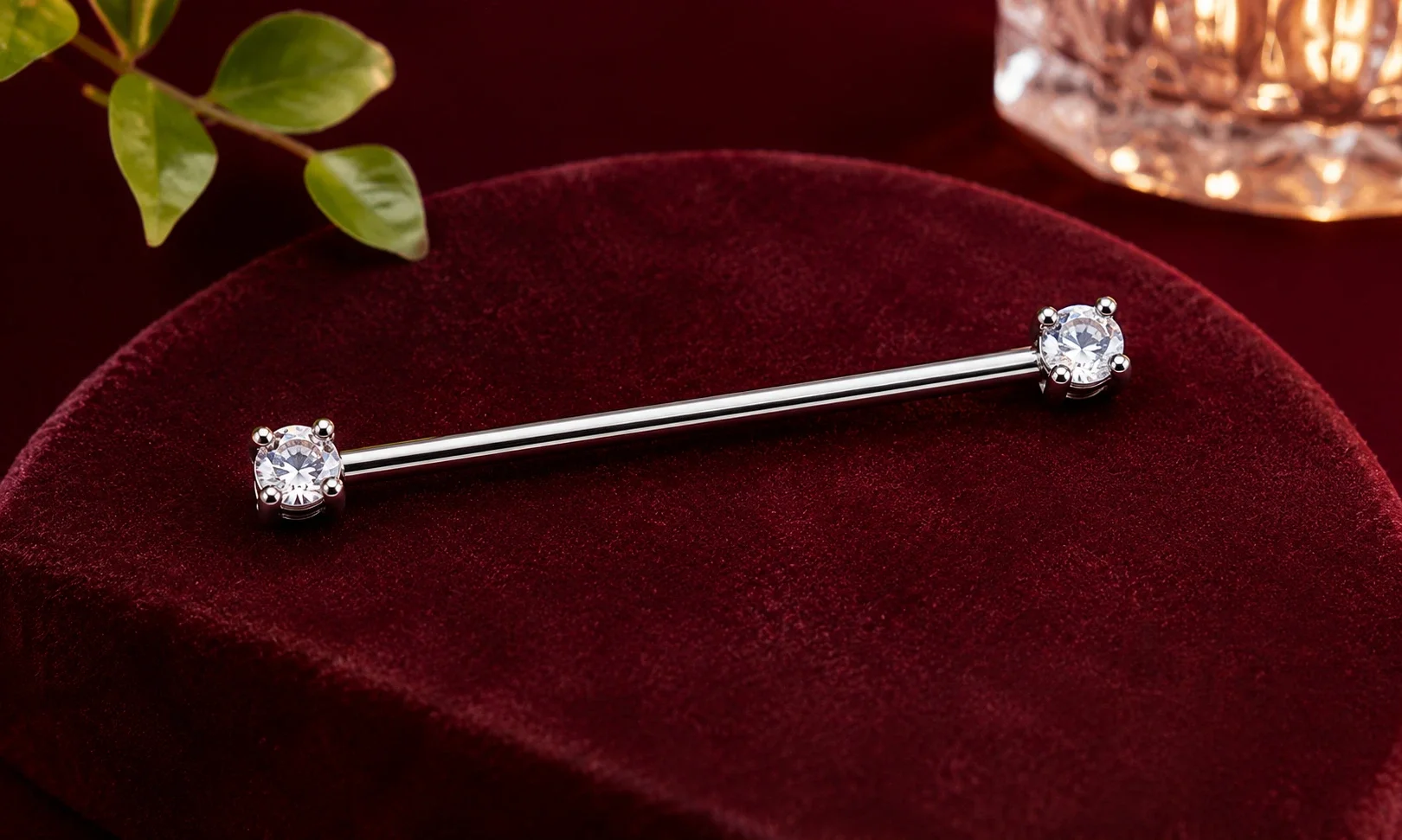
The traditional industrial piercing usually starts with a long straight barbell. The length and thickness need to match your ear and allow room for initial swelling.
Implant grade titanium is a popular choice for fresh piercings. It’s lightweight and suitable for many people who are sensitive to nickel. The Association of Professional Piercers lists specific implant-grade titanium standards such as ASTM F-136 and ASTM F-67.
Other materials may be suitable when they meet professional standards. These include certain implant-grade steel and solid 14k or 18k nickel-free gold. If you’re exploring different ways to express your personal style, you can also check out these red nail design ideas for some inspiration.
Avoid cheap plated jewelry and mystery metals for a fresh piercing. Ask your piercer what material is being used and whether they can confirm its quality.
Can You Change the Industrial Bar?
Not straight away. The first bar is chosen to allow for swelling and support healing. Your piercer may recommend a shorter bar once the initial swelling has settled.
This is called downsizing. It should be done by a qualified piercer rather than by yourself. Wait until the piercing is fully healed before changing to decorative jewelry.
5. How Should You Care for an Industrial Piercing?
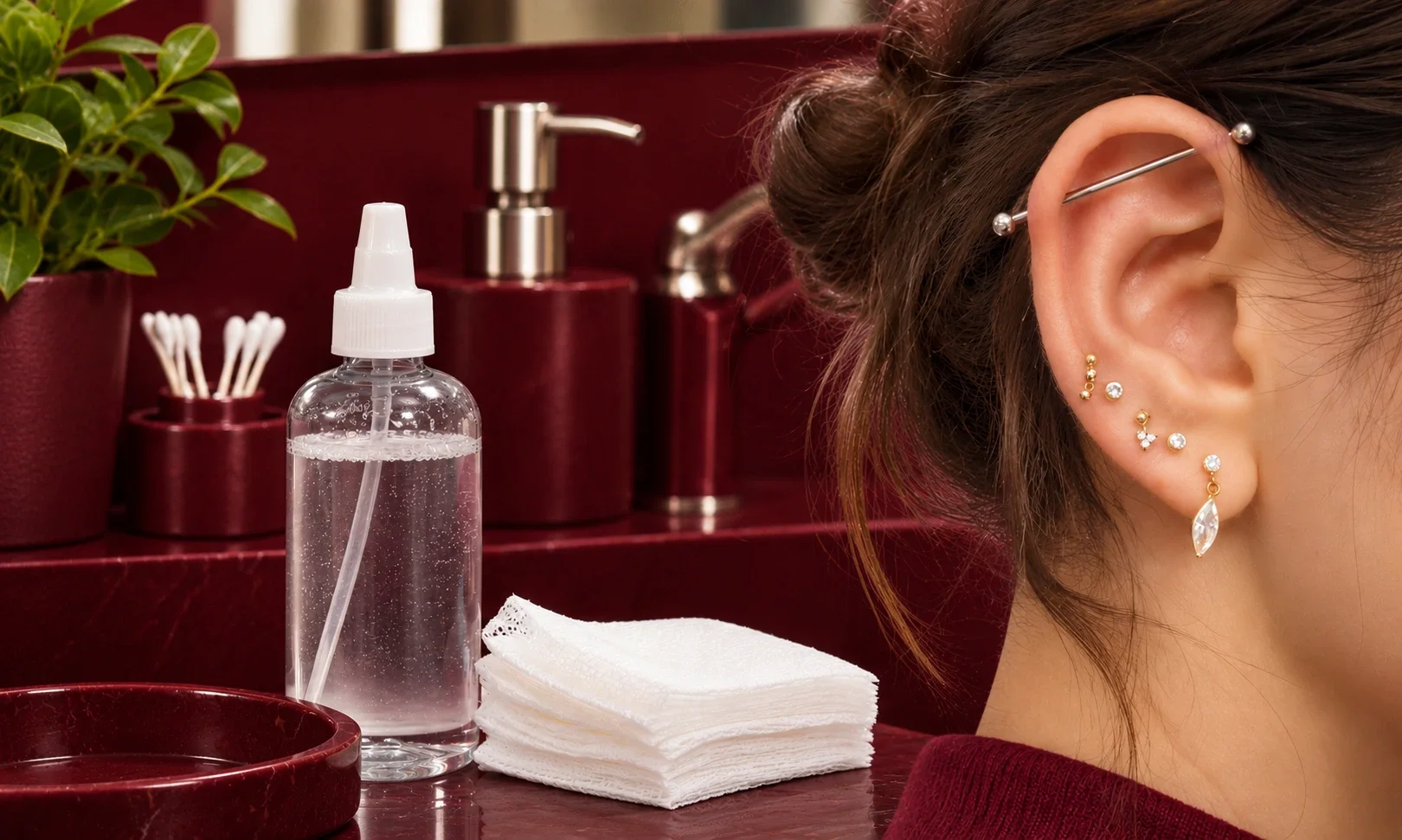
Good aftercare is mostly about keeping the area clean and leaving it alone. You don’t need to keep touching it or using lots of products.
The Association of Professional Piercers recommends sterile saline wound wash with 0.9% sodium chloride as the only active ingredient. It also advises against twisting or rotating the jewelry during cleaning.
Follow these simple steps:
- Wash your hands before touching the area.
- Spray the piercing gently with sterile saline.
- Let clean water rinse away any loosened residue during your shower.
- Dry it carefully with clean disposable gauze or paper products.
- Avoid moving the bar while cleaning.
- Keep your pillowcase and phone clean.
- Keep hair products and makeup away from the piercing.
Don’t use alcohol or hydrogen peroxide because these can irritate healing skin. Avoid homemade salt mixtures too since they may be too strong and dry out the area. If you’re unsure about changing a daith piercing or caring for a healing cartilage piercing then ask your professional piercer for advice.
Also avoid swimming in pools and lakes or using hot tubs while your piercing is healing. These precautions can help reduce irritation and the risk of infection.
6. What Are the Signs of an Infected Industrial Piercing?
Some tenderness and light crusting can happen during healing. But worsening symptoms should not be ignored.
Watch for signs such as:
- Increasing pain or swelling.
- Skin that feels hot around the piercing.
- Strong redness or darkening around the area.
- Yellow or green pus.
- A bad smell from the piercing.
- Fever or chills.
- Feeling generally unwell.
Cartilage infections need extra care. The Mayo Clinic advises getting medical attention for a cartilage piercing that becomes painful and swollen or very red. An infection around ear cartilage can become serious if treatment is delayed.
If you think your piercing is infected contact a healthcare professional promptly. Don’t remove the jewelry on your own unless a medical professional tells you to.
7. Is an Industrial Piercing Right for You?
If you like bold ear jewelry then an industrial piercing may be worth considering. But looks shouldn’t be the only reason to choose it.
Think about whether you can avoid sleeping on that ear and whether headphones or helmets will press against the bar. You should also be comfortable with a healing process that can take many months.
If your ear shape isn’t suitable for a traditional industrial ask a professional about alternatives. A different placement or two separate piercings connected with a chain may create a similar look. The exact option depends on your anatomy and should be assessed in person.
At DaithPiercing we believe choosing a piercing should involve more than picking a style from a picture. Understanding the placement and jewelry and aftercare helps you make a better decision before booking.
Frequently Asked Questions
1. Can everyone get an industrial piercing?
No. The shape of your upper ear needs to allow the two holes and connecting bar to sit comfortably. A professional piercer should check your anatomy first.
2. How long does an industrial piercing take to heal?
It often takes around 6 to 12 months. Some piercings take longer depending on placement and irritation and individual healing.
3. Can I sleep on my industrial piercing?
It’s best to avoid sleeping on it while it heals. Pressure can irritate the cartilage and make recovery take longer. Try sleeping on the other side or using a travel pillow with an opening.
4. Can I change my industrial bar after a few weeks?
Don’t change it just because the swelling has gone down. Your piercer should check whether the bar needs downsizing and when a jewelry change is safe.
5. What is the best metal for an industrial piercing?
Implant grade titanium is a common option for initial jewelry. Make sure the material meets a recognised standard and that the bar is properly sized for your ear.
6. Is an industrial piercing more difficult to heal than a lobe piercing?
It can be. It passes through cartilage and has two connected piercing points. It also needs protection from pressure and movement while healing.
Final Thoughts
An industrial piercing can give your ear a strong and stylish look. But it needs the right anatomy and careful placement. The long healing period also means you’ll need to be patient with it.
Choose an experienced piercer and ask about the jewelry material before the procedure. Keep the area clean and avoid unnecessary pressure. If pain or swelling gets worse then don’t wait for it to settle on its own. Get medical advice.
Disclaimer
This article is for general educational purposes only and is not a substitute for medical advice. Piercing suitability and healing time vary from person to person. Always consult a qualified professional piercer before getting an industrial piercing. Seek medical care if you notice signs of infection or worsening symptoms.