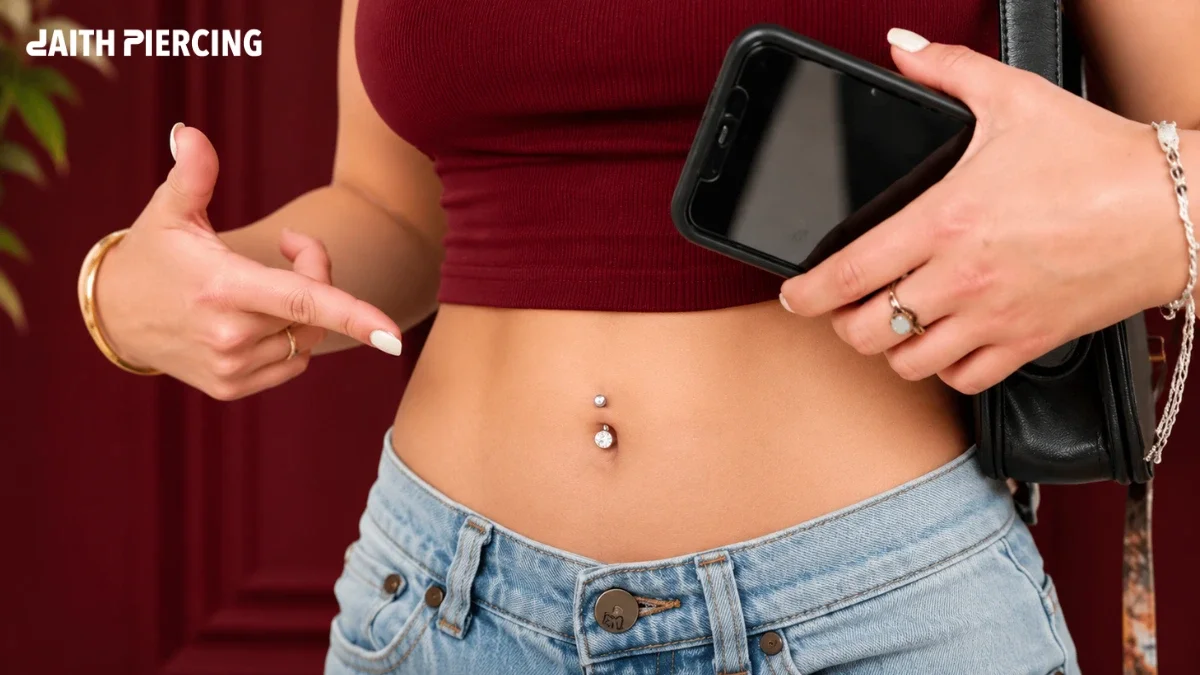
A belly button piercing can add a little personal style without being too bold. Some people prefer a simple silver barbell while others like a small gemstone or a gold design. It is a popular choice because you can show it off when you want and keep it covered with normal clothing.
But there is something you should know before booking an appointment. A belly button piercing takes patience. It can take around 6 to 12 months to heal fully and sometimes longer. That means you need to care for it even after the first soreness goes away.
At DaithPiercing, we believe good piercing information should be easy to understand. So let’s look at how the piercing works and what to expect before and after getting one.
1. What Is a Belly Button Piercing?
A belly button piercing is also called a navel piercing. It usually passes through the small fold of skin above the belly button rather than through the navel itself.
A professional piercer checks your anatomy first. Not every belly button has the same shape or enough suitable skin for a traditional piercing. A good piercer should explain whether the placement is right for you instead of trying to force a style that may not heal well.
The jewelry is normally a curved barbell with one decorative end above the navel and another end sitting inside or near it.
2. How Much Does a Belly Button Piercing Hurt?
Pain is different for everyone. Some people describe the feeling as a quick sharp pinch followed by pressure. Others find the area more sensitive than they expected.
The actual piercing process is usually brief. The soreness afterward can last longer and the area may feel tender when clothing touches it.
You may notice a little swelling or redness during the first few days. Mild tenderness and some light crusting can also happen while the skin starts healing. These signs should gradually settle rather than become more painful.
3. How Long Does a Belly Button Piercing Take to Heal?
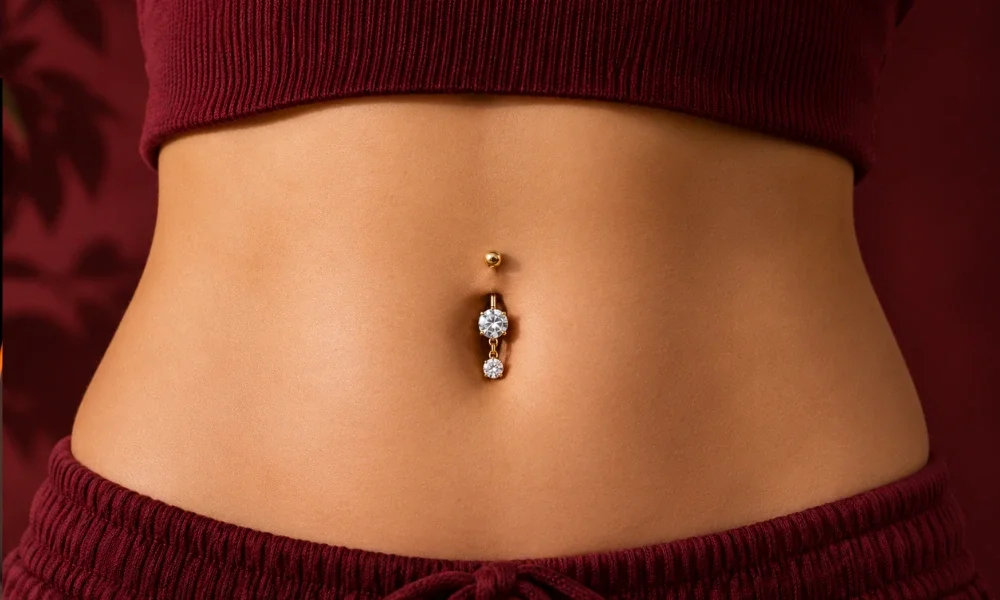
This is where you need to be patient. A belly button piercing can take 6 to 12 months to heal. Some may take longer depending on the person’s body and how much irritation the area gets.
The outside may look fine before the inside has fully healed. This happens because piercing channels heal from the outside inward. So don’t assume it is ready for new jewelry just because it no longer hurts.
During healing you should:
- Keep the area clean.
- Avoid pulling or twisting the jewelry.
- Wear clothes that don’t press tightly against your navel.
- Follow the cleaning routine given by your piercer.
- Wait for professional advice before changing the jewelry.
4. How Should You Clean a Belly Button Piercing?
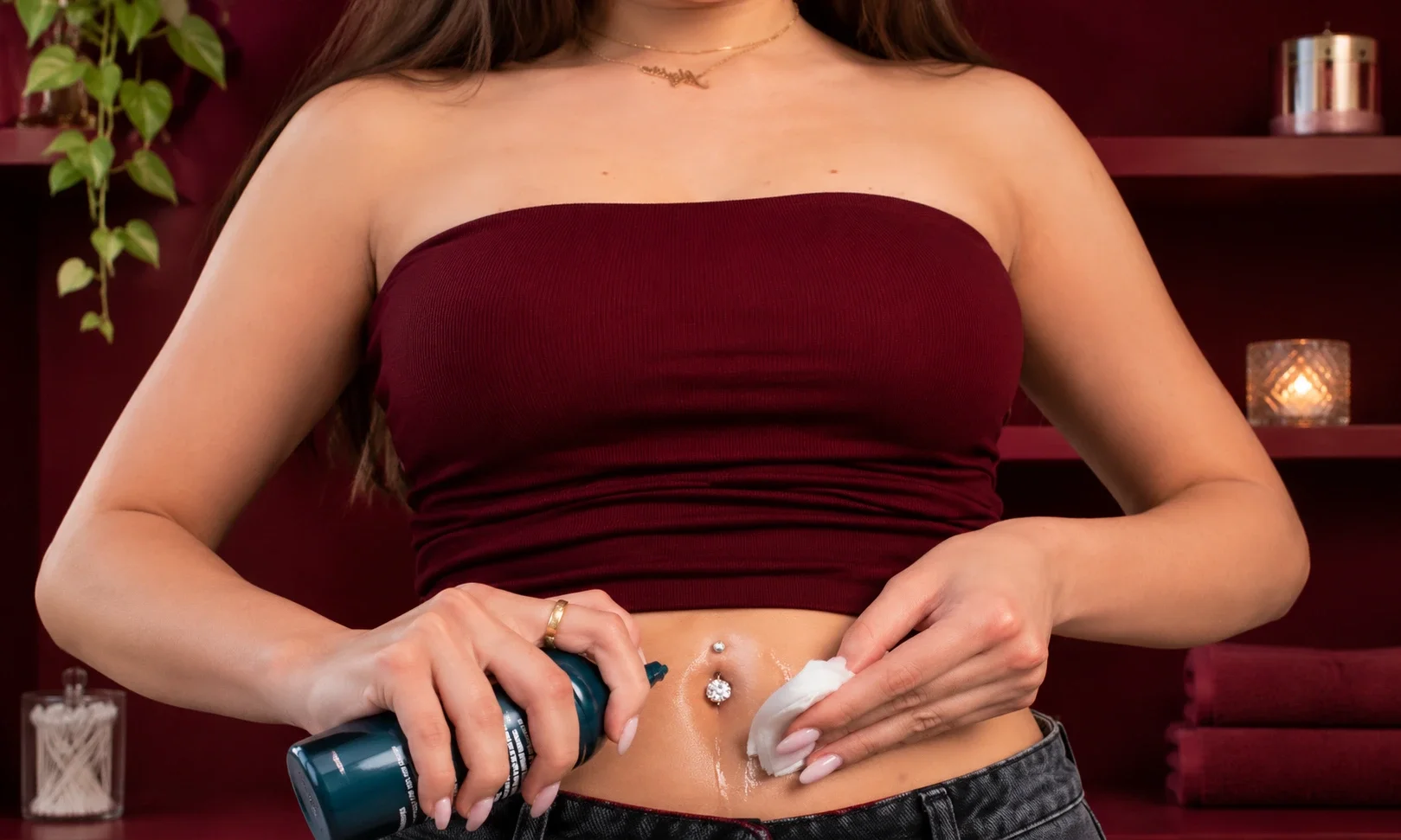
Good aftercare helps reduce irritation and lowers the chance of infection. You don’t need a complicated cleaning routine. Gentle care is usually better than using lots of products. Just like choosing the right nail designs to match your personal style, taking care of a new piercing is all about choosing what works best and keeping things simple.
The Association of Professional Piercers recommends sterile saline wound wash for cleaning healing body piercings. Look for a product with 0.9% sodium chloride as its only active ingredient.
Simple belly button piercing aftercare
- Wash your hands before touching the area.
- Spray the piercing with sterile saline wound wash.
- Let any softened crust come away gently without picking at it.
- Dry the area carefully with clean disposable gauze or paper products.
- Leave the jewelry alone between cleaning sessions.
Avoid twisting or spinning the jewelry. It can irritate the healing skin and slow things down.
What should you avoid?
- Alcohol and hydrogen peroxide.
- Strong antibacterial soaps.
- Thick ointments unless a healthcare professional tells you to use one.
- Tight waistbands that rub against the piercing.
- Touching it with unwashed hands.
- Swimming in pools or soaking in hot tubs and lakes while it heals.
- Changing the jewelry before it is ready.
The APP also advises avoiding excessive cleaning because it can irritate the skin.
5. Which Jewelry Is Best for a Belly Button Piercing?

The best jewelry is not always the most expensive or decorative one. For a fresh piercing the material and fit matter more than the design.
A professional piercer can help choose jewelry that suits your anatomy and leaves enough room for normal swelling.
Popular jewelry choices
- Curved barbell: A common choice for a traditional navel piercing.
- Implant-grade titanium: A lightweight option that can suit people who are sensitive to nickel.
- 14-karat or higher solid gold: Can be suitable when it is nickel-free and made for body piercing.
- Niobium: Another material used for body jewelry.
The Association of Professional Piercers lists specific implant-grade titanium standards such as ASTM F-136 and ASTM F-67. It also explains that gold for initial piercings should be 14 karat or higher and free from nickel and cadmium.
Avoid cheap plated jewelry for a fresh piercing. The coating can wear away and expose the metal underneath. Also avoid jewelry that feels too tight or catches easily on clothing. If you’re wondering when it’s safe to switch your jewelry then check this guide on how soon you can change a daith piercing before making any changes to a healing piercing.
6. What Are the Risks of a Belly Button Piercing?
Like any body piercing a navel piercing comes with some risks. The area can become irritated by tight clothing or repeated movement. Infection and allergic reactions are also possible.
Another issue is migration or rejection. Migration means the jewelry gradually moves closer to the surface. Rejection happens when the body pushes the jewelry out through the skin.
Watch for:
- Skin between the holes becoming thinner.
- Jewelry appearing closer to the surface.
- Ongoing redness or irritation.
- Jewelry becoming more visible through the skin.
- Increasing pain or swelling.
If you notice these changes ask an experienced piercer to check the placement. If you have signs of infection seek medical advice.
When should you see a doctor?
A little tenderness and mild redness can happen early on. But increasing pain or heat and swelling or thick yellow or green discharge can be signs of infection.
Get medical advice promptly if you notice pus or severe pain or fever or chills. Red streaks spreading from the piercing also need urgent attention. You can also learn about possible piercing rash symptoms to better understand skin irritation around a piercing. Don’t remove the jewelry yourself unless a doctor tells you to do so.
7. How Do You Choose a Safe Piercing Studio?
Choosing the right piercer is just as important as choosing the jewelry. A clean studio should be happy to explain its process and answer your questions.
Before booking:
- Check whether the piercer is trained and experienced.
- Ask how equipment is sterilized.
- Make sure a new sterile needle is used.
- Ask whether the jewelry is suitable for a fresh piercing.
- Check that the piercer explains aftercare clearly.
- Don’t go ahead if the studio looks unclean or rushes the process.
Healthdirect recommends choosing a qualified body artist and checking how the studio handles sterilization and equipment.
Frequently Asked Questions
1. Can I shower after getting a belly button piercing?
Yes. Showers are generally a better choice than soaking in a bath while the piercing heals. Rinse the area gently and dry it with a clean disposable product.
2. When can I change my belly button jewelry?
Wait until the piercing is fully healed and ask a qualified piercer to check it first. A piercing can look healed on the outside while the inside is still recovering.
3. Can I wear high-waisted jeans with a new navel piercing?
It’s better to avoid waistbands that press or rub against the jewelry. Friction can irritate the area and make healing take longer.
4. Is a little discharge normal?
A small amount of pale fluid that dries into a light crust can happen during healing. Thick or bad-smelling discharge with increasing pain or swelling needs medical attention.
5. Can a belly button piercing close?
Yes. Piercing holes can shrink or close when jewelry is removed. Even older piercings may close or become difficult to reinsert jewelry into.
6. Can everyone get a belly button piercing?
Not always. The shape and amount of skin around your navel affect whether a traditional piercing is suitable. A professional piercer should assess your anatomy before proceeding.
Final Thoughts
A belly button piercing can be a nice way to express your style. But getting it done is only the first step. The real work is keeping it clean and avoiding irritation while it heals.
Choose a reputable piercer and suitable jewelry. Give your body enough time to recover and don’t rush into changing the jewelry. If something doesn’t feel right then get it checked instead of trying to fix it yourself.
Disclaimer
This article is for general information only and is not a substitute for medical advice. Piercing risks and healing times can vary from person to person. If you suspect an infection or have ongoing pain or swelling consult a qualified healthcare professional. Follow the aftercare instructions provided by your professional piercer.