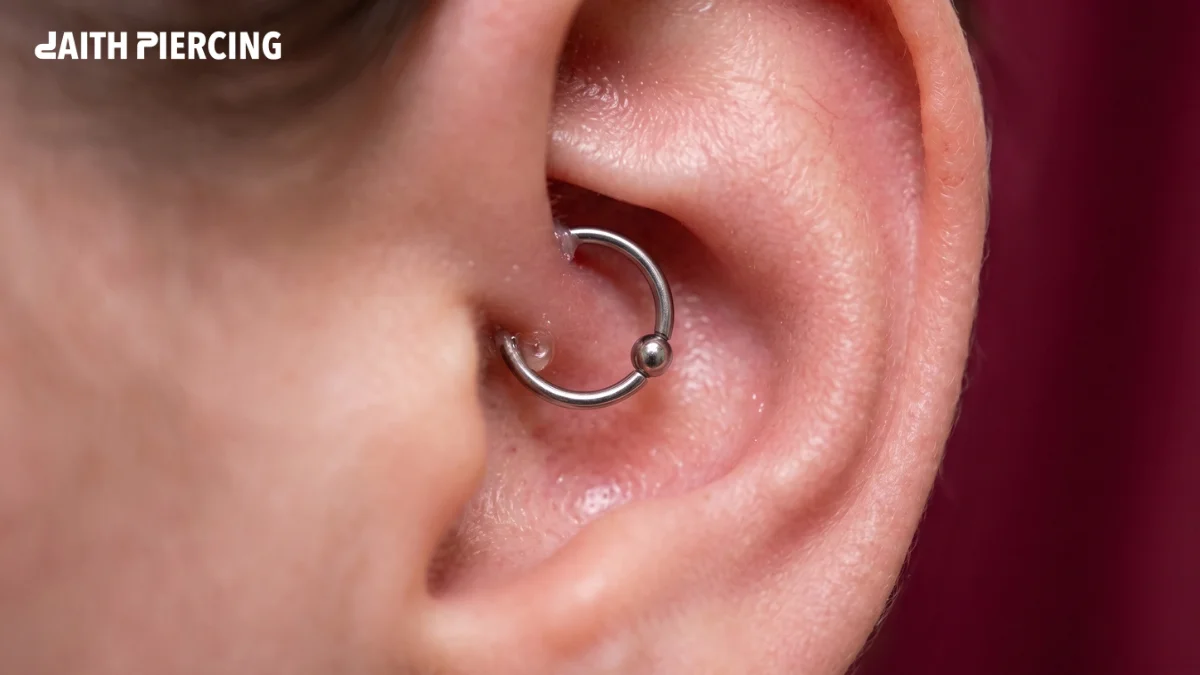
Daith piercing discharge is often normal clear or white fluid that crusts as it heals. Yellow, green, thick, or smelly discharge, especially with pain or swelling, may signal infection. Keep jewelry in, clean with saline, and see a doctor if symptoms worsen after 2–3 days.
A new ear piercing brings many questions about healing. When you see fluid near your ear canal, you may feel nervous. You need to know if this liquid means standard healing or a problem. At daithpiercing.io, we help you understand your healing journey. This guide explains discharge colors, odors, and timelines so you can care for your ear safely.
Key Takeaways
-
Clear or white discharge that forms crusts is usually normal healing.
-
Thick yellow or green fluid, bad odors, and blood often signal an infection.
-
You must never remove jewelry if you suspect a bacterial infection.
-
See a doctor if your symptoms worsen after two or three days of home care.
What Is Normal Daith Piercing Discharge?
Your body sends extra plasma and white blood cells to repair the cartilage tissue in your inner ear. This liquid is called lymph fluid. Lymph fluid moves to the surface and dries when it meets air. This drying process creates the hard bits often called crusties.
Cartilage heals from the outside edge inward, so fluid moves out daily for several months. Lymph fluid is a healthy sign that your body is repairing the wound. It shows that your immune system is protecting the tissue. You just need to clean the dried fluid gently so it does not pull on the raw skin.
Clear Fluid Piercing Discharge: Lymph or Warning Sign?
Clear fluid piercing discharge is almost always standard lymph. It feels thin and watery between your fingers. It usually appears during the first few weeks of healing. You may see a small drop after a warm shower or after cleaning your ear.
This fluid becomes a warning sign only if the volume suddenly increases. If clear liquid streams out constantly or comes with severe throbbing pain, your cartilage may have extra swelling or fluid buildup. Otherwise, thin clear liquid shows your body is working correctly.
Daith Piercing Discharge Colors Chart: Yellow, White, Green & Clear
Different fluid colors tell you what is happening inside the cartilage tissue. Here is a quick reference guide for common discharge colors and textures.
| Discharge Color | Texture | Likely Meaning | Action Needed |
| Clear | Thin, watery | Normal lymph | Continue saline care |
| White / Off-white | Slightly thick, crusty | Normal healing | Clean gently, monitor |
| Yellow (light) | Thin | Often normal | Watch for thickening |
| Yellow (dark) / Green | Thick, opaque | Possible infection | Clean + monitor 48 hrs |
| Bloody | Thin, pink-tinged | Minor trauma or early stage | Normal if brief |
Yellow Discharge Piercing: Healing Crust or Infection Signal?
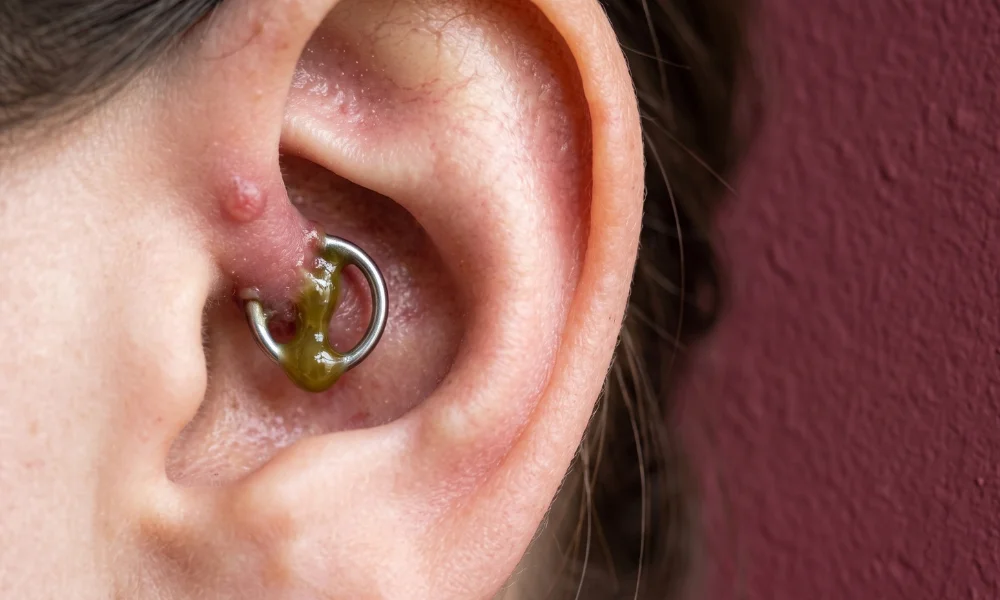
Yellow discharge piercing issues cause confusion for many people. Light yellow fluid that dries into pale yellow crust is usually safe. This color comes from dead skin cells mixed with natural lymph fluid. The fluid stays thin and comes out in small amounts. Dark yellow or deep golden fluid means something else. If the fluid becomes thick, creamy, or cloudy, bacteria may be multiplying in the wound.
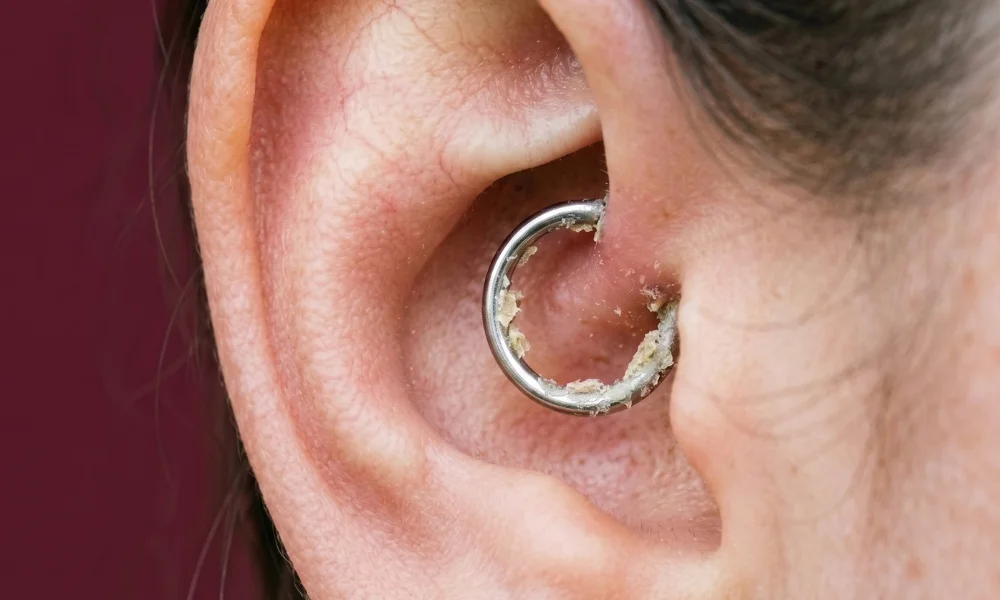
Dark yellow fluid often pools around the entry holes of the ring. You should track the texture of yellow discharge. Thin light yellow liquid needs simple cleaning, but thick yellow fluid requires close monitoring for other infection signs.
White Discharge Ear Piercing: What’s Normal vs Not
White discharge ear piercing symptoms are usually fine, but you must know the difference between crust and pus. Normal white fluid is pale plasma. It dries into a light, flaky crust around the ring. This crust crumbles easily when you clean it with wet cotton. White pus is completely different.
White pus looks thick, heavy, and milky. It does not dry into a simple flake. Instead, it forms a sticky layer that fills the inner ear space. White pus means your white blood cells are actively fighting off an invading organism. Flaky white crust is safe tissue growth, but sticky white liquid indicates a developing problem.
Daith Piercing Pus vs. Normal Healing Crust
You must distinguish between standard healing crust and dangerous pus to protect your cartilage. These two substances look, feel, and react very differently on your skin.
| Feature | Normal Crust | Daith Piercing Pus |
| Color | White / light yellow | Yellow, green, grey |
| Texture | Flaky, dry | Thick, wet, opaque |
| Smell | None | Foul / smelly |
| Pain | Mild / none | Throbbing, worsening |
| Surrounding skin | Slight pink | Red, hot, swollen |
Normal crust forms when dry plasma catches on the metal ring. It stays dry and does not spread across your ear. Daith piercing pus stays wet and keeps leaking out. Pus feels slippery or pasty. When you have pus, the skin around the metal turns dark red or purple.
The cartilage also feels warm to the touch. Normal crust produces no heat and causes no sharp pain when you move your face. If you see wet, thick fluid combined with hot skin and severe throbbing, you are dealing with pus rather than standard healing crust.
Smelly Discharge Piercing: Why Odor Matters
A smelly discharge piercing indicates that bacteria are growing in your ear canal area. Clean lymph fluid has no smell at all. When bacteria break down skin oils, blood, and white blood cells, they create a sharp, foul odor. This smell often tastes or smells like old cheese or stale water. An odor is a reliable sign that germs are active in the tight space of your inner ear fold.
Smell alone does not always mean you need antibiotics. Dead skin cells and natural body oils can trap trapped odors under a ring if you do not clean the area well. However, when a bad smell occurs alongside thick yellow fluid, throbbing pain, or dark red skin, an infection is active. You must never ignore a strong smell that stays after a soft saline rinse.
Daith Piercing Discharge Timeline: Week-by-Week Guide
Cartilage heals slowly because it gets limited blood flow. This timeline shows what type of fluid you can expect as the months pass.
| Timeframe | Expected Discharge | Red Flags |
| Days 1–3 | Light bleeding, clear fluid | Heavy bleeding |
| Week 1–2 | Clear / white crust | Yellow / green pus |
| Week 3–8 | Minimal, occasional crust | Odor, thick discharge returns |
| Month 3+ | None | Any new discharge |
During the first three days, your ear may leak a little blood mixed with clear plasma. This reaction happens because the needle just cut through dense tissue. By weeks one and two, the bleeding stops completely, and clear or off-white crust starts forming.
Between weeks three and eight, the fluid output drops significantly. You may only find a tiny piece of dry crust every few days. After three months, the internal channel stabilizes. Any sudden return of thick fluid, bad odors, or green liquid after month three means a new infection has started.
How to Treat Infected Piercing Discharge at Home
-
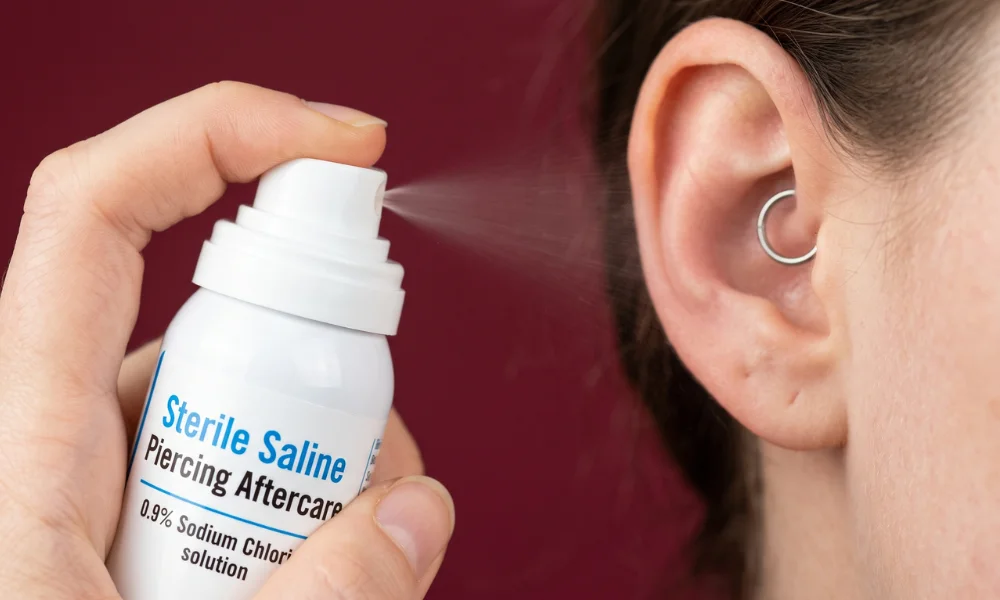
Buy a sterile 0.9% sodium chloride saline spray from a pharmacy.
-
Spray the saline solution directly onto the front and back of the piercing site.
-
Let the liquid soak the tissue for two minutes to soften any hard crust.
-
Dry the area thoroughly with a clean piece of paper towel.
-
Repeat this cleaning routine two times every day.
Never use rubbing alcohol, hydrogen peroxide, or tea tree oil on your ear. Alcohol and peroxide burn away fragile new skin cells and delay healing. Tea tree oil causes severe chemical irritation and allergic reactions on raw cartilage.
Do not remove the jewelry if you see pus or suspect an infection. Removing the ring allows the skin hole to close up tight. This traps the bacteria inside the deep cartilage tissue, which can cause a painful abscess. Also, do not twist, turn, or rotate the ring while cleaning. Twisting tears open the delicate inner healing tube and pushes surface bacteria deep into the wound.
When Daith Piercing Discharge Means You Need a Doctor
Home care with saline works well for mild irritation, but cartilage infections can damage your ear shape if ignored. You must visit an urgent care clinic or a doctor if you develop a fever or chills. Watch for spreading redness that moves away from the piercing and across your main ear shape.
You also need medical help if your symptoms do not improve after 48 to 72 hours of proper saline cleaning. If the ear tissue swells so much that the metal ring gets embedded into your skin, seek emergency medical care immediately. Severe, deep throbbing pain that keeps you awake at night is another clear sign that you need prescription oral antibiotics.
Common Mistakes That Worsen Daith Piercing Discharge
-
Touching the ear ring with unwashed fingers introduces fresh bacteria directly into the open wound.
-
Sleeping on the pierced ear creates pressure, traps heat, and forces dirty pillowcase fibers into the cartilage.
-
Wearing headphones or earbuds pushes against the metal ring and transfers bacteria from your electronics.
-
Over-cleaning the ear more than two times a day strips natural protective oils and irritates the raw skin.
-
Using harsh soaps, ointments, or thick creams smothers the hole and traps infectious fluid inside.
Conclusion
Understanding the difference between normal lymph fluid and infected piercing discharge protects your ear and helps your piercing last. Pay close attention to changes in fluid color, smell, and pain levels over time. When in doubt, do not panic, do not remove your jewelry, and consult a medical professional or visit daithpiercing for reliable care guides.
Frequently Asked Questions
Is clear fluid piercing discharge normal?
Yes, clear fluid is a completely normal part of the healing process. Thsis fluid is called lymph, and your body uses it to repair tissue damage. It usually dries into small, clear or pale crusts around your jewelry.
What does infected piercing discharge look like?
Infected discharge looks thick, cloudy, and opaque rather than clear or watery. It usually appears as dark yellow, green, or dark grey fluid. It also comes with extra swelling, hot skin, severe pain, and a bad odor.
Can a daith piercing have discharge months later?
Yes, a daith piercing can produce light discharge months later if you bump it or sleep on it. Cartilage takes up to a full year to heal internally. However, sudden thick or smelly discharge months later usually means a new bacterial infection or severe physical trauma.
Should I remove my jewelry if there is pus?
No, you must leave the jewelry inside the ear when you see pus. Removing the ring lets the outer skin hole shrink and close up. This traps the infectious pus deep inside your cartilage, which can create a serious abscess.
How long does daith piercing discharge last?
Regular clear or white lymph discharge lasts for several weeks or months in varying amounts. It steadily decreases as the internal cartilage hole forms solid skin walls. Active infected discharge should stop within a few days of proper saline care or antibiotic treatment.