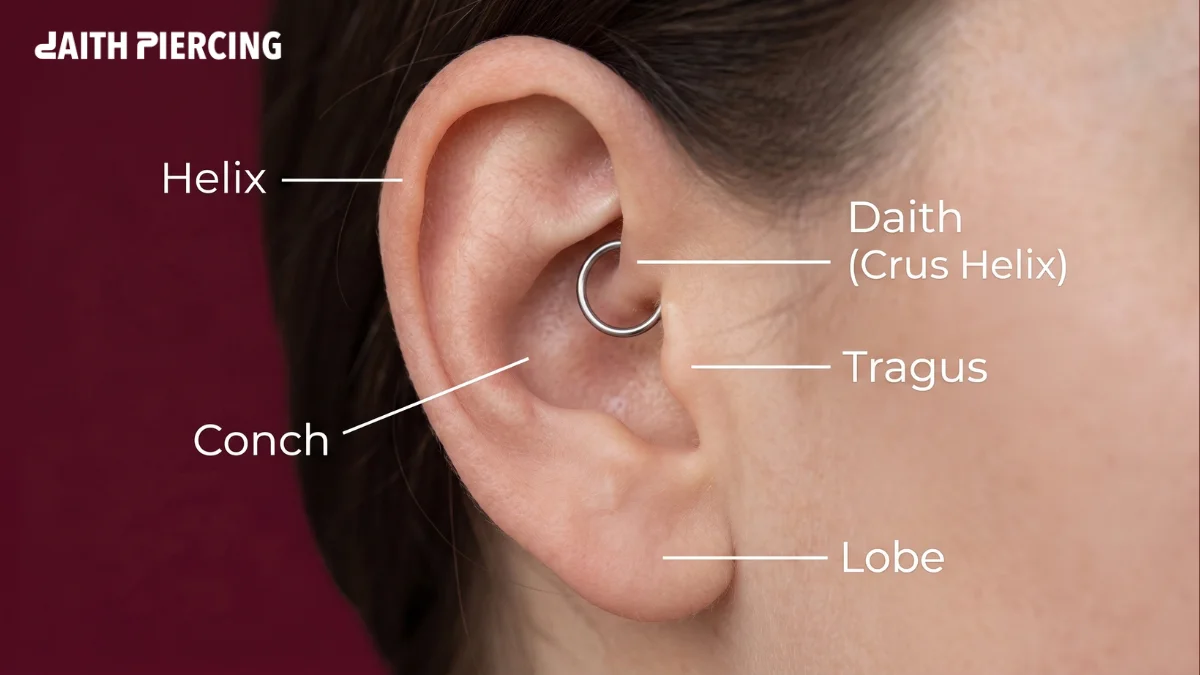
Daith piercing rejection happens when the body pushes jewelry out of the cartilage. This process causes thinning skin, jewelry migration, and redness. It happens less often than in surface piercings. Still, catching signs early prevents permanent tissue damage.
Do you notice your daith piercing sitting differently? Is the skin around your jewelry growing thin? You might be seeing early daith piercing rejection. At DaithPiercing, we break down real rejection symptoms, the timeline, and exact action steps. Protect your ear and save your piercing today.
Key Takeaways
-
Daith piercing rejection occurs less than surface piercing rejection, but thin cartilage or bad jewelry triggers it.
-
Early daith piercing rejection symptoms include thin skin, shallower jewelry placement, and lingering redness.
-
Rejection appears weeks, months, or years after your piercer places the jewelry.
-
Taking fast action on signs of piercing rejection lowers your risk of a deep piercing rejection scar.
What Is Daith Piercing Rejection?
Daith piercing rejection is a biological foreign body response. Your immune system views the metal as an intruder. Your body builds new skin cells behind the jewelry. It slowly pushes the post toward the outer surface of your ear.
Daith cartilage rejection differs from earlobe or surface piercing rejection. Cartilage lacks strong blood flow. So, cartilage moves metal much slower than soft surface skin. Still, the tissue stays thin and cannot heal around poorly placed metal. Many people get daith piercings to help with migraine pain. Yet, poor placement or constant pressure causes your body to reject the ring entirely.
Daith Piercing Rejection Symptoms: 9 Early Warning Signs
Recognizing daith piercing rejection symptoms early saves your ear tissue from severe damage. Cartilage does not regenerate quickly once torn or stretched. You must monitor your inner ear fold daily during the first year of healing.
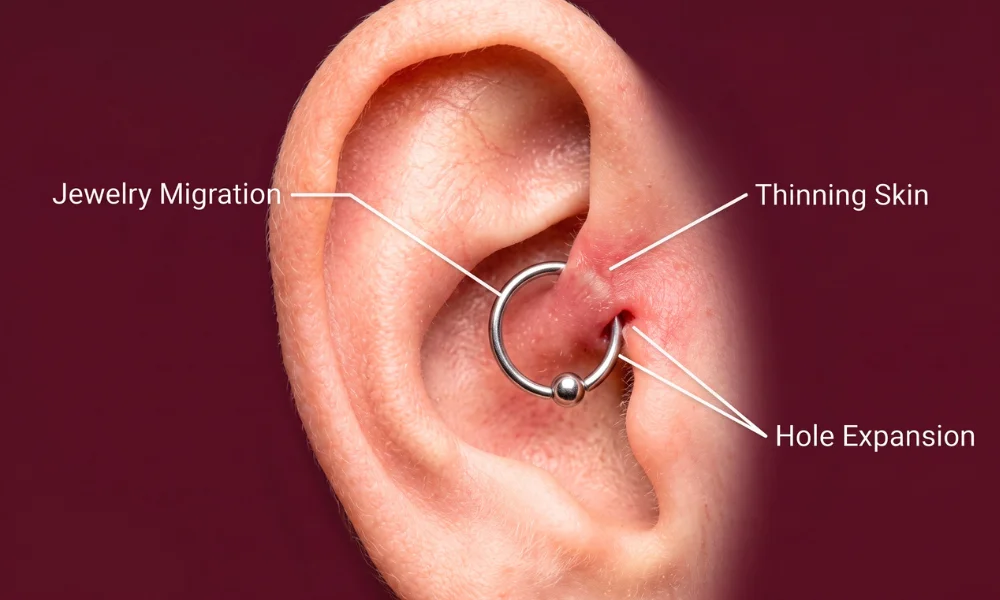
Signs of Piercing Rejection You Shouldn’t Ignore
-
Jewelry sitting higher or closer to the outer cartilage edge than on initial placement
-
Thin, shiny, taut, or translucent skin stretching directly over the metal bar
-
Persistent redness, flaking, and dry skin scaling that lasts well past normal healing weeks
-
Piercing holes growing noticeably wider, oval shaped, or shifting positions over time
-
Increased soreness, dull aching, or burning sensations long after initial swelling settles
-
The jewelry hanging loose, swinging freely, or shifting its angle unexpectedly
-
Clear, odorless lymph fluid leaking constantly without any active signs of bacterial infection
-
Skin feeling tight or stretched directly over the metal ring or curved barbell
-
The metallic shape of the ring showing clearly through the top translucent layer of skin
Daith Piercing Rejection Symptoms at a Glance
| Symptom | What It Looks Like | Urgency Level |
| Jewelry Migration | Ring moves closer to the edge of the inner cartilage fold | Moderate |
| Skin Thinning | Tissue over metal looks clear, shiny, or stretched tight | High |
| Redness and Flaking | Dry skin rings and scales develop around the entry hole | Low to Moderate |
| Hole Expansion | Entrance and exit holes look enlarged, pulled, or stretched | High |
| Exposed Metal Bar | You can see the metal post through thin surface tissue layers | Critical |
Signs of Piercing Rejection vs. Infection vs. Irritation
People often confuse rejection with common healing complications. You must distinguish between rejection, bacterial infection, and simple mechanical irritation. Treating rejection like an infection will not stop your body from pushing out the metal.
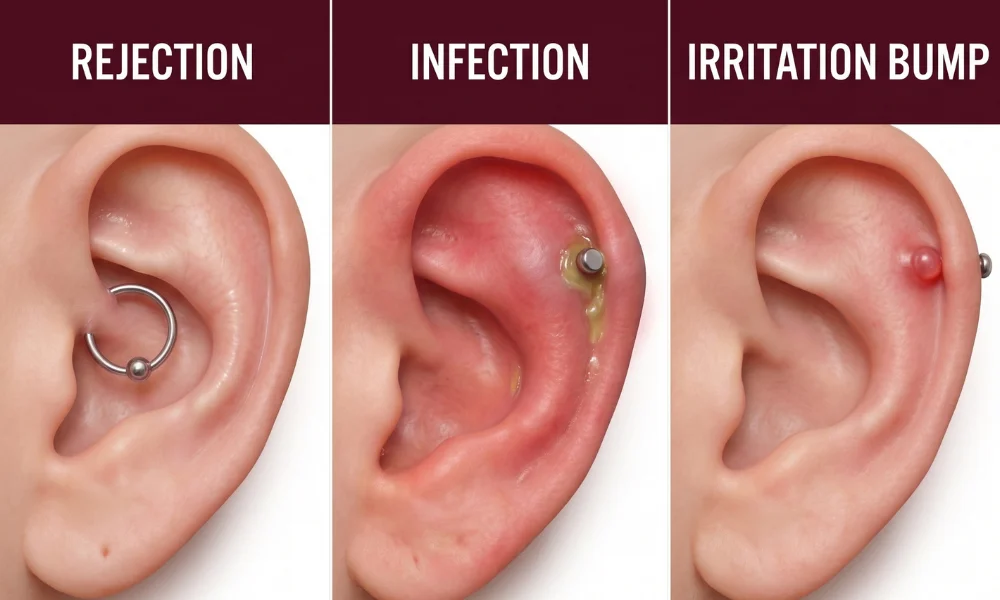
How to Tell Rejection Apart From a Daith Piercing Infection
Rejection involves physical movement of metal without immediate heat, red streaks, or foul pus. Your body simply pushes the foreign body out quietly. An infection brings localized heat, throbbing pain, green or yellow pus, swollen lymph nodes, and red streaks around the ear fold. Infection requires medical treatment and antibiotics.
Mechanical irritation causes localized bumps known as granulomas or hypertrophic scarring. These bumps form due to snagging, poor cleaning habits, or sleeping pressure. Bumps do not mean your body is rejecting the metal. The ring stays in its original deep placement during irritation. Rejection specifically changes the physical position of the post.
Rejection vs. Infection vs. Irritation
| Symptom | Rejection | Infection | Normal Irritation |
| Pain Type | Mild ache or zero pain | Severe throbbing pain and burning heat | Minor tenderness when touched |
| Fluid Output | Clear or pale yellow lymph fluid | Thick yellow or dark green foul pus | Occasional crusty clear fluid |
| Tissue Changes | Thinning, translucent skin over metal | Swollen, dark red, hot tissue | Raised red bump near the entry hole |
| Jewelry Position | Moves outward toward skin edge | Stays locked in original position | Stays locked in original position |
If you suspect bacteria rather than physical movement, read our detailed guide on daith piercing infection care to spot bacterial issues fast and treat them safely.
Why Is Your Daith Piercing Pushing Out?
Your body pushes metal out for very specific biological, mechanical, and anatomical reasons. Identifying the root cause helps you prevent future rejection events.
- First, bad jewelry selection creates massive tissue stress. Thin gauge wire acts like a cheese cutter against cartilage tissue under pressure. Heavy rings drag the wound downward. Low grade metals containing nickel or brass trigger immediate allergic inflammation. This allergic state speeds up tissue breakdown.
- Second, daily physical trauma forces the metal outward. Sleeping on your side puts intense pressure on the crus helix cartilage fold. Snagging earbuds, tight headphones, or hairbrushes tears the internal tissue. Constant friction signals your immune system to push the foreign object away.
- Third, poor ear anatomy or flawed piercing technique plays a massive role. The daith region requires a deep, precise bite of cartilage. An inexperienced piercer might place the needle too shallow in your fold. So, your body easily forces the metal through the remaining thin skin barrier. Also, improper entry angles create uneven pressure vectors that force the ring out over time.
Daith Piercing Rejection Timeline: What to Expect Week by Week
Daith piercings take six to nine months to heal completely. Many ears require up to twelve full months for total cartilage stabilization. Because cartilage heals so slowly, rejection risks linger far longer than they do in soft earlobe tissue.
Early vs. Late Daith Piercing Rejection Timeline
Rejection can begin during early healing weeks or appear unexpectedly years after the original piercing session. Understanding the timeline helps you catch subtle signs early.
During the first month, rejection usually stems from poor placement angle or severe metal allergies. Between months one and three, steady pressure from sleeping or earbuds triggers slow movement. Beyond three months, thin skin becomes visible as migration advances.
Rejection Timeline
| Stage | Timeframe | What Happens | Signs to Watch |
| Stage 1 | Weeks 1 to 4 | Initial tissue stress, severe metal allergy, or poor shallow placement | Constant localized swelling, burning sensation, and deep redness |
| Stage 2 | Months 1 to 3 | Immune response begins moving metal toward the outer tissue layer | Skin turns shiny, entry holes stretch, clear lymph fluid drains daily |
| Stage 3 | Months 3 to 9 | Active rejection and steady migration through cartilage structure | Jewelry sits shallower, metal shows through thin translucent skin |
| Stage 4 | After Full Healing | Delayed rejection caused by sudden physical trauma or low quality rings | Unexpected migration or tissue thinning years after full healing |
How to Stop Piercing Rejection Before It’s Too Late
You cannot reverse migration once cartilage tissue dissolves completely behind the post. Still, you can halt early rejection if you act before the metal reaches the skin surface.
Step by Step Action Plan to Stop Piercing Rejection
-
Switch your jewelry to high grade implant certified titanium (ASTM F136) with help from a professional piercer.
-
Stop touching, twisting, turning, or rotating the ring during your daily routine.
-
Use a specialized travel pillow with an ear hole to eliminate all pressure while sleeping on your side.
-
Keep earbuds, over ear headphones, and tight beanies completely away from your ear during recovery.
-
Clean the site using only sterile saline sprays containing point nine percent sodium chloride and water.
-
Avoid using harsh chemical antiseptics like rubbing alcohol, hydrogen peroxide, tea tree oil, or bactine.
-
Visit an experienced professional piercer immediately to evaluate placement depth and tissue health.
Piercing Rejection Scar: What to Expect and How to Minimize It
Cartilage scar tissue forms quite differently than soft earlobe tissue. Earlobes form smooth scars. Cartilage forms dense collagen buildup, raised keloids, or permanent cleft split marks when metal tears through the outer fold.
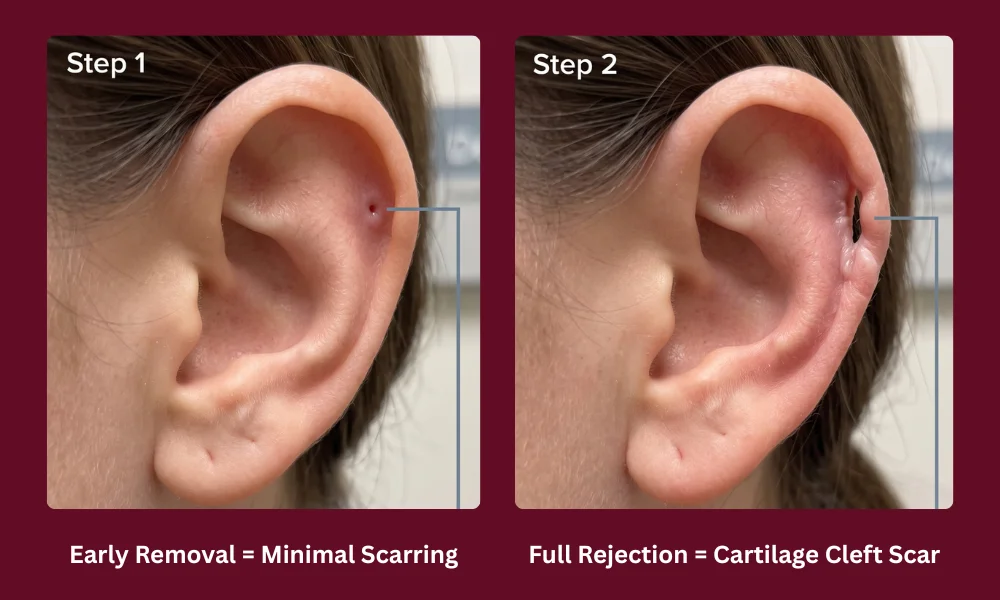
Can You Prevent a Piercing Rejection Scar?
You prevent severe scarring by removing jewelry early. Do not wait for the metal ring to rip through your skin. If your piercer confirms active rejection, let them remove the jewelry safely in a clean environment.
Once your piercer removes the ring and the wound closes completely, start dedicated scar care. Apply medical grade topical silicone gel daily to smooth out raised tissue structures. Keep the healing area hydrated with basic unscented moisturizers once the outer skin seals. Soft tissue discoloration fades over time. Yet, severe cartilage split scars often stay permanent without specialized cosmetic procedures or surgical revisions.
Can You Re Pierce a Daith After Rejection?
Yes, you can re pierce your daith after a rejection event. But you must wait three to six months minimum before attempting a new piercing. Your inner ear cartilage needs ample time to fully close, clear lingering inflammation, and stabilize structural density.
Your piercer must assess the remaining healthy cartilage fold during a face to face consultation. They will choose a deeper entry angle or a slightly different spot away from old scar tissue channels. Choosing a highly skilled piercer guarantees correct gauge selection and proper placement depth for your specific ear anatomy.
When to See a Professional Piercer or Doctor
Visit an experienced piercer within forty eight hours if you notice your jewelry moving position or skin growing thin over the post. They can evaluate placement depth, downsize your ring, or safely remove the jewelry to prevent permanent tearing.
Seek immediate medical help from a doctor or urgent care clinic if you notice red streaks spreading across your ear, severe burning heat, fever, or thick green foul discharge. These symptoms indicate a dangerous cartilage infection rather than simple mechanical rejection. Cartilage infections require prompt prescription antibiotics to avoid severe ear deformities.
Conclusion
Spotting daith piercing rejection early makes the difference between saving your piercing and keeping a permanent scar. Watch for thinning skin, shifting jewelry, and persistent irritation. Act fast when you see these signs. Explore DaithPiercing for more expert backed piercing guides and trusted ear care tips.
Frequently Asked Questions
Is daith piercing rejection common?
No, daith piercing rejection is not very common. The deep fold of the inner ear cartilage naturally protects the jewelry from frequent physical snags and daily bumps. Still, shallow placement, improper metal choice, or constant pressure from earbuds causes rejection.
How do I know if my daith piercing is healing or rejecting?
A healing daith stays locked in its original deep position while swelling and soreness steadily decrease over time. A rejecting daith physically moves closer to the outer skin surface while the tissue over the metal grows thin, tight, and shiny.
Can a daith piercing reject after years?
Yes, a daith piercing can reject years after healing. Major physical trauma, sudden development of metal sensitivity, prolonged illness affecting the immune system, or long term pressure from heavy headphones can trigger late rejection.
Does downsizing jewelry stop rejection?
Downsizing stops rejection if heavy or oversized initial jewelry caused mechanical dragging and tissue stress. Yet, downsizing cannot stop rejection if your body has already pushed the post too close to the outer skin edge.