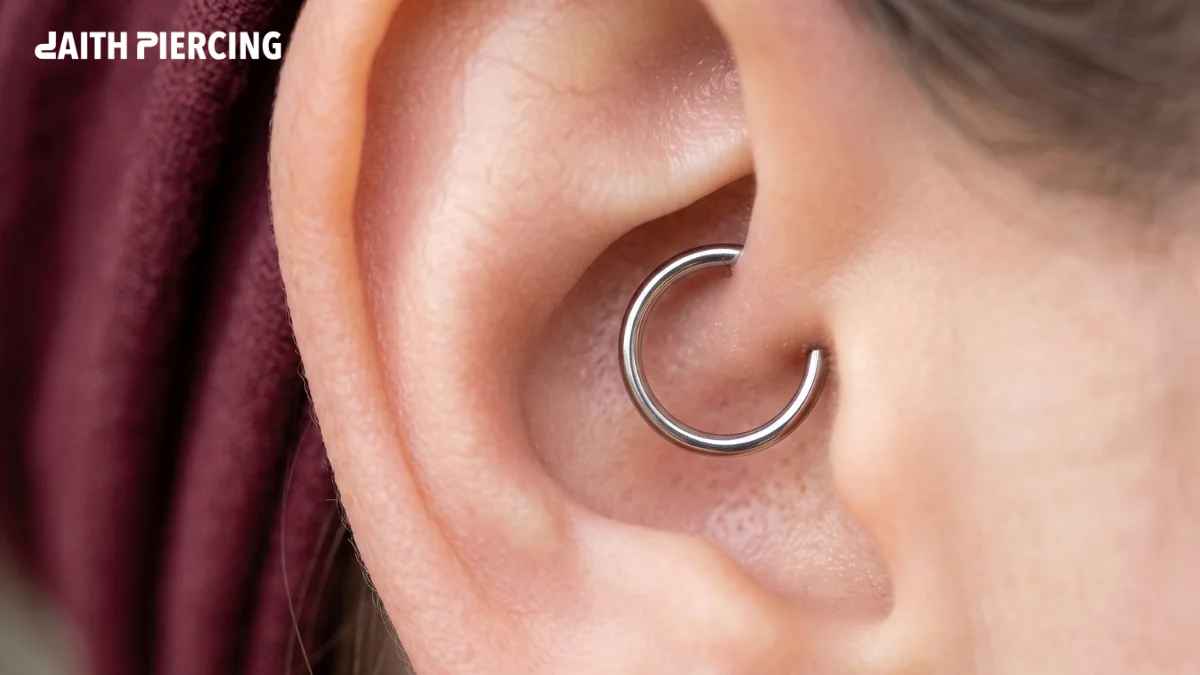
Daith piercing itching is usually a normal part of cartilage healing, caused by new tissue and nerve regeneration. It becomes concerning only if paired with redness, swelling, discharge, or heat signs of infection or a nickel allergy needing attention.
Getting a daith piercing brings excitement, but sudden itching can raise immediate concern. You will find that mild itching is usually a normal part of body recovery. This guide from daithpiercing.io covers healing stages, allergic reactions, nickel sensitivity, and clear signs that show when itching indicates a real problem versus simple tissue repair.
Key Takeaways
-
Daith piercing itching is common during weeks 1 through 8 of healing, and it usually remains harmless.
-
Persistent, one-sided itching with severe swelling or thick discharge may signal an infection or a nickel allergy.
-
Implant-grade titanium or niobium jewelry prevents most allergic-reaction itching completely.
-
Never scratch your ear, but use sterile saline soaks and gentle rotation-free care instead.
Is Daith Piercing Itching Normal?
Yes, daith piercing itching is normal during healing because your body activates several natural repair steps at once. A piercer passes a needle through your inner ear cartilage, and your body views this entry point as a deep wound. Damaged nerve fibers inside the dense cartilage tissue begin to regenerate, so they send light tingling signals to your brain. You register these signals as a persistent itch.
At the same time, specialized immune cells release histamines near the inner ear fold, so local blood flow increases. This process transports healing nutrients directly to the area. New skin cells form a lining inside the hole, and professionals call this lining a fistula. This rapid cell turnover pushes dead micro-cells outward, and that movement creates mild dryness.
Dry skin triggers an itch response, so you will notice this sensation early in your recovery process. Still, this feeling simply shows that your body is actively building new protective tissue.
Piercing Healing Stages Itch: What to Expect Week by Week
The severity of your itchy ear piercing healing changes as your body progresses through distinct tissue repair phases. Early trauma triggers inflammatory fluid shifts, and then mid-stage recovery brings intense skin formation and nerve activity.
| Healing Stage | Timeframe | Itch Level | What Is Happening |
| Initial trauma | Days 1 to 7 | Low to Moderate | Swelling, tenderness, and early cellular fluid buildup |
| Active healing | Weeks 2 to 8 | Peak itching | Rapid new tissue growth, nerve repair, and histamine release |
| Maturation | Months 2 to 6 | Occasional | Fistula strengthening, skin thickening, and reduced dryness |
| Fully healed | 6 to 12 months | Rare | Complete tissue closure and stable internal nerve pathways |
Daith Piercing Itchy Inside vs Outside: What It Means
Here are the details:
Itchy Inside the Ear Canal Area
An itch deep inside the inner cartilage curve usually points to internal nerve regeneration along the newly forming fistula. Deep tissue nerves in the ear share pathways with the vagus nerve, so subtle pressure inside the inner fold can feel like a deep tickle. Still, you must check whether oversized captive bead rings or thick seam rings press directly against the inner ear canal wall. Continuous metal pressure creates friction ulcers, and these spots cause deep itching before they break open.
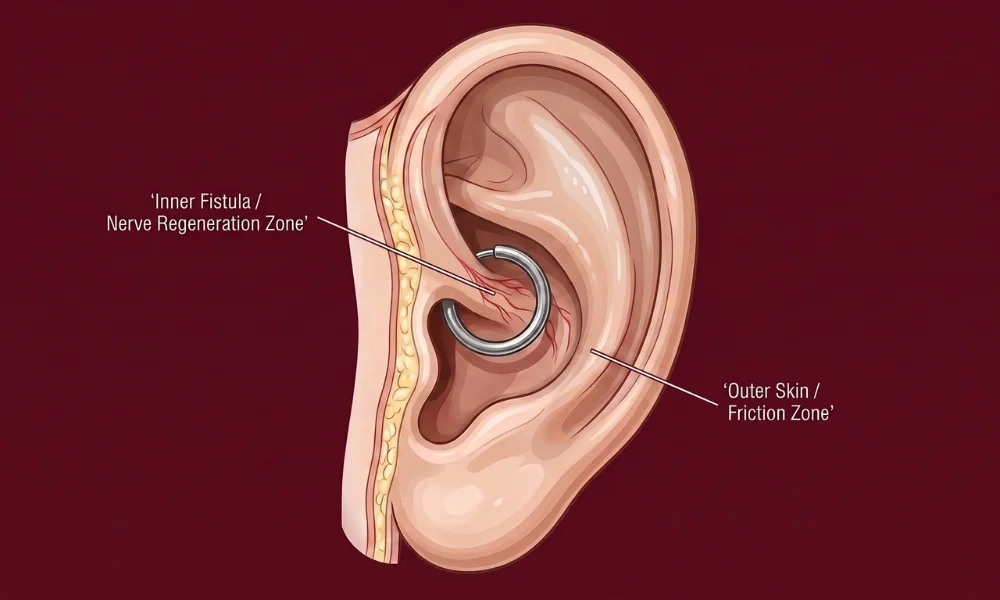
Itchy Skin Around the Piercing
An itch on the visible skin surface surrounding your daith fold usually stems from external factors like contact dermatitis or extreme localized dryness. Washing your ear too frequently strips natural protective oils, so the outer skin becomes flaky and reactive. Harsh soaps, residue from hair shampoos, and artificial fragrances in hair care items settle inside the ear bowl, and then these products irritate the outer skin.
Itching vs Infection Piercing: How to Tell the Difference
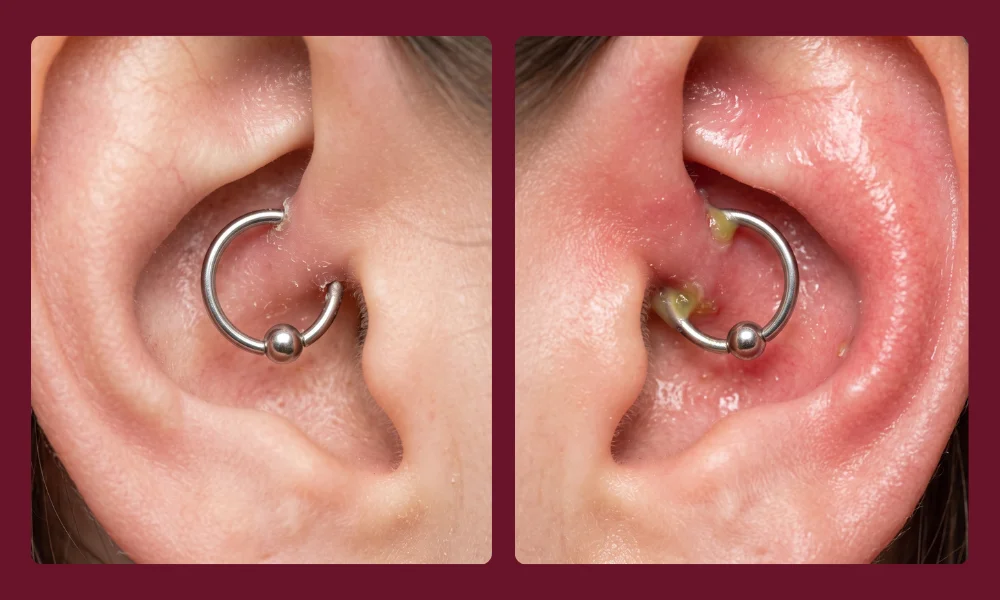
Distinguishing a routine healing itch from a dangerous bacterial infection protects your ear cartilage from permanent tissue loss. Cartilage tissue lacks a direct internal blood supply, so bacterial growth spreads fast if you ignore key warning indicators.
| Symptom | Normal Itching | Infection | Allergic Reaction |
| Discharge | None or clear thin fluid | Yellow or green thick pus | Clear, watery fluid |
| Redness | Mild, fades over days | Spreading, dark, and warm | Localized strictly to metal contact |
| Pain | Mild, occasional tickle | Throbbing, worsening pain | Burning sensation with itchy rash |
| Swelling | Normal early on | Increasing, tight swelling | Swelling around jewelry only |
| Smell | None | Foul odor present | None |
Daith Piercing Allergic Reaction: Signs and Causes
An allergic reaction happens when your body identifies trace elements in your jewelry metal as dangerous invaders. An infection stems from invading bacteria, but an allergy represents an immune system reaction triggered by direct contact with specific materials. Low-quality metal jewelry leaches microscopic metallic ions into your damp inner ear skin. These ions bond with skin proteins, so they create an antigen complex. Your immune system attacks this complex continuously, and then inflammation begins.
Nickel Allergy Piercing Symptoms to Watch For
A nickel allergy piercing issue typically manifests as a clear contact dermatitis pattern directly where the metal touches your skin. You will observe a localized rash around the jewelry insertion points, and you will also see dry skin or tiny watery blisters. A daith piercing allergic reaction can develop weeks after the initial placement because nickel ions leach out slowly. The surrounding skin may darken or turn greenish-grey, and it will itch constantly, yet you will not see signs of systemic fever or thick yellow pus.
Hypoallergenic Jewelry for Sensitive Ears
Replacing cheap metals with certified biocompatible materials resolves persistent allergic reactions instantly. Implant-grade titanium with an ASTM F136 specification contains virtually zero nickel, and it also resists body fluid corrosion completely. Solid niobium is another safe option, so it provides excellent strength without allergic risk. Medical-grade PTFE or bioplast flexible plastics work well during acute flare-ups because they eliminate metal contact entirely, yet they still maintain an open channel.
How to Relieve Itchy Ear Piercing Healing Safely
Safe itch management relies on preserving your delicate ear tissue while you flush away dried crust and excess fluid residue.
-
Spray the inner ear fold twice daily with a sterile, fragrance-free 0.9% sodium chloride saline solution.
-
Soak a clean paper towel in warm saline, and then rest it against the daith area for five minutes to soften dry crusts.
-
Keep your fingers completely off the jewelry, and do not rotate or twist the ring inside the fresh wound channel.
-
Apply a dry cold compress around the outer ear, so you can calm inflamed nerve endings and reduce deep itching.
-
Cover your regular bed pillow with a clean, breathable cotton pillowcase every single night, and this habit lowers bacterial contact.
-
Avoid applying rubbing alcohol, hydrogen peroxide, or harsh antibacterial soaps, because these products destroy new cells and amplify itching.
When Itching Means You Should See a Doctor or Piercer
Mild itching remains a normal part of recovery, but specific red flag symptoms show that your body needs medical intervention. Contact a professional if you experience any of these issues:
-
Body fever or systemic chills that accompany localized ear discomfort
-
Dark redness that expands beyond the daith fold and spreads across your outer ear
-
Constant yellow or green pus that smells bad and leaks continuously from the entry points
-
Ear swelling that causes the skin to cover or embed the jewelry ends completely
-
Intense itching or burning that lasts longer than three months without any reduction in severity
Consult a licensed professional piercer to evaluate jewelry fit, or visit a medical doctor or dermatologist if you suspect a bacterial infection or severe systemic allergic response.
Conclusion
Mild daith piercing itching represents a completely normal sign that your cartilage tissue heals properly and builds new skin layers. Still, you must stay alert to changing symptoms, so you can spot an infection or a nickel allergy early. Explore more piercing care guides on daithpiercing for expert aftercare tips and reliable jewelry advice.
Frequently Asked Questions
Is it normal for a daith piercing to itch after a year?
No, itching after a full year is not a typical part of tissue healing. Your internal fistula should be fully formed and quiet by this stage. Late itching usually indicates a sudden metal allergy from lower-quality jewelry, trapped shampoo residue, or physical trauma from rough sleeping habits.
Does itching mean my daith piercing is healing well?
Yes, moderate itching usually shows that your body actively builds new skin and repairs tiny nerves. The histamine response drives fresh nutrients to your inner ear cartilage fold, so tissue rebuilds faster. Still, this positive sign applies only if you see no thick pus, severe swelling, or spreading redness alongside the itch.
Can I use hydrocortisone cream on an itchy piercing?
No, you should never put hydrocortisone cream or thick ointments on an unhealed daith piercing. Thick creams block air circulation around the entry holes, and then they trap dangerous bacteria inside the deep canal. Stick strictly to sterile saline sprays for quick and safe relief.
How long does daith piercing itchiness last?
Peak daith piercing itching usually lasts between two and eight weeks post-piercing. New skin layers mature and stabilize over time, so the intense tickling feelings taper off gradually. Still, you may experience light, brief itching through month six whenever dry air, cold weather, or mild crust buildup occurs.