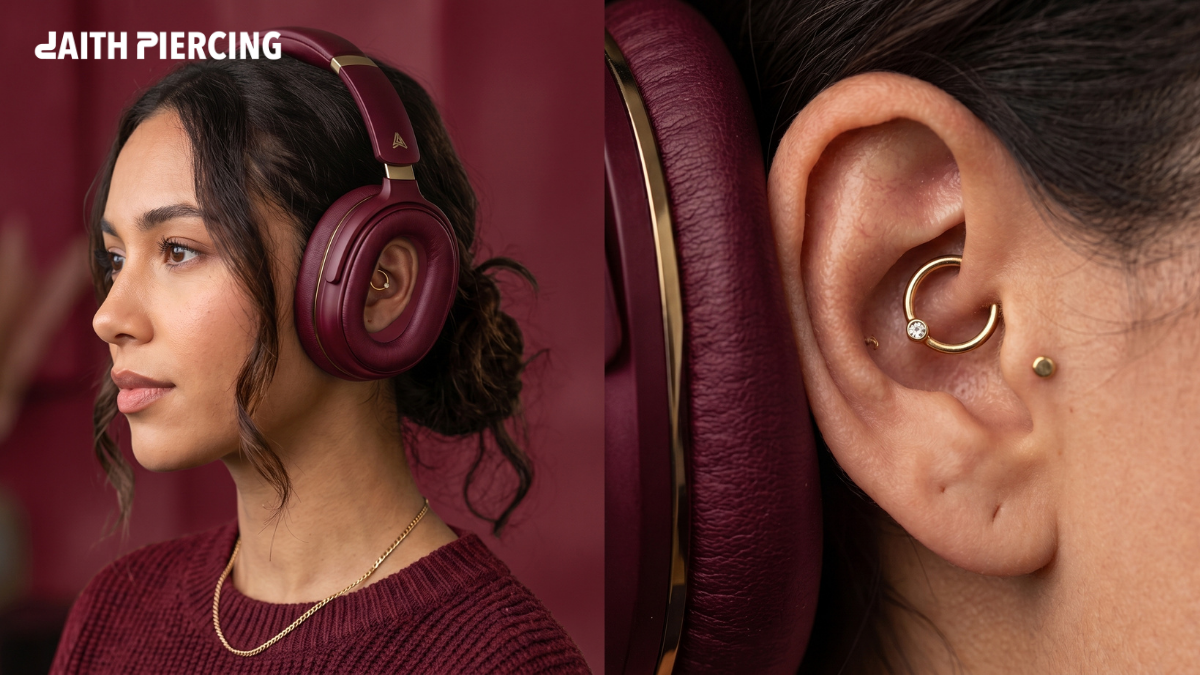
Daith piercing headphones are generally safe once healing is complete (6–9 months). During healing, avoid direct pressure on the piercing choose over-ear, bone conduction, or open-ear headphones, and always clean them before use.
Getting a daith piercing should not mean giving up your headphones. Whether you are a gamer, commuter, or music lover, this guide from DaithPiercing breaks down exactly when it is safe to wear headphones after piercing, which styles avoid pain, and how to protect your healing cartilage without sacrificing sound.
Key Takeaways
-
Wait at least 3–6 months before wearing tight in-ear or clamping headphones.
-
Over-ear and bone conduction models are safest during healing.
-
Daith piercing headphone pain usually signals too much direct pressure, not infection.
-
Gaming headsets need extra care due to long wear time and clamping force.
What Is a Daith Piercing? Why Daith Piercing Headphones Feel Different
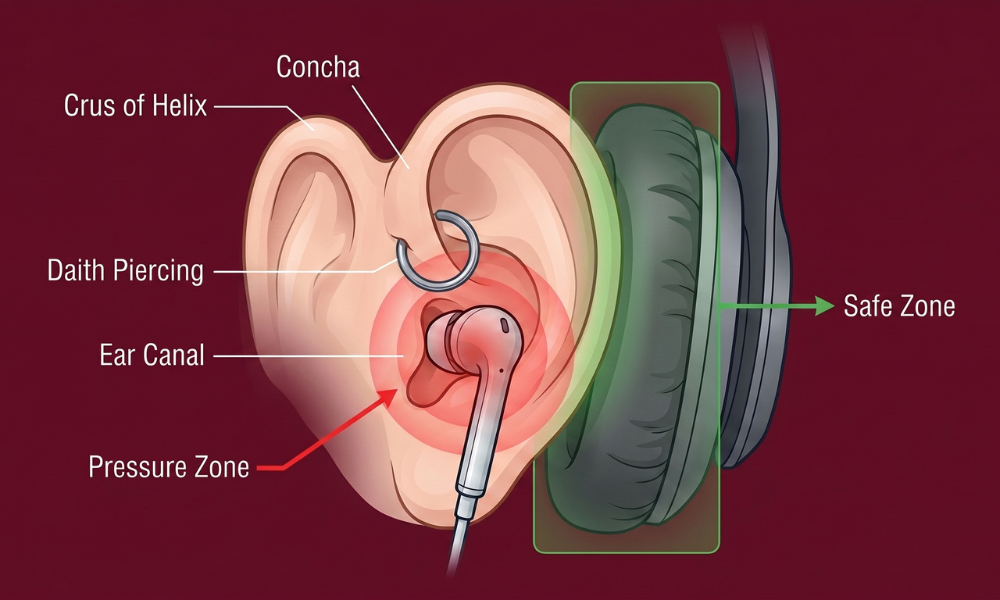
A daith piercing passes directly through the innermost cartilage fold of your ear. Piercers call this specific spot the crus of helix. It sits right above the entrance to your ear canal. That location creates a unique challenge for music lovers.
Unlike lobe or outer helix piercings, a daith piercing sits right inside the ear bowl. Standard earbuds rest directly against this cartilage fold. Regular in-ear models push hard against fresh jewelry. Over-ear padding covers the outer ear, but in-ear designs push straight into the inner ear space where your new ring sits.
Cartilage takes time to recover because it lacks a direct blood supply. Full healing takes 6 to 9 months. Direct friction during this time creates intense swelling and scar tissue. Choosing the right daith piercing headphones protects this delicate area while your tissue recovers.
Daith Piercing Headphone Pain: What Causes It and How Long It Lasts
Daith piercing headphone pain is usually caused by direct jewelry pressure, not infection, and typically fades once swelling subsides.
Fresh cartilage sensitive tissue reacts quickly to physical strain. Wearing tight ear cups traps body heat and moisture around the wound. This environment encourages bacteria buildup. The combined force of clamping pressure and trapped sweat leads to sharp throbbing sensations.
You must separate normal healing discomfort from actual complications.
| Symptom | Likely Cause | Action |
| Dull ache after wearing headphones | Pressure on fresh piercing | Remove headphones and switch to open-ear style |
| Sharp pain + redness | Irritation and friction | Rest your ear and clean gently with saline |
| Pain + swelling + discharge | Possible infection | Stop headphone use and see your piercer or doctor |
When Can I Wear Headphones After Piercing? Full Healing Timeline
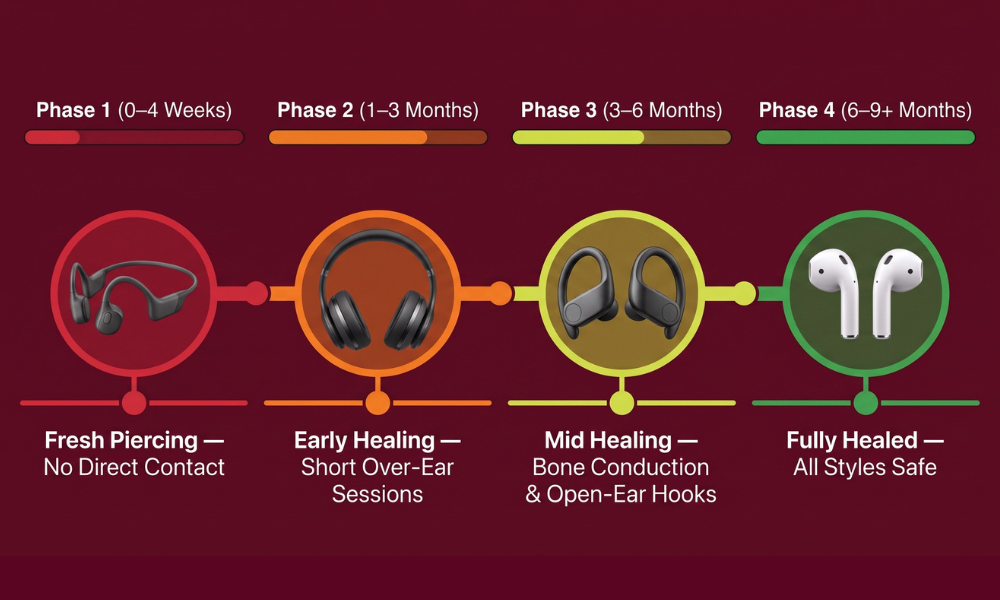
Most piercers recommend waiting a minimum of 3 months, with 6–9 months for full healing, before wearing headphones after piercing.
Cartilage heals from the outside inward. The surface may look fine after a few weeks, but internal tissue remains vulnerable to pressure. Inserting dynamic audio gear too early forces the ring into raw tissue walls.
This recovery schedule outlines safe audio choices for each phase:
| Healing Stage | Timeframe | Headphones OK? | Recommended Type |
| Fresh Piercing | 0–4 weeks | No direct contact | Speakers or loose bone conduction |
| Early Healing | 1–3 months | Limited | Loose over-ear only with short sessions |
| Mid Healing | 3–6 months | Yes, with care | Bone conduction or open-ear hooks |
| Fully Healed | 6–9+ months | Yes | Any style, including in-ear earbuds |
Every person heals at a different speed. Consult your professional piercer before returning to stiff in-ear audio equipment.
Over Ear Headphones Piercing Safety: Do They Really Work Better?
Over-ear designs offer far better protection than tight earbuds. Standard in-ear tips wedge directly into the ear bowl. They apply continuous force to the crus of helix. Over-ear cups shield the entire outer ear inside a padded cavity.
However, over-ear models are not automatically safe. Headbands with strong clamping force press ear pads tight against your head. Thick cushion padding can shift during movement and crush the outer rim of your ear against the jewelry post.
How Over Ear Headphones Piercing Pressure Affects the Crus of Helix
Clamping force measures how tightly a headset squeezes your head. High clamping force transfers kinetic pressure straight through your outer ear structures. This force tilts the ring stem inside the fresh wound track. In-ear options direct force right onto the crus of helix, while over-ear cups spread weight safely across your skull.
Adjust your headband sliders to maximum length to reduce tension. You can also ask your piercer for low-profile jewelry. Switching to a flat-back post or smaller gauge ring reduces contact points inside the ear bowl.
Headphones After Piercing: Best Options for Every Healing Stage
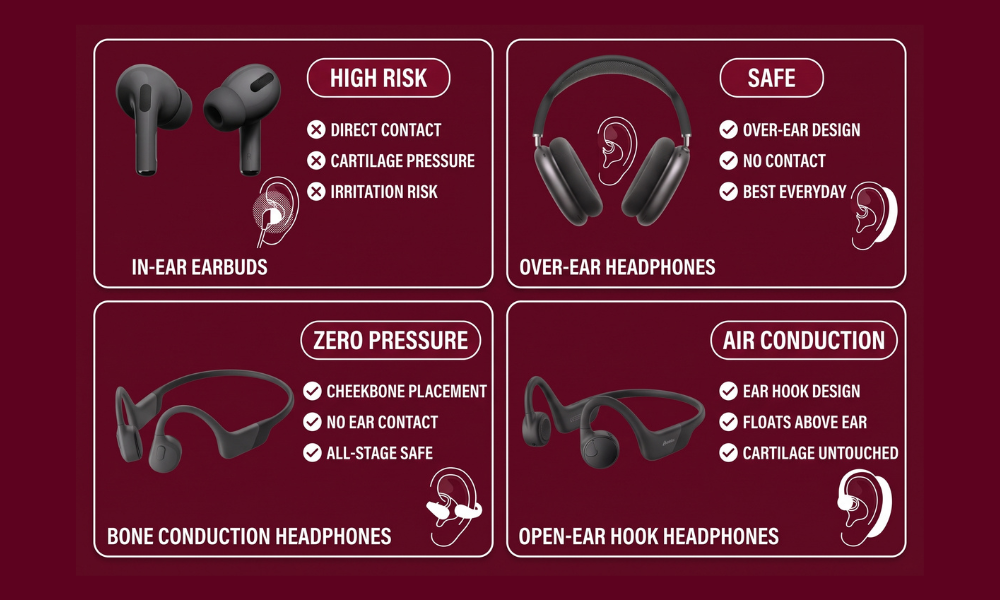
Selecting headphones after piercing requires matching audio gear with your current healing phase. You need options that avoid pressing directly on the inner ear structure.
-
Over-ear cups enclose the whole ear without touching the center bowl.
-
Bone conduction units rest on cheekbones and bypass the ear canal completely.
-
Clip-on open speakers float near the ear without touching cartilage.
-
Open-ear hooks rest behind the upper ear and direct sound inside without physical contact.
| Type | Contact With Daith? | Best For |
| Standard Earbuds | Yes (Direct) | Fully healed piercings only |
| Over-Ear Headphones | Minimal (Adjustable) | Early–mid healing phase |
| Bone Conduction | None | Any healing stage |
| Open-Ear / Clip-On | None | Any healing stage |
Bone Conduction, Clip-On and Open-Ear Daith Piercing Headphones Compared
Bone conduction designs pass sound vibrations directly through your cheekbones to the inner ear. They leave your ear canal completely open. You face zero risk of pressing against fresh metal studs or rings. Sound quality drops in low bass frequencies, but hygiene remains optimal.
Clip-on speakers and open-ear hooks mount over the outer ear ridge. They beam audio into the canal without applying physical pressure to the crus of helix. Using specialized daith piercing headphones like these prevents heat buildup and keeps sweat away from raw tissue. They are the safest pick for active workouts.
Gaming Headset Ear Piercing: What Gamers With a Daith Need to Know
Gamers face specific challenges with a gaming headset ear piercing setup. Long gaming sessions cause continuous mechanical pressure on ear tissue. Ear cups trap moisture and elevate warmth inside the ear cavity over hours of wear.
To keep your ear safe, make sure to check high clamping force and loosen your headband. Watch out for trapped heat and sweat, taking breaks every 45 minutes to let your ear cool. Swap stiff leather pads for soft velour pads to ease tension.
You can protect your piercing without stepping away from team chat:
-
Choose headsets with broad, adjustable headbands to lower side pressure.
-
Take 10-minute breaks every 45 to 60 minutes to let cartilage cool.
-
Clean your headset ear pads daily with alcohol wipes to remove skin oils.
-
Pick lightweight headsets under 300 grams to lower head strain.
-
Use wired or wireless models that let you tilt one ear cup off the ear.
How to Reduce Daith Piercing Headphone Pain While It Heals
You can actively protect your ear while enjoying music. Use this practical safety checklist to prevent irritation:
-
Clean the piercing twice daily with sterile 0.9% saline spray.
-
Wipe down daith piercing headphones with disinfectant before every use.
-
Avoid tight headbands that push ear pads against your head.
-
Use a donut travel pillow so your ear floats freely while sleeping.
-
Choose implant-grade titanium or gold jewelry to reduce metal reactions.
-
Swap long initial piercing posts for smaller gauge rings after initial swelling drops.
Mistakes That Wreck Healing When Wearing Headphones After Piercing
Small errors in your daily routine can trigger persistent bumps or delayed healing. Avoid these common mistakes:
-
Sharing dirty ear equipment with friends or gym partners.
-
Skipping daily cleaning on over-ear cushion pads.
-
Wearing heavy headsets while sleeping or napping.
-
Ignoring early warning signs like throbbing or warmth.
-
Inserting dirty rubber earbuds before the 6-month mark.
Final Thoughts on Daith Piercing Headphones
Finding reliable daith piercing headphones does not have to force a choice between style and sound. Choose pressure-free options early on, follow the healing timeline, and listen to your body signals. For more expert-backed care guides, explore DaithPiercing your trusted resource for healing safely and confidently.
Frequently Asked Questions
Can I wear AirPods with a daith piercing?
You should avoid AirPods and other tight in-ear styles during the first 6 months of healing. The hard plastic shell presses directly against the inner ear cartilage. This pressure causes pain and swelling. Wait until your piercer confirms the wound track is fully healed.
Is over-ear better than earbuds for a new daith piercing?
Yes, over-ear designs are much better for a new daith piercing. They distribute weight across the sides of your head instead of concentrating pressure on the inner ear bowl. Make sure the ear cup cavity is deep enough so the internal speaker mesh does not touch your jewelry.
How long until a gaming headset will not hurt my daith?
A gaming headset should stop causing discomfort after 2 to 3 months if you use lightweight models with loose clamping pressure. However, continuous wear over multiple hours can still cause soreness. Take regular breaks and adjust headband sliders to keep pressure low.
Does daith piercing headphone pain mean infection?
No, pain usually points to mechanical irritation or physical pressure rather than an infection. An infected piercing displays extreme redness, burning heat, heavy swelling, and yellow or green discharge. If you only experience a dull ache after removing your headset, pressure is the main issue.