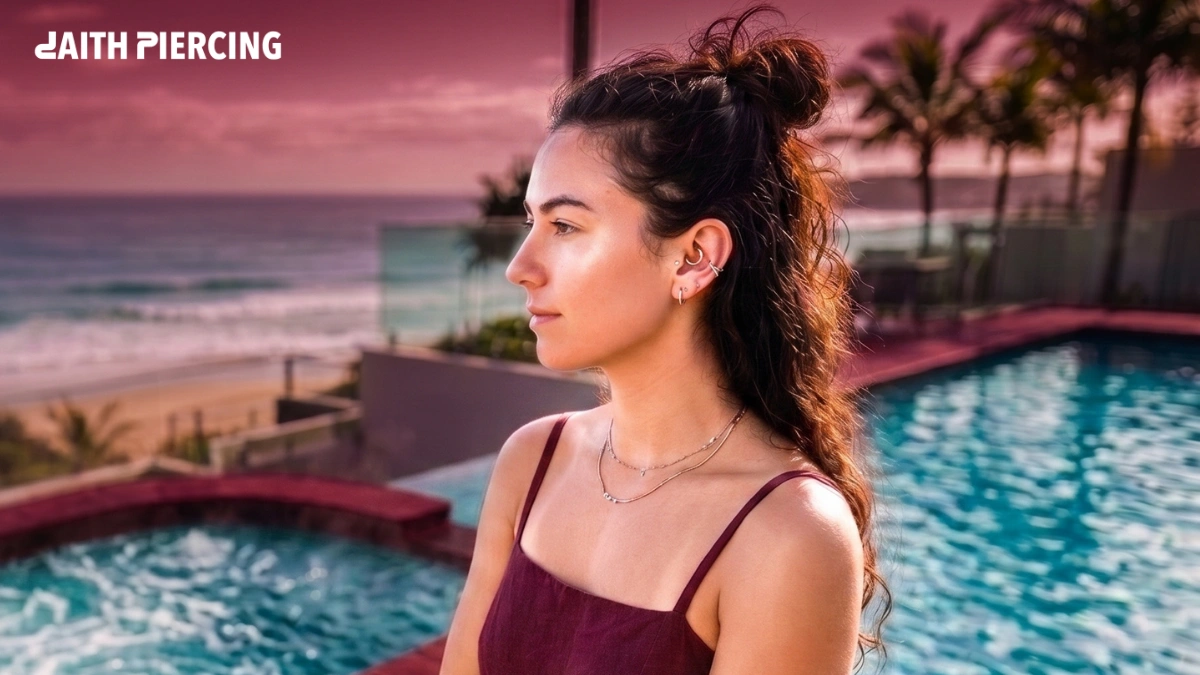
Key Takeaways
- Avoid swimming with a new daith piercing whenever possible.
- Chlorine pools can still irritate healing cartilage and are not completely risk-free.
- Ocean water is not the same as sterile saline solution.
- Lakes, rivers, and hot tubs generally carry the highest infection risk during healing.
- Waterproof bandages offer limited protection and should not replace proper aftercare.
- Clean your piercing with sterile saline if it is accidentally exposed to water.
- If you notice signs of infection, seek professional medical advice promptly.
Getting a daith piercing is exciting, but it also comes with a healing period that requires extra care. One of the most common questions people ask is whether they can go swimming while their piercing is still healing.
Whether you’re planning a beach vacation, heading to the local pool, or relaxing in a hot tub, it’s important to understand how different types of water can affect a fresh piercing. The wrong choice at the wrong time can increase your risk of irritation or infection and slow down the healing process.
This guide explains what professional piercers and medical experts recommend about swimming with daith piercing, including the risks of chlorine pools, ocean water, and hot tubs, along with practical tips to protect your new piercing.
Quick Answer
No, it’s generally not recommended to swim with a new daith piercing until it has healed enough to reduce the risk of infection. Professional piercers commonly advise avoiding swimming during the early healing period, especially in public pools, hot tubs, lakes, and oceans.
A daith piercing typically takes 6 to 9 months to heal completely, although some people may take up to a year depending on their body’s healing process. If swimming cannot be avoided, keeping the piercing as dry and clean as possible afterward is essential.
Can You Swim with a New Daith Piercing?
The short answer is it’s best to wait.
A fresh daith piercing is an open wound. During the first few weeks, the piercing channel has not yet formed a protective barrier, making it easier for bacteria and other microorganisms to enter the tissue.
Unlike earlobe piercings, a daith piercing sits inside the ear cartilage. Cartilage has a lower blood supply than soft tissue, which means it generally heals more slowly. Because healing takes longer, protecting the area from contamination becomes even more important.
Many people assume that clear-looking water is safe. Unfortunately, water that appears clean can still contain bacteria, fungi, parasites, and other microorganisms that may cause problems for a healing piercing.
Even if you do not develop an infection, prolonged exposure to water can soften healing tissue, increase irritation, and delay recovery.
Why Water Can Be Risky During Healing
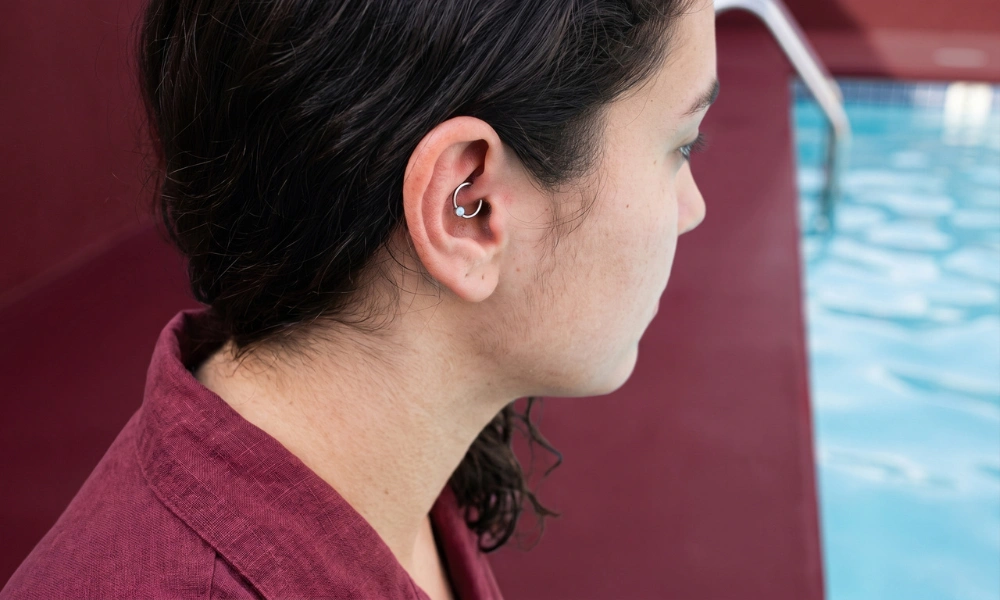
Swimming introduces your piercing to water that cannot be guaranteed to be sterile.
Different swimming environments carry different risks, but they all have one thing in common they expose your healing piercing to substances that should not enter an open wound.
Common concerns include:
- Bacteria
- Viruses
- Fungi
- Chemical disinfectants
- Dirt and debris
- Natural microorganisms
These contaminants may lead to redness, swelling, pain, discharge, or delayed healing.
The first few months after getting your daith piercing are the most important. During this time, minimizing unnecessary exposure gives your body the best chance to heal properly.
Swimming in a Chlorine Pool
Many people think chlorine makes swimming pools completely safe for fresh piercings. While chlorine helps disinfect pool water, it does not make the water sterile.
Public pools are used by hundreds of swimmers every day. Body oils, sweat, cosmetics, and microorganisms are constantly introduced into the water. If chlorine levels are not properly maintained, harmful bacteria can survive.
Even when chlorine levels are correct, the chemicals themselves may irritate a healing piercing.
Risks of chlorine pools
| Risk | Why It Matters |
|---|---|
| Chlorine irritation | May dry out or irritate healing tissue. |
| Bacterial exposure | Poorly maintained pools can still contain bacteria. |
| Delayed healing | Frequent swimming may slow recovery. |
| Increased sensitivity | Fresh cartilage piercings are especially vulnerable. |
If you are concerned about chlorine pool piercing infection, postponing swimming is usually the safest choice until your piercer confirms your daith piercing has healed sufficiently.
Swimming in the Ocean
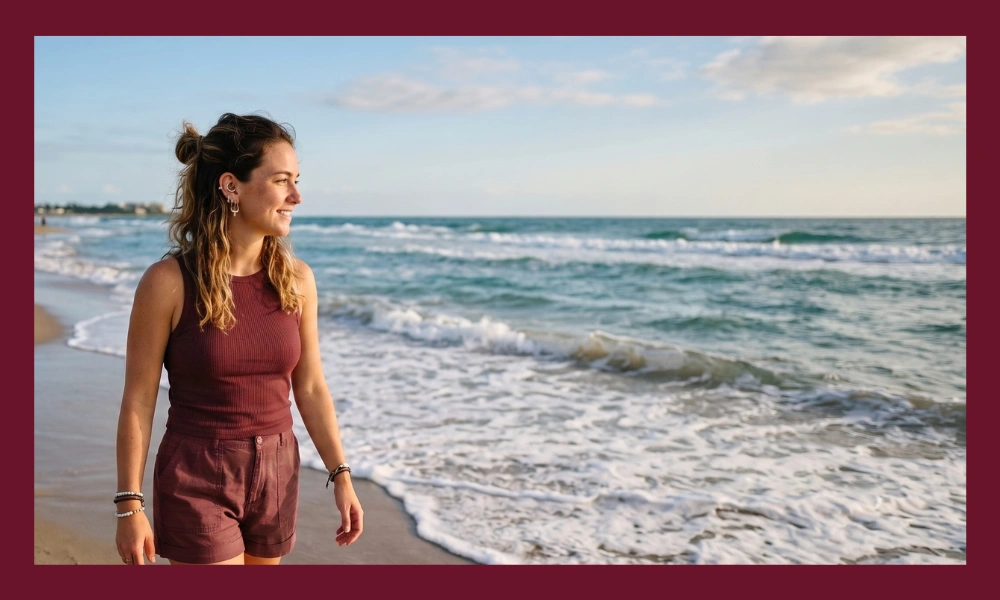
Ocean water often feels cleaner than pool water, but it still presents risks for a new piercing.
Natural seawater contains countless microorganisms. Water quality also changes depending on tides, rainfall, nearby wastewater discharge, wildlife, and algae levels.
Although sterile saline solution is commonly recommended for piercing aftercare, natural seawater is not the same thing. Sterile saline is carefully prepared under controlled conditions, while ocean water is unpredictable.
Swimming with Daith Piercing: Potential ocean risks
- Marine bacteria
- Sand entering the piercing
- Salt causing irritation if the tissue is already inflamed
- Pollution in some coastal areas
- Increased friction from waves
Many people search for information about ocean water new piercing because they assume saltwater always promotes healing. In reality, professionals recommend sterile saline solution, not swimming in the ocean as part of routine aftercare.
Swimming in Lakes and Rivers
Freshwater is generally considered one of the riskiest environments for a healing piercing.
Unlike treated pools, lakes and rivers contain naturally occurring bacteria, parasites, algae, and organic matter. Water quality can also change quickly after rainfall or seasonal shifts.
Because these environments are not disinfected, they pose a greater chance of exposing your piercing to microorganisms that could cause infection.
For that reason, many professional piercers recommend avoiding freshwater swimming until the piercing has healed completely.
Using a Hot Tub with a New Daith Piercing
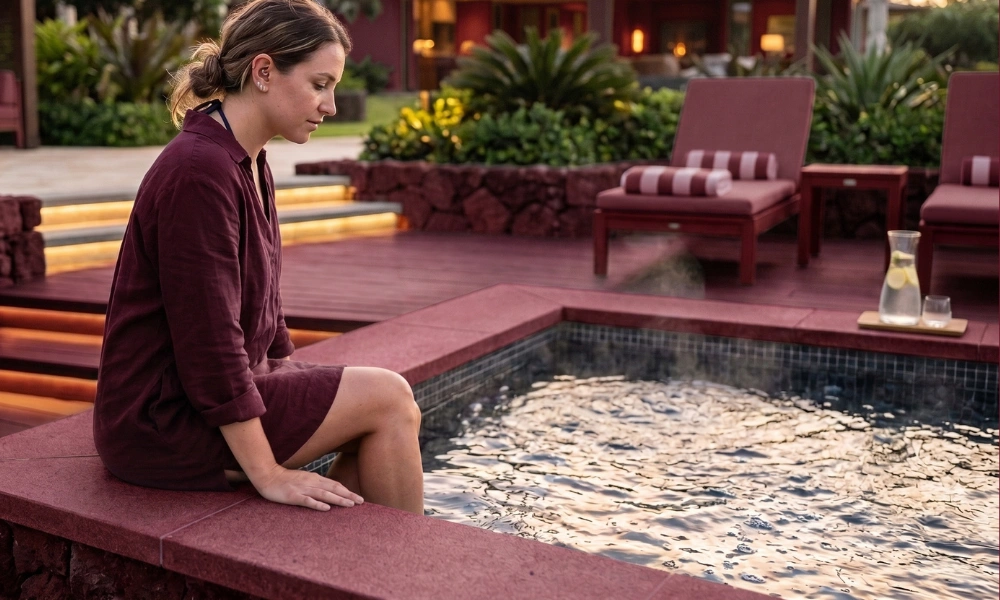
Hot tubs are often considered the highest-risk option during healing.
Warm water provides an environment where bacteria can multiply more easily if maintenance is inadequate. Even well-maintained hot tubs require careful monitoring to keep disinfectant levels effective.
Why hot tubs are risky
| Concern | Explanation |
|---|---|
| Warm temperatures | Encourage bacterial growth when sanitation is poor. |
| Heavy bather use | More people increase contamination risks. |
| Prolonged soaking | Keeps the piercing wet for longer periods. |
| Chemical exposure | Can irritate healing cartilage tissue. |
People often search for hot tub piercing bacteria because hot tubs have been linked to outbreaks of waterborne infections when they are not properly maintained.
For a healing daith piercing, avoiding hot tubs until healing is complete is the safest approach recommended by professional piercers.
Can a Waterproof Bandage Protect a Daith Piercing?
Many people look for a waterproof bandage piercing solution before heading to the beach or pool. While waterproof dressings can help keep some wounds dry, they are usually not practical for a daith piercing.
Because a daith piercing sits deep inside the inner ear, it is difficult to cover completely. Water can still seep underneath the bandage, especially while swimming, and trapped moisture may irritate the healing tissue.
If swimming is unavoidable, a waterproof dressing may provide limited protection for a short time, but it should not be considered a substitute for waiting until your piercing has healed.
Waterproof Bandage: Pros and Cons
| Pros | Cons |
|---|---|
| May reduce direct water exposure | Difficult to seal around the ear |
| Can protect against splashes | Not reliable during swimming |
| Easy to find at pharmacies | Moisture may become trapped underneath |
| Helpful for brief exposure | Doesn’t eliminate infection risk |
For a fresh daith piercing, avoiding swimming remains the safest option.
Swimming After Piercing: How Long Should You Wait?
One of the most common questions is “swimming after piercing how long?”
A daith piercing heals much more slowly than an earlobe piercing because it passes through cartilage. While healing times vary from person to person, patience is important.
General Swimming Guidelines
| Swimming Location | Recommended Waiting Time |
|---|---|
| Public swimming pool | Wait until the piercing has healed well, ideally after full healing |
| Ocean | Wait until healing is complete |
| Lake or river | Avoid until fully healed |
| Hot tub | Avoid until fully healed |
Even if your piercing feels comfortable after a few months, internal healing may still be taking place. Your professional piercer is the best person to confirm whether your piercing is ready for swimming.
What If You Accidentally Swim?
Sometimes plans change, or you may forget your piercing is still healing. One swim doesn’t automatically mean you’ll develop an infection.
What matters most is how you care for the piercing afterward.
After-Swim Care Checklist
- Rinse the area gently with sterile saline solution.
- Pat the piercing dry with a clean disposable paper towel.
- Avoid twisting or rotating the jewelry.
- Wash your hands before touching the piercing.
- Monitor for unusual redness, swelling, or discharge.
If symptoms worsen instead of improving over the next day or two, seek advice from your piercer or a healthcare professional.
Does Saltwater Help a Daith Piercing Heal?
There’s often confusion about saltwater healing piercing because people hear that “salt water is good for piercings.”
The recommendation actually refers to sterile saline solution, not ocean water.
Sterile saline is made under controlled conditions and is free from harmful microorganisms. Ocean water, on the other hand, can contain bacteria, sand, algae, and pollutants.
Using sterile saline as part of your aftercare routine is beneficial. Swimming in the sea is not considered a replacement for proper cleaning.
Signs Your Piercing May Be Infected
Some redness, tenderness, and mild swelling are normal during the first days after getting a daith piercing.
However, certain symptoms may indicate an infection.
Watch for:
- Increasing pain instead of gradual improvement
- Swelling that continues to worsen
- Thick yellow or green discharge
- A foul odor
- Warm skin around the piercing
- Fever or feeling generally unwell
If you notice these symptoms, contact a healthcare professional promptly. Avoid removing the jewelry unless advised, as this can sometimes trap an infection inside the piercing channel.
Common Mistakes to Avoid
Many healing problems happen because of simple mistakes rather than bad luck.
Avoid these common errors:
| Mistake | Why It’s a Problem |
|---|---|
| Swimming too soon | Increases infection risk |
| Touching the piercing with dirty hands | Transfers bacteria |
| Rotating the jewelry | Irritates healing tissue |
| Sleeping on the pierced ear | Causes pressure and irritation |
| Using alcohol or hydrogen peroxide | Can dry out healthy healing tissue |
| Ignoring signs of infection | May allow complications to worsen |
Expert Tips for Faster Healing
Good aftercare doesn’t speed up the body’s natural healing process, but it creates the best conditions for healthy recovery.
Here are a few practical tips:
- Follow your piercer’s cleaning instructions.
- Clean the piercing with sterile saline only unless otherwise advised.
- Keep hair products away from the piercing.
- Change pillowcases regularly.
- Avoid earbuds that press against the jewelry.
- Eat a balanced diet and stay hydrated to support normal healing.
Small daily habits can make a noticeable difference over several months.
Daith Piercing Swimming Checklist
Before you go near the water, ask yourself these questions.
- Is my piercing fully healed?
- Has my piercer confirmed it’s safe to swim?
- Am I avoiding hot tubs during healing?
- Can I clean the piercing immediately afterward if needed?
- Am I prepared to skip swimming if the piercing is irritated?
If you answer “no” to any of these questions, waiting a little longer is usually the safer decision.
Conclusion
When it comes to swimming with daith piercing, patience is one of the best forms of aftercare. A fresh cartilage piercing needs time to heal without repeated exposure to bacteria, chemicals, and prolonged moisture.
Whether you’re thinking about a chlorine pool, the ocean, a lake, or a hot tub, waiting until your piercing has healed significantly reduces the chance of irritation and infection. If you accidentally get your piercing wet, clean it gently with sterile saline and keep an eye on the healing process.
Taking a few months off from swimming may feel inconvenient now, but it can help your daith piercing heal properly and look great for years to come.
Frequently Asked Questions
Can I swim one week after getting a daith piercing?
No. A one-week-old daith piercing is still an open wound and should not be exposed to pools, oceans, lakes, or hot tubs.
Is chlorine safe for a healing daith piercing?
Chlorine helps disinfect pools but does not make them sterile. It can also irritate healing tissue, so swimming is not recommended until your piercing has healed.
Can I wear earplugs while swimming?
Earplugs may create pressure or friction against a healing daith piercing and often do not provide complete protection from water.
Is ocean water better than a swimming pool?
Neither is considered safe for a fresh piercing. Ocean water contains natural microorganisms, while pools contain chemicals and may still harbor bacteria if not properly maintained.
Can I clean my piercing with sea salt?
It’s better to use a sterile saline solution specifically intended for wound care rather than homemade saltwater mixtures, which may have the wrong concentration.