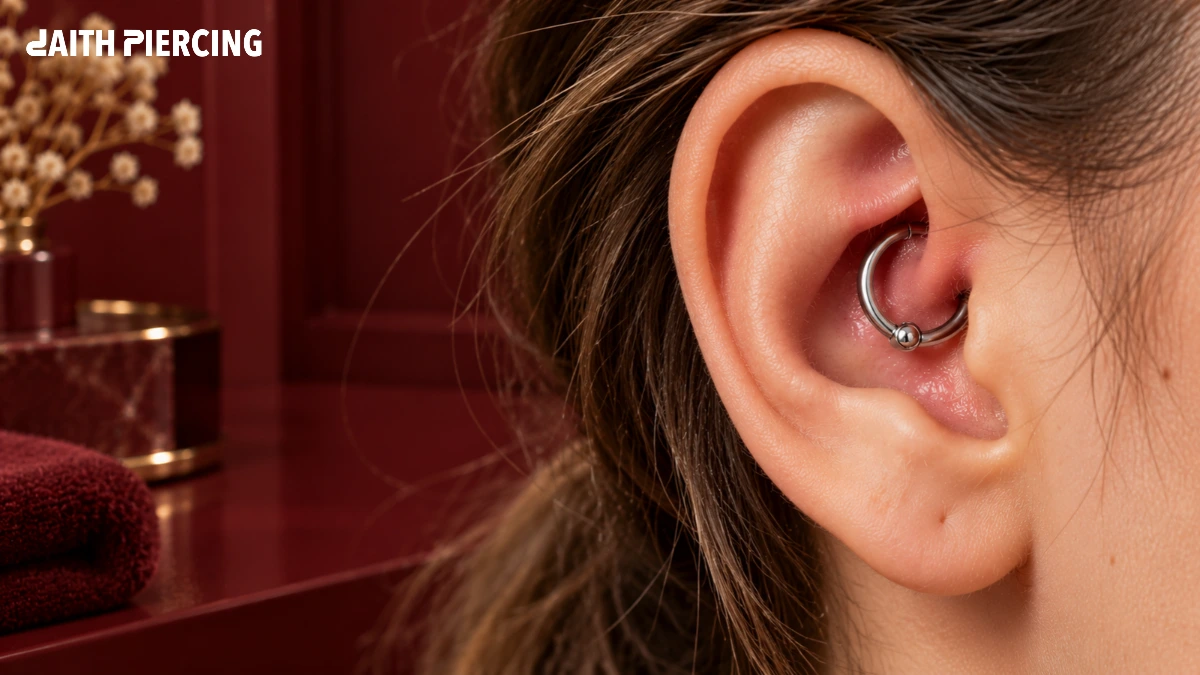
Key Takeaways
- Daith Piercing Not Healing After 6 Months: A daith can take 6 to 12 months to heal.
- Six months does not always mean the piercing should be completely healed.
- Pressure and friction can prolong irritation.
- Do not routinely twist or rotate healing jewelry.
- Sterile saline is a simple, professional aftercare option.
- Avoid alcohol, hydrogen peroxide, and harsh products.
- Have jewelry size and material checked by an experienced piercer if problems continue.
- Increasing pain, heat, swelling, pus, or spreading redness can indicate infection.
- Cartilage piercing infections should be assessed by a healthcare professional.
- Give the piercing time instead of repeatedly disturbing it.
Quick Answer
A daith piercing can still be healing after six months because cartilage heals slowly. Cleveland Clinic notes that daith and other cartilage piercings may take 6 to 12 months to fully heal.
However, persistent swelling, increasing pain, heat, spreading redness, or pus should not simply be blamed on slow healing. These symptoms can indicate infection and deserve medical attention, particularly because the piercing passes through cartilage.
If your piercing is mainly experiencing mild tenderness, occasional crusting, or irritation after being bumped, pressure or poor aftercare may be the bigger problem.
Is It Normal for a Daith to Take More Than 6 Months?
Yes. Six months is not necessarily the finish line for a daith piercing. The Association of Professional Piercers explains that piercings can look healed on the outside while the inside remains fragile. In other words, the surface can appear healthy before the internal piercing channel has completely matured.
Therefore, do not judge healing only by appearance. If the area still becomes tender after pressure or develops crusting from time to time, it may simply need more time and less irritation.
| At 6 months | What it may mean |
|---|---|
| Mild occasional tenderness | Healing may still be continuing |
| Small irritation bump | Often linked with friction or pressure |
| Occasional light crust | Can occur during healing |
| Increasing swelling | Needs closer attention |
| Hot, very painful tissue | Possible infection |
| Yellow or green pus | Possible infection |
| Redness spreading outward | Seek medical care |
Why Is My Daith Piercing Not Healing?
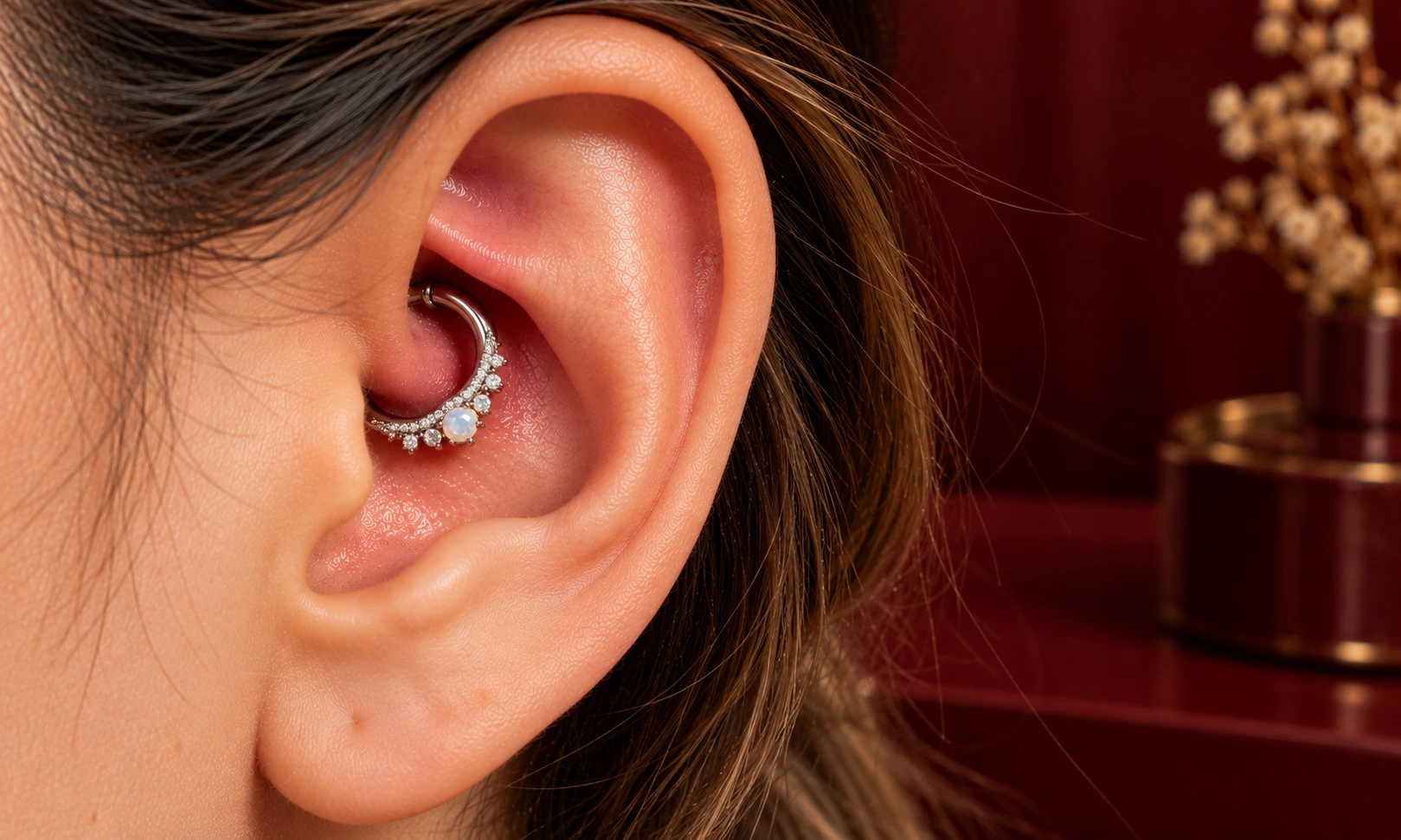
Several factors can keep a daith irritated long after the initial piercing.
1. Cartilage Takes Time to Heal
Unlike an earlobe, cartilage has a more limited blood supply. As a result, cartilage piercings generally repair more slowly. For that reason, reaching the six-month mark does not necessarily mean your daith should be completely settled. Some people heal within the expected range, whereas others need longer, especially when the piercing has experienced repeated irritation.
2. Sleeping on the Piercing
Pressure is one of the most overlooked causes of prolonged irritation. If you sleep directly on your daith, your head can push the jewelry against the cartilage for hours. Consequently, the piercing may repeatedly become irritated even though your cleaning routine is otherwise good.
The Association of Professional Piercers specifically warns that sleeping directly on healing cartilage can cause irritation and may even affect the piercing angle.
3. Touching or Rotating the Jewelry
Many people were once told to twist their jewelry while cleaning. However, current professional aftercare guidance does not recommend routinely rotating a healing piercing.
The APP states that moving or rotating jewelry is unnecessary and may irritate the piercing. Therefore, wash your hands before cleaning, but otherwise leave the jewelry alone.
4. Over-Cleaning
Keeping a piercing clean is important. Nevertheless, cleaning it too aggressively can create another problem. Alcohol, hydrogen peroxide, harsh soaps, iodine, and other strong products can irritate healing tissue. The APP also warns that over-cleaning itself can delay healing. More cleaning does not always mean faster healing.
5. Incorrect Jewelry
Jewelry that is too tight, too heavy, poorly shaped, or made from an unsuitable material can keep a piercing irritated. The APP recommends choosing appropriate jewelry materials and having a qualified piercer assess problems involving jewelry size, style, or material. In particular, implant-certified titanium is one established option for initial body jewelry.
6. Earbuds and Headphones
Because a daith sits close to the ear canal, earbuds can create pressure and friction around the jewelry. Furthermore, headphones and phones can come into contact with the area. The APP recommends keeping items such as phones and headphones clean and avoiding pressure on healing cartilage.
If your daith becomes sore after using earbuds, give the area a break and ask a professional piercer whether your jewelry and fit are appropriate.
7. Repeated Bumps and Snags
Hair, towels, clothing, hands, and bedding can all catch on a daith. Even a small bump may restart irritation. Therefore, try to identify what repeatedly touches the piercing instead of simply adding more cleaning.
Normal Healing vs Irritation vs Infection
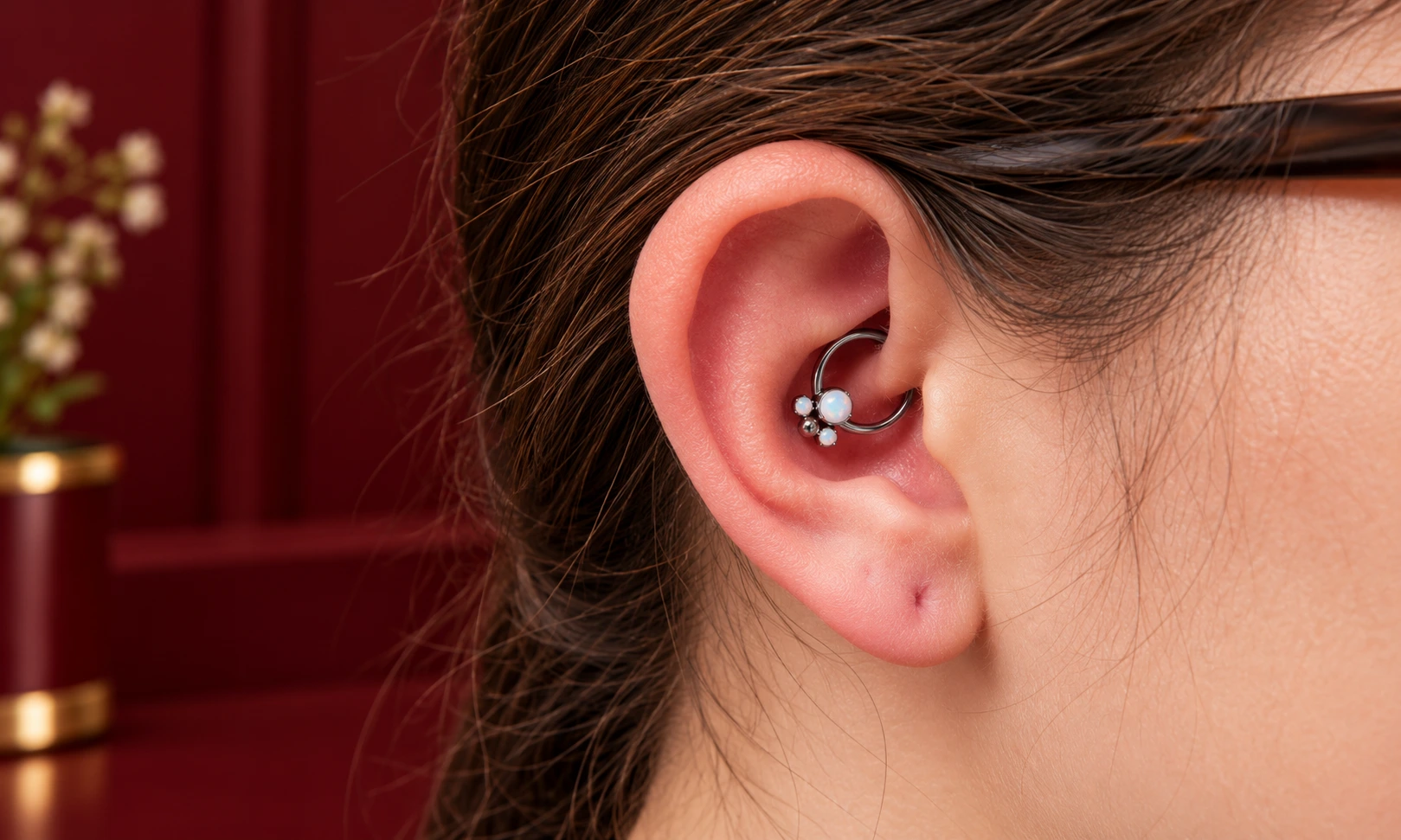
Not every bump means infection.
During normal healing, some tenderness, discoloration, itching, and a small amount of whitish-yellow fluid that dries into crust can occur. An irritation problem is more likely when symptoms appear after pressure, touching, jewelry movement, or another form of trauma, such as when daith piercing jewelry gets stuck.
In contrast, infection requires more caution.
| Sign | More consistent with |
| Mild tenderness | Normal healing |
| Occasional crust | Normal healing |
| Small irritation bump | Irritation |
| Symptoms after sleeping on it | Irritation |
| Increasing warmth | Possible infection |
| Significant swelling | Possible infection |
| Thick pus | Possible infection |
| Spreading redness | Possible infection |
| Fever or feeling unwell | Possible infection |
According to the NHS, swelling, significant pain, warmth, marked redness or darkening, pus, and feeling hot, cold, shivery, or generally unwell can indicate an infected piercing.
What to Do If Your Daith Is Not Healing
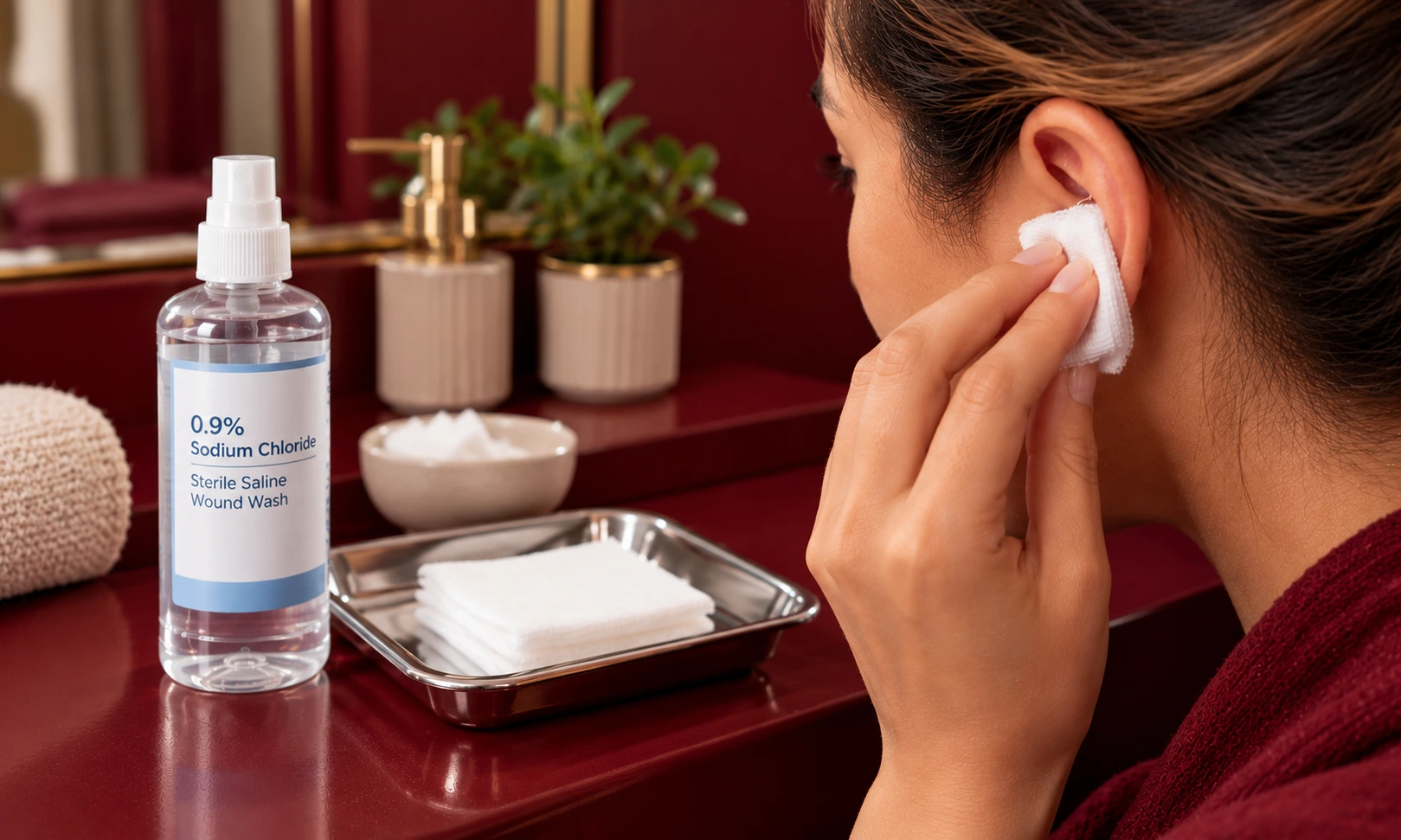
Start by simplifying your routine.
Use Gentle Aftercare
Wash your hands before touching the area. Then use a sterile saline wound wash intended for piercings or wounds.
The APP recommends sterile saline containing 0.9% sodium chloride and advises against products such as contact lens solution, eye drops, nasal sprays, and saline products containing unnecessary additives.
Afterward, allow the area to dry gently using clean disposable gauze or another suitable disposable product.
Stop Unnecessary Movement
Do not spin, twist, pull, or play with the jewelry. Instead, let the piercing remain as still as possible while the tissue continues to heal.
Reduce Pressure
Avoid sleeping directly on the pierced ear. If you are a side sleeper, a travel pillow with an opening can help keep your ear from pressing against the pillow. Additionally, keep pillowcases clean and pay attention to headphones, phones, hats, and hair products.
Review Your Jewelry
If the jewelry appears too tight, is constantly moving, is causing pressure, or seems poorly positioned, do not change it yourself. Instead, have an experienced professional piercer inspect the piercing and determine whether the size, shape, or material is contributing to the problem.
Jewelry Materials That May Be Better Choices
Jewelry material matters, especially when a piercing has remained irritated for months. The Association of Professional Piercers lists implant-certified titanium among appropriate materials for initial piercings and provides specific ASTM and ISO standards for titanium and certain steel grades. If you prefer a decorative style, explore heart-shaped daith jewelry while keeping material quality and proper fit in mind.
| Material | Consideration |
| Implant-certified titanium | Well-established option for healing piercings |
| Niobium | Used by professional piercers and considered biocompatible |
| Appropriate solid gold | Can be suitable when properly made |
| Unknown or poorly specified metal | Better avoided during healing |
| Plated jewelry | Not ideal for a healing piercing |
Most importantly, do not choose jewelry based only on appearance. Fit, quality, finish, and material all matter.
Common Mistakes That Can Delay Healing
Even with good intentions, some habits can keep a daith irritated.
Avoid these common mistakes:
- Rotating the jewelry every day.
- Cleaning the piercing repeatedly throughout the day.
- Using rubbing alcohol.
- Using hydrogen peroxide.
- Applying harsh antibacterial products.
- Picking crust from the piercing.
- Sleeping directly on the ear.
- Changing jewelry too early.
- Wearing jewelry that puts pressure on the cartilage.
- Ignoring repeated bumps or snags.
The APP specifically identifies inappropriate aftercare, harsh products, over-cleaning, friction, pressure, and unnecessary movement as causes of prolonged piercing problems.
When Should You See a Doctor?
If your daith is painful, hot, significantly swollen, very red or dark, or producing pus, do not assume that it is simply taking longer to heal.
Cartilage infections can require medical treatment. Mayo Clinic advises seeking medical care for a cartilage piercing that becomes painful, itchy, swollen, and very red or dark.
Similarly, the NHS recommends urgent medical advice when you think a piercing is infected.
If you suspect an infection, do not remove the jewelry on your own unless a healthcare professional tells you to. The NHS specifically advises leaving it in unless a doctor recommends removal.
Daith Piercing Healing Checklist
Use this simple checklist if your daith piercing healing problem has continued for six months:
| Check | What to do |
| Healing time | Remember that 6 to 12 months can be normal for cartilage |
| Cleaning | Use appropriate sterile saline |
| Touching | Keep hands away except when cleaning |
| Jewelry | Do not twist or rotate it |
| Sleeping | Avoid pressure on the pierced ear |
| Headphones | Keep them clean and avoid pressure |
| Products | Keep hair and beauty products away |
| Jewelry material | Ask a professional to check its quality |
| Jewelry fit | Have a piercer check size and placement |
| Infection signs | Seek medical care when symptoms worsen |
Frequently Asked Questions
Can a daith piercing still be healing after 6 months?
Yes. Six months can still fall within the normal healing window for a daith. Cleveland Clinic states that daith and several other cartilage piercings may take approximately 6 to 12 months to heal.
Why does my daith still hurt after 6 months?
Mild or occasional soreness can happen when the piercing is still healing. However, repeated pressure, sleeping on it, jewelry problems, or excessive touching can keep irritating the area.
If pain is increasing rather than improving, especially with warmth, swelling, or discharge, seek medical advice.
Is a bump on a six-month-old daith normal?
A small irritation bump can occur during healing, particularly after friction or pressure. However, a painful, hot, swollen bump accompanied by pus or spreading redness should be assessed by a healthcare professional because those symptoms may indicate infection.
Should I change my daith jewelry after 6 months?
Not automatically. Six months does not guarantee that the piercing is fully healed. If jewelry needs to be changed because of its size, material, or style, have an experienced piercer assess it first. The APP recommends professional help for jewelry changes during healing.
Should I twist my daith jewelry while cleaning?
No. Current APP guidance says rotating or moving healing jewelry is unnecessary and can cause irritation.
Can I sleep on my daith after 6 months?
Only when the piercing is comfortable and no longer reacts to pressure. Nevertheless, if sleeping on it causes soreness or swelling the next morning, continue avoiding direct pressure.
What is the fastest way to heal a daith piercing?
There is no reliable shortcut that guarantees faster healing. Instead, reduce irritation, use gentle aftercare, avoid unnecessary movement, choose appropriate jewelry, and give the cartilage enough time to recover.
When is a daith piercing fully healed?
A piercing is considered healed when the tissue has matured rather than simply looking good from the outside. Because daith piercings can take 6 to 12 months or longer, healing should be judged by the condition of the piercing rather than a fixed date.
Conclusion
If your daith piercing not healing after 6 months, there is no need to panic immediately. Six months can still be within the expected healing range for a cartilage piercing.
However, persistent irritation deserves attention. Start by reducing pressure, stopping unnecessary jewelry movement, simplifying your aftercare, and checking whether your jewelry is appropriate.
At the same time, do not ignore infection symptoms. Increasing pain, heat, significant swelling, pus, spreading redness, or feeling unwell are reasons to seek medical care rather than simply waiting for the piercing to heal.
At DaithPiercing, the goal is to make piercing care easier to understand so you can recognize the difference between normal healing and a problem that needs professional attention.