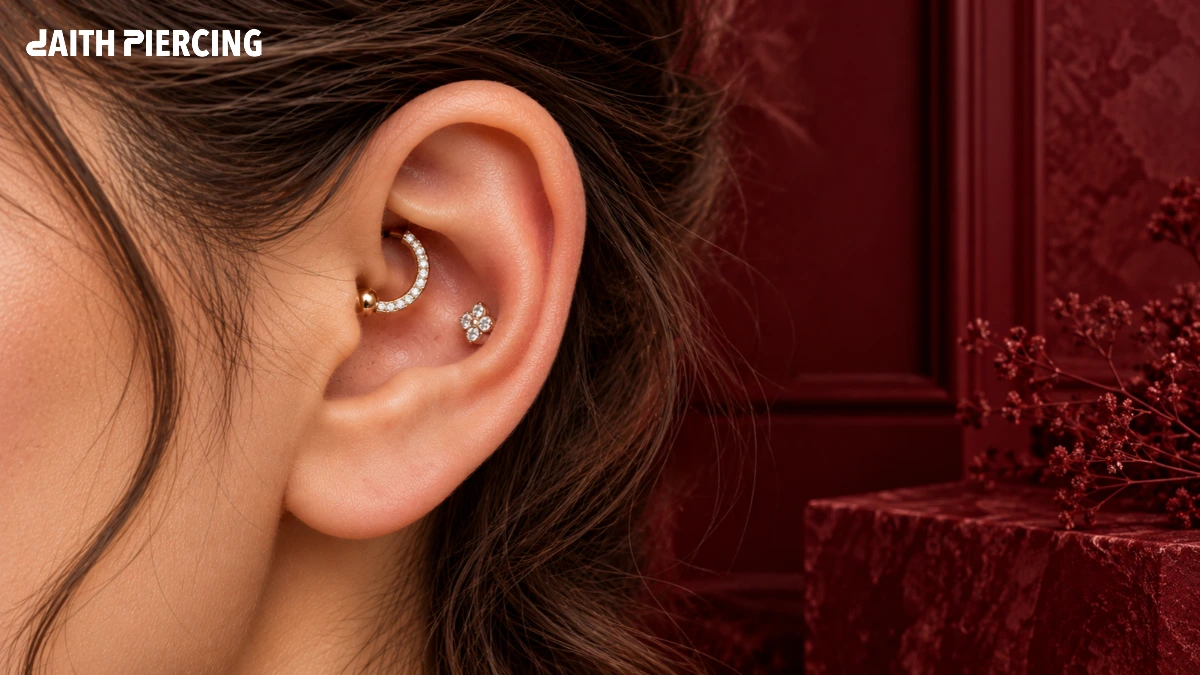
Choosing between a daith piercing and a conch piercing can feel surprisingly difficult. Both sit in the cartilage of the ear, both can create a stylish statement, and both work beautifully with minimalist or more detailed ear-stacking looks. The real difference comes down to where the piercing sits, how visible it is, what jewelry suits it, and how it fits your ear anatomy.
If you are comparing Daith Piercing vs. Conch, the best choice is not simply the one that looks better in someone else’s photo. Your ear shape, lifestyle, preferred jewelry, and patience for cartilage healing all matter.
This guide breaks down the two placements so you can make a more informed choice before visiting a professional piercer.
Key Takeaways
- Daith and conch piercings have very different placements and visual effects.
- A daith sits in the inner cartilage fold and usually creates a subtle, curved appearance.
- A conch sits in the central cartilage and generally provides a more visible focal point.
- Both are cartilage piercings and can take several months to fully heal.
- Jewelry should be selected according to anatomy, fit, material, and healing stage.
- Professional placement and proper aftercare are more important than copying a particular aesthetic.
- The best choice depends on your preferred style and how you want your overall ear stack to look.
Daith Piercing vs. Conch: The Basic Difference
The easiest way to understand the difference is to look at their location.
A daith piercing passes through the small fold of cartilage just above the ear canal. Because of its tucked-away placement, it has a more subtle and slightly mysterious appearance. A small hoop is one of the most recognizable jewelry choices for this area.
A conch piercing sits through the broad, central area of cartilage known as the conch. It is positioned farther outward and is usually more visible from the side or front of the ear. Depending on the jewelry, a conch can look delicate, bold, or highly decorative.
Neither placement is automatically better. They simply create different visual effects.
Daith Piercing Placement and Aesthetic
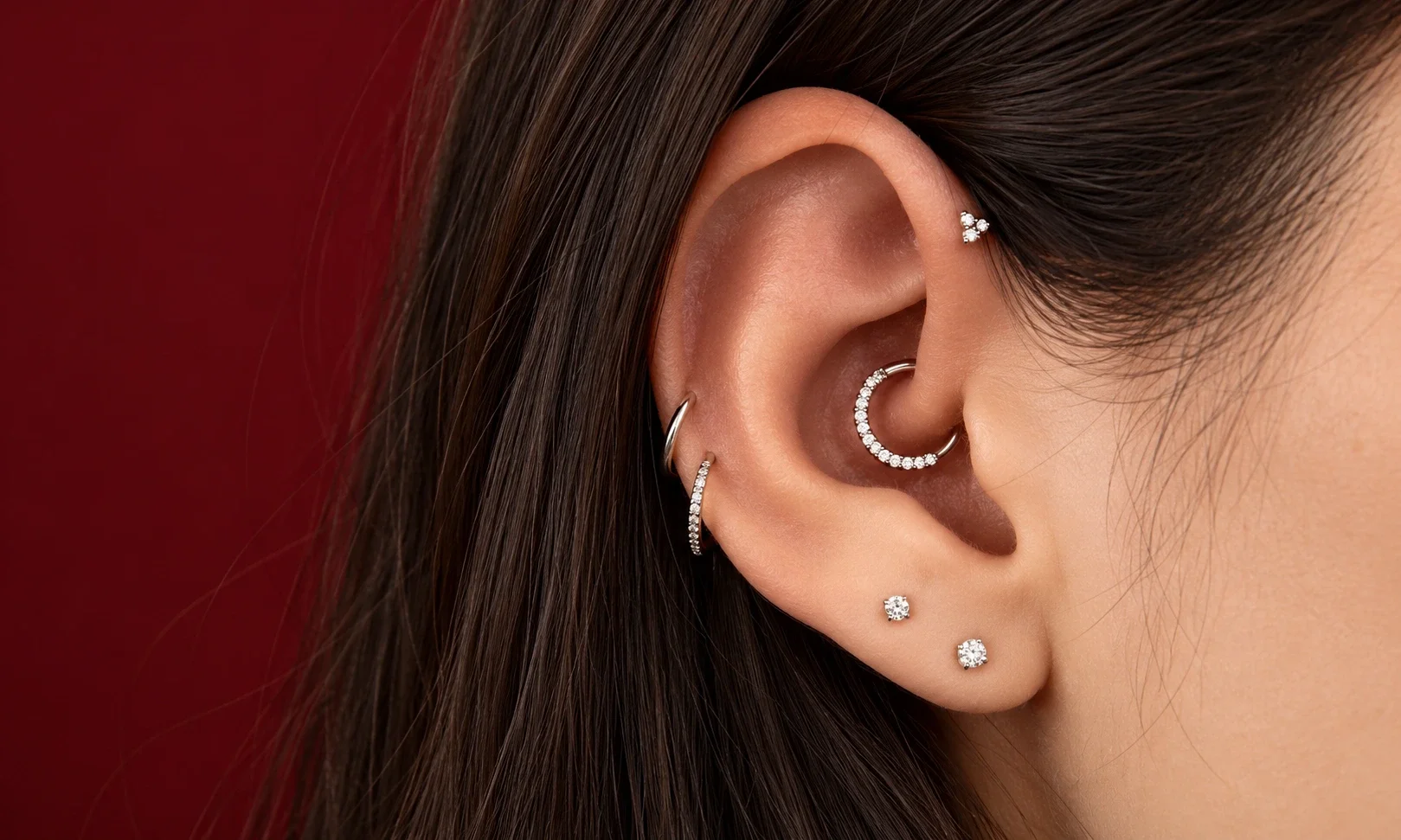
The daith is located in the inner cartilage fold of the ear. Its position gives it a tucked-in appearance that can make the jewelry look almost hidden until someone looks closely.
What Makes a Daith Look Different?
The main appeal of a daith is its compact and curved appearance. A fitted hoop can follow the natural shape of the inner ear and create a clean, continuous line.
For a simple look, a small smooth ring can be enough. If you prefer something more decorative, a clicker or a ring with a subtle gemstone can make the piercing stand out without making the entire ear look crowded.
Because the daith is located deeper inside the ear structure, it usually does not have the same visual presence as a conch. That can be a major advantage if you want something stylish but understated.
Conch Piercing Placement and Aesthetic
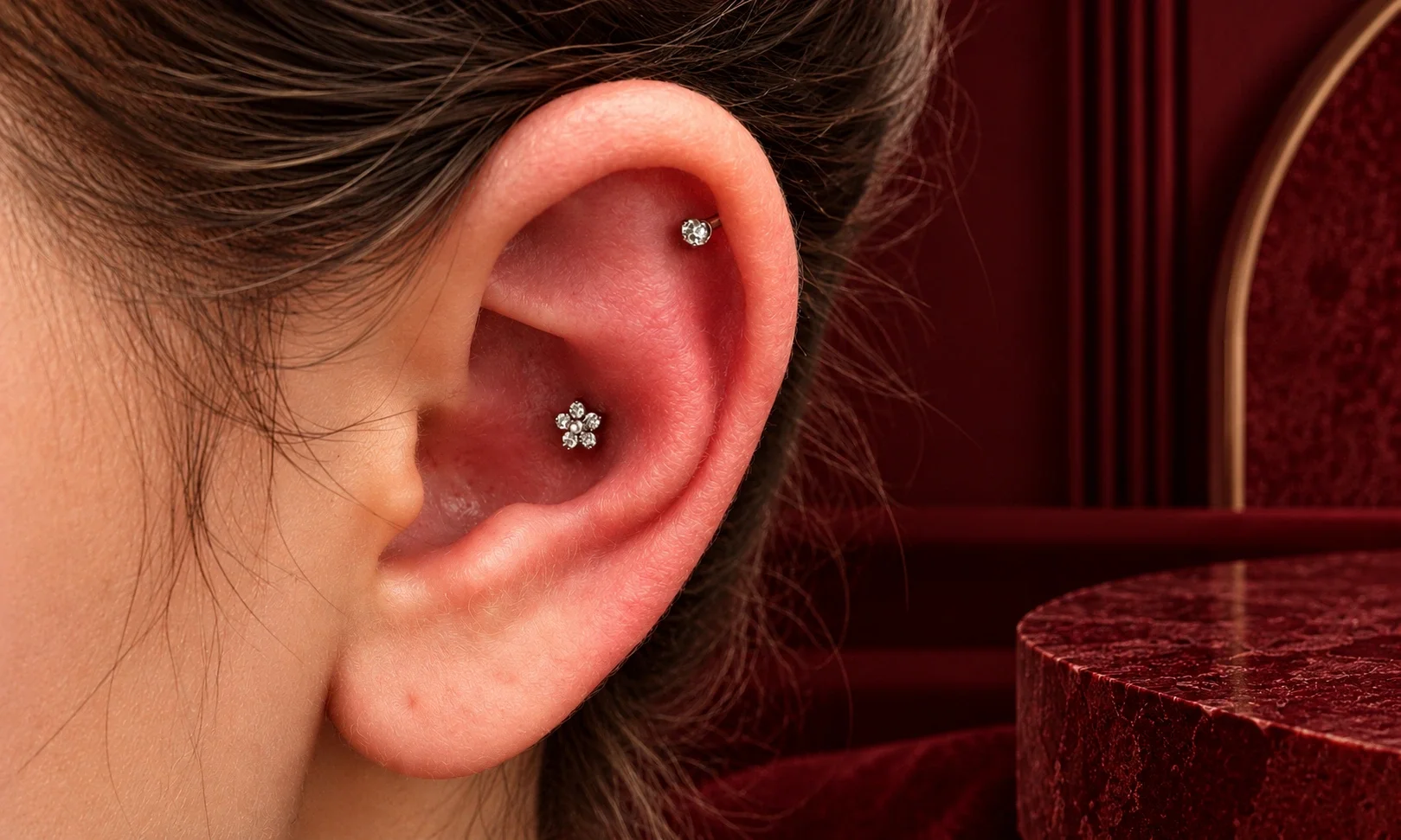
The conch sits in the wider central cartilage of the ear. It gives you more visible space around the jewelry, which makes it especially versatile for different styling ideas.
Why Is the Conch So Popular?
A conch piercing can work with a small stud for a refined appearance or a hoop that follows the outer curve of the ear once the piercing is properly healed and suitable for that jewelry.
The larger cartilage area also gives the jewelry more visual impact. A tiny gemstone can create a minimal look, while a larger piece can become the focal point of an ear stack. This makes the conch particularly appealing if you want a piercing that people can notice easily.
Daith vs. Conch: Which Looks Better?
There is no universal winner because the two placements create completely different aesthetics. A daith generally gives an intimate, tucked-away, curved look. It can work particularly well with people who prefer subtle jewelry and inner-ear details.
A conch tends to create a more noticeable, structured look. It can become a centerpiece when combined with lobe, helix, or other cartilage piercings.
Think of the difference this way:
Daith = subtle and tucked away.
Conch = visible and statement-focused.
Your existing piercings can also influence the decision. If your ear already has several outer-edge piercings, a daith may add visual interest toward the center. If your ear is relatively minimal, a conch can become a strong focal point.
Jewelry Choices: Daith vs. Conch
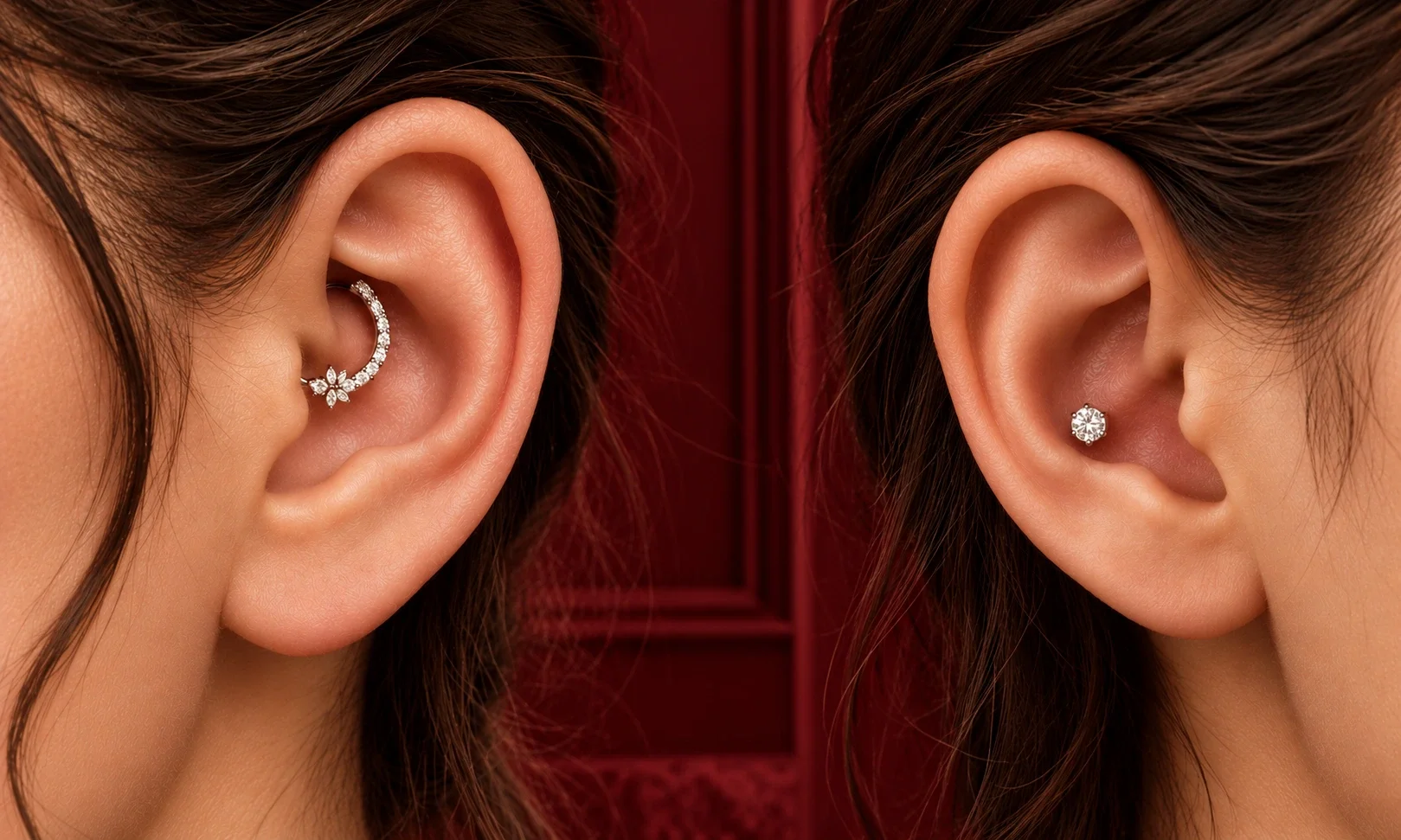
Jewelry is where the aesthetic difference becomes even more obvious.
Best Jewelry for a Daith
Daith jewelry is commonly associated with rings because the curved shape works naturally with the placement. Seamless-style rings, clickers, and decorative circular designs can all create different moods.
A simple metal ring can give the ear a clean everyday appearance, while a gemstone design can make the piercing feel more elegant.
However, jewelry should not be selected only for appearance. The size, shape, material, and fit need to suit your individual anatomy and the stage of healing. The Association of Professional Piercers recommends having a qualified piercer determine appropriate jewelry sizing and making changes during healing professionally.
Best Jewelry for a Conch
The conch gives you more obvious styling flexibility. A flat-back stud can create a minimalist look, while a decorative end can turn the piercing into a small centerpiece.
After healing, some people choose a hoop for a more dramatic appearance. The exact jewelry style should depend on the placement, anatomy, and available space rather than simply copying a photo from social media.
Quality matters too. Properly fitted, high-quality jewelry can help reduce unnecessary irritation, while poorly fitted jewelry can contribute to swelling, snagging, and healing problems.
Which One Is Easier to Style?
If your main goal is creating a visible ear stack, the conch usually offers more obvious styling opportunities. Its central position makes it easy to coordinate with lobe and helix jewelry. You can use it as the main focal point and keep surrounding pieces smaller.
The daith works differently. Because it sits deeper inside the ear, it can add an unexpected detail to an otherwise simple arrangement. This makes the choice less about which piercing is fashionable and more about the type of ear aesthetic you want to create.
Healing Time and Aftercare
Both daith and conch piercings involve cartilage, so neither should be treated like a simple lobe piercing. Cartilage generally heals more slowly because it has a lower blood supply than soft tissue. Cleveland Clinic notes that cartilage piercings, including daith and conch placements, can take around six to 12 months to fully heal. Individual healing can vary.
How Should You Care for Either Piercing?
During healing, keep your hands clean before touching the area and avoid unnecessary movement of the jewelry. The Association of Professional Piercers recommends sterile saline wound wash and specifically advises against routinely rotating or twisting jewelry.
Sleeping directly on a healing cartilage piercing can also irritate and may affect the piercing angle. Keeping pressure away from the ear is therefore an important part of comfortable healing.
Avoid changing the jewelry simply because the outside looks healed. Piercings heal from the outside inward, so the deeper tissue can remain fragile even when the piercing feels comfortable.
Which Piercing Hurts More?
Pain is highly individual, so there is no reliable way to say that one will hurt more for everyone. Both placements involve cartilage, and the experience can depend on your anatomy, the piercer’s technique, your personal sensitivity, and how relaxed you are during the procedure.
Instead of choosing based on online pain ratings, focus on finding an experienced professional who can assess whether the placement is suitable for your ear.
Choosing the Right Piercer Matters
A beautiful piercing starts with correct placement. A professional piercer should assess your anatomy before deciding exactly where the needle should pass. The Association of Professional Piercers emphasizes anatomical suitability, proper placement, sterilization, jewelry quality, and correct sizing as important parts of safe piercing practice.
Do not choose a placement simply because it looks good on another person’s ear. Cartilage folds and ear shapes differ, so the same piercing can look completely different from one person to another.
For both daith and conch piercings, avoid DIY piercing kits or untrained piercing services. Proper placement and appropriate jewelry sizing can make a major difference during healing.
Daith or Conch: Which One Should You Choose?
Choose a daith if you prefer:
- A subtle inner-ear detail
- Curved or ring-style jewelry
- A less obvious piercing
- A delicate addition to an existing ear stack
- A distinctive look without making the piercing the main focus
Choose a conch if you prefer:
- A more visible cartilage piercing
- Stud-based minimalist jewelry
- A future hoop look after appropriate healing
- A strong centerpiece for an ear stack
- More noticeable decorative jewelry
If you are still undecided, look at your existing jewelry collection. If most of your pieces sit around the outer ear, a daith can bring attention toward the center. If your ear is relatively empty, a conch can provide a stronger starting point.
Signs That Your Piercing May Need Attention
Some tenderness, localized swelling, mild redness, itching, and light crusting can occur during normal healing. However, increasing pain, significant swelling, heat, pus, or feeling generally unwell can indicate an infection and should not be ignored.
If you suspect an infection, seek medical advice rather than removing the jewelry on your own. A healthcare professional can advise you on the appropriate treatment.
E-E-A-T Note
At DaithPiercing, we focus on practical piercing information that helps readers understand placement, jewelry, healing, and aftercare before making a decision. If you’re also exploring personal style, our guides to almond French tip nails and easy hairstyles offer more beauty inspiration.
This guide uses professional piercing guidance and clinical health information rather than relying only on aesthetic trends. Because every ear has different anatomy and every piercing heals differently, a qualified professional should assess your individual ear before piercing.
FAQs
Is a daith or conch piercing more noticeable?
A conch piercing is generally more noticeable because it sits in the central area of the ear. A daith is more tucked away and tends to create a subtle detail.
Can you wear a hoop in a conch piercing?
Yes, a hoop can be used in a conch piercing after it has healed appropriately and the jewelry is correctly sized for your anatomy. A professional piercer can help determine when and what type of hoop is suitable.
Is daith jewelry usually a hoop?
Rings are strongly associated with daith piercings because their curved shape complements the inner cartilage placement. The specific jewelry should still be selected based on proper fit and healing requirements.
Do daith and conch piercings take the same time to heal?
Both can require a long cartilage-healing period. A general timeframe for daith and conch piercings is around six to 12 months, although healing varies from person to person.
Which is better for an ear stack, daith or conch?
A conch is often better when you want a visible centerpiece, while a daith can add a subtle inner-ear detail. Your existing piercings should be considered before deciding.
Can I change my jewelry during healing?
You should not change healing cartilage jewelry simply for style. If a change or downsize is needed, have a qualified piercer assess and perform it. The Association of Professional Piercers recommends professional jewelry changes during healing.